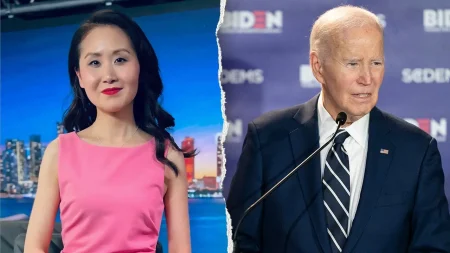






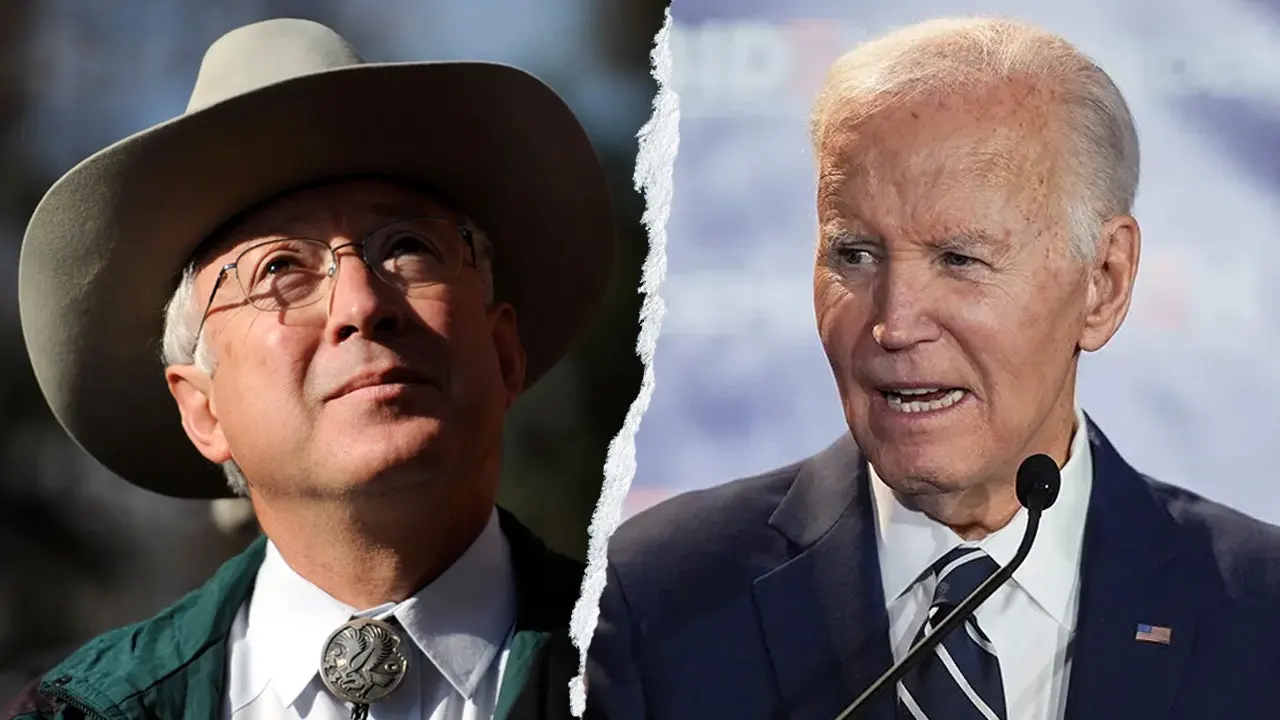
In the quiet, secure rooms of the United States Embassy in Mexico City, a seasoned diplomat watched a political tragedy unfold on his television screen. It was late July 2024, and Joe Biden’s struggling debate performance had just cast a shadow of uncertainty over the entire nation. For Ken Salazar, then serving as the U.S. Ambassador to Mexico, the moment was not just a partisan crisis; it was a deeply personal awakening. Salazar, a veteran politician with a lifetime of public service behind him, realized that the current trajectory of the Democratic Party was headed toward a historic defeat. In that moment of profound national anxiety, a bold and unexpected thought took root in his mind: “I should run for president,” he told himself. This revelation, captured in a poignant excerpt from his book Borderlands: My Fight For An Inclusive America, was not a product of sudden vanity, but rather the culmination of years of quiet alarm. Salazar had watched the administration he served struggle to connect with the raw anxieties of the American public, particularly regarding the deeply divisive issue of immigration. Believing that a Western voice with a deep understanding of the border could heal the party’s self-inflicted wounds, Salazar began to quietly organize behind the scenes. He drafted an ambitious presidential policy platform and assembled a trusted team of advisors, ready to offer a pragmatic, country-first alternative if the party chose to open up the nomination process, demonstrating how even a loyal ambassador could feel compelled by duty to challenge his own boss for the sake of the country’s future.
At the heart of Salazar’s frustration was a crisis that had been brewing for years along the southern border—a situation he had begged the Biden administration to confront with honesty and urgency. From his unique vantage point in Mexico, Salazar saw the physical reality of human migration and the staggering operational toll it took on border communities. He consistently urged the White House and Homeland Security Secretary Alejandro Mayorkas to abandon cautious political euphemisms and call the situation what it truly was: a crisis. Salazar argued that hiding behind sterile language only alienated voters, who could see the chaotic reality with their own eyes on the nightly news. Within the closed doors of the administration, officials readily acknowledged the compounding disaster, using the word “crisis” constantly, yet they steadfastly refused to say it in public for fear of giving political ammunition to their opponents. When Salazar pushed Mayorkas to be transparent, the secretary’s response laid bare the paralyzing fear and political exhaustion gripping the administration: “Ken, I have a lot on my plate already. I’m about to be impeached for all this border stuff. The Republicans have it out for me.” This candid exchange illustrated a tragic breakdown in leadership, where the fear of partisan attacks and the imminent threat of impeachment overshadowed the urgent need to speak honestly to the American people, ultimately eroding public trust and setting the stage for a devastating political reckoning.
Salazar’s concerns deepened as he watched the administration delegate the monumental task of addressing the migratory challenges to Vice President Kamala Harris. Early in his tenure, Salazar had passionately championed the creation of a “border czar” role, believing that a de facto empowered coordinator was essential to streamline the government’s fractured response. But when Harris was officially tasked with addressing the “root causes” of migration from Central America, the reality fell tragically short of Salazar’s hopes. Instead of becoming a decisive leader on the ground, Harris became associated with an ineffective, high-altitude approach that failed to stem the immediate tide of people arriving at the southern border. Salazar observed that despite her powerful position sitting next door to the Oval Office for nearly four years, her efforts had virtually no visible impact on the ground. “For whatever reason, she had been unable to help with the border and migration crisis,” Salazar noted with sharp disappointment, reflecting a growing sentiment among border residents and local officials who felt abandoned by Washington. By focusing on long-term systemic problems in distant nations while ignoring the immediate crisis on the domestic frontier, the administration allowed the border to remain a vulnerable political flank, leaving Harris to bear the heavy burden of a “border czar” title without any key policy successes to show for it.
The true turning point came when President Biden finally made the historic decision to step aside, opening a brief window where the Democratic Party could have engaged in a vibrant, honest debate about its future course. Salazar stood ready with his platform, prepared to inject his border-tested perspective into a competitive national primary. However, the open democratic process he envisioned never materialized. Instead, the party establishment moved with swift, unilateral precision to coronate Kamala Harris as the party’s nominee without a single primary vote being cast. Salazar did not mince words about this decision, labeling the bypassing of an open primary “a mistake” that deprived the party of vital vetting and a necessary course correction. While the Biden administration did eventually enact strict border restrictions in late 2024—a move that successfully lowered crossing numbers and offered Salazar a bittersweet sense of vindication—the policy shift came far too late to change the political narrative. The chaotic, uncontrolled images of the border had already been etched into the minds of voters over several years, dominating the final months of the campaign and ensuring that immigration would remain the defining issue that ultimately swayed the electorate against the Democratic ticket.
To truly appreciate the depth of Salazar’s conviction, one must look at the rich tapestry of his personal history as a historic trailblazer for Hispanic Americans in politics. Born into a family with deep ancestral roots in the American Southwest that stretch back long before the borders of Colorado were drawn, Salazar has always viewed the borderlands not as a line of division, but as a place of shared culture and mutual prosperity. As Colorado’s first Hispanic U.S. Senator and later as the Secretary of the Interior under President Barack Obama, he dedicated his career to bridging cultural divides and advocating for marginalized communities. His book, Borderlands: My Fight For An Inclusive America, serves as both a warning and a blueprint for a nation currently tearing itself apart over the immigrant experience. In its pages, Salazar humanizes the crisis by illustrating how a broken immigration system hurts families, strains local resources, and diminishes the moral standing of the United States. He argues passionately that the only way to heal this national wound is to move past the polarized rhetoric of walls and open borders, and instead embrace a holistic approach that respects human dignity while firmly enforcing the rule of law on the ground.
Though his own path to the presidency in 2024 was blocked by party elites, Ken Salazar is refusing to let his vision for a humane and secure border fade into obscurity. Instead, he has embarked on a strategic mission to shape the future of the Democratic Party, pitching his forward-looking “borderlands platform” to the next generation of potential presidential contenders for 2028 and beyond. He has already held critical, private discussions with prominent Democratic leaders from key battleground states, including Arizona Senators Mark Kelly and Ruben Gallego, both of whom represent communities intimately familiar with the direct impacts of federal border policy. Furthermore, Salazar has set his sights on meeting with influential Midwestern leaders like Illinois Governor JB Pritzker, whose state has had to grapple with the complex logistics of housing thousands of migrants bused from the border. By engaging these influential figures, Salazar hopes to build a powerful coalition that can rescue his party from its defensive crouch on immigration, urging them to embrace a balanced, common-sense approach that marries strong enforcement with real legal pathways. Through this tireless advocacy, Salazar seeks to ensure that the hard-learned lessons of the 2024 election are not forgotten, but are instead used to build a stronger, more inclusive, and politically resilient America.