


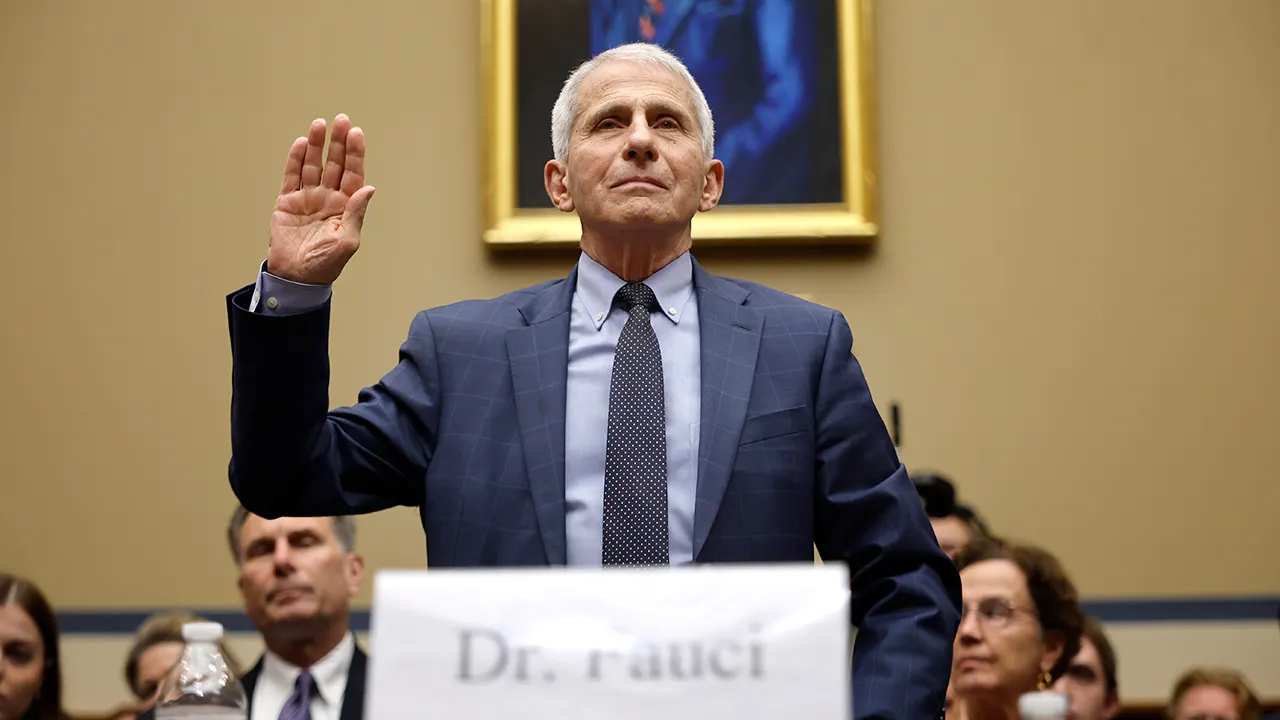
In the cold, uncertain winter of January 2021, the world stood at a historic and incredibly fragile precipice. Suspended between the devastating, ongoing grip of a global pandemic and the dazzling promise of newly authorized mRNA vaccines, the public was desperate for clear guidance, safety, and a return to normal life. Behind the scenes of this massive scientific rollout, the leaders tasked with steering the nation’s public health response—Dr. Anthony Fauci, then-Director of the National Institute of Allergy and Infectious Diseases; Dr. Rochelle Walensky, the Director of the Centers for Disease Control and Prevention; and Dr. Vivek Murthy, who was preparing to serve as Surgeon General under the incoming Biden administration—carried an almost unimaginable burden of responsibility. Every word they uttered and every official guideline they approved had the power to shape the daily health choices of hundreds of millions of people. While their public appearances were carefully designed to project a united front of scientific certainty, newly unsealed text messages, released by Senators Ron Johnson and Rand Paul, reveal a far more complex, intensely human, and deeply cautious dialogue occurring in the quiet hours of their private lives. These candid text messages offer an invaluable, unfiltered window into the minds of America’s top medical authorities as they wrestled with the profound clinical and ethical dilemmas of administering a brand-new vaccine technology to pregnant women. Rather than showing a group of detached bureaucrats, these exchanges reveal real doctors trying to balance the fundamental medical oath of “do no harm” with the pressing, chaotic reality of a deadly respiratory virus that was actively threatening lives, showcasing the complex tightrope between strict scientific nuance and the sweeping demands of national health communication. This revealing digital correspondence strips away the polished, often sterile armor of institutional press conferences, replacing it with the raw, earnest, and urgent scientific inquiry of human beings who knew that their decisions would define the health of an entire generation, proving that scientific policy is rarely as simple or black-and-white as the public often demands.
The core of this private conversation focused on an issue that has long been one of the most sensitive and difficult areas in all of medicine: how to safely protect pregnant women and their unborn babies from an active infectious disease without introducing any unnecessary biological risks. Dr. Vivek Murthy opened the discussion by asking a series of thoughtful, practical questions, inquiring whether there was any clinical reason to favor vaccination either earlier or later in a pregnancy, and if there was any real-world evidence of adverse outcomes among pregnant women who had already taken the plunge and gotten vaccinated. Dr. Fauci’s initial response was firmly rooted in the strict, objective boundaries of the data available at the time, explaining that there was no existing medical data or sound theoretical reason to believe that getting vaccinated early in a pregnancy was any better or worse than waiting until the later trimesters. However, as the evening went on and the discussion deepened, the doctors began to carefully analyze the underlying physiological reactions triggered by the brand-new mRNA platform. Fauci raised a crucial, nuanced point: because many vaccine recipients experience significant, systemic cytokine-related symptoms and high fevers after receiving their second dose, this intense inflammatory immune reaction “theoretically could be associated with miscarriage in the 1st trimester.” Upon reading this, Dr. Walensky immediately recognized the biological validity of his concern, responding that it was “definitely a good point, esp after dose two,” showing that these leaders were highly sensitive to the well-established obstetric fact that maternal fevers during the critical first trimester can sometimes pose serious risks to fetal development. This exchange highlights the deep, quiet responsibility these doctors felt to look beyond simple statistical averages and consider the delicate, individual biological journeys of expectant mothers, ensuring that every potential risk, no matter how theoretical or rare, was fully discussed and evaluated behind closed doors before policy was set in stone.
While these top medical officials were busy dissecting the delicate biological mechanics of the vaccine, they were also forced to confront a parallel, highly destructive epidemic of online misinformation that threatened to undermine their entire public health strategy before it could fully save lives. Dr. Murthy raised a growing concern about persistent, frightening rumors suggesting that the novel mRNA technology could somehow cause genetic mutations or alter the DNA of a developing fetus. Fauci was quick to firmly debunk these fears, explaining that such claims were based on a complete misunderstanding of molecular biology, as the mRNA from the vaccines does not enter the cell’s nucleus and cannot integrate into or alter human genes. Yet, even as they dismissed these wild falsehoods, the doctors remained deeply sensitive to the legitimate, natural anxieties of expectant mothers who were simply trying to protect their future children. Murthy emphasized that addressing these fears with compassion and clarity was essential, noting that Fauci’s clinical observation about the second-dose cytokine response was an incredibly important piece of nuance that they needed to keep in mind. This particular moment in their text exchange beautifully humanizes the overwhelming challenge of modern public health leadership: the constant, exhausting struggle to separate real, scientifically plausible risks from hysterical, scientifically impossible rumors, all while maintaining a deep, empathetic connection with a frightened public that is desperate for absolute, unwavering certainty in a world that is inherently full of scientific shade and gray areas. They understood that to simply dismiss all fears as “anti-science” would be a catastrophic mistake; instead, they had to honor the natural, protective instincts of parents by addressing their concerns with transparent, honest information. This required these leaders to constantly translate complex immunological data into clear, reassuring language that could cut through the noise of social media panic without oversimplifying the very real clinical care required.
The fragile internal consensus of the American health team was suddenly put to the test the very next day when the World Health Organization issued a highly cautious guideline advising against the use of Moderna’s COVID-19 vaccine in pregnant women due to a lack of robust clinical trial data. For Murthy, Walensky, and Fauci, this unexpected divergence from a major global health body threatened to spark a massive public relations crisis and severely damage maternal vaccination efforts inside the United States. Murthy expressed immediate concern, admitting that the WHO’s highly conservative stance took him by surprise and warning that such a sweeping recommendation against the vaccine could be “potentially quite damaging to public confidence among pregnant women,” who were already navigating a confusing sea of conflicting advice. This sudden international disagreement perfectly captures the intense friction that often exists between the ultra-precautionary principle of international bodies and the practical, life-saving demands of a domestic emergency where thousands of real people are dying every single day. The American doctors knew that when global public health advice appears fragmented or contradictory, public trust instantly crumbles, leaving vulnerable individuals to make critical, life-or-death decisions in a state of total fear and confusion. Walensky shared Murthy’s deep anxiety and recognized that they needed to act quickly to address this dangerous mixed message, promising to immediately flag the global discrepancy for the upcoming meeting of the Advisory Committee on Immunization Practices so they could build a clear, unified, and science-backed message. Their concern was not merely bureaucratic; it was a deeply felt worry about the real-world consequences of confusion, knowing that a single poorly worded statement from an international agency could lead to thousands of pregnant women choosing to remain unvaccinated, leaving them completely defenseless against a virus that was sweeping through communities across the nation.
In the face of the confusion introduced by the World Health Organization’s cautious stance, Dr. Fauci pivoted the discussion back to the fundamental scientific principle of risk-benefit analysis, which serves as the ultimate compass for medicine during a crisis. He reminded his colleagues that any potential, theoretical risks associated with the vaccine—such as a fever-induced miscarriage in the first trimester—had to be weighed objectively against the very real, documented, and devastating dangers of COVID-19 infection during pregnancy, which was known to dramatically increase the risk of maternal death, severe respiratory failure, and premature birth. To ground this theoretical debate in concrete, comforting reality, Fauci highlighted that more than 10,000 pregnant women in the United States had already stepped forward to receive the vaccine, with “no issues” or adverse outcomes reported in the early clinical monitoring data. He also emphasized that major domestic regulatory and professional bodies, including the Food and Drug Administration, the CDC’s Advisory Committee on Immunization Practices, and the American College of Obstetricians and Gynecologists, had all carefully reviewed the science and created a supportive framework that allowed pregnant women to make an informed, personal choice in consultation with their own doctors. Furthermore, Fauci pointed out that robust animal toxicology studies had not raised any safety flags, providing a crucial layer of pre-clinical safety data. This pragmatic approach highlighted a hard truth of medicine: in the middle of a raging pandemic, choosing not to vaccinate is not a risk-free choice; it is a choice to face a highly dangerous virus unprotected, and the role of public health is to help people choose the path of least harm. By focusing on real-world outcomes and clinical consensus, Fauci sought to ground the administration’s policy in steady, practical optimism, reassuring his colleagues that while they must remain vigilant about potential side effects, the overwhelming weight of the evidence showed that vaccinating expectant mothers was a vital shield against the very real tragedy of severe maternal illness.
Ultimately, these newly revealed text messages offer a rare, deeply humanizing window into a pivotal moment in modern medical history, showing that the scientists who guided the nation through the pandemic were not detached, unyielding ideologues, but rather thoughtful, deeply concerned clinicians carrying out a complex, high-stakes dialogue in real-time. By discussing the potential risks of a second-dose fever while simultaneously defending the vaccine against baseless genetic myths, Fauci, Walensky, and Murthy demonstrated the exact kind of intellectual honesty and scientific rigor that is required when navigating a novel crisis. Their anxiety over the World Health Organization’s cautious stance was not a political calculation, but a deeply felt concern for the lives of pregnant women, driven by the knowledge that public doubt could easily prevent vulnerable people from receiving life-saving protection. As we look back on these private conversations years later, they serve as a powerful reminder of the delicate relationship between scientific inquiry and public communication, illustrating that science is never a static set of rules, but a continuous, evolving process of questioning, weighing evidence, and adapting to new realities. In exposing the quiet, late-night doubts and the rigorous debates of these public health leaders, these documents do not undermine our trust in their guidance; rather, they humanize the immense burden of leadership, showing that behind the institutional podiums were real human beings striving to protect humanity with the best tools and information they had at their disposal. In an era where public discourse is often polarized and stripped of nuance, these messages remind us that true scientific leadership requires the courage to ask difficult questions in private so that the public can be guided with safety and integrity in the light. They show that behind the policy decisions were mothers, fathers, and doctors who deeply cared about the families they were sworn to protect, reminding us of the profound humanity that lies at the very heart of medicine.