



Paragraph 1: The Invisible Guardians Take Flight
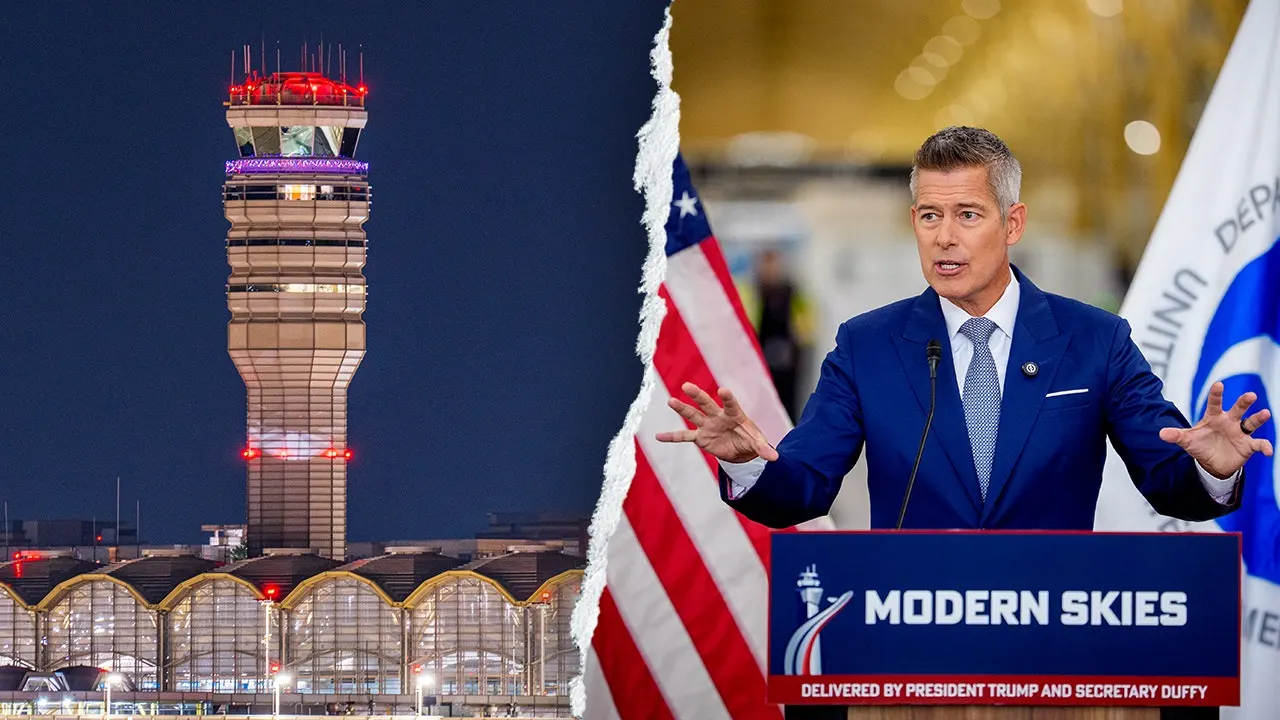
Beneath the soaring metal birds and the contrails that paint the arcing blue, there exists an invisible army rarely seen by the traveling public—yet trusted with the most precious cargo imaginable: our lives. These are the air traffic controllers, the silent guardians who orchestrate the chaotic symphony of the skies, guiding planes into crowded hubs and calm country strips with the precision of a conductor and the calm of a seasoned therapist. For years, this invisible army has been stretched perilously thin, battling fatigue, mandatory overtime, and the exhausting weight of knowing that a single misstep could be catastrophic. But a new dawn is breaking over the control towers of America. In a groundbreaking announcement that signals a tectonic shift in the nation’s aviation infrastructure, the Federal Aviation Administration has shattered its own historic record for controller hiring, bringing a staggering 2,235 new trainees into the fold this fiscal year. This is not just statistics, not merely a number that beats a bureaucratic goal—it is a testament to a renewed human commitment to safety, a collective breath of relief exhaled by a beleaguered workforce that has been running on fumes for years. Transportation Secretary Sean Duffy captured the pulse of this achievement with palpable enthusiasm, framing it as a direct result of aggressive policy changes and a fresh appeal to a generation weaned on technology rather than traditional textbooks. “We’re recruiting, hiring, and training more air traffic controllers than ever before—and the numbers show it,” Duffy declared. “Thanks to President Trump, we’ve shaved months off the hiring pipeline, dramatically expanded our collegiate training programs, and inspired thousands of young gamers to pursue this exciting career.” The reference to “gamers” is not a flippant quip; it is a strategic recognition that the frantic multitasking, spatial awareness, and rapid decision-making honed on a keyboard are directly translatable to the pressure cooker of a radar scope. This milestone, however, is not the finish line—it is the starting gun in a long and arduous race to finally reverse decades of systematic neglect and chronic understaffing that has left the system teetering on the brink.
Paragraph 2: A Decade of Scarcity Melts into a New Dawn
To truly appreciate the magnitude of this historic achievement, one must understand the grim shadow that has loomed over air traffic control for too long. The system was not merely understaffed; it was dangerously hollowed out, a silent crisis accumulating like pressure in a boiler. Just last December, FAA Administrator Bryan Bedford delivered a stark, almost brutal testimony to Congress, shattering any pretense of stability with a chilling confession. “We’ll never catch up,” he admitted, describing a system that was “designed to be chronically understaffed.” That admission was a raw, honest indictment of a bureaucratic machine that had been bleeding experienced controllers through retirement while failing to replenish the ranks with enough fresh blood to keep pace. The consequences were human, felt in the marked fatigue of controllers pulling six-day weeks, in the high-pressure environment where mandatory overtime became a dreaded norm, and in the dwindling morale of a workforce tasked with volumes of traffic that seemed to grow exponentially every year. Yet, the narrative has now flipped. The FAA finished its fiscal year with an incredible 35 trainees above its target of 2,200, and more importantly, it now boasts its highest level of fully certified professional controllers in a decade—11,027 as of September 30, a significant leap from the 10,694 recorded at the end of fiscal 2025. This net increase of 333 certified professionals represents real flesh-and-blood people who have passed the grueling gauntlet of training, graduated from the academy, and earned the coveted “CPC” certification. However, optimism must be tempered with realism. The agency’s internal workforce plan identifies a target of 12,563 certified professional controllers to safely meet forecast demand. That means, despite this glorious surge, the FAA still stands 1,536 bodies short of its goal—a gap that represents more than just empty chairs, but years of accumulated backlog in training. The record-breaking 2,235 hires, coupled with the previous year’s strong showing of 2,028 (the highest since 2008), are the first heavy rainfalls in a prolonged drought, but the reservoir remains worryingly low.
Paragraph 3: The Human Alchemy of Training and Retention
Behind every record-breaking hire is a personal story of ambition, fear, and steely determination. Becoming an air traffic controller is not a simple career choice; it is a crucible. For a new hire, the journey to full certification is an odyssey that can take more than two years, depending on the complexity of the assigned facility. It is a path filled with late-night study sessions, simulations that replicate the chaos of a congested airspace, and the humbling realization that a moment of hesitation can be the difference between safety and catastrophe. This year, the FAA has reinvented how it navigates this treacherous pipeline, making it more efficient and accessible. The expansion of the Enhanced Air Traffic Collegiate Training Initiative is a masterstroke, allowing qualified graduates of partnering universities to bypass the lengthy FAA Academy altogether and report directly to their facilities for on-the-job training. This effectively compresses the timeline, turning students into active participants in the national safety net faster than ever before. Secretary Duffy’s nod to “young gamers” taps into a fascination that might seem trivial to outsiders but is deeply relevant to controllers. The video game console has inadvertently become a training ground for the neural pathways required in the tower—the ability to track multiple moving objects, to predict trajectories, and to execute split-second decisions while managing an elevated heart rate. Furthermore, the administration has shrewdly recognized that it cannot only feed the pipeline; it must also keep the veterans from walking out the door. In a world where experience is irreplaceable, nearly 400 retirement-eligible controllers were convinced to stay through a new, enticing bonus structure. This dual-pronged approach—accelerating the novices and retaining the sages—creates a vital synergy. The veteran controllers act as mentors, passing down the intuitive wisdom that cannot be taught in a classroom: the subtle, unspoken rhythm of handing off an aircraft, the instinctive read of a pilot’s voice, and the profound steadiness that comes from having safely guided a thousand thunderstorms.
Paragraph 4: Technology as a Liberator, Not a Replacement
The human element remains paramount, but the machinery supporting these guardians is undergoing a revolutionary overhaul. The Trump administration has backed this hiring surge with a monumental infusion of $12.5 billion aimed at modernizing the nation’s air traffic control infrastructure—a staggering investment that promises to replace aging wargame-era technology with sleek, digital systems. This is not just about upgrading wires and screens; it is about fundamentally altering the cognitive load on the human brain. The new telecommunications infrastructure, upgraded radios, and advanced radars are designed to eliminate the static and interference that plague old systems, providing controllers with crystal-clear data streams. Perhaps the most impactful change is the introduction of electronic flight strips. For generations, controllers have wrestled with strips of paper, physically moving them across a scope to track flights—a tedious, error-prone method that consumed critical mental bandwidth. The shift to digital strips is profoundly liberating, freeing the controller to spend less time on transcription and more time on the actual, vital act of separation and decision-making. Furthermore, the FAA is aggressively expanding simulator-based training, allowing trainees to practice emergency scenarios—a bird strike, a runway incursion, a sudden microburst—in a safe, immersive environment before they ever face a real one. The agency is even exploring artificial intelligence and machine learning tools to predict traffic demand surges and recommend optimal spacing, acting as a cognitive co-pilot for the human mind. Yet, the intent is not to replace the controller with an algorithm. The goal is to reduce the friction, to allow the human intellect to focus on the subtle judgment calls and compassion that technology lacks. A veteran controller might look at a new AI dashboard with wary eyes, but deep down, they recognize it as a tool that could alleviate the crushing monotony of data entry and allow them to breathe, to think, and to see the bigger picture of the sky they steward.
Paragraph 5: The Race Against the Clock and the Soaring Demand
While the hiring numbers are a cause for celebration, the context surrounding them is a reminder of the relentless pressure that defines modern aviation. The FAA does not operate in a vacuum; it operates alongside an industry where the demand for air travel has been climbing to dizzying heights. Each new passenger who boards a jet, each new route a commercial carrier adds, places an implicit weight upon the shoulders of these 11,000-plus certified controllers. The net increase of 333 certified controllers this year is a solid step, but the 1,536-controller gap to the target highlights the sheer magnitude of the race against time. This is a race against the demographic clock—a generation of controllers hired in the 1980s and 1990s is reaching retirement age, and while bonuses are stalling their departure, it cannot do so forever. It is also a race against the training pipeline itself. Even with the accelerated collegiate pathway and the abridged hiring process which has already shaved more than five months off the time to bring a recruit on board, the FAA cannot conjure certified professionals overnight. Each of those 333 newly certified controllers had to spend months or years under the tutelage of the veterans, absorbing the esoteric rules of the airspace. However, the proactive streamlining is having a visceral, human impact on the applicants themselves. Consider the perspective of a hopeful young graduate who applied under the old system: they faced a bureaucratic maze, waiting patiently for months on end, their lives in limbo, haunted by uncertainty. Now, with the reduced timeline, that same applicant receives a prompt response, is processed efficiently, and quickly finds themselves on the path to a career that offers tremendous responsibility and profound job security. This efficiency is a lifeline of hope for a generation that often feels trapped by its own ambitions. It is a clear signal that the federal government is listening, adapting, and actively removing the barricades between a person and their destiny.
Paragraph 6: The Torch Is Passed, and the Journey Continues
As the fiscal year closes, the FAA stands at a pivot point, armed with a record-breaking cohort of trainees and a renewed sense of purpose. The agency is already casting its eyes toward the future horizons, targeting another 2,300 controller trainees in fiscal year 2027 and an even more ambitious 2,400 in fiscal year 2028. This is not a one-off victory lap; it is a sustained, multi-year offensive to entrench a robust workforce capable of handling the skies for the next generation. Yet, Secretary Duffy’s poignant closing remarks—”This is an important milestone, but not the finish line”—serve as a powerful grounding reminder that aviation safety is a continuous, adaptive endeavor. The 1,536-controller shortfall looms like a specter, whispering that the work is far from complete. But for the thousands of new trainees who walked into facilities this year, carrying their badges and their nerves, the atmosphere is electric with possibility. Picture them: a former video game enthusiast, blinking in the bright light of a radar room, seeing the blips moving across the scope—not as pixels, but as actual lives, actual engines, actual families. They feel the weight of the headphones settle on their ears, and for a fleeting moment, they might feel the burden of responsibility. But then they look around, see the calm, weathered faces of the veterans who chose to stay, and they feel a sense of belonging. They have joined a brotherhood and sisterhood that spans decades, a lineage of men and women who have dedicated themselves to the quiet, unglamorous task of bringing people home safely. The record is theirs, the history is written, but the story is just beginning. The skies are open, the runways are busy, and thanks to this monumental human effort to rebuild the guard, the promise of safe passage remains steadfast. It is a story of hope, of grit, and of a government finally listening to its exhausted watchmen and handing them a fresh battalion of eager recruits. The noise of the jets will continue, but now, there are more ears to hear it, more minds to understand it, and more hearts to shoulder the burden—and that is the most human victory of all.