





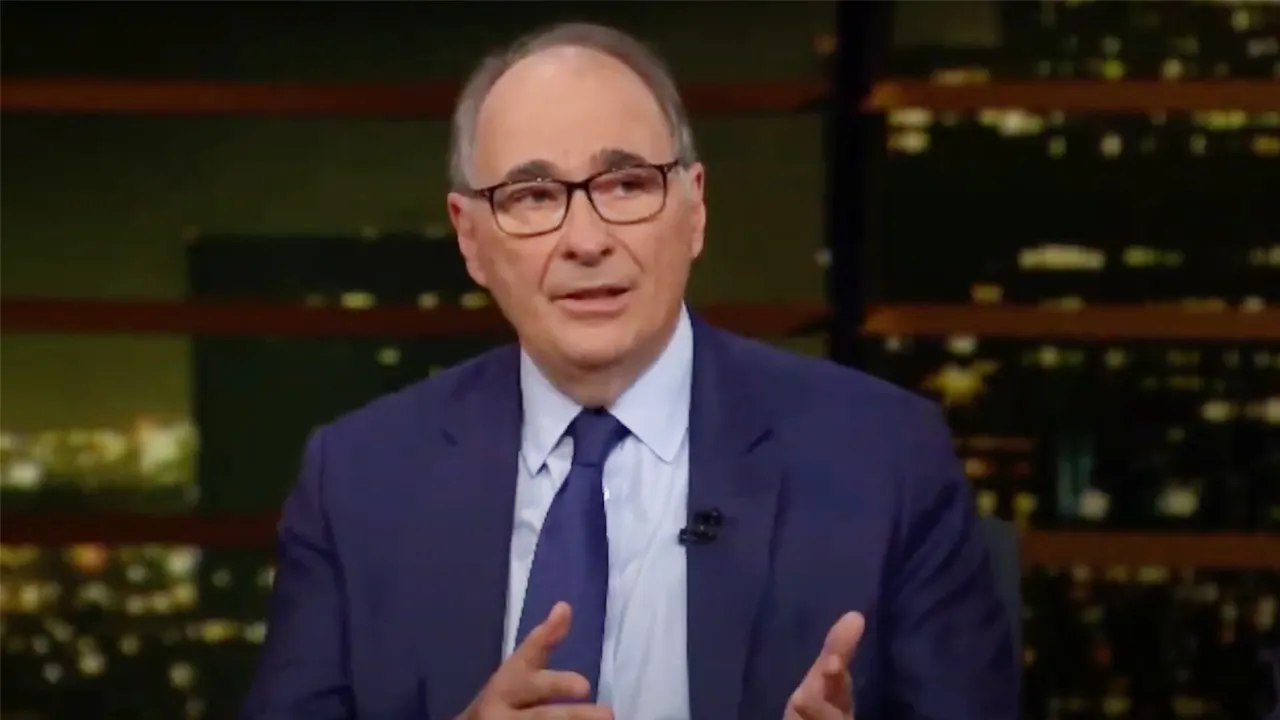
On a blistering summer day in Chicago, a city gripped by a punishing heatwave, David Axelrod—the prominent Democratic strategist who famously engineered Barack Obama’s historic climb to the presidency—found himself rawly exposed to the searing realities of urban neglect. Walking past the grand, imposing stone facade of the Art Institute of Chicago, Axelrod’s eyes fell upon a sight that has unfortunately become commonplace in America’s metropolitan areas: an elderly, seemingly homeless man collapsed unconscious on the burning steps. Distressed by the immediate danger the man faced under the baking noon sun, Axelrod quickly dialed 911, expecting a swift and compassionate emergency response. Instead, he was met with a chilling display of bureaucratic indifference. According to Axelrod, when he told the dispatcher that the unresponsive man had not explicitly asked for assistance, the operator flatly informed him, “Well, I’m not going to send anyone.” This abrupt rejection left a vulnerable human being abandoned on the scorching concrete, prompting a shocked Axelrod to publicly question whether local authorities had simply given up, voicing his profound fear that society is collectively becoming complicit in a form of quiet, “unintended suicide.”
This troubling encounter, which Axelrod shared on social media, exposed a deep and painful modern-day paradox regarding how we treat our most vulnerable citizens behind the protective screen of municipal protocols. To understand the full tragedy of the situation, one must look at the quiet struggle that preceded the 911 call. Axelrod later detailed that a museum security guard had tried to intervene earlier, waking the slumped man three times and begging him to move into the shade, only to be met each time with a flat refusal from the weary senior. This detail highlights a heart-wrenching gridlock of urban life: a vulnerable person, likely exhausted, dehydrated, and perhaps suffering from mental health issues or cognitive decline, exercising a tragic agency to refuse help, while the systems designed to protect him use that refusal as an administrative escape hatch to justify doing absolutely nothing. By prioritizing rigid checklist procedures over basic human empathy, the emergency response framework effectively transformed a citizen’s quiet cry for help—or his inability to ask for it—into a death sentence of neglect. Axelrod’s public outrage struck a deep chord with everyday citizens who increasingly feel that the basic social contract of our cities has been quietly dismantled, leaving a landscape where a person can literally pass out on a public monument in a deadly heatwave while emergency dispatchers wash their hands of any responsibility.
However, the moment Axelrod posted his critique of Chicago’s emergency response online, his humanitarian plea was instantly swept into the volatile, hyper-polarized vortex of American culture-war politics. Rather than finding universal agreement on the need for better emergency services, Axelrod was met with a wave of swift, severe backlash from conservative commentators and political strategists who eagerly pointed out the deep irony of his complaints. Figures on the political right seized on the incident as a direct consequence of the progressive urban policies Axelrod had spent his entire career promoting and defending. Abigail Jackson, a White House deputy press secretary, remarked on social media platform X that Axelrod was finally coming “face to face” with the real-world outcomes of Democratic governance, noting with satisfaction that he did not seem to like what he saw. Similarly, Erielle Azerrad, deputy chief counsel to Texas Republican Senator Ted Cruz, compared the situation to the pervasive homelessness and administrative paralysis seen in San Francisco’s Mission District, suggesting that Axelrod was only now waking up to the destructive nature of these policies. Columnists and strategists like Miranda Devine and Steve Guest joined the digital pile-on, bluntly asking if Axelrod owned a mirror, framing the incident not merely as a localized municipal failure, but as a direct, structural byproduct of a political ideology that has spent decades in control of major American cities.
This public controversy quickly deepened a growing civil war within the Democratic Party itself, exposing a massive rift between those demanding systemic overhaul and those desperate to defend their local administrations. The incident caught the attention of Susana Mendoza, a prominent candidate for mayor of Chicago, who broke ranks to fiercely condemn both the 911 dispatcher’s dismissive response and the current city administration under Mayor Brandon Johnson. Mendoza openly declared the city’s hands-off response under these conditions to be entirely unacceptable, arguing passionately that during extreme weather emergencies—whether a freezing winter blizzard or a suffocating summer heatwave—the local government has a moral obligation to mobilize and administer lifesaving care, even when a vulnerable person initially refuses help. She went on to accuse Mayor Johnson’s administration of outright abandoning the very people they had promised to protect, stating that despite all the progressive campaign rhetoric focusing on empathy and community investment, the actual administrative reality on the streets was a tragic desert of real, tangible care. Mendoza’s sharp public criticism highlighted a growing, painful frustration among practical progressives who are beginning to realize that high-minded ideological statements and symbolic policies are utterly meaningless if a city cannot perform the basic duty of keeping a senior citizen from baking to death on a public sidewalk.
At the heart of this entire tragedy lies a glaring, multi-million-dollar disconnect between grand, theoretical government policies and the gritty, practical reality of everyday street operations. Earlier this year, Chicago’s mayor, Brandon Johnson, proudly launched an ambitious, much-publicized five-year initiative specifically designed to address homelessness by making it “rare, brief and nonrecurring.” This heavily promoted plan focuses on seven distinct core strategies—including emergency shelter, permanent housing transitions, physical and mental healthcare, job training, and civic integration—and partners directly with a massive, $1.2 billion municipal housing initiative. Yet, despite these soaring, paper-bound policy goals and the promise of eye-watering budgets, the actual reality of Axelrod’s encounter proved that these grand administrative schemes often break down entirely at the ground level. The expensive, highly structured city plan apparently lacked the simple operational agility to send a single ambulance or social worker to check on an unconscious senior citizen during an active weather emergency. This disconnect perfectly illustrates the frustrating bureaucratic maze of modern municipal governance, where local leaders can confidently announce billion-dollar long-term investments, yet still completely fail to provide basic, immediate, common-sense human services to a person dying of heatstroke right outside a world-famous museum.
In the end, the immediate drama surrounding the steps of the Art Institute of Chicago found a quiet resolution, as the museum later confirmed that the elderly man eventually regained consciousness and moved away of his own accord, but the deeper moral questions raised by his abandonment remain entirely unanswered. The incident serves as a stark, haunting reminder of how easily we can hide behind administrative definitions of “consent” and regional “policy” to excuse our own lack of basic human decency. When our emergency services require an unconscious, suffering person to explicitly ask for help before we extend a saving hand, we have allowed our legalistic structures to completely destroy our natural moral instincts as human beings. It should not require a high-profile political figure like David Axelrod to spark a massive public debate about whether a human life is worth saving from a heat wave, nor should the suffering of a vulnerable citizen be reduced merely to a political tool for partisan mudslinging. As American cities continue to navigate the complex social crises of homelessness, drug addiction, and mental illness, this incident stands as a profound warning: if we cannot bridge the immense gap between our political rhetoric and basic, hands-on empathy, we risk becoming a society that is highly organized, incredibly wealthy, and politically outspoken, yet completely hollowed out of real human compassion.