





The Michigan Senate Race: A Battle for the Democratic Soul
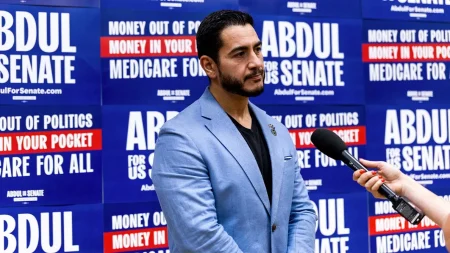
The political landscape in Michigan has become a crucible of ideological conflict, where the future of the Democratic Party itself hangs in the balance. At the center of this storm stands Abdul El-Sayed, a physician and epidemiologist whose recent primary victory has sent shockwaves through the political establishment. El-Sayed, who would make history as the first Muslim senator if elected, spent the past weekend attempting to bridge the deep divides that have emerged between the party’s progressive wing and its more traditional, establishment-oriented members. His efforts to mend fences with Jewish Democrats in the state came after a series of controversial statements and associations that have placed him at the epicenter of a national debate about antisemitism, foreign policy, and the very soul of the Democratic Party.
The weekend’s events unfolded against a backdrop of heightened tensions following a disturbing incident at a suburban Detroit synagogue, where federal investigators say a gunman, radicalized by Hezbollah ideology, attempted to carry out a mass attack on Jewish worshippers. The alleged attacker, a Lebanese-born individual who had recently lost relatives in an Israeli airstrike, was reportedly seeking to kill as many Jewish people as possible. El-Sayed’s initial response to this tragedy—himself reflecting on how “hurt people, hurt people”—ignited a firestorm of criticism from within his own party, with critics arguing that his words appeared to contextualize or even excuse the attack rather than unequivocally condemn it.
The controversy represents just one flashpoint in a broader ideological battle that has come to define the Democratic primary season. El-Sayed’s narrow victory over the more moderate Representative Haley Stevens was celebrated by progressives as a triumph for the party’s leftward shift, while moderates viewed it with alarm, seeing it as evidence that the party is being pulled increasingly toward positions that could alienate mainstream voters. The divide has become so pronounced that Michigan’s Secretary of State, Dana Nessel, another prominent Democrat, chose to skip the weekend’s nominating convention entirely, citing concerns about rising antisemitism within her own party.
The Weight of Words and the Politics of Apology
In the aftermath of the synagogue attack, El-Sayed’s attempt to explain his controversial statement has done little to quell the criticism. Speaking at the state party’s nominating convention in Lansing, he offered what some observers have characterized as a qualified apology, expressing regret that his words “might have been misconstrued to be justifying something that I did not intend to justify.” While he condemned the attack “outright” and offered his sincere apologies to anyone who felt hurt by his comments, his explanation that he was trying to provide context for the attack rang hollow to many in the Jewish community who felt that the moment demanded unambiguous condemnation, not analysis.
The racial and religious undertones of this controversy cannot be overstated, as El-Sayed finds himself navigating an extraordinarily delicate political landscape. As a Muslim candidate who would make history if elected, he has positioned himself as a champion of Palestinian rights while simultaneously attempting to reassure Jewish voters of his commitment to their safety and security. He has described Israel’s military operations in Gaza as “genocide” and has declined to unequivocally affirm Israel’s right to exist, positions that have endeared him to progressives but alarmed Jewish community members who see these stances as fundamentally threatening.
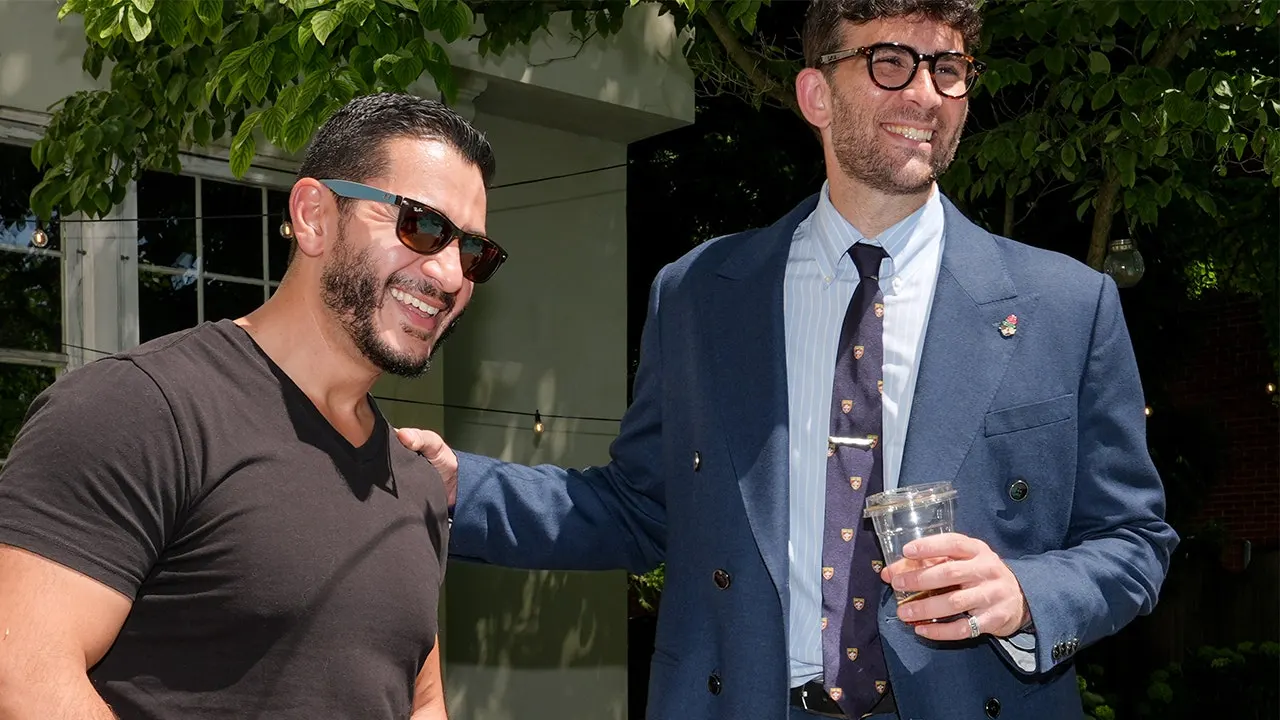
His weekend meeting with the Michigan Democratic Party’s Jewish Caucus represented an attempt at reconciliation, with attendees describing “real conversations” taking place behind closed doors. El-Sayed subsequently offered what some viewed as a carefully worded apology, suggesting that his earlier comments “might have been misconstrued” and expressing remorse to “anybody who feels like my comments may have been hurtful.” Yet even as he sought to make amends, he stopped short of fully repudiating the support of one of his most prominent backers, the controversial streamer Hasan Piker, whose history of incendiary comments has further complicated El-Sayed’s efforts to project a unifying message.
The Hasan Piker Controversy
The shadow of Hasan Piker hangs heavily over the El-Sayed campaign, presenting a persistent challenge that the candidate has struggled to address satisfactorily. Piker, a left-wing online personality with millions of followers, has been a vocal supporter of El-Sayed’s campaign, appearing at campaign events and using his substantial platform to advocate for the candidate. However, Piker’s history of controversial statements, including comments that some have interpreted as threatening toward American Jews, has become a significant liability for the campaign. When pressed about Piker’s recent remarks concerning Jewish state Senator Jeremy Moss, El-Sayed attempted to distance himself, insisting that “nobody speaks for this campaign besides me and my campaign spokespeople.” Yet when asked directly to repudiate Piker’s comments, El-Sayed deflected, dismissing the streaming personality as “a streamer from California” who is irrelevant to the concerns of Michigan voters.
The strained relationship between El-Sayed’s progressive platform and the concerns of Jewish voters in Michigan reflects a broader national conversation about the Democratic Party’s stance on Israel and the treatment of Jewish Americans within progressive spaces. El-Sayed has been a vocal critic of Israel’s military operations in Gaza, describing them as “genocide,” and has argued against unconditional military aid to the Israeli government. While he acknowledges that “hurt people, hurt people” as an explanation for his earlier controversial remarks, he simultaneously maintains that his commitment to Palestinian rights does not diminish his support for the safety and dignity of Jewish communities. This balancing act has proven difficult, as he faces skepticism from those who see his positions as fundamentally hostile to Jewish interests and from those who believe his attempts at outreach are merely tactical rather than genuine.
The political implications of this controversy extend far beyond Michigan’s borders, touching on fundamental questions about the Democratic Party’s identity and future direction. Republican opponents have seized upon El-Sayed’s statements and associations as evidence of a party increasingly captive to extreme elements. Mike Rogers, the Republican nominee, has characterized El-Sayed’s apology as a “sham,” pointing to his continued refusal to explicitly condemn the rhetoric of supporters like Piker, who has made numerous inflammatory statements including suggesting that capitalists should be murdered and that America “deserved 9/11.” The Republican Jewish Coalition’s annual gathering in Las Vegas became a platform for attacking the Democratic Party’s perceived shift away from supporting Israel, with Republican National Committee Chair Joe Gruters declaring that antisemitism “has found a home in the Democratic Party.”
The controversy surrounding El-Sayed’s campaign has forced a reckoning within Democratic politics that extends far beyond Michigan’s borders. Progressive victories in primaries, including El-Sayed’s win and similar outcomes in other states, have emboldened the party’s left flank while alarming its centrist establishment. Veteran Democratic strategist Julian Epstein has been particularly outspoken, criticizing party leadership for hiding behind what he calls the “Big Tent” fiction while radical members of the Democratic Socialists of America achieve significant victories in primaries. Epstein’s characterization of the situation as a moment when “moderates should unite and shed the Big Tent delusion” underscores the depth of the ideological chasm that has opened within the party.
The Republican response to these divisions has been swift and pointed, with GOP leaders using the controversy to paint the entire Democratic Party as hostile to Jewish Americans. Former Representative Mike Rogers, El-Sayed’s Republican opponent in the Senate race, has seized upon the synagogue attack comments and El-Sayed’s association with Piker to portray the Democratic nominee as dangerously out of step with mainstream values. Rogers’ campaign highlighted a letter from Jewish leaders in Michigan who expressed feeling “threatened and alienated” by El-Sayed’s politics, while others claimed that the Democratic candidate’s “sham apology” did little to address the underlying concerns about his fitness for office. The political temperature continues to rise, with Republican National Committee Chair Joe Gruters using a gathering of Jewish Republicans to argue that the hatred that motivated the October 7th attacks has “found a home in the Democratic Party.”
Yet within this heated political environment, there are signs of potential reconciliation. The fact that Jewish Democratic leaders in Michigan agreed to meet with El-Sayed at all suggests a willingness to engage in dialogue, even if the path forward remains uncertain. The campaign’s decision to hire a Jewish liaison and El-Sayed’s expressed commitment to “the safety and dignity of Jewish kids like I believe in the safety and dignity of my own kids” represent small but significant steps toward healing. Ultimately, this controversy transcends any single campaign and speaks to fundamental questions about how political movements balance competing values, how they address complex international conflicts, and how they maintain coalitions that include diverse perspectives on deeply contentious issues. As the midterm elections approach etched in the backdrop of the November vote, the resolution of these tensions within the Democratic Party may prove as consequential as the outcome of any individual race in determining the future direction of American politics.