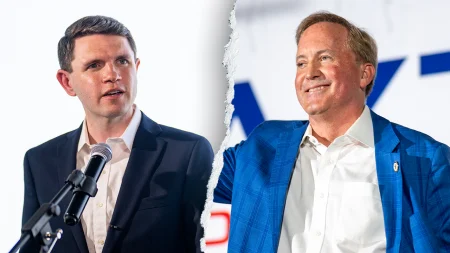



In the sun-scorched expanses of Arizona, where every drop of water carries the weight of survival, a fierce political storm has erupted over an unexpected battleground: the lush, manicured fairways of the state’s beloved golf courses. As the midterm elections loomed just days away, a casual remark from Arizona’s Democratic Attorney General Kris Mayes about the state having “too many golf courses” and “way, too much grass” ignited a firestorm that transcended the usual policy debates. The comment, made during a wide-ranging interview about water conservation, quickly became the flashpoint in a high-stakes showdown between Mayes and Republican Senate President Warren Petersen, who is vying to unseat her. With the future of Arizona’s economy, its water supply, and its political leadership hanging in the balance, the controversy has laid bare deep divisions over how the state should navigate its arid reality—and who gets to decide the fate of its most iconic industries. What began as a nuanced discussion about sustainability spiraled into a statewide clash that now serves as a proxy for the broader battle over government intervention, economic liberty, and the very identity of the Grand Canyon State.
The spark that ignited this fire came during an interview Mayes gave to Politico, where she delved into the contentious issue of data centers proliferating across Arizona and their voracious appetite for water. In the midst of that conversation, she warned that the state was hurtling toward a potential Supreme Court showdown over Colorado River water supplies, a looming crisis that has long haunted the arid Southwest. It was then that Mayes, a former journalist and public utilities regulator turned top prosecutor, pivoted to what she saw as the need for more aggressive conservation measures. “We could do a hell of a lot more when it comes to conservation,” she said, specifically pointing to tax incentives for rainwater catchment and the removal of thirsty lawns. Then came the line that would echo across the political landscape: “We have way, way too much grass in Arizona. We probably, frankly—and I’m sure the golf industry is not going to like this when I say this—we probably have too many golf courses in Arizona right now.” In that moment, Mayes may have intended to illustrate the scale of the water challenge, but she inadvertently touched a nerve that runs deep in Arizona’s cultural and economic psyche. Golf is not just a pastime in this desert state; it’s a multibillion-dollar engine that powers tourism, hospitality, and local communities, particularly in the Phoenix and Scottsdale areas. The comment, stripped of its context, sounded like a governmental attack on an industry that Arizonans hold dear—and Petersen was quick to seize on it.
The backlash was swift, visceral, and amplified by the digital megaphone of social media. Petersen, a conservative Republican from Maricopa County who has made no secret of his desire to unseat Mayes, fired off a statement that framed the controversy in stark ideological terms. “Kris Mayes thinks Arizona has too many golf courses. I think Arizona has too many radical politicians who believe government should dictate which industries get to thrive,” he told Fox News Digital. His words were just the opening salvo. Across the political spectrum, Republicans and golf enthusiasts alike piled on with biting sarcasm and indignation. Rep. Eli Crane, a Republican congressman from Arizona, quipped, “We don’t have a golf course problem in Arizona. We have a dumocrat problem in Arizona,” deliberately misspelling the word to underscore his contempt. Petersen, never one to shy away from a punchline, added his own tweet: “Kris Mayes is promising to get rid of golf courses. I promise to get rid of Kris Mayes.” The online commentary took on a life of its own, with figures from the business world and conservative activism joining the fray. Tom Spengler, CEO of an e-procurement software company, insisted that Arizona “honestly needs more golf courses,” noting that tee times had become nearly impossible to secure and rates had doubled or tripled since the pandemic. Justin Streiff of Turning Point USA, a conservative youth organization, mocked Mayes’ remark about grass, writing, “We have too much grass—said no one ever, other than Kris Mayes.” Even the popular golf satire site PGA Tuor got in on the action, posting a clip of Mayes’ comments with the caption, “How to not get re-elected 101.”
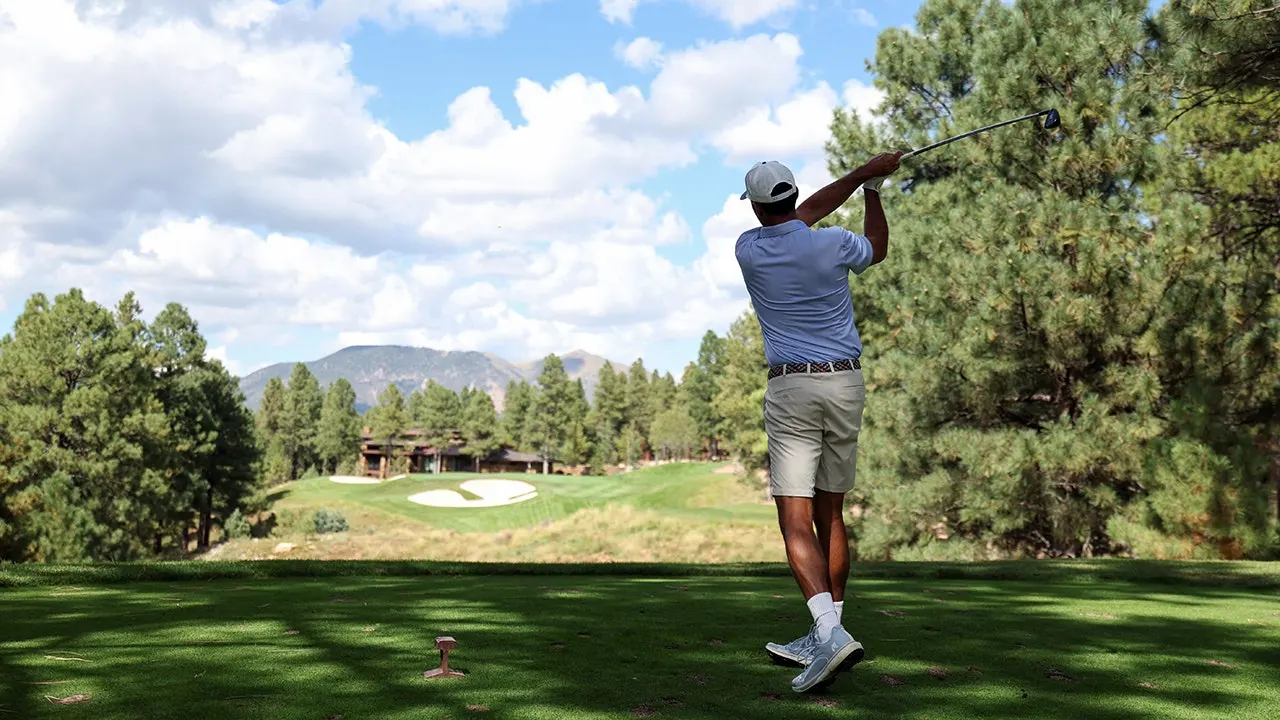
Beneath the humor and the outrage, however, lay a substantive debate backed by hard numbers. Arizona’s business community, never shy about defending its interests, mobilized quickly to counter Mayes’ implication that golf courses were a wasteful drain on the state’s water resources. Courtney Coolidge, vice president of the Arizona Chamber of Commerce, responded with a sobering set of statistics that painted a very different picture. According to her data, the golf industry contributes a staggering $6 billion to the state’s economy each year, supports over 66,000 jobs, generates $2.3 billion in wages, and produces $520 million in state and local tax revenue. Most critically for the water debate, she noted that golf courses collectively account for just 2% or less of the state’s total water usage—a figure that aligns closely with a 2023 study by the Arizona Alliance for Golf. These numbers were echoed by many in the industry who pointed out that modern golf courses have become models of water efficiency, using recycled water and drought-tolerant grasses. The implication was clear: Mayes’ offhand remark had unfairly caricatured an industry that had already adapted to Arizona’s harsh climate. One self-identified putting enthusiast, voicing his frustration on social media, said Mayes had “no idea what the economic impact golf has on our entire state,” and declared that her comment had cost her his vote. As the backlash intensified, it became evident that this was no longer just a debate over water policy; it was a referendum on whether government officials had the right to casually dismiss an industry that millions of Arizonans rely on for their livelihoods and leisure.
In the face of mounting criticism, Mayes attempted to walk back her statement, but her clarification only seemed to deepen the controversy. In a tweet, she tried to reassure the public, writing, “Relax, nobody’s closing golf courses.” She explained that her point was about the need for incentives to help all Arizonans and major industries swap thirsty grass for rainwater catchment, especially if the water situation worsens. She reiterated that her real focus was on fighting the “foreign mega-farms and data centers” that she claimed were draining the state’s water supply. “My point is we need incentives to help all Arizonans and major industries swap thirsty grass and catch rainwater,” she wrote, before directly accusing Petersen of spreading “false claims” for political gain. But the damage had already been done. Critics seized on her tone, calling the “relax” comment “condescending” and dismissive. One X user retorted, “you relax – we all heard you.” Other detractors went further, branding her proposed approach to the golf industry as “communist” and a prime example of overreach by a government that sees itself as the arbiter of which businesses deserve to exist. The irony was not lost on observers that Mayes, a Democrat in a state that has been trending purple, was now being painted as an enemy of a pastime that transcends political affiliation. Even moderate voters who might have agreed with her underlying concern about water conservation found themselves alienated by the offhand nature of her remarks. The episode had become a classic case study in how a single unguarded sentence can reshape a political campaign, turning a nuanced policy discussion into a caricature of government interference.
As the controversy continued to simmer, Petersen and other Republicans seized on the opportunity to broaden the attack, using Mayes’ comment as evidence of a larger pattern of Democratic overreach in a state they once controlled with ease. For decades, Arizona was reliably Republican, but recent years have seen demographic shifts and political realignments that have made the state a fierce battleground. Mayes herself narrowly won the attorney general’s office in 2022, defeating Republican Abraham Hamadeh by a razor-thin margin of just 280 votes, a result that was followed by recounts and litigation. This time, with Petersen as her challenger, the stakes are even higher. The attorney general’s office in Arizona wields significant influence, overseeing everything from consumer protection to water rights litigation, and the outcome could have implications for how the state navigates its most pressing challenges. Petersen, a seasoned legislator and conservative firebrand, has positioned himself as a guardian of Arizona’s economy against what he calls the “radical” policies of the left. The golf controversy fits neatly into that narrative: a chance to paint Mayes as an out-of-touch bureaucrat who sees a beloved industry as a target for regulation. But beyond the campaign tactics, the dispute also underscores a genuine ideological divide over how to address Arizona’s water crisis. While Mayes advocates for incentives and voluntary conservation, many Republicans view any suggestion of restricting industries or coercive measures as an infringement on individual liberty and economic freedom. The question of whether golf courses are a luxury or a necessity in the desert is, at its heart, a question about the role of government in shaping private behavior—and it is a question that Arizonans will answer at the ballot box.
With Election Day just days away, the golf course controversy has become a litmus test for the state’s political mood. Petersen is betting that the outrage will resonate far beyond the fairways, tapping into a broader resentment of government intervention in the economy. His campaign has made the issue a centerpiece, casting Mayes’ remark as a window into her worldview. Meanwhile, Mayes and her allies have tried to reframe the debate, arguing that her comments were taken out of context and that her real focus is on protecting Arizona from the voracious water consumption of out-of-state interests. Yet, in the court of public opinion, the image of an attorney general casually musing about eliminating golf courses is hard to shake. The controversy has rallied Republican voters, energized the business community, and even drawn attention from national media, making it one of the most talked-about moments of the 2024 midterm cycle in Arizona. For the thousands of Arizonans who work in the golf industry, who spend their weekends on the links, or who simply cherish the green oases that punctuate the desert landscape, the remark felt like an attack on their way of life. And for the state’s political observers, it has become a vivid illustration of how a single misstep can upend a campaign. As the polls prepare to open, both candidates are acutely aware that the vote may hinge on more than just policy positions—it may hinge on the question of who truly understands the heart and soul of Arizona. And in that race, the fairways may prove to be just as consequential as the courthouse. Whether Mayes can recover from her own words or Petersen can ride the wave of outrage to victory remains to be seen, but one thing is certain: in Arizona, the battle for water has become inseparable from the battle for political power, and the echoes of a single sentence will be heard long after the votes are counted.