




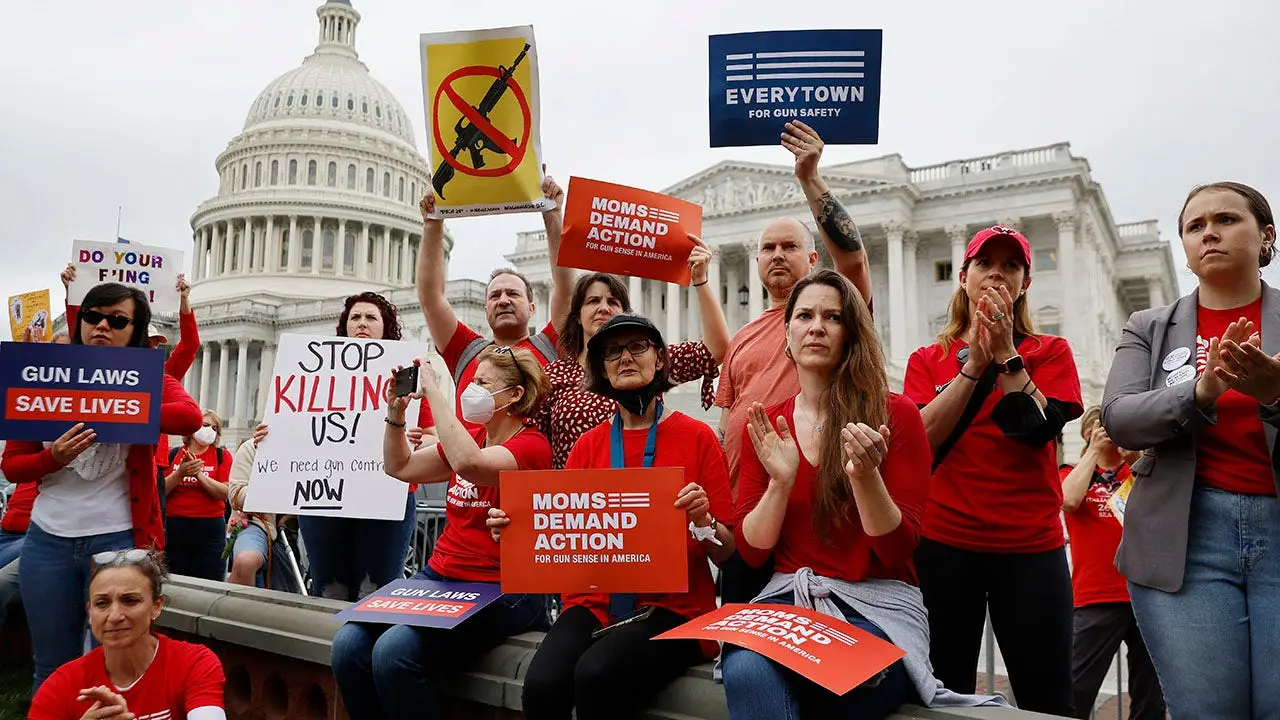
The delicate balance between public safety and the constitutional right to bear arms has once again ignited a high-stakes political storm in Washington, D.C. House Oversight Committee Chairman James Comer, a Republican representing Kentucky, is leading a sharp escalation into how the Biden administration regulates firearms, specifically targeting potential backroom coordination between federal agencies and influential gun control advocates. At the very heart of this intensifying investigation is the Bureau of Alcohol, Tobacco, Firearms and Explosives (ATF)—the federal agency tasked with enforcing gun laws—and Everytown for Gun Safety, a highly influential and billionaire-backed advocacy group founded by former New York City Mayor Michael Bloomberg. Comer’s panel is demanding a comprehensive paper trail of communications, raising serious concerns that a newly established White House office may have actively worked alongside private activists to coordinate “lawfare”—the strategic use of legal actions and lawsuits to bypass legislative hurdles. By pressuring gun manufacturers through targeted municipal lawsuits, critics argue that the administration and its allies are attempting to rewrite Second Amendment boundaries from the courtroom rather than through traditional legislative debate in Congress. This escalating congressional probe highlights a deeply polarized capital where the boundaries of federal oversight are constantly being tested against the relentless pressure of grassroots activism, corporate defense, and the rule of law.
The immediate catalyst for this congressional showdown lies in a highly controversial lawsuit filed in March 2024 by the City of Chicago against Glock Inc., one of the most recognizable and widely used handgun manufacturers in the world. Represented legally by Everytown’s powerful court litigation arm, the city alleges that Glock has knowingly put corporate profits over public safety by refusing to alter its classic pistol design to prevent illegal modifications. According to the lawsuit, the manufacturer’s standard handguns are uniquely susceptible to being modified into illegal, fully automatic machine guns using cheap, readily available tactical modifications known as “auto sears” or “Glock switches.” These small metal or plastic pieces, which are often illegally imported or manufactured using cheap desktop 3D printers, can turn a standard semi-automatic weapon into a military-grade firearm capable of firing dozens of rounds in mere seconds, creating a severe tactical challenge for urban law enforcement officers working on the frontlines. The plaintiffs argue that Glock is fully aware of how easily its weapons are converted by criminals but has actively chosen not to redesign its products to stop the practice, which they claim constitutes a direct violation of municipal safety laws and consumer protection standards. For gun rights advocates and conservative lawmakers, however, this lawsuit represents an unfair attempt to hold a manufacturer legally liable for the illegal, criminal misuse of a legally produced, highly popular consumer product, establishing a dangerous precedent for all manufacturing sectors.
What has transformed a local municipal lawsuit into a major federal investigation, however, is the suspicion of a highly coordinated strategy orchestrated behind closed doors between federal regulators and private activists. Chairman Comer points to a pivotal 2023 meeting between the White House Office of Gun Violence Prevention (WHOGVP) and representatives from Glock, during which administration officials reportedly pressured the gunmaker to implement design modifications. Just three months later, Chicago launched its lawsuit, and almost immediately, Everytown’s President, John Feinblatt, took to social media to publicly criticize Glock, referencing specific operational details from that private White House meeting. For congressional investigators, this timeline suggests a highly suspect flow of sensitive information, implying that executive branch officials may have leaked private corporate negotiations to a partisan activist group to help draft their legal complaint. Comer argues that Feinblatt’s apparent “insider information” is not a mere coincidence but rather strong circumstantial evidence that federal resources were weaponized to fuel a private organization’s litigation strategy, creating a dangerous precedent where federal agencies work hand-in-hand with private entities to dismantle industries they cannot regulate through traditional legislative means, essentially weaponizing the judicial system against the state’s political opponents.
This suspicion of collusion is further fueled by the deeply interconnected, almost cozy relationships that exist between the Biden White House and active gun control organizations, pointing to what critics describe as an uncomfortably fast revolving door. A prominent example of this crossover is Rob Wilcox, a top aide in the administration’s gun violence prevention office who previously spent eight years as a key strategist and executive for Everytown for Gun Safety. This direct professional crossover raises natural questions about conflict of interest, as former political lobbyists transition directly into federal positions where they possess the authority to regulate their former employers’ corporate adversaries. To many critics, this environment blurs the line between non-partisan public service and ideological activism, a perception further reinforced by President Biden’s personal appearances at Everytown events, such as his address at their “Gun Sense University” conference in mid-2024. During this event, the President loudly reiterated his support for sweeping federal bans on popular semi-automatic rifles, signaling a shared ideological mission that critics argue has compromised the executive branch’s duty to act as an impartial enforcer of the law rather than an active participant in partisan legal crusades aimed at shutting down the firearms industry.
In response to these perceived ethical breaches, House Republicans are stepping up their constitutional duty of congressional oversight, though they have met significant administrative resistance at every turn. Prior attempts to secure documentation through subpoenas from the National Archives, the ATF, and Everytown itself have yielded little to no cooperation, leaving investigators frustrated by what they describe as systematic stonewalling and a blatant disregard for transparency requirements. Chairman Comer has made it clear that this investigation goes beyond a single lawsuit; it is about protecting the integrity of the federal government’s recordkeeping systems and preventing political appointees from using their elevated platforms to leak proprietary data to external political allies. If the investigation reveals that federal staff actively conspired with outside lobbyists to target private enterprises, lawmakers argue it will pave the way for crucial new legislation designed to restrict federal officials from abusing their authority or using public offices to launch politically motivated litigation campaigns against legally operating American businesses, ensuring that federal policy remains subject to public debate rather than backdoor maneuvering.
As the legal dust settles in the courtroom, Chicago’s lawsuit remains active, with a Cook County judge recently greenlighting the case to proceed by rejecting Glock’s initial motion to dismiss, escalating the stakes for both sides of the debate. This unfolding judicial drama, paired with the intensifying pressure from Capitol Hill, underscores a critical juncture in American gun politics, where the battlefield has shifted from congressional chambers directly into courtrooms and executive offices. The outcome of both the Chicago lawsuit and Comer’s congressional inquiry could establish powerful new precedents regarding corporate liability, executive transparency, and the limits of executive branch cooperation with private political actors. For everyday citizens, the debate is no longer just about the mechanics of a firearm or the interpretation of the Second Amendment, but about a much larger, more fundamental question of governance: whether the federal government should remain an objective mediator of the law, or whether it has become a partisan participant, using private relationships to squeeze out industries it finds politically inconvenient, thereby reshaping the American economy and legal structure from within.