




On the chilly, high-stakes eve of a long-awaited congressional recess, the United States Senate became the stage for an extraordinary political drama that defied all expectations, culminating in a crucial, last-minute triumph for President Donald Trump and his administration. For weeks, Washington had been gripped by a grinding struggle over the limits of executive authority, specifically focusing on whether Congress would shackle the White House’s ability to wage war or conduct aggressive military operations against Iran. Just a day prior, it seemed that the critics of executive overreach had secured a defining victory. In a move that sent shockwaves through the Republican caucus, Democratic Senator Tim Kaine of Virginia had successfully navigated a war powers resolution through the upper chamber, utilizing a razor-thin Senate majority—bolstered by a couple of key Republican absences—to deliver a stinging rebuke to the administration’s foreign policy leverage. The resolution was designed to strictly limit the president’s military options at a highly sensitive moment when American and Iranian diplomats were actively engaged in delicate negotiations to secure a comprehensive, long-term peace agreement beyond a precarious sixty-day memorandum of understanding. With senators packing their bags for a two-week winter break, the defeat of the administration’s stance appeared to be a fait accompli, leaving the White House seemingly weakened on the international stage and exposing deep fractures within the Republican Party itself. However, what transpired in the dark, frantic hours before the Senate finally adjourned was not merely a legislative reversal, but a masterclass in high-pressure political realignment that turned a devastating defeat into an unexpected, late-night victory.
The path to this sudden turnaround was paved with raw emotion, bruised egos, and an astonishingly hostile, closed-door confrontation that threatened to blow up the Republican Party’s legislative agenda entirely. During what was supposed to be a standard, strategic meeting to rally support for Trump’s cornerstone voter integrity and citizenship verification legislation—the SAVE America Act—the discussion rapidly deteriorated into an explosive shouting match. Senator Bill Cassidy, a fiercely independent Republican from Louisiana, took direct aim at the president and his foreign policy team, aggressively challenging the administration over what he and several colleagues perceived as a patronizing lack of transparency regarding the ongoing situation with Iran. Lawmakers had grown increasingly weary of being kept in the dark, feeling that the executive branch was demanding blind loyalty while treating the legislative branch as a mere rubber stamp for military brinkmanship. Trump, never one to back down from a direct challenge, pushed back with equal fury, labeling the previous day’s successful war powers vote as a self-inflicted American wound that actively sabotaged national security. In his view, the Senate’s domestic bickering was sending a signal of weakness and division directly to Tehran, effectively stripping American negotiators of their vital leverage at the worst possible time. The sheer intensity of the clash left onlookers stunned, laying bare the deep-seated resentment that many traditional conservative lawmakers harbored toward an administration that frequently bypassed conventional congressional oversight, while also highlighting the immense stakes of a presidency trying to project ultimate strength abroad while managing a highly volatile coalition at home.
Recognizing that an angry Senate could derail his entire foreign policy agenda, Trump and his closest allies launched an immediate, highly targeted diplomatic counter-offensive aimed at pulling the key Republican holdouts back into the fold. The administration mobilized its heaviest hitters, dispatching Vice President JD Vance and Special Envoy Steve Witkoff to conduct emergency briefings and extend immediate invitations to the White House for the very senators who had sparked the rebellion. The charm offensive and strategic arm-twisting worked with remarkable speed, particularly in the case of Senator Cassidy, who publicly expressed his gratitude on social media for the administration’s rapid responsiveness and thoroughness in addressing his acute national security concerns. Even more astonishing was the capitulation of Senator Rand Paul of Kentucky, a politician whose fierce, decades-long commitment to anti-interventionism and constitutional limits on executive war powers had made him a reliable vote for almost every Democratic-led war powers resolution in recent memory. While Paul was quick to assert that his fundamental philosophical beliefs regarding the separation of powers remained entirely unchanged, he conceded that the cessation of active hostilities and a personal, direct appeal from the president had convinced him to alter his tactics. Instead of voting against the administration, Paul chose to cast a vote of “present,” dryly noting that this tactical maneuver was designed specifically to give President Trump the requisite psychological “space and leverage” needed to hammer out a lasting peace deal with a notoriously difficult adversary.
This sudden, dramatic shifting of the legislative winds did not occur without drawing sharp criticism and profound skepticism from across the aisle, where Democrats watched their hard-won victory vanish in a cloud of late-night backroom deals. Senator Chris Murphy of Connecticut, who has long served as one of the Democratic Party’s most vocal and persistent champions of reclaiming congressional war powers, openly lamented the sudden reversal of the Republican skeptics. While Murphy begrudgingly acknowledged that the political climate had shifted rapidly in the hours following the White House briefings, he warned that the current ceasefire with Iran was far more tenuous and unstable than the administration was willing to admit, making the removal of congressional constraints highly dangerous. Furthermore, Murphy flatly rejected the administration’s core narrative that the original war powers resolution had crippled American diplomatic leverage, pointing out that foreign policy dynamics are rarely governed by the procedural drama of the Senate floor. In Murphy’s estimation, the Iranian leadership is highly sophisticated and possesses a keen understanding of American domestic realities; they do not need to analyze a close Senate roll-call vote to recognize that the vast majority of the American public has absolutely no appetite for another open-ended, costly conflict in the Middle East. From the Democratic perspective, the sudden loyalty of the Republican flip-floppers was not a sudden burst of strategic clarity, but rather a disheartening yielding to executive pressure that set a dangerous precedent for the balance of power.
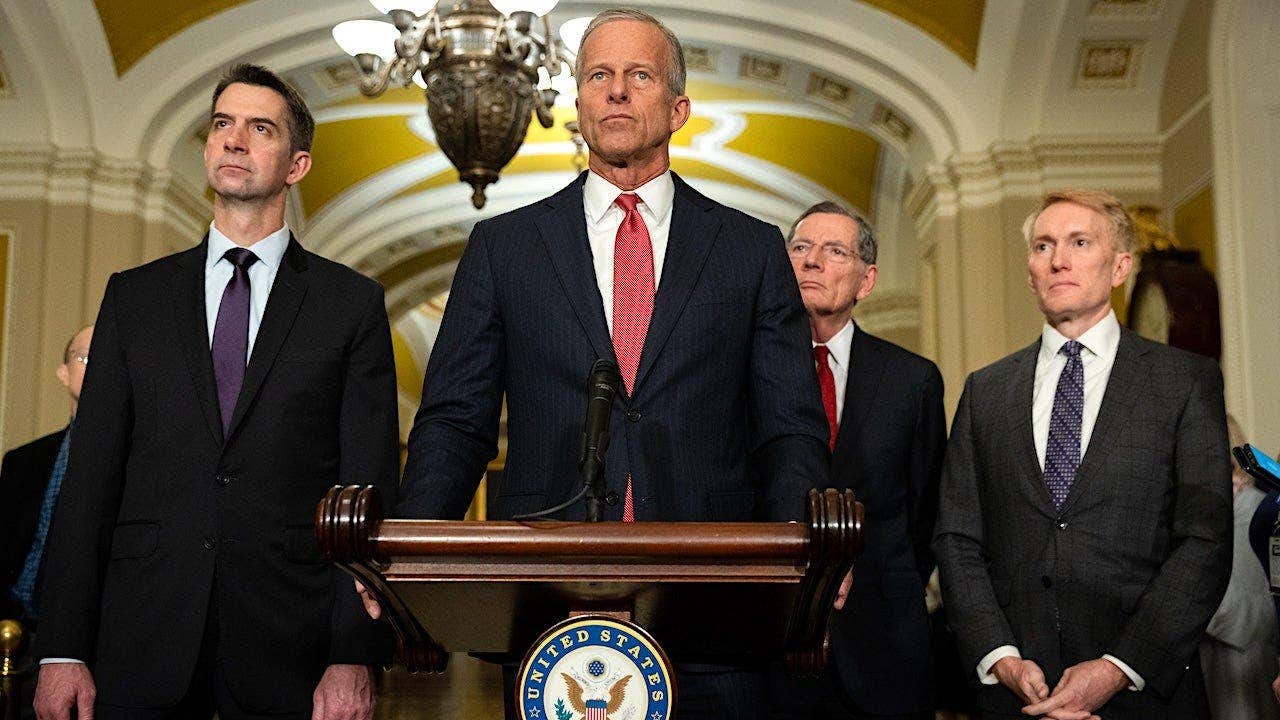
For the newly minted Senate Republican leadership, the dramatic late-night reversal served as a massive, validating victory for their whip operation during an incredibly turbulent period in Washington. Under the watchful eyes of Senate Majority Leader John Thune of South Dakota and Senate Majority Whip John Barrasso of Wyoming, the GOP leadership team had spent weeks navigating a minefield of internal dissent, complicated by Trump’s unpredictable, last-minute policy pronouncements that had previously derailed several key legislative packages, including a high-profile housing bill. The successful coordination to flip Cassidy and Paul represented a crucial trial by fire for Thune, whose relationship with Trump has frequently been the subject of intense media scrutiny, speculation, and online pressure from the populist wing of the party. As the final, surprising vote tally of 50-47 in favor of the administration’s position was locked in, a sense of profound relief swept through the leadership suites. Gathered in Thune’s private office alongside stalwart allies like Senators Lindsey Graham of South Carolina and Bernie Moreno of Ohio, the GOP leaders immediately placed a celebratory phone call to Trump to deliver the good news directly. Trump, ecstatic at the unexpected turn of events, quickly took to social media to celebrate the dramatic shift from a 50-48 loss to a decisive victory, publicly thanking Thune, Graham, and Moreno while declaring that the unified front had officially put the Iranian regime on notice that the United States would speak with one voice.
Ultimately, this explosive chapter of congressional history revealed a great deal about the evolving, deeply complex power dynamics of the modern Republican Party and the nature of presidential influence. While critics and political commentators had spent days suggesting that the fierce shouting match between Trump and Cassidy signaled a deepening, irreparable rift between the populist White House and institutionalist Senate Republicans, incoming Senator Bernie Moreno dismissed such concerns as mere superficial noise. Moreno argued that the intense clash was actually a healthy sign of passionate, highly intelligent leaders hashing out critical national security issues, proving that Trump possesses the unique ability to engage directly with his fiercest critics, address their concerns, and ultimately unite them under a singular banner. By transforming a moment of profound internal dysfunction into a display of legislative solidarity, the Republican caucus managed to send a powerful, unmistakable message to Iran that President Trump commands the solid backing of the United States Congress as he enters the final, critical stages of peace negotiations. It remains to be seen whether this precarious unity will hold once the Senate returns from its recess to face a mountain of pending domestic legislation, but for one brief, dramatic night in Washington, the theater of partisan conflict yielded to a calculated, high-stakes demonstration of raw executive strength on the global stage.