






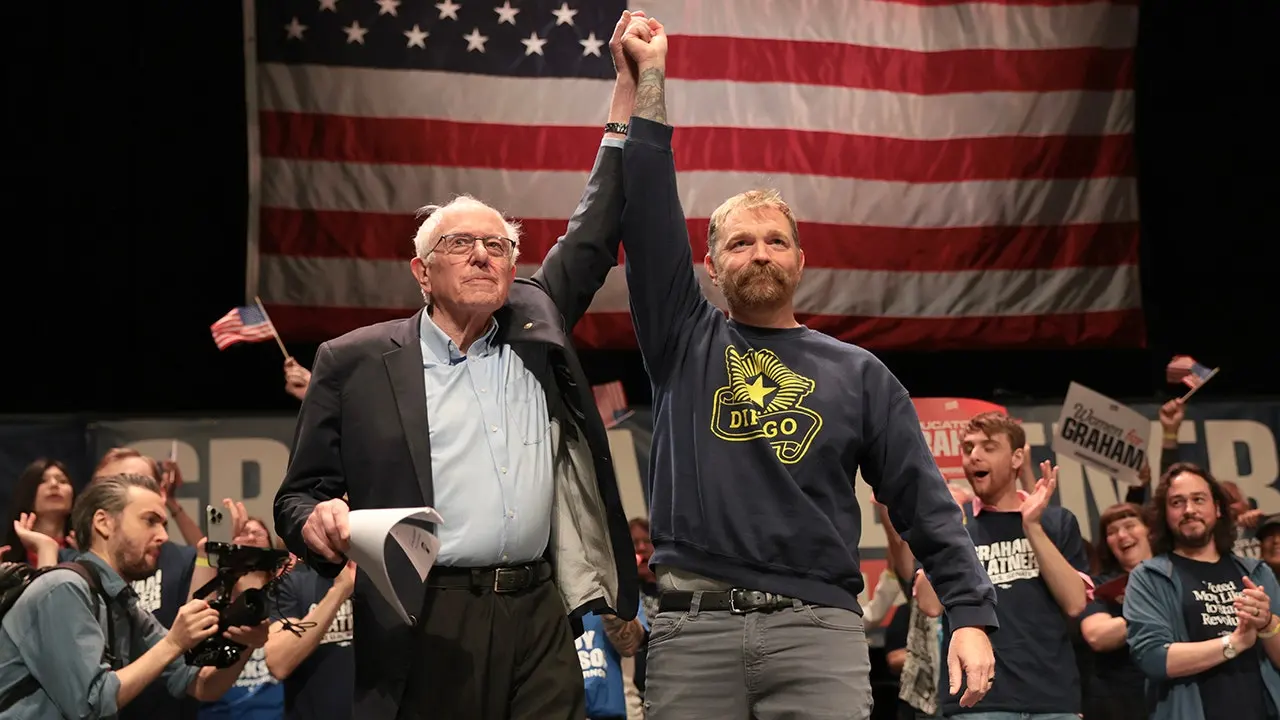
The marble corridors of the United States Capitol have long served as the backdrop for some of the most intense, unscripted human dramas in American politics, where the high-minded rhetoric of the Senate floor collides abruptly with the raw, uncomfortable realities of campaign-trail scandals. Such was the scene on a tense Tuesday afternoon when Senator Bernie Sanders, the independent from Vermont celebrated for his fiery, uncompromising eloquence, found himself in a quiet, glaring standoff with his own public persona. Clad in his signature rumpled suit and waiting anxiously for a Capitol elevator to rescue him from the press, Sanders was confronted by reporters from Fox News Digital. They pressed him on a deeply troubling question: did he believe the harrowing allegations of abuse and misconduct brought forward by multiple women against Graham Platner, the embattled Maine Democratic Senate candidate whom Sanders had passionately championed? The silence that followed was heavy, punctuated only by the repetitive ding of the elevator shaft. As reporters asked if Sanders had anything to say about the accusations—or about the highly controversial, Nazi-linked tattoo that has recently come to light in connection to Platner’s orbit—the senator remained entirely mute. For a political figure whose career is defined by an unwavering willingness to speak truth to power and champion the vulnerable, this stubborn silence in a congressional hallway offered a stark, humanizing glimpse into the agonizing compromises and calculated retreats that define modern partisan survival.
To understand the weight of Sanders’ silence, one must look closely at the storm currently engulfing Graham Platner’s Senate campaign in Maine, which has rapidly devolved from an optimistic progressive crusade into a deeply distressing moral quagmire. Once hailed as a fresh, promising voice capable of challenging long-serving Republican Senator Susan Collins, Platner now finds his political future hanging by a thread under the weight of severe personal and ethical controversies. Multiple women have stepped forward with devastating accounts of abusive behavior, painting a picture of interpersonal toxicity that stands in sharp, painful contrast to the progressive values of empathy and equality Platner championed on the stump. The allegations do not end there; they are compounded by reports of sexually explicit messages, historical social media posts that many have found deeply offensive, and the highly disturbing presence of a Nazi-linked tattoo within his immediate campaign environment, which critics argue he knew about far earlier than he admitted. While Platner has vigorously denied any wrongdoing and sought to portray himself as the victim of a coordinated, politically motivated smear campaign, the vivid nature of the accusations has deeply shaken the electorate. These developments have transformed a crucial Senate race into a painful public reckoning over character, safety, and the boundaries of political accountability.
For Bernie Sanders, the decision to dodge these questions reveals a profound internal friction that many high-profile politicians experience when the ideals they preach clash with the messy realities of electoral math. For decades, Sanders has built an international reputation as a moral compass for the American left, a leader who refuses to bend to political expediency and who has consistently demanded justice for the marginalized and abused. Yet, the reality of political warfare means that Platner’s race in Maine is not just a local contest; it is a critical battleground that could determine the balance of power in the United States Senate. By choosing to ignore the reporters’ queries and stare ahead into the empty space of a Capitol corridor, Sanders humanized the painful, pragmatic calculations that even the most idealistic leaders must make behind closed doors. To condemn Platner outright would be to abandon a candidate he had personally elevated, potentially throwing a vital progressive campaign into absolute chaos on the highly anticipated eve of a crucial primary election. Conversely, to defend him would be to alienate survivors of abuse and undermine the very ethical foundation of his brand. In that awkward, silent wait for the elevator, Sanders embodied the classic political tragedy of a man caught between the absolute standards of moral purity and the dirty, compromised business of winning elections.
This agonizing ethical division is not unique to Sanders; indeed, it has fractured the wider Democratic establishment, exposing deep regional and personal divides on how to handle candidates who become liabilities. On one hand, institutional powerhouses like Senate Minority Leader Chuck Schumer and Senator Elizabeth Warren have quietly maintained their support or withheld decisive condemnation, treating Platner’s candidacy as a chess piece that is simply too valuable to forfeit in the high-stakes game of unseating Susan Collins. On the other hand, some colleagues have refused to participate in the silence, most notably Pennsylvania Senator John Fetterman, who bluntly refused to defend Platner and publicly labeled him as political “baggage” that the party could no longer afford to carry. Fetterman’s raw, characteristically direct assessment highlights the immense anxiety felt by many in the party who worry that sheltering an accused abuser destroys their moral credibility on vital issues of gender-based violence and human rights. This internal schism illustrates the human cost of political pragmatism, showcasing a party torn between the cold, systemic urge to secure a legislative majority at any cost and the deeply human demand to protect victims and maintain basic moral integrity.
At the very heart of this political circus are the human beings whose voices are so often drowned out by the roar of campaigns and the strategic silence of statesmen: the women who had the courage to come forward. For survivors of abuse, the spectacle of a beloved progressive champion like Bernie Sanders avoiding a direct question about their credibility is a uniquely painful betrayal. When national figures refuse to acknowledge allegations of misconduct, they inadvertently signal to victims everywhere that their trauma is secondary to the pursuit of legislative power. The brave individuals who chose to speak out against Platner did not do so to become talking points in a Fox News hallway ambush or a calculated Senate strategy session; they did so in pursuit of basic truth and accountability. To watch their painful, personal experiences reduced to political “baggage” to be managed, or ignored entirely by leaders who otherwise claim to be their champions, is a sobering reminder of how easily human dignity can be discarded in the pursuit of political victory. Their struggle highlights the profound disconnect between the high-minded ethics championed on campaign stages and the isolating, often disappointing experience of those who seek justice within a system designed to protect the powerful.
Ultimately, the resolution of this crisis does not lie in the quiet hallways of Washington, but in the hands of the ordinary citizens of Maine, who went to the polls on Tuesday carrying the heavy, complicated burden of this ethical dilemma. For Maine voters, the choice was never a simple matter of policy platforms or party lines; it was a deeply personal struggle over what they are willing to tolerate in exchange for political change. Progressive voters who desperately want to defeat Susan Collins were forced to ask themselves whether they could cast a ballot for a man accused of such deeply troubling behavior, or if doing so would compromise their own values beyond repair. This is the ultimate human dimension of democracy: the weight of responsibility that falls upon ordinary citizens when their leaders fail to lead with clarity. As Mainers entered the voting booths, they did so knowing that their decision would resonate far beyond their state line, serving as a powerful testament to whether the ideals of human decency, respect, and safety still hold sway in an increasingly cynical, polarized nation.