





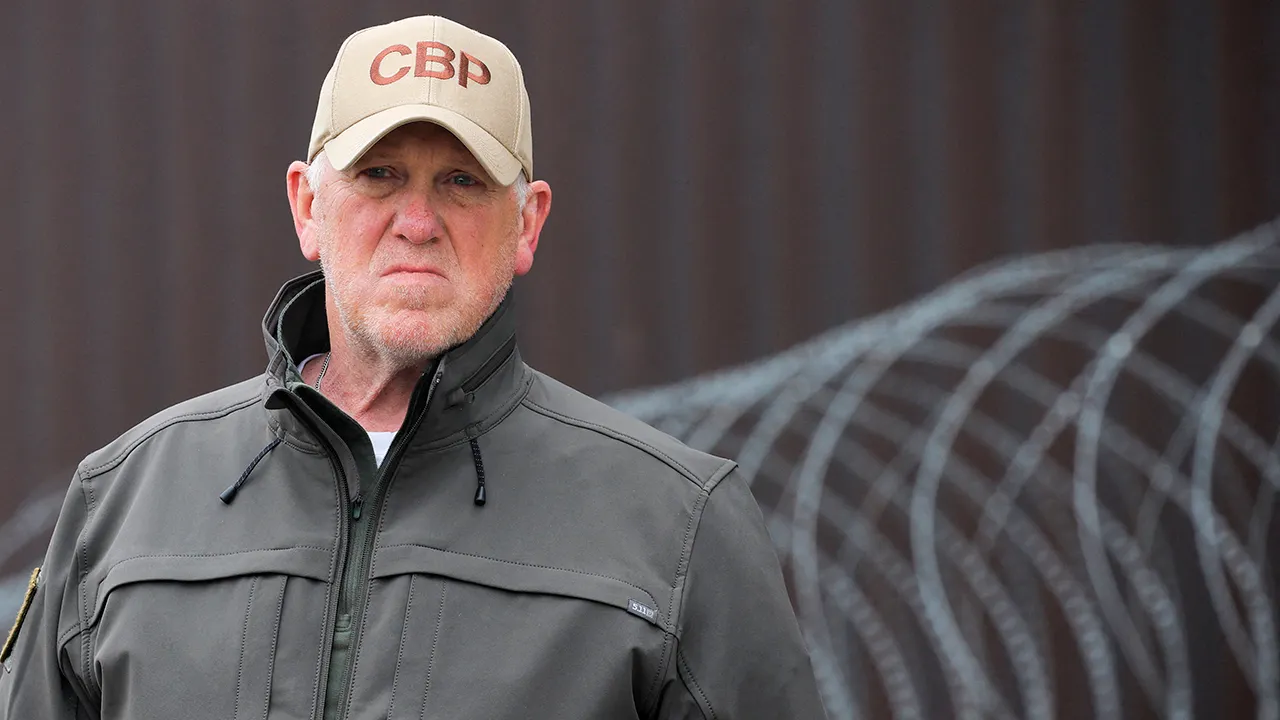
At the Faith and Freedom Coalition’s Road to Majority Policy Conference in Washington, D.C., Tom Homan, who now serves as the newly designated White House border czar, chose to completely forgo the polished, sanitized political talking points that typically define Washington bureaucrats. Instead, he stepped to the podium fueled by a raw, white-hot fury—a reaction born from the grueling, tragic decades he spent on the front lines of American immigration enforcement. Homan’s impassioned speech was not merely a defensive policy brief, but a passionate, deeply personal retaliation against the chorus of critics, media figures, and humanitarian organizations, including the Catholic Church, who have long painted the Trump administration’s immigration agenda as cruel, xenophobic, and devoid of basic human empathy. With a voice heavy with frustration and trauma, Homan forcefully sought to invert the moral paradigm of the border debate, arguing that the critics themselves are the ones enabling a cycle of unimaginable human suffering. He declared that he was intensely “pissed off” at the persistent mischaracterization of border wall construction and strict deportation efforts, framing these measures not as acts of exclusion, but as critical acts of mercy and defense. He juxtaposed the clean, air-conditioned conference rooms where policy is debated with the suffocating, desolate stretches of the borderlands where the consequences of those policies are paid in human blood. To him, the abstract moralizing of critics fails to reckon with the bloody, dust-choked reality of human trafficking. To Homan, a porous and poorly enforced border is not a compassionate sanctuary, but a deadly, state-sanctioned trap that coaxes desperate families to surrender their life savings and their lives to sadistic human traffickers. By securing the southern border with unwavering iron-will, Homan argued, the Trump administration is performing the single most humane act possible: dismantling the deadly incentives that lead migrants to their graves and replacing lawless chaos with foreign cartels.
To ground his argument in reality, Homan shared a haunting, deeply visceral memory that has scarred his psyche: the day he stood in the back of a tractor-trailer surrounded by nineteen dead bodies. He recounted arriving at the awful crime scene in the sweltering Texas heat, where a packed smuggler’s truck had been abandoned by its driver, turning the un-ventilated steel container into a literal, mechanical oven. Homan described the agonizing final moments of these victims, who had stripped down to their underwear in a desperate, futile attempt to find some relief from the suffocating, 170-degree heat that trapped them inside. Among the deceased lay a young boy, a child whose life was cut short by greedy smugglers who viewed human souls as mere disposable cargo to be abandoned at the first sign of law enforcement pressure. Homan’s voice cracked with emotion as he urged the comfortable Washington audience to look past political abstractions and visualize that scene—to imagine the sheer panic, the desperate scratching at clawed-at metal walls, the gasping for oxygen, and the unimaginable physical agony of nineteen human beings slowly baking to death in pitch darkness. For Homan, this horrific event was not an aberration but a direct, predictable consequence of a severely broken system that signals to the desperate people of the world that entry is guaranteed if they can simply survive the journey. He fiercely contended that open-border advocates bear moral responsibility for creating the market demand for these deadly smuggling operations, arguing that lax enforcement actively funds and empowers the criminal networks that turn human desperation into a highly profitable, extraordinarily lethal cash crop. By confronting his audience with the sensory horrors of that steel tomb, Homan sought to make it impossible for critics to argue their positions from a high moral ground of pure, unblemished idealism.
The horrors Homan described did not stop with the victims of asphyxiation and extreme heat; he quickly turned his focus to the pervasive, unspeakable violence systematically committed against the most vulnerable migrants—defenseless children traveling through cartel-controlled territories. Standing before the silent assembly, he shared a deeply distressing detail from his time on the front lines, recalling how he knelt to look into the eyes of a helpless nine-year-old girl who had been brutally, repeatedly raped by cartel members during her journey northward. In Homan’s view, this stomach-churning level of abuse is not an occasional tragedy, but the standard operating tax collected by the transnational criminal organizations that govern the migration routes. He fiercely challenged the emotional selectivity of the public, the political class, and the mainstream media, questioning why there is such a profound absence of public tears, media outrage, and high-profile celebrity activism for the thousands of children who are sexually abused, trafficked, and emotionally shattered under lax border policies. Homan went so far as to directly confront pop-culture icons who routinely speak out on immigration, asking where their tears are for the children routinely victimized by cartels on their watch. He passionately argued that the strict enforcement policies implemented by Donald Trump have dramatically curtailed these horrors by signaling to families that the journey is futile, thereby preventing children from being thrust into a meat grinder of violence. For Homan, shutting down the border is the ultimate act of child protection, a necessary intervention that rescues vulnerable young lives from the predatory grasp of cartels who view human beings as nothing more than leverage and currency. By detailing his interactions with these traumatized children, he sought to expose the profound hypocrisy of a human rights establishment that prioritizes the abstract right to migrate over the concrete right of a child to be safe from systemic physical violation.
This stark ideological divide lies at the absolute center of the intense national debate surrounding the Trump administration’s hardline immigration policies. Opponents, including progressive lawmakers, human rights advocates, and prominent religious leaders such as representatives of the Catholic Church, argue that turning away asylum seekers, building massive physical barriers, and implementing widespread deportations are fundamental violations of human dignity. They contend that a wealthy nation has a moral obligation to offer shelter to those fleeing violence, tyranny, and crushing poverty, rather than erecting barriers and separating families. Homan, however, rejects this framework as a naive delusion that ignores the direct result and cause-and-effect relationship of global migration patterns. He insists that well-meaning, compassionate-sounding political rhetoric acts as a powerful, irresistible “pull factor,” inadvertently encouraging more desperate families to risk their lives in the Arizona desert or place their children in the hands of homicidal smugglers. From his battle-tested perspective, true Christian charity and humanitarianism are not found in offering a lottery-like asylum system to those who happen to survive a deadly, cartel-controlled gauntlet. Instead, real compassion lies in ensuring the gauntlet is shut down so parents are not tempted to risk their children’s lives in the first place. This philosophy of deterrence as a moral imperative argues that strict, uncompromising enforcement of the rule of law is the only viable method to break the financial back of the human-trafficking cartels, who generate billions of dollars annually from human misery. Homan’s argument presents a profound ethical challenge to his critics, forcing them to consider whether their advocacy for open pathways is actually paving a road of good intentions directly to a hell of exploitation and death. By reframing law enforcement as a holy shield, Homan attempted to reclaim the moral and ethical high ground from religious institutions that he believes have lost sight of the practical consequences of their theology.
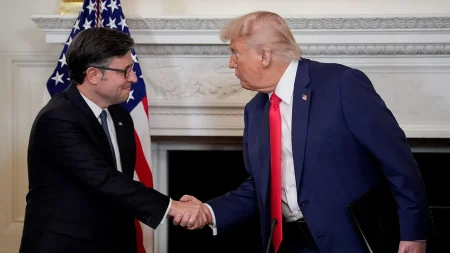
While defending the ethical dimensions of border security, Homan was equally unyielding in his political defense of Donald Trump, praising Trump for having the courage to implement policies that previous administrations found too politically risky or controversial to pursue. He credited Trump with delivering the most secure southern border in the history of the United States, pointing to signature policies such as the “Remain in Mexico” program, the construction of hundreds of miles of steel border wall, and the rapid Title 42 expulsions as highly effective tools that restored order to a collapsing system. Homan’s fierce loyalty to Trump is deeply rooted not in partisan tribalism, but in what he views as a shared, clear-eyed understanding of the relationship between national security, sovereignty, and human nature. He argued that when the Trump administration closed the border and enforced strict legal consequences for illegal entry, they successfully choked off the cartels’ primary revenue stream, drastically reducing the number of migrants attempting the deadly journey and consequently saving thousands of lives from being lost in the desert lands. This political defense is particularly significant as the administration prepares to launch an unprecedented mass deportation campaign designed to target and remove millions of undocumented immigrants, a move that has drawn fierce condemnation from progressive circles. Homan, however, remains completely unfazed by the gathering political storm, framing these impending enforcement actions as a necessary and long-overdue restoration of the rule of law. By linking Trump’s actions to the preservation of human lives, Homan sought to completely dismantle the narrative that conservative border policies are driven by malice, presenting them instead as an unwavering, patriotic duty that protects both the domestic security of American citizens and the lives of those who would otherwise fall victim to criminal cartels. He asserted that true leadership requires making difficult, deeply unpopular decisions to protect the integrity of the nation, regardless of the media backlash.
In closing, Homan left his audience with a powerful, forward-looking call to action that underscored his determination to continue this mission, declaring with certainty that the administration was far from finished with its pursuit of border integrity. This bold statement serves as a clear signal to both supporters and detractors that the administration is preparing to escalate its efforts, undeterred by political, social, or legal battles that inevitably lie ahead on the national stage. Homan’s concluding remarks served as a reminder that the ongoing battle over the southern border is not merely a dry policy debate or an intellectual exercise; rather, it is a profound, existential struggle over the very definition of a nation-state, national security, and the ultimate value of human life. He reiterated his belief that a country without secure borders cannot claim sovereignty, and that a government’s failure to protect its boundaries is a direct betrayal of its fundamental duty to provide safety for its citizens. By weaving together graphic, heartbreaking stories of human tragedy with a fierce, uncompromising defense of national sovereignty, Homan successfully bridged the gap between hardline law enforcement and humanitarian concern, demonstrating that the two concepts are not mutually exclusive, but are in fact deeply linked. In his worldview, the law is not an obstacle to preserving human dignity, but the essential foundation upon which safety and dignity are built. As the United States continues to grapple with the deep, complex, and painful realities of its immigration crisis, Homan’s impassioned address stands as a stark, humanized warning about the real-world consequences of policy decisions, challenging policymakers and citizens alike to look past comfortable rhetoric and confront the harsh realities of the borderlands with honesty, courage, and a shared commitment to saving human lives.