




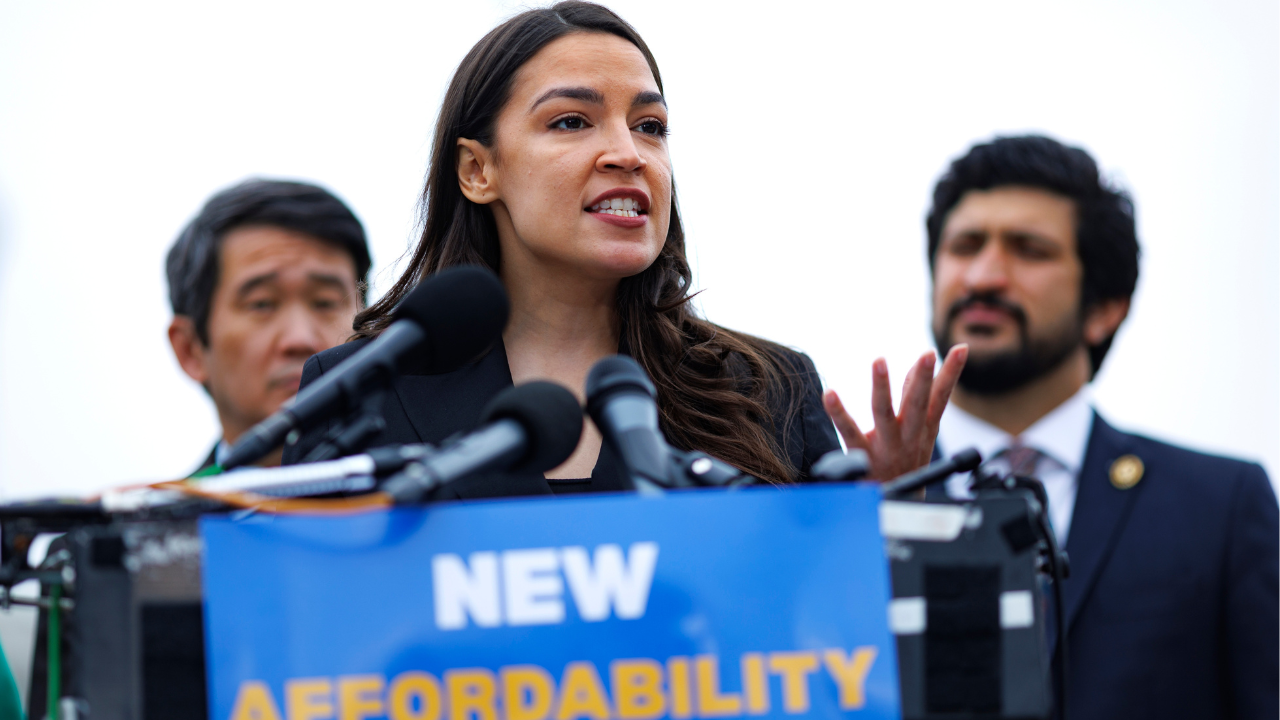
Eight years have slipped by since Alexandria Ocasio-Cortez first shattered the political Richter scale, transforming instantly from a working-class bartender in the Bronx into a national phenomenon by unseating one of the most powerful Democrats in Congress, Joe Crowley. Today, the woman universally recognized as “AOC” is no longer the raw, idealistic outsider throwing rocks at the party fortress; she has successfully transitioned into a formidable, four-term legislative powerhouse whose political instincts have grown sharper with every session. Her recent victory in her own primary, where she effortlessly dismantled two challengers with comfortable ease, was more than just a routine re-election bid—it was a bold statement of her enduring local dominance and a launchpad for her future. As she surveys the political landscape, her eyes are increasingly fixed on much loftier horizons, with quiet whisperings of a dramatic, high-stakes primary challenge against the Senate’s top Democrat, Chuck Schumer, or even a historic run for the presidency in 2028. Her unique brand of progressive politics has evolved from a flash-in-the-pan progressive movement into a lasting, resilient political institution, proving that her initial victory was not an anomaly, but the vanguard of a massive structural shift within the American left.
This shifting of the political tides was made abundantly clear in New York’s recent, high-stakes congressional primaries, where a wave of leftist victories sent shockwaves through the corporate-aligned Democratic establishment. Backed by prominent socialists like New York mayoral contender Zohran Mamdani and veteran Senator Bernie Sanders, grassroots progressive candidates staged stunning upsets against entrenched, well-funded establishment rivals. In a race that shook the city’s political foundations, progressive candidate Darializa Avila Chevalier managed to narrowly edge out incumbent Adriano Espaillat, a veteran lawmaker who chaired the Congressional Hispanic Caucus and held massive sway within the community. Meanwhile, in the race to succeed retiring Representative Nydia Velazquez, progressive state Assembly Member Claire Valdez cruised to a comfortable, twenty-point victory over the establishment-endorsed candidate, proving the formidable strength of local, grassroots organizing over institutional patronage. Rounding out this progressive sweep, former New York City Comptroller Brad Lander soundly defeated moderate incumbent Dan Goldman, cementing the reality that the progressive movement is no longer just a vocal minority, but a highly coordinated, formidable machine capable of unseating some of the wealthiest and most influential leaders within the party’s moderate wing.
Interestingly, Ocasio-Cortez chose to play a highly calculated and disciplined game during this primary cycle, opting to stay out of the local New York City brawls and endorsing very sparingly. While her absence from the local battlefield raised some eyebrows among grassroots purists, it strategically insulated her from localized party infighting, allowing her to position herself as a unifying, national-level figure who transcends regional disputes. Instead, she has spent much of her energy side-by-side with her mentor, eighty-four-year-old Senator Bernie Sanders, joining him on a massive, country-wide “Fighting Oligarchy” speaking tour aimed at mobilizing working-class voters against corporate influence. This close partnership has effectively designated Ocasio-Cortez as the undisputed heir apparent to Sanders’ vast populist movement, positioning her to inherit a national infrastructure of passionate activists, small-dollar donors, and progressive voters. Her strategic silence on the local level, combined with her high-profile national tour, demonstrates a sophisticated understanding of power, showing that she is carefully pacing herself, building her national profile, and preparing to step into the massive void that will eventually be left by the aging lions of the American progressive movement.
This leftward shift in New York City’s political center of gravity is already causing major, operational headaches for top establishment Democrats like Senator Chuck Schumer and House Minority Leader Hakeem Jeffries, who now find their own home turf transformed into a battleground for the party’s soul. Schumer, who faces a critical re-election campaign in just two years, is acutely aware that any misstep could invite a fierce, well-funded primary challenge from Ocasio-Cortez, a prospect that keeps party moderates awake at night. When pressed recently about her long-term aspirations and whether she has her sights set on a historic 2028 bid for the White House, Ocasio-Cortez offered a characteristically playful yet deeply telling response, musing, “Could I be president? Could I not be president? Maybe, maybe not.” This tantalizing ambiguity is a deliberate strategic play, keeping her establishment rivals off-balance while allowing organization groups like the Democratic Socialists of America to actively assess her viability through national straw polls. For Jeffries and Schumer, the challenge of governing a fractured party is made infinitely more complicated when one of their most popular and media-savvy colleagues refuses to rule out a challenge to the existing hierarchy, maintaining a constant, silent pressure on the establishment to tilt their policies leftward.
Yet, despite the euphoric celebrations among progressives following their sweep in New York City, seasoned political analysts caution that these localized victories may not translate effortlessly to the rest of the country. A closer look at the electoral map reveals that these democratic socialist victories were highly concentrated within a specific geographical pocket of Brooklyn and Queens, a densely populated, deeply progressive urban enclave often referred to colloquially as the city’s “Commie Corridor.” Outside of this unique ideological bubble, more moderate, mainstream Democrats comfortably held their ground, suggesting that the progressive surge may face significant geographic boundaries. For example, in the highly watched race to succeed retiring Representative Jerry Nadler in Manhattan, voters chose to bypass the more radical options in favor of Micah Lasher, a pragmatic, establishment-aligned candidate. Furthermore, in the critical swing districts north of the city, such as the 17th Congressional District, moderate Army veteran Cait Conley secured a primary victory to challenge Republican Mike Lawler in a toss-up race that will ultimately decide which party controls the House of Representatives, emphasizing that in purple districts, electability and mainstream appeal still reign supreme.
Ultimately, Ocasio-Cortez stands at a fascinating and historical crossroads, balancing the intense, ideologically pure demands of her progressive base against the pragmatic compromises required to build a broad-based, national coalition. Progressive advocates point to the New York primary sweep as a clear, undeniable seismic shift, arguing that voters are hungry for bold, anti-corporate fighters who refuse to be bought by wealthy donors or special interest groups. However, pragmatic Democratic strategists warn that the fiery, anti-establishment rhetoric that wins over voters in Astoria or Williamsburg can quickly backfire in the industrial Midwest or the suburban South, where voters tend to be far more ideologically moderate and risk-averse. As Ocasio-Cortez contemplates her next monumental career move—whether that involves challenging a sitting Senate giant like Schumer or embarking on an ambitious, barrier-breaking quest for the presidency—she must carefully navigate this geographic and ideological divide. Her journey from a passionate, insurgent activist to a calculated, national leader is far from over, and her ability to bridge the gap between deep-blue urban centers and the rest of a highly divided America will decide not only her own political destiny, but the future direction of the Democratic Party as a whole.