





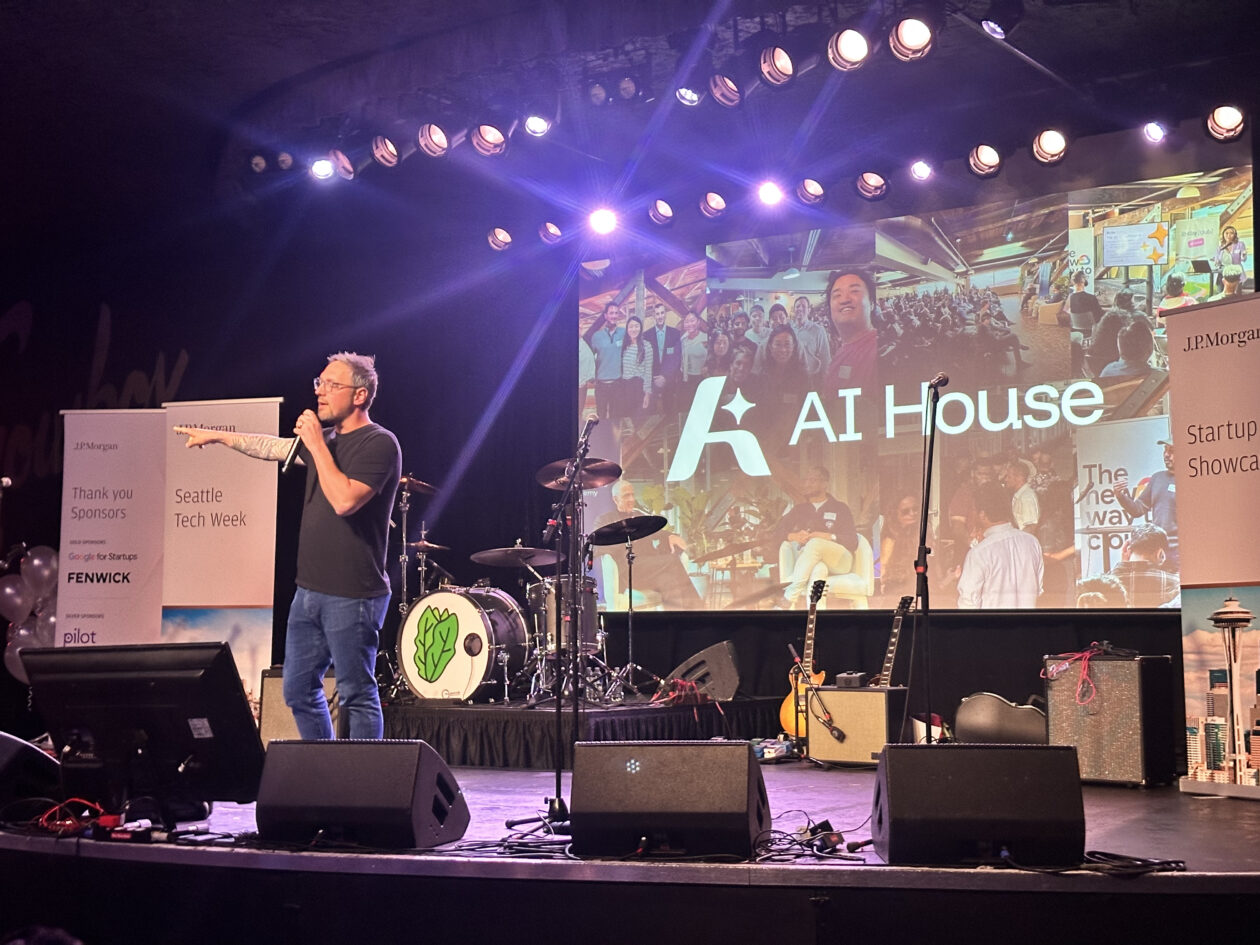
It was an ordinary Tuesday evening in late July 2026 when the historic Showbox Market in Seattle, a storied venue that has echoed with the sounds of musical legends for generations, became the backdrop for a different kind of performance. Standing before a packed crowd of innovators, dreamers, and builders during Seattle Tech Week, Jacob Colker, the co-founder and managing director of AI House, stepped up to the microphone. He was not there merely to pitch a new venture or dissect the latest algorithmic breakthroughs; instead, he chose to deliver an impassioned, deeply personal sermon on the soul of the city itself. Colker, who has rapidly emerged as one of the Pacific Northwest’s most vocal and unapologetic champions, tapped into a collective undercurrent of anxiety and unfulfilled potential that has quietly settled over the region. Despite boasting one of the most robust innovation economies on the planet, flanked by breathtaking natural landscapes of mountains and waters, and eagerly preparing to take the global stage as a host city for the World Cup, Seattle has lately suffered from a palpable, inward-looking malaise. It is a city that, notwithstanding its massive wealth and unparalleled technological pedigree, has somehow allowed itself to slide into a state of self-doubt. Colker, channeling the magnetic energy of a seasoned motivational speaker, sought to shatter this collective gloom, reminding the audience that they are standing on holy ground when it comes to global innovation, but warning that they are on the cusp of squandering their greatest historical advantage if they do not wake up to the magic surrounding them.
To illustrate this collective amnesia, Colker shared a poignant and deeply human story about a personal shift in perspective that resonated deeply with the crowd. He recalled the absolute, jaw-dropping wonder of attending his very first Cirque du Soleil performance years ago, describing how his mind was utterly blown by the sight of human bodies executing impossible aerial flips and ethereal, glowing horses seemingly floating through the air above the audience. He was transfixed, recognizing the performance as a triumph of human imagination, daring, and artistry. Fast forward many years later, and Colker found himself taking his own family to see another Cirque du Soleil show under the big top at Marymoor Park in nearby Redmond. This time, however, something was different; as they walked out of the tent, his family felt strangely underwhelmed, treated to a spectacle that had somehow become routine. Colker used this anecdote as a powerful metaphor for Seattle’s current psychological state, arguing that we, as a community, have become profoundly numb to our own magic. He pointed out that Seattle has virtual “flying horses” soaring through every corner of its city limits, reminding the audience of the earth-shattering legacies of local giants like Boeing, Microsoft, Amazon, and the tireless parade of startup founders who quite literally built the modern cloud computing infrastructure that powers the global internet. The region is also anchored by the globally recognized University of Washington, which consistently ranks as one of the finest public research institutions in the world, constantly seeding the market with brilliant minds and groundbreaking discoveries.
Yet, despite this embarrassment of riches, Colker diagnosed a critical, gaping wound in the local ecosystem, a missing piece that threatens to stall Seattle’s velocity just as the next massive tidal wave of technological revolution—artificial intelligence—is beginning to swell. That missing ingredient, he explained, is not capital, and it is certainly not technical talent; rather, it is a profound lack of genuine community and intentional connection. In the wake of the pandemic, remote work, and rapid, sometimes destabilizing corporate growth, the organic tissue that once bound Seattle’s innovators together has frayed, leaving a collection of brilliant minds working in siloed isolation. Colker’s work with AI House is a direct, hands-on attempt to repair this social fabric, creating physical and intellectual sanctuaries where founders, researchers, and creatives can cross-pollinate, collaborate, and build spontaneous trust. He argued that technology does not advance in a vacuum of cold code, but thrives instead in the warm, messy intersections of human relationships, shared late-night conversations, and collective ambition. By failing to foster a lively, dense, and supportive community, Seattle risk becoming a transactional tech hub rather than a transformational epicentre, a place where people merely work rather than a place where they dream together of a better world.
This passionate defense of the Emerald City struck a powerful chord, quickly reverberating far beyond the walls of the Showbox and lighting up social media feeds where local leaders eagerly joined the conversation. Prominent local venture capitalist Jen Haller of Ascend echoed the crowd’s enthusiasm with a spirited LinkedIn comment declaring, “Jacob for Mayor!”—a testament to how hungry the local tech community is for authentic, charismatic leadership that champions civic pride over corporate reticence. This yearning for a narrative shift was a dominant, recurring theme throughout Seattle Tech Week, finding harmony with statements made earlier that same day at a “Building in Seattle” event. There, Zaylan Jacobsen, the energetic co-chair of the local Young Professionals Nexus chapter, spoke movingly about Seattle as “one of the most special places in the entire world.” Jacobsen did not shy away from acknowledging the city’s very real, visible short-term challenges, but he urged the community to lift their gaze and appreciate the timeless, inimitable qualities of the region, from its collaborative intellectual culture to the majestic, restorative presence of the surrounding Cascade and Olympic mountain ranges that have inspired generations of pioneers.
When pressed later by journalists about what drove him to deliver such an unvarnished, emotional appeal to the crowd, Colker spoke with the raw candor of someone who genuinely cares about the trajectory of his home. He lamented that Seattle has spent years quietly absorbing lazy, repetitive criticism from national media outlets and political commentators, and, tragically, has begun to internalize this external negativity. He rejected the prevailing “doom loop” narratives outright, emphasizing that is not an issue of capability, saying, “The city does not have a talent problem, an ambition problem, or an innovation problem; it has a confidence problem.” Crucially, Colker does not view his role as that of a superficial cheerleader or a slick civic booster trying to gloss over real issues with public relations spin. Instead, he is issuing a direct, urgent challenge to his peers to stop allowing outsiders to define the boundaries and character of their community, to recognize the extraordinary, unmatched assets already at their disposal, and to start carrying themselves with the urgency, pride, and fierce conviction of a city that rightfully belongs at the absolute center of global progress.
As the formal presentations of the evening drew to a close and the crowd transitioned from listening to celebrating, Colker demonstrated that his passion for the energetic rhythm of his city is not confined to the podium. Armed with a surplus of leftover adrenaline, he made his way to the back of the Showbox stage, traded his microphone for a pair of drumsticks, and joined his bandmates in their group, Good Lettuce and the Hallpasses. Sitting behind the drum kit, Colker helped unleash a wave of high-energy rock-and-roll that had the crowd dancing, laughing, and shedding the last remnants of their professional reserve. In a moment of pitch-perfect poetic irony, the band belted out a rousing, heartfelt rendition of Journey’s timeless anthem, “Don’t Stop Believin’.” As the iconic keyboard chords echoed through the historic venue and Colker kept the driving beat, the song transformed from a classic-rock staple into a profound, unifying rallying cry for an entire ecosystem. It was a beautiful, human reminder that underneath all the complex code, venture capital spreadsheets, and corporate ambitions, the true engine of Seattle’s future is simple, unwavering belief—in each other, in the magic of the place they call home, and in the boundless possibilities of what they can build together when they finally remember how to fly.