






The Viral Saga of a Stubborn Cyclist and a Worn-Out Cop
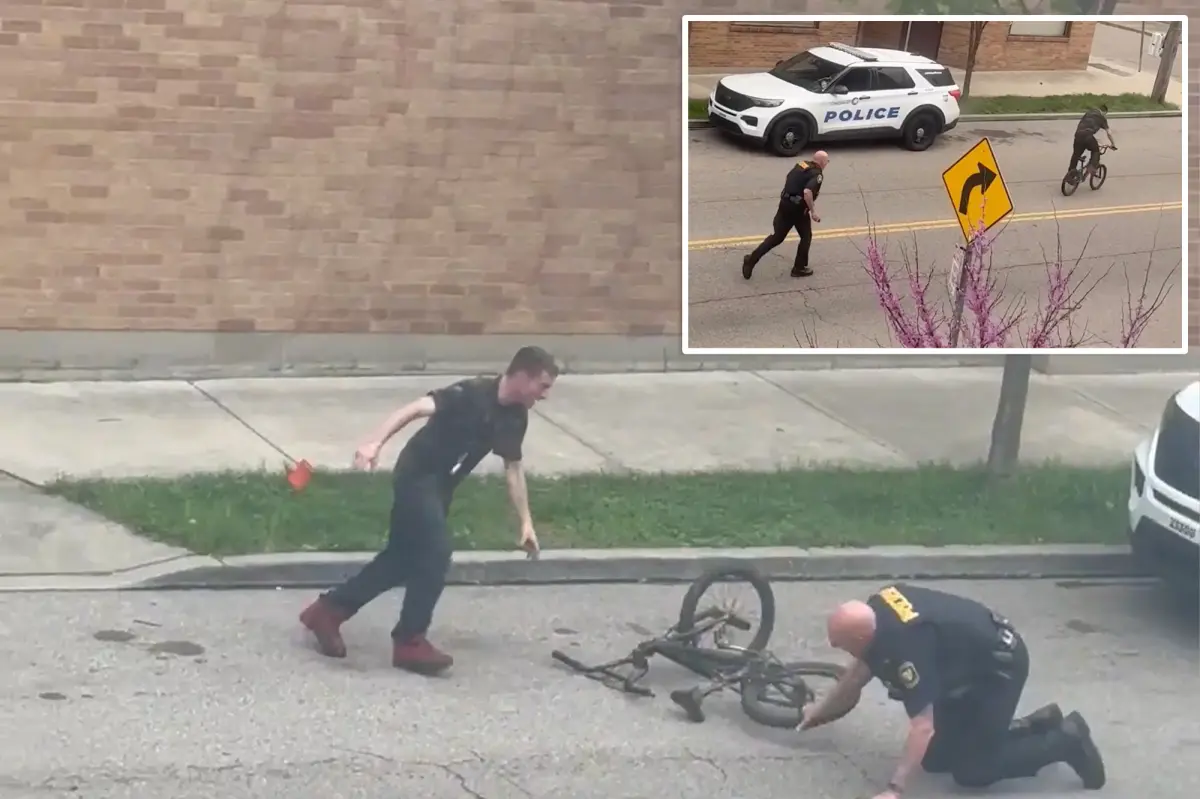
It all started on a seemingly ordinary afternoon in Cincinnati, where everyday life can sometimes spiral into something surprisingly hilarious and chaotic. Picture this: a young cyclist, zipping through the streets with a defiant glint in his eye, and a police officer, probably expecting a routine stop, who ends up entangled in what feels like a scene straight out of a comedy sketch. The bystander who filmed it captured pure, unscripted human drama—a headlock attempt gone wrong, tumbles on the pavement, and a chase that screamed lack of preparedness. This wasn’t just another news clip; it went viral overnight, amassing over 10 million views as people shared it with captions like “Dad bod vs. cardio god.” But beneath the laughter, there’s a story of human struggle, the weight of a job that’s anything but glamorous, and the thrill of someone daring to outsmart authority. As I imagine watching this unfold, I can’t help but feel a mix of empathy for the officer, who seemed outmatched, and admiration for the cyclist’s agility, which turned a simple confrontation into a memorable spectacle. In our digital age, where every mishap can become instant entertainment, this incident reminds us that real life often defies expectations, sparking debates about police tactics, fitness in public service, and that unwritten code of urban rebellion. The officer wasn’t some villain; he was likely just doing his duty, responding to something that caught his eye on the road. Maybe it was a missing reflector on the bike or a suspicious package—details get murky in viral storms. But the video paints a picture of a man pushed to his physical limits, his face turning blue with exertion, not malice. We’ve all been there in our own ways: trying to control a situation that’s slipping away, huffing and puffing while someone spry darts ahead. It’s human nature to root for the underdog, and here, the cyclist emerged as the nimble fox evading the tired hound. Broader context adds layers; Cincinnati, with its mix of charming neighborhoods and gritty undercurrents, isn’t immune to social tensions. Incidents like this highlight discussions on racial profiling or just sheer bad luck, but without concrete details, it’s all speculation. What struck me most was the bystander’s role in amplifying this moment— a quiet observer turning catalyst for global chuckles. In essence, this wasn’t revolution; it was recreation, a fleeting dance of defiance that underscored the raw, unpredictable nature of human encounters on city streets. By the time it hit social media, it had morphed from a local scuffle into a universal joke about age, weight, and willpower. I pondered how many lives intersect in such impromptu ways, each carrying their own stories thatvelle might never surface. The cop, perhaps a veteran with years of dodging bullets and busting crime, reduced to gasping like a novice jogger. The cyclist, maybe a young, broke guy just trying to get from A to B, turning a potential arrest into an escape artist’s triumph. This relatable chaos resonates because we’ve all fantasized about outrunning trouble, even if ours is metaphorical—just beating deadlines or escaping awkward conversations. It humanizes law enforcement, showing they’re people too, prone to exhaustion and embarrassment. And it humanizes us, the viewers, who comment online from our couches, safe and smug. Deep down, it reflects society’s fascination with failure redeemed by persistence, or the lure of freedom unchecked. As the video looped endlessly, it invited empathy for all parties, a reminder that behind every viral hit is a tapestry of emotions—frustration, exhaustion, exhilaration—that make us all more alike than different. In retelling it, I can’t shake the feeling that this brief encounter encapsulates bigger themes like autonomy versus authority, the body versus the spirit, and the uncontrollable spread of stories in our connected world. It’s not just a chase; it’s a mirror held up to human frailty and ingenuity.
The Initial Clash: A Headlock and a Flip of Fortune
Zooming in on the heart of the drama, the video kicks off with that pivotal, breathless moment where theory meets reality—and reality bites back. The officer, his uniform perhaps a tad too tight around his midsection, spots the cyclist pedaling along, clutching something that sparks suspicion. What was it? A phone, a wallet, or contraband? The clip doesn’t say, but in that instant, impulse overrides protocol, and he lunges forward, fingers grasping for whatever’s in the young man’s grip. This isn’t a calculated takedown; it’s messy, human urgency that screams “stop now before things escalate.” The cyclist, quicker on his feet than a gazelle, refuses to yield, twisting like a seasoned wrestler and countering with surprising finesse. One pivot, a smart use of leverage, and boom—the officer finds himself in an unexpected headlock, his balance undermined by his own momentum. It’s poetic justice in motion: the pursuer becomes the pursued. As he gasps for air, his face flushing from exertion and surprise, I imagine the flurry of thoughts racing through his mind—regret for not calling backup, irritation at his struggling form, and maybe a flash of doubt about his career choice. The boy’s blue face isn’t literal; it’s the figure of speech for the cop’s predicament, a dad-joke reference that stuck. We humans are wired to rail against unfairness, and seeing the power dynamic flip like this elicits a primal cheer. He shoves the policeman down, not with malice, but with instinctual survival, pushing against the weight that’s suddenly a disadvantage. In that gravelly tumble to the ground, roles reverse: the authority figure is humbled, sprawling awkwardly as he rights himself, while the youthful rider seizes the moment. It’s a microcosm of life’s unpredictable shifts, where strength isn’t just physical but tactical. The cyclist, heart pounding, abandons his bike temporarily, relying on wits over wheels. Our protagonist officer, pot-bellied and persistent, scrambles up, his movements a blend of determination and dismay, reflecting how we all sometimes cling to pride in defeat. This isn’t violence; it’s a struggle for control, humanized by the cop’s visible fatigue—sweat slicking his brow, breath coming in ragged bursts. Tales like this are folklore in the making, passed down through shares as cautionary yarns about presuming power. It tugs at heartstrings, making me root for both: the retired-seeming cop deserving a break, the kid proving that smarts can triumph muscle. In urban folklore, such clashes become legends, cautioning us that assumptions lead to embarrassment. The cyclist’s defiance isn’t rebellion for the sake of it; perhaps instinct, fear, or sheer adrenaline. We empathize with the officer’s unyielding pursuit, picturing family waiting at home, tired after a shift. Yet the humor shines through—an unguarded moment turning into gallery fodder. This humanizes policing as a job of high stakes and low rewards, where one misstep broadcasts worldwide. I’ve replayed that headlock in my mind, admiring the cyclist’s quick thinking, wondering if the cop’s adrenaline faded into frustration. It echoes deeper narratives about underdogs prevailing, men chasing shadows of justice. Society lives on such stories, a reminder that authority isn’t infallible, encouraging humility. Even in failure, there’s glory in trying, and that nod to humanity makes reruns captivating.
The Chase Heats Up: A Sluggish Cop vs. a Nimble Cyclist
As the dust settles from that initial flop, the real pursuit begins—a cat-and-mouse game that stretches the comic potential to its limits, with our portly policeman chasing after the fleet-footed cyclist like a determined bulldog after a squirrel. It’s a minute-long farce that plays out in slow-motion glory on the screen, every stumble and stride fuel for countless memes. The boy, now back on his bike, pedals with renewed vigor, his mock circles around the hobbling officer a playful taunt that borders on mockery. You can almost hear the imaginary soundtrack—a cartoonish chase theme—as he loops effortlessly, highlighting the cop’s labored gait. This isn’t high-speed cinema; it’s raw, unfiltered stuggle, the officer’s efforts turning him into a symbol of overexertion. Tiredness is his adversary now, his once-authoritative pace reduced to a waddle, breaths coming in heaving gasps that paint a vivid picture of a man pushed beyond his limits. We’ve all experienced that draining ache, the kind where legs plead for mercy after a sprint, yet duty—or stubborn pride—forces onward. The cyclist’s advantage is clear: youth, agility, and perhaps a bit of urban savvy, making him the clear victor in this physical chess match. He outpaces the stocky pursuer without breaking a sweat, his maneuvers evoking images of freedom fighters dodging captors in historical tales. It’s empowering to watch, a testament to human adaptability in the face of authority. On the officer’s side, the exhaustion is palpable, his body betraying him in the heat of the chase, reminding viewers of the toll that jobs like these take on real people. Fathers, husbands, veterans—they’re not caricatures but flesh-and-blood workers grappling with the demands of maintaining order. This scenario humanizes the narrative further, turning a routine traffic stop gone awry into a metaphor for life’s uneven battles. In Cincinnati’s concrete jungle, where joggers and bikers weave through traffic, such chases are reminders of the city’s pulse—vibrant yet unpredictable. The cyclist’s circles feel like playful jabs, mocking the cop’s sluggishness in a way that’s humorous yet humane, not cruel. You sense the cop’s inner monologue: “Just a little more, don’t give up,” fueled by professionalism or ego. It’s that relatable grit we admire in stories of perseverance. But here, it backfires comically, as every attempted lunge lands short. The video’s detail captures the emotional arc—the officer’s rising frustration, the cyclist’s rising confidence. In storytelling terms, this chase is the climax, building tension with each near-miss. Society devours these moments, gleaning lessons on fitness, fairness, and folly. We laugh at the cop’s expense but empathize with his plight, knowing exhaustion hits us all. Perhaps it’s a nudge toward better preparation in public roles, or just a wink at human comedy. Either way, the pursuit ends unresolved, leaving a trail of what-ifs that keep viewers hooked. As a fan of these vignettes, I see it as a mirror to our own pursuits—some chased with vigor, others left gasping. It’s not just entertainment; it’s a slice of shared humanity, raw and real.
Failed Attempts and the Edge of Defeat
Enter the climax of futility, where the officer, desperate and depleted, resorts to the tools of his trade, only to watch them fizzle like sputtering fireworks. With tireless determination (or sheer stubbornness), he reaches for his pepper spray, deploying it in what might have been a last-ditch ploy to halt the retreating cyclist. But here’s where humanity and comedy collide: the spray puffs out harmlessly, meeting naught but air as the nimble rider jogs casually away, unscathed and unphased. It’s a moment of pure irony, the cop’s weapon of persuasion rendered useless against someone fast enough to evade it, turning the scene into a comedy of errors. You can picture the cop’s exasperation, that sinking feeling when Plan A crumbles, followed by Plan B, and now this—nothing but gasps and futility. We’ve all banged our heads against similar walls, whether in everyday life or on the job, where the expected fails spectacularly. The cyclist’s nonchalant jog-away underscores his upper hand, a young man’s evasive dance that outsmarts machinery and man alike. This isn’t Hollywood heroics; it’s real-life escapology, humanized by the cop’s visible defeat, his amble slowing to a crawl as oxygen demands its toll. It’s a testament to the unpredictable nature of confrontations, where technology and training don’t always equal victory. In our empathetic lenses, we see the officer not as incompetent, but as outmatched by circumstance—the weight of the world (or perhaps a heavy meal) dragging him down. The pepper spray incident, in particular, has sparked online debates: “Was it a dud canister?” or “Did he even aim properly?” Regardless, it adds layers of relatability, reminding us that even professionals err under pressure. Broadening the lens, this echoes stories of David and Goliath, where the under-equipped triumph through smarts over brawn. City dwellers understand these dynamics—the thrill of dodging, the groan of failing. The cyclist’s evasion isn’t arrogance; it’s survival, a nod to human resilience. For the cop, it’s a humbling pause, his efforts winding down like a clock at dusk. We root for redemption, imagining seconds where he could’ve pinned down the victor. But in this tale, defeat is the punchline, teaching humility without judgment. Society’s commentary highlights flaws in preparation, urging better training for those on the front lines. Yet, it’s endearing—faults make us human, failures foster growth. Rewatching, I’m struck by the cyclist’s grace under fire, the cop’s unrelenting heart. It’s a parable on persistence wavering, entertainment laced with insight. In viral lore, this spray failure becomes iconic, a symbol of human miscues that unite us in laughter and lessons.
Escape into the Sunset: The Cyclist’s Triumph and the Cop’s Solitude
And just like that, the tide turns decisively—the cyclist, seizing his window of weakness, leaps back onto his prized bicycle, pedaling with earnest intent toward freedom as the officer, now thoroughly winded, can only watch with fading resolve. The video captures this poignant shift: the fugitive mounting his escape vehicle while the jaded pursuer fights gravity and fatigue, slumped against his patrol car like a deflated balloon at a sorry party. It’s a bittersweet crescendo, the younger man’s victory lap contrasted against the older one’s silent retreat, left standing “alone in the street” as if contemplating the absurdity of it all. We feel the empathy surge—the cop, blue in the face from exertion, metaphorically and perhaps literally out of breath, embodying the exhaustion of a job where “chase scenes” are real, not rehearsed. Humanizing this, I wonder about his backstory: years patrolling Cincinnati’s streets, encountering everything from jaywalkers to thieves, only to be bested by a biker with tricks up his sleeve. The cyclist, in contrast, vanishes around the corner like a phantom, his defiance a whisper in the wind, leaving us to ponder if justice was served or simply sidestepped. It’s relatable turmoil—won’t we all have days where escape feels sweeter than confrontation? Society grapples with this duality: admiration for the successful escapee, pity for the pursuing figure. In narratives of life, such escapes mirror our own flights from duties or disagreements, triumph tinged with guilt. The officer’s solitude resonates, a lonely sentinel pondering missed opportunities. Physically, his labored breaths mirror emotional depletion, a reminder that real heroism involves enduring defeat. Yet, the humanness shines: no villain here, just a chase ending in stalemate, sparking viral empathy. Viewers, far from judgment, offer retirement wishes—a nod to human compassion. This isn’t a win-lose; it’s a dance of circumstance, urging balance between vigor and wisdom. In Cincinnati’s context, where bikes navigate bustling blocks, the story underscores urban mobility’s power. The cyclist’s bolt represents untamed youth, the cop’s stand a testament to duty’s grind. As I reflect, it’s a vignette on perseverance’s limits, entertainment evoking universal sighs.
The Aftermath: Virality, Comments, and Lingering Mysteries
As the dust fades on this chaotic encounter, the true magic happens in the digital realm, where the bystander’s clip morphs into a global phenomenon, reposted fervently across platforms like Instagram, where one share racks up a jaw-dropping 10 million views. It’s a zeitgeist moment, transforming a private skirmish into public spectacle, with comments flooding in like waves of collective catharsis. “Please give that poor policeman retirement,” one sympathetic soul pleads, humanizing the ordeal by acknowledging the toll it takes on real people trying to do their best. Others rib playfully: “A 10-year-old girl could escape from this so-called officer!”—a humorous jab that underscores the disparity in fitness and luck. Even skeptical takes emerge: “Are they both drunk?”—adding a layer of conspiracy that fuels endless speculation. This virality isn’t just clicks; it’s a mirror to society’s soul, dissecting authority, humor, and humanity in one fell swoop. The Post’s outreach to the Cincinnati Police Department for clarity highlights the fog of uncertainty—no definitive arrest disclosed, no clear motive revealed, leaving room for imagination and debate. Was it a serious offense or a minor tiff? The ambiguity amplifies the story’s allure, inviting interpretations from police reform advocates to stand-up comedians. In human terms, this echoes our shared fascination with flaws—how we mock yet mourn them in others. The officer, stripped bare in pixels, becomes a symbol of systemic strains, prompting calls for better support. The cyclist, forever the elusive figure, embodies rebellion’s spirit, a relatable anti-hero in a world of rules. Collectively, it sparks dialogue on tactics, training, and empathy in policing. We’ve seen similar viral storms reshape narratives, from Rodney King to today’s TikTok mishaps, each peeling back layers of bias and bravery. In this case, laughter bridges divides, reminding us that humor humanizes even the toughest ordeals. As views mount, the story evolves, a reminder of digital connectivity’s power. What began as a chase ends in contemplation, urging kinder scrutiny of public servants. The cyclist’s tale fades into myth, the cop’s into legend, a poignant punctuation on human comedy. Society grows richer from such shares, fostering understanding amid the uproar. Ultimately, it’s a celebration of relatability—our chases, our falls, our viral epiphanies—binding us in shared, imperfect experience.