





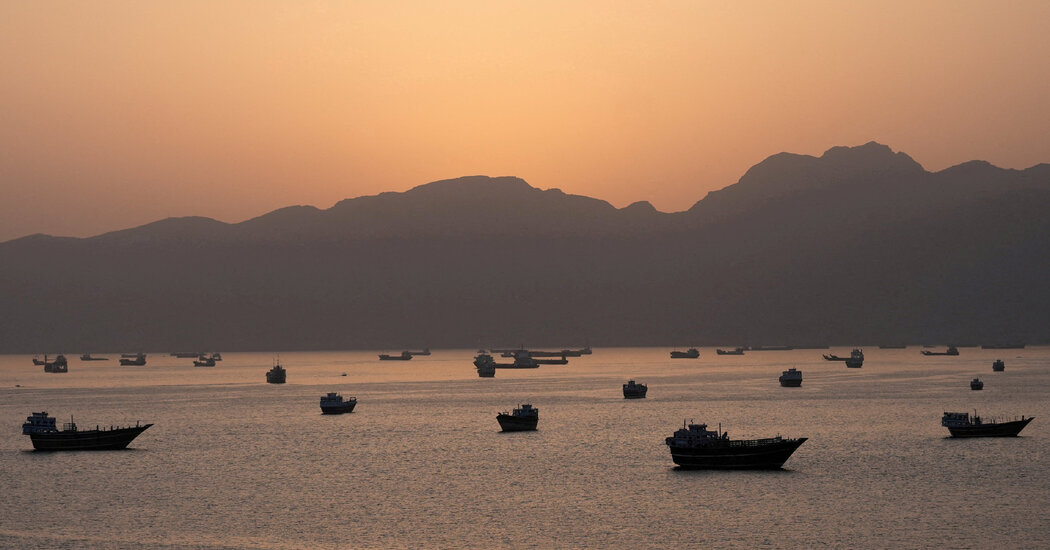
President Donald Trump stirred up international tensions on Sunday with a bold social media post announcing a new U.S. initiative to rescue stranded ships trapped in the Strait of Hormuz, a critical waterway that Iran has essentially shut down. Calling it “Project Freedom,” Trump said the effort would kick off Monday morning, Middle East time, after hearing pleas for help from nations whose ships are stuck there. He emphasized that these vessels hail from parts of the world completely uninvolved in the region’s conflicts, framing it as a humanitarian gesture. Trump warned that any attempts to interfere would be met with forceful action, though he left out specifics on how it would operate. This move seems like a direct challenge to Iran, betting that Tehran won’t escalate by firing the first shot or laying more mines, effectively flipping the script on their blockade without lifting the U.S. sanctions choking Iran’s ports. It’s a high-stakes gamble, potentially turning the tables on the dual standoff gripping the region.
Diving deeper, Trump’s announcement paints Project Freedom as a coordinated effort to safely navigate those stuck ships through the troubled waters, rather than providing armed escorts. A follow-up statement from U.S. Central Command clarified the American involvement, spotlighting a formidable military presence to back it up: guided-missile destroyers, over 100 land- and sea-based aircraft, multi-domain unmanned platforms, and about 15,000 service members on deck. Imagine a buzz of activity, with drones buzzing overhead, ships patrolling, and elite forces ensuring smooth passage without direct confrontation. This setup suggests the U.S. is positioning itself as a traffic cop in the strait, guiding commerce that Iran has disrupted, all while keeping hostilities at bay. If it succeeds, it could restore some normalcy to global trade routes vital for oil, fertilizers, and even tech materials like helium for semiconductors. But at its core, it’s a strategic play to demonstrate American strength without provoking an all-out clash, assuming Iran blinks first in this tense standoff.
Iran’s initial reaction to Trump’s post was surprisingly low-key, almost as if they were trying to downplay the drama. A spokesperson for the Islamic Revolutionary Guards Corps, Sardar Hossein Mohibi, told state media that Iran’s forces were fully equipped and ready to prevail, wrapping it in a traditional religious sentiment that divine power would ensure victory against a bigger enemy. The state broadcaster, IRIB, dismissed the whole thing as “Trump’s delirium,” while other outlets just skimmed over the threat without much fanfare. Meanwhile, Ebrahim Azizi, head of Iran’s parliamentary national security commission, fired back on social media with a stern “Warning,” declaring any American meddling in the strait a ceasefire violation. It’s like Iran is signaling they’re not backing down, but not overreacting yet—perhaps buying time or avoiding escalation. This muted tone stands in contrast to their usual fiery rhetoric, hinting at internal calculations to avoid triggering a full-blown confrontation.
This declaration arrives amid ongoing U.S.-Iran negotiations, where Tehran recently proposed a war-ending deal that Trump reportedly deemed insufficient. In his post, Trump acknowledged talks are still alive and “could lead to something very positive for all,” but Project Freedom injects new urgency. Picture the high-level discussions unfolding in the background, with diplomats haggling over terms, as Trump simultaneously ramps up military readiness. It’s a delicate dance: challenging Iran on the seas while holding the door open for peace talks, betting that this show of force might pressure Tehran into a better offer. If the gamble pays off, it could restore the pre-war status quo, before tensions boiled over on February 28 when Iranian-imposed tolls—sometimes as hefty as $2 million per ship—stalled global commerce. For ship owners, it’s a glimmer of hope after weeks of limbo, but for Iran, it underscores Washington’s reluctance to relent on their own crippling blockade of Iranian ports.
Yet, Trump’s strategy isn’t without its perils, as the strait hasn’t been fully swept for mines, and there’s always the chance a rogue element on the Iranian side could ignite a spark without Tehran’s approval. Analysts worry that if Iran decides to test the U.S. initiative with a speedboat attack or drone strike—perhaps from the Revolutionary Guards’ nimble “mosquito fleet”—it could shatter the fragile ceasefire. Iran’s navy, while much of the traditional fleet was sunk in early battles, still boasts shore-based launchers capable of unleashing missiles or drones on passing vessels. Think of the narrow waterway lined with hidden threats, where a single miscalculation could unleash chaos. Moreover, Trump’s move subtly needles European allies, who’ve been rallying a joint maritime effort but only promise action after a full ceasefire—something Trump sarcastically noted as arriving “after the need for confronting Iran is over.” It’s like he’s calling out their delay, pushing for proactive U.S. leadership in a region crying out for stability.
The broader context reveals just how volatile things have been: right after the war erupted, about 20 commercial vessels suffered projectile hits, mostly from drones, according to the International Maritime Organization. Families of sailors must have been on edge, imagining loved ones dodging invisible threats in those choppy waters. Project Freedom aims to calm that storm, offering safe passage for innocent ships waylaid by Middle East politics. But success hinges on Iran heeding the warning and standing down, allowing U.S. military coordination to escort global trade back onto its path. If it works, it might forge a path to de-escalation, proving that assertive diplomacy—backed by sheer force—can reset the balance. For now, though, the world watches, wondering if this cat-and-mouse game in the Hormuz Strait will end peacefully or erupt anew, with lives and livelihoods hanging in the balance. Trump’s bet is bold, humanizing the plight of stranded crews while challenging a regime’s iron grip, but the outcome remains a roll of the dice in an already unpredictable conflict. Also, internationally, allied nations are voicing support quietly via diplomatic channels, wary of antagonizing either side but hopeful this initiative sparks broader negotiations. Shipowners from Asia and Europe express cautious optimism, sharing stories of weeks-long delays that crippled supply chains for everything from food staples to tech components. On the ground, U.S. troops deployed for this mission are training intensely, blending high-tech gadgets with old-school vigilance to monitor every ripple in the strait. Civilians caught in the crossfire, like local fishermen in Iranian coastal towns, worry about how escalated tensions might impact their daily lives. Trump’s approach humanizes the economic toll too, spotlighting ordinary workers in industries hit hardest—factory employees awaiting urea for crops or factory floors short on helium. But critics argue it’s a unilateral gamble that risks isolating allies, especially as China and Russia weigh in with lukewarm endorsements shadowed by concerns over sovereignty. Environmental groups add another layer, pointing to the strait’s ecological fragility if mines or strikes unleash spills. Trump’s recent tweets have wavered on the topic, sometimes softening his tone toward future talks, sometimes doubling down on strength, revealing the statesman-like balancing act he’s performing. Public opinion in the U.S. is divided: patriots applaud the decisive move, while peace advocates decry the brinkmanship. In Iran, state media spins the narrative of defiance, yet whispers of fatigue among citizens suggest some yearn for resolution. If Project Freedom succeeds, it could pave the way for summit-level dialogues, humanizing the faces behind the flags—families separated by sanctions, entrepreneurs stymied by blockades. But failure might deepen suspicions, fueling extremism on both sides. This isn’t just geopolitics; it’s a living drama of human resilience amid volatility. Travelers recount harrowing tales from before the war, like narrowly avoiding shadowy patrols in the night. Military families brace for potential deployments, their loved ones ready to protect global arteries. Economists predict ripple effects: stock markets fluttering over oil prices, consumers seeing indirect hikes. Trump’s gamble echoes historical precedents, like the Cold War’s tense navigations, but amplified by social media’s immediacy. Allies in the region, such as Saudi Arabia, quietly endorse it, seeing a bulwark against Iranian influence. Diplomats scribble notes furiously, probing for loopholes in the ceasefire that could allow expansion. For the stranded ships’ crews, this is a personal relief drama, trading cabin confinement for potential freedom. U.S. pilots simulating runs practice precision, their focus on de-escalation. In Tehran, officials debate internally, voices of conciliation vying with hardliners. Trump’s experience from prior negotiations lends hope he’s playing a long game. If mines complicate things, specialized units stand ready to intervene safely. Ultimately, humanizing this, it’s about people—sailors, workers, families—caught in a web of power moves, yearning for calm seas.