





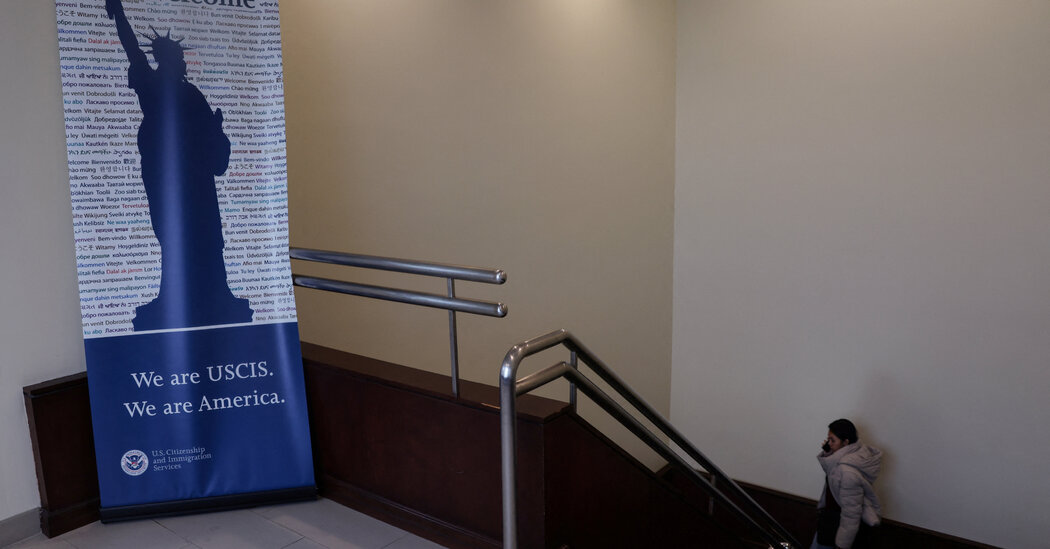
The United States immigration landscape was struck by a quiet but devastating seismic shift on a recent Friday, leaving hundreds of thousands of families suspended in a state of sudden, paralyzing panic. U.S. Citizenship and Immigration Services (USCIS), the federal agency tasked with keeping the gates to the American dream, quietly handed down a sweeping policy directive that fundamentally rewrites the rules for how aspiring permanent residents secure their futures. Broadly speaking, the agency announced that it will now only allow immigrants currently living inside the United States to adjust their status to permanent residence under truly “extraordinary circumstances.” For the vast majority of applicants, this means they will be forced to pack up their lives, leave their homes and jobs behind, and return to their countries of origin to petition for a green card through an American consulate abroad. To understand the sheer scale of this disruption, one only has to look at the numbers from the previous year: of the 1.4 million green cards issued in 2024, more than 800,000 were granted to individuals who were already residing within the United States, utilizing the domestic adjustment of status process to transition peacefully into permanent legal standing. By dismantling this well-worn administrative pathway, the federal government has effectively erected a towering, high-stakes wall, replacing a stable and orderly domestic application process with a chaotic, unpredictable journey of international exile that threatens to tear communities apart and leave families completely fractured.
At the very heart of this brewing storm are mixed-status families, particularly those where an immigrant is married to a United States citizen. Historically, the sacred bond of marriage to an American citizen has been recognized as a powerful unifying force, providing a compassionate and structured path for spouses to resolve their historical immigration issues while remaining safely at home with their partners, protecting them from the agony of prolonged separation. Under this new framework, however, the government has redefined what was once a standard, humane policy of keeping families together into an incredibly rare and elusive luxury, declaring that the ability to remain in the country during the green card process is merely a matter of “administrative grace” rather than a standard expectation. Charles Kuck, a prominent immigration attorney and the former president of the American Immigration Lawyers Association, pointed out the inherent cruelty of this systemic pivot, arguing that the policy is a thinly veiled, deliberate attempt to slow down legal immigration by making the entire process so intensely unpleasant, stressful, and risky that applicants will simply give up and go home. This shift effectively weaponizes the concept of “extraordinary circumstances”—which was historically utilized as a penalizing measure reserved for individuals with severe criminal histories or multiple past deportations—and applies it as a baseline restriction for ordinary, law-abiding partners of American citizens who are simply trying to build a peaceful life together.
The mechanical reality of what this policy demands of applicants is nothing short of terrifying, as it forces them to trade a protective domestic legal environment for a high-stakes gamble in a foreign land. When an immigrant is allowed to adjust their status while remaining in the United States, they retain access to their established support networks, local legal counsel, and the fundamental constitutional protections that shield them from sudden, arbitrary actions. By forcing these individuals to travel back to their home countries to complete their applications at a U.S. consulate, the government is essentially stripping away their safety net, placing them in a legal vacuum where a single unfavorable decision by a consular officer can result in permanent exile. If a green card is denied at a foreign embassy, the applicant is instantly stranded abroad, physically separated from their spouse, children, employment, and home, with virtually no avenue for a meaningful legal appeal. This dynamic creates a powerful psychological war of attrition, transforming what should be a routine bureaucratic check-in into a terrifying existential threat, fully realizing the concerns of legal advocates who note that the system is being engineered to exhaust the financial and emotional reserves of immigrant families until they self-deport out of sheer exhaustion.
The government, however, defends this aggressive restructuring by framing it as a necessary measure to mend what they classify as a highly vulnerable and easily exploited legal system. Zach Kahler, a spokesperson for USCIS, articulated the agency’s official stance by asserting that the new rules are designed to permanently close a systemic “loophole” that historically allowed unsuccessful applicants to easily slip into the shadows of American society and live illegally after their residency petitions were formally denied. Yet, this rigid bureaucratic justification stands in stark, painful contrast to the warnings issued by veteran civil rights defenders and legal advocates on the ground, who argue that the policy will achieve the exact opposite of its intended goal. Efrén Olivares, the vice president of litigation and legal strategy at the National Immigration Law Center, emphasized that this policy is less about administrative efficiency and more about deliberately upending and disrupting the lives of countless immigrant families who have done everything by the book. Rather than encouraging compliance, advocates warn that forcing people to leave their families to wait in potentially dangerous or unfamiliar home countries will actually push thousands of eligible, law-abiding immigrants deeper into the shadows of American life, choosing the quiet anxiety of living undocumented over the terrifying gamble of leaving the country and risking a permanent, state-sanctioned separation from their loved ones.
The sheer agonizing weight of this policy change is further compounded by the notoriously slow, bureaucratic timelines that define the modern American immigration apparatus. For those forced into consular processing abroad, the waiting period is not a matter of weeks, but of grueling, life-altering years: while a spouse of a U.S. citizen might face a separation of around twelve months, siblings of citizens can easily find themselves waiting upward of five years, and self-petitioning parents can face a staggering decade of separation in their home countries before their cases are resolved. This crushing reality has triggered a wave of profound anxiety and confusion among real people across the nation, many of whom spoke on the condition of anonymity out of a very real, paralyzing fear of administrative retaliation. Among them is an Albanian woman who won her green card through the diversity lottery in 2022, who described her immediate panic upon hearing the news, frantically calling her Italian fiancé who was preparing to move to the United States on a work visa later this year. The couple is now joining thousands of others in a desperate scramble to find and hire expensive legal counsel, forced to spend their life savings simply to navigate a shifting legal quicksand that threatens to stall or completely demolish their dreams of building a life together before they can even begin.
Ultimately, the long-term societal fallout of this sweeping policy shift extends far beyond the immediate trauma of separated families, threatening to permanently alter the moral and social fabric of communities across the United States. As Karla Ostolaza, the managing director of the immigration practice at the Bronx Defenders, gravely observed, the invisible scars of this policy will be deeply felt in neighborhoods, schools, and workplaces as vulnerable individuals are actively discouraged from pursuing legal pathways to integration. By cutting off access to a safe domestic adjustment process, the federal government is effectively locking eligible, productive members of society out of the formal economy, leaving them highly vulnerable to labor exploitation, wage theft, and systemic abuse because they fear that any contact with the legal system could result in their exile. This policy represents a fundamental, heartbreaking reimagining of the American Dream, shifting the nation’s posture from one of family reunification and integration to one of administrative hostility and systemic exclusion. As the dust settles on this new directive, families nationwide are left to grapple with an agonizing, impossible choice between the safety of hiding in the shadows or the terrifying risk of stepping onto an airplane, reminding us that behind every cold bureaucratic memo are real human lives, hanging delicately in the balance.