






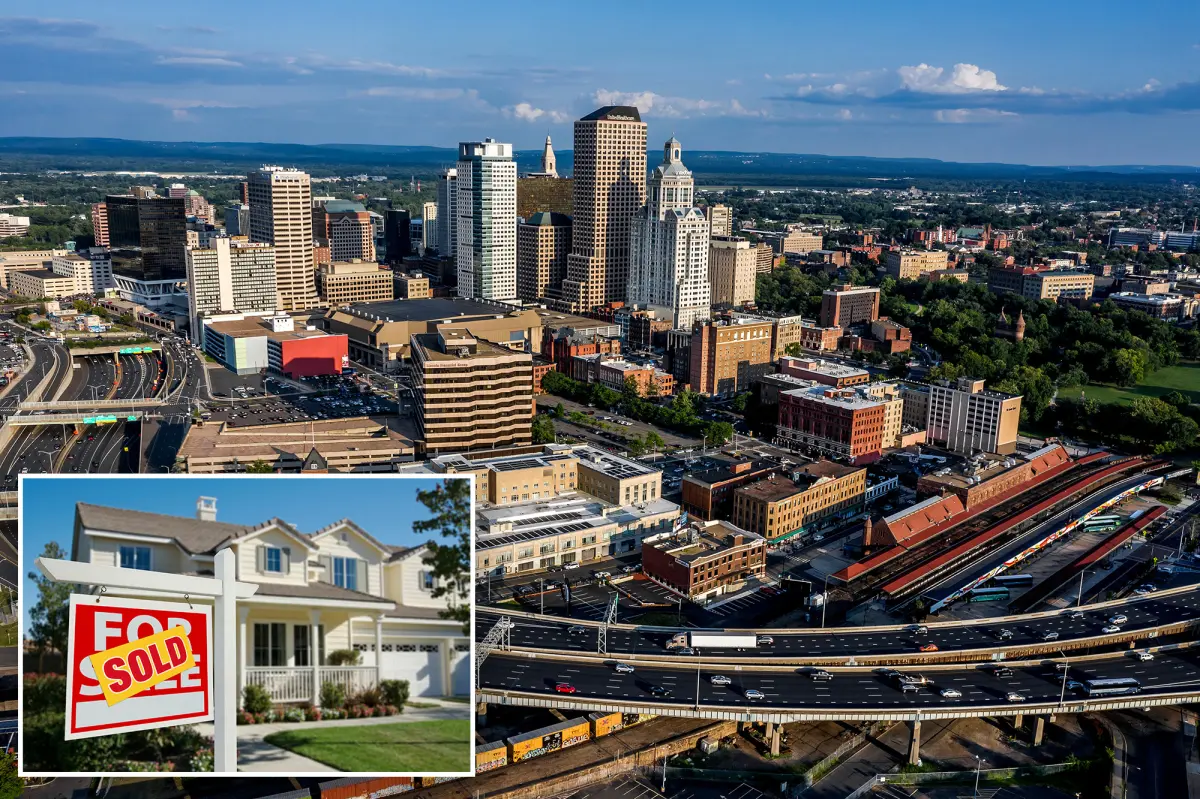
For generations, the narrative surrounding Hartford, Connecticut, was one of quiet decline—a classic story of a rust-belt adjacent industrial center whose glory days were firmly anchored in the history books. Yet, in a stunning turn of events that has caught real estate analysts and longtime locals completely off guard, the nation’s “Insurance City” has officially risen to the absolute pinnacle of American real estate, claiming the crowning spot as the hottest housing market in the country according to Zillow’s 2026 forecast. This dramatic transformation is not merely a statistical anomaly; it is a deeply human story of buyers searching for stability, shifting regional priorities, and a fierce, emotional battleground over a dwindling supply of brick-and-mortar opportunities. Today, the typical home value in Hartford sits at an incredibly competitive $381,760, representing a sweet spot of relative affordability for young families, remote workers, and renters escaping the astronomical costs of neighboring metropolitan areas. The competition on the ground is nothing short of relentless, leaving local house hunters both exhilarated and exhausted as a staggering 66 percent of homes in the Hartford area are selling well above their asking prices. This intense bidding environment is fueled by a severe inventory drought, with the number of homes available for active purchase plummeting by an astonishing 63 percent compared to pre-pandemic baselines. Because desperate buyers are snapping up everything that hits the market, a mere 16.5 percent of listings saw any price cuts in 2025, while overall home values achieved a healthy 4.3 percent growth, with another 3.9 percent increase projected for 2026. This unexpected real estate renaissance has painted a vibrant, chaotic picture of open-house lines wrapping around quiet suburban blocks, proving that Hartford’s long-dormant charm is once again a highly prized commodity in a rapidly changing world.
To truly understand how Hartford became the nation’s most competitive real estate frontier, one must look back through the layers of its complex, often melancholic history. More than a century ago, during the peak of the Gilded Age, Hartford boasted the highest per capita wealth of any city in the United States, overshadowing financial giants like New York and Boston thanks to its absolute dominance of the global marine and fire insurance industries. Opulent Victorian estates, sprawling municipal parks, and towering brick headquarters defined a landscape of immense civic pride, but the latter half of the twentieth century brought a slow, painful unraveling. As suburbanization took hold and major corporate anchors like Travelers, Aetna, and Cigna systematically scaled back their downtown footprints or quietly moved their executives toward New York, the city’s heart began to hollow, culminating in a demographic mass exodus that saw the population contract by more than 50,000 residents from its 1950 peak of roughly 177,000 down to around 122,000 today. This long-term disinvestment left behind a landscape of beautiful, historic housing stock that sat overlooked and undervalued for decades, but the post-pandemic reshuffling of American life has recast these historic properties in a completely new light. Today, young professionals who were priced out of coastal enclaves are looking at Hartford’s tree-lined streets and sturdy architectural bones not as relics of a bygone era, but as an affordable sanctuary where they can lay down lasting roots. The sudden surge in demand represents a poetic turning point for the city, converting decades of quiet stagnation into a triumphant, community-led homecoming that is breathing fresh life into historic neighborhoods.
This localized explosion of interest in Hartford highlights a much broader, systemic housing crisis playing out across the entire northeastern United States, where a severe, generational shortage of inventory is clashing directly with human necessity. While popular Sunbelt states like Texas, Florida, and the Carolinas have captured major headlines over the past decade for their exploding populations, their local housing markets tell a vastly different story in terms of pressure and competition. Because these Southern regions have actively built new housing, sprawling outward with massive new subdivisions to welcome newcomers, their supply has largely kept pace with demand. In stark contrast, the dense, historic Northeast is structurally locked in place by strict local zoning laws, natural geographic barriers, and a deeply ingrained cultural commitment to preserving open green spaces and historic landmarks, resulting in a near-total bottleneck of new residential construction. This systemic chokehold on inventory means that when anyone wishes to purchase a home in this region, they are forced to fight tooth and nail over an incredibly finite, existing pool of older properties, transforming ordinary real estate transactions into highly stressful, emotional trials. Zillow’s data highlights this regional squeeze perfectly, showing that the most competitive, low-inventory, and high-demand real estate markets in the country are overwhelmingly clustered in the historic corridors of the Northeast and Mid-Atlantic, where the dream of homeownership is increasingly defined by what few properties buyers are willing to battle over.
The ripple effects of this Northeast inventory squeeze are vividly illustrated by the cities that claim the immediate runner-up spots behind Hartford, highlighting an intense competition that stretches from the Great Lakes to the Atlantic coast. Landing squarely at number two is Buffalo, New York, another classic Rust Belt city experiencing a profound, culturally rich revitalization where typical home values average a highly accessible $277,499. The city’s legendary architecture, historic parkways, and friendly communities have sparked a buying frenzy, resulting in an incredible 65 percent of homes closing above their asking price amidst a 39.1 percent drop in pre-pandemic inventory. Meanwhile, the colossal New York City metropolitan area stubbornly holds onto the number three position, proving that despite high costs and changing work models, the magnetic pull of the tri-state area remains completely unbreakable. With typical home values in the metropolitan area sitting at a premium $704,284, nearly half of all listings are selling over asking price as families scramble to secure a foothold in a suburban market that has lost roughly 48 percent of its available housing over the last five years. Moving slightly farther up the coast, Providence, Rhode Island, claims the fourth spot on the list, shining as a creative, academic, and historical haven where the typical home value has soared to $503,409. Half of the homes in the Providence area undergo intense bidding wars that push final sales prices past their listing numbers, driven by a massive 55 percent reduction in available houses that has left local buyers with incredibly slim pickings, illustrating how the craving for coastal New England living has pushed working-class families and young professionals to their financial limits.
As we navigate the remaining heavy hitters of the top ten national hot spots, the list paints a fascinating picture of American geographic and economic diversity, showing how the same fundamental supply-and-demand struggle manifests across vastly different regional landscapes. In the tech-heavy enclave of San Jose, California, which claims the fifth spot, the sheer concentration of wealth translates into an eye-watering average home price of $1.56 million; yet, despite a minor price correction of 2.1 percent in 2025, 62 percent of homes still sell over asking because local inventory remains incredibly constricted, showing that even high-earning tech workers are struggling to find properties. Philadelphia, Pennsylvania, ranks sixth with a typical value of $378,054 and 41 percent of homes selling over asking, offering a vibrant, gritty, and deeply historic urban alternative that is pulling in buyers who are priced out of nearby New York and Washington, D.C. Boston, Massachusetts, follows closely at number seven, where academic and medical professionals fight over historic brownstones priced at an average of $717,711, with 51 percent of properties receiving bids over asking price, while across the country, Los Angeles, California, holds the eighth spot with home values averaging $941,869 and 42 percent of sales closing over asking price, proving that the Southern California lifestyle still commands a premium despite a minor 1.2 percent dip in values. Rounding out the top ten are Richmond, Virginia, at number nine, where Southern charm and a blooming culinary scene have driven up typical prices to $383,275, and Milwaukee, Wisconsin, at number ten, representing the soulful, working-class heart of the Midwest, where a $369,303 average home value has 50 percent of properties selling over asking as buyers realize the immense value of Great Lakes urban living.
Ultimately, what these numbers reveal is a deep, psychological shift in the collective consciousness of the American homebuyer, one that increasingly values authenticity, regional culture, and relative economic sanity over the flashy, high-cost prestige of historically dominant major cities. The unexpected triumph of cities like Hartford, Buffalo, and Milwaukee is a powerful testament to the resilience of the American urban fabric, proving that no community is ever truly forgotten or beyond the reach of a passionate, citizen-driven revival. As people continue to look for places where they can not only survive but truly thrive, they are rediscovering the architectural beauty, the historic municipal parks, and the tight-knit community networks of cities that were built to last. This current housing boom, while undeniably stressful for buyers who must navigate historic inventory lows and draining financial battles, offers a glimmer of long-overdue economic hope for these historic municipal centers, injecting fresh capital, diverse talent, and a renewed sense of local pride into neighborhoods that have waited decades for their turn in the spotlight. The story of Hartford’s historic rise to the top of the real estate charts is, at its heart, a story of human reallocation—a poignant reminder that home is not just a financial asset to be traded, but a place of belonging, and that sometimes, the best way to move forward into the future is to reinvest in the sturdy, overlooked foundations of our past.