






The Spotlight on a Star Athlete
In the sun-drenched fields of Yorba Linda High School, amidst the cheers and challenges of a California girls’ track meet, one competitor stood out like a beacon of determination and talent. AB Hernandez, a senior from Jurupa Valley, isn’t your average high school athlete. As a transgender woman, she brought a level of skill and power to the CIF Southern Section Division 3 preliminaries that left many in awe—and others in heated debate. This wasn’t just about jumping over bars or leaping across pits; it was a personal triumph for Hernandez, who faced the pressures of public scrutiny head-on. For her, the track represents a space of freedom and self-expression, where she could pour out years of training and passion. But as the day unfolded, her victories sparked a wave of emotions across the community, highlighting the complex intersections of identity, fairness, and the very definition of women’s sports. Spectators, family members rooting for their daughters, and activists watched intently, each grappling with their own feelings about who gets to compete and why. Hernandez’s story isn’t just about wins; it’s about a young person’s fight to live authentically in a world that often questions the rules.
Dominating the Events: A Display of Athletic Prowess
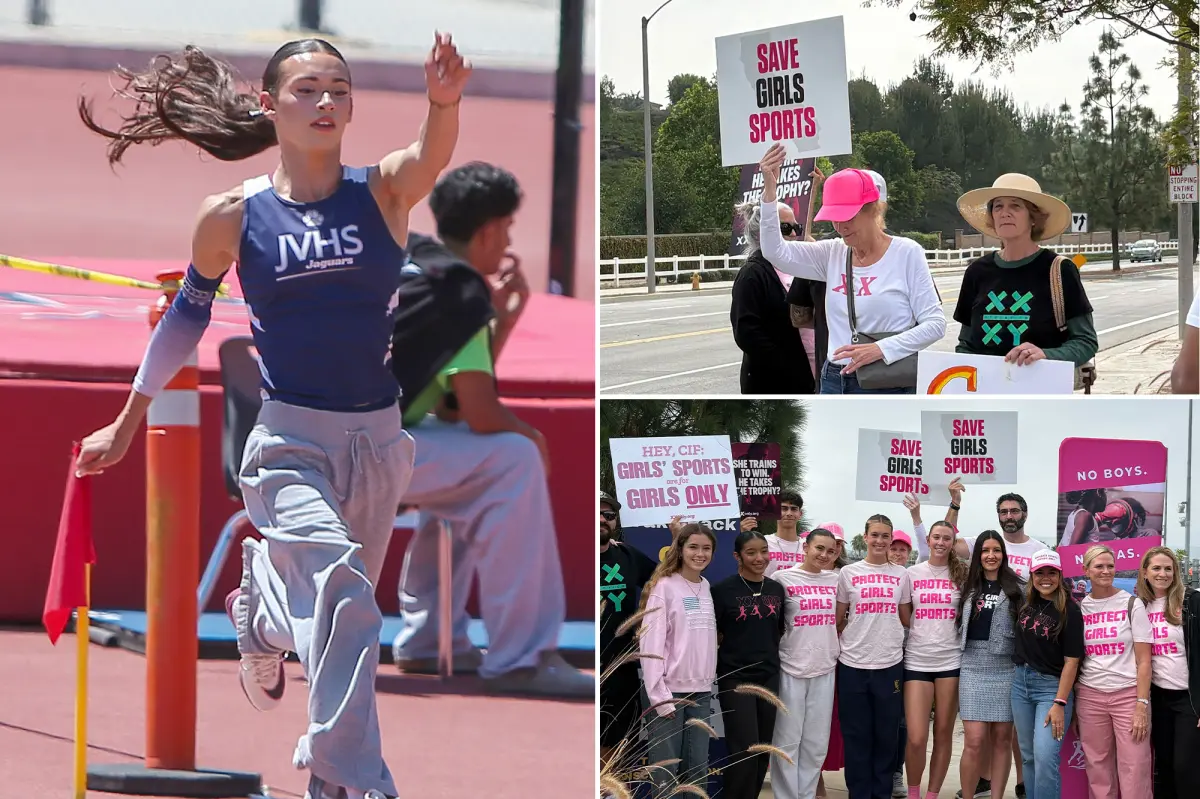
Saturday’s meet was a masterclass in skill, with Hernandez sweeping through the jumping events like a force of nature. In the triple jump, she soared to an impressive 42 feet, 4 inches, leaving her competitors trailing behind—the next best finishes came in at 39 feet, 7 1/2 inches and 37 feet, 8 inches. Imagine the effort that goes into each leap: the explosive takeoff, the mid-air adjustments, and the precise landing, all perfected through countless hours of practice. Then, in the long jump, Hernandez stretched her abilities even further, covering 20 feet, 4 1/4 inches. That put her more than a foot ahead of the second-place mark at 19 feet, 1 1/2 inches, with third place managing 18 feet, 7 inches. You can picture the crowd’s reactions—gasps of surprise, bursts of applause from supporters, and furrowed brows from those wondering if this was about natural talent or something more. Hernandez also tied for first in the high jump, clearing 5 feet, 2 inches alongside Reese Hogan, her name now intertwined with this talented rival. For Hernandez, these performances were milestones, building on a journey that began in girls’ volleyball and blossomed into track dominance. Each event wasn’t just a race but a testament to resilience, as she navigated a path fraught with challenges, inspire admiration from allies and envy from detractors alike.
Protests and Public Outcry: Voices Raised for Girls’ Sports
Outside the high school grounds, the air was thick with tension and purpose, as protesters gathered for a “Save Girls’ Sports” rally before the meet began. Led by former NCAA athlete Sophia Lorey, the group carried signs and chanted slogans, demanding that biological males be barred from competing against girls. One protester’s voice rang out angrily, accusing California Governor Gavin Newsom of betraying female athletes, proclaiming that “girls are being threatened.” These weren’t faceless complaints; they were heartfelt pleas from parents and advocates who felt the integrity of women’s sports slipping away. One grandfather at the event, there to cheer on Moorpark High School’s team, shook his head in exasperation: “It happened last year, and I thought it’d be done, but it’s California.” There was a raw, personal edge to this frustration—visions of daughters missing out on scholarships or state titles because of perceived physical advantages. For Higgins, the protesters represented a system unwilling to adapt, forcing families into uncomfortable alliances or divisions. The rally turned the meet into more than a competition; it became a flashpoint for broader societal debates, where emotions like fear for the future of girls’ athletics clashed with calls for inclusivity.
A Rising Figure in the National Debate
AB Hernandez hasn’t just popped onto the scene; she’s become a polarizing icon in the fight over transgender participation in sports. Her path started with girls’ volleyball, where her skills quickly drew attention, and now, as a track star, she’s repeatedly captured headlines after clinching victories in events against biological female competitors. Saturday’s showdown with Reese Hogan added another layer to this narrative—Hogan’s act of stepping onto the podium beside Hernandez last time was seen by some as a stand for unity, applauded by those advocating for trans inclusion. But for critics, these wins are symptoms of an unfair playing field, where biological males, with their typically greater muscle mass and bone density, hold edges that feel insurmountable. Hernandez’s presence forces us to confront human stories: a teenager chasing dreams in a body that society doesn’t always recognize, versus the anxieties of biological girls who train tirelessly only to see records redefined. It’s not black-and-white; Hernandez speaks of her identity with quiet conviction, insisting that her journey is about belonging and visibility. Yet, the escalation feels relentless, as her name echoes in arguments far beyond the track, reminding us that behind the controversy are real people with real stakes.
Broader Implications: Lawsuits and Investigations
The furor at Yorba Linda isn’t isolated; it’s part of a nationwide storm swirling around California’s policies on transgender athletes. The US Department of Justice has filed a lawsuit against the state, challenging rules that allow trans women to compete in girls’ and women’s sports, arguing they undermine fairness and rights. Meanwhile, the Department of Education has ramped up investigations into Title IX violations, now encompassing the California Community College Athletic Association, which oversees 108 programs across the state. These probes aren’t about abstract legal jargon—they’re about ensuring equitable access, with officials like Assistant Secretary for Civil Rights Kimberly Richey declaring, “Women’s sports are for women. The Trump administration will not tolerate policies that erase women’s rights.” Picture the school boards and community colleges caught in the crossfire, trying to balance inclusion with tradition. For athletes like Hernandez, this means navigating a landscape where every win risks sparking another wave of scrutiny. The controversy has transcended high school fields, infiltrating olympic-level debates and casting shadows over future generations, as families and policymakers wrestle with questions of biology, equality, and what it means to be fair.
Voices from the Spotlight: Support and Critique
Amid the noise, figures like tennis legend Martina Navratilova have weighed in, amplifying the criticism. After Olympic gold medalists Nancy Hogshead and Kaillie Humphries spoke out about California’s approach, Navratilova chimed in on social media: “Right on Nancy!!! We are just built different!!!” Her follow-up was direct: “Newsom could overturn this in a second. No excuse.” These endorsements come from a place of deep expertise, grounded in years of athletic grit and a recognition of the inherent physical differences between males and females. For proponents of change, such as advocates for trans rights, Navratilova’s stance feels like an overreach, potentially erasing the lived experiences of trans athletes who feel their participation is a step toward acceptance. Yet, for detractors, her words validate the lived frustrations of biological female athletes. In humanizing this debate, we see not just statistics and laws, but the passion of icons rallying for causes that matter to them—their voices echoing the hopes and hurts of everyday people. Ultimately, Saturday’s meet at Yorba Linda isn’t just about jumps and podiums; it’s a mirror to society’s evolving views on gender, sports, and belonging, urging us to listen more closely to the hearts behind the headlines.
(Word count: 1,248)