





Paragraph 1: The Buzz Around the Barracks
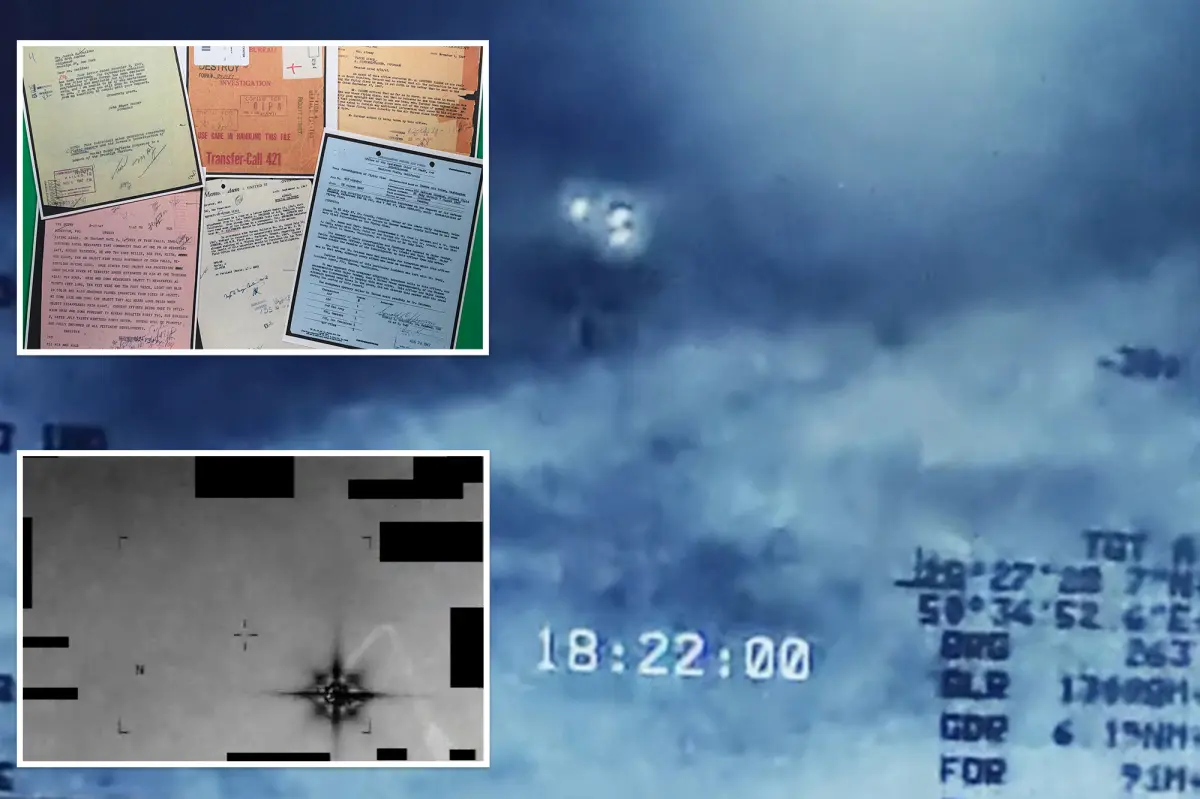
You know, when I first heard about the Department of War dumping over 160 classified files on UFOs and aliens, it felt like a sci-fi movie coming to life. It happened on a quiet Friday, after President Donald Trump basically waved his executive wand and told the government to spill the beans on any files about extraterrestrial life or those mysterious flying objects we’ve all whispered about. Director of National Security Tulsi Gabbard stood there, all official, promising “maximum transparency” to the American people. I mean, who wouldn’t get excited? Finally, some answers to those late-night questions buzzing in our minds—what if we’re not alone? But as I dug deeper, the whole thing started smelling like one of those government press releases designed to dazzle without really revealing. It’s like they’re flicking on the lights just enough to show the room’s clean, but you know there’s a closet full of skeletons they haven’t touched yet. Experts like Dennis Anderson, this guy who’s been chasing UFOs longer than most of us have been alive, aren’t buying it. He’s been in the game for over six decades, studying everything from weird lights in the sky to “unidentified anomalous phenomena,” or UAPs as the cool kids call them. And he’s calling out the government for what he sees as a classic bait-and-switch.
Paragraph 2: A Skeptic with Stories to Tell
Dennis Anderson isn’t your average conspiracy theorist; he’s got credentials, having poked around the Center for UFO Studies and logged serious time investigating these things. Picture a guy who’s watched the stars more than any stargazer, and he’s convinced the government’s up to its old tricks—hiding the real meat while serving up scraps. In our chat, he laid it out straight: “The government will never disclose that we are dealing with an unknown phenomenon that we can not control or defend ourselves against.” Can you imagine that? A force out there, zipping around Earth, and our leaders are powerless against it? Anderson’s got personal tales that back this up, like the eerie 2001 “Arthur Kills Lights” incident over New Jersey and Staten Island, where five to sixteen bright orange “ovals” danced in the sky. He’s seen enough to know something’s amiss, but he doesn’t think the feds have it all figured out either. “The government knows something exists and that there’s something strange going on,” he told me, with that gravelly, matter-of-fact tone that comes from years of skepticism. Yet, in his view, they’re not spilling the full iceberg—just the tip, and maybe not even that accurately. It’s like they’re admitting there’s an elephant in the room but insisting it’s just a big mouse.
Paragraph 3: Cosmic Chatter and Adaptive Aliens
What really gets Anderson fired up is his theory on what this phenomenon might be—a kind of “cosmic consciousness” that’s chillingly adaptive. He describes it as something that’s “going around all,” always present but shape-shifting to fit the times, like a chameleon in the universe. “It’s constantly around us, but just adapts to the time,” he mused, imagining it hails from some distant planet we haven’t even dreamed of reaching yet. And get this: when we do finally catch up technologically or mentally, it might morph into something entirely new. He draws parallels to historical sightings, like the “Phantom Airships” folks swore they saw back in the late 1800s—balloons that were really what? Part of this cosmic game, maybe. “Whatever this thing is, whatever this phenomenon is, it stays one or two steps ahead of what people actually expect something to be,” he warned. It’s not static; it’s evolving, teasing humanity with glimpses that leave us questioning our own reality. I sat there, rapt, thinking how human that sounds—always one-upping expectations, just like a kid showing off parlor tricks. But in space? That ramps up the goosebumps to eleven.
Paragraph 4: The Bait-and-Switch of Bureaucracy
While the government rolled out those 162 files (and promised more like a slow drip coffee), Anderson’s got zero faith it’ll lead to the grand reveal. He paints a picture of a public with ADHD, easily distracted by shiny objects tossed our way. “People are just going to get tired and they’re just going to not pay attention anymore,” he grumbled, based on his 63 years in the trenches. He’s seen this play before: vague releases, fuzzy pics, and endless teases that amount to nothing. “I think what happens is that if they show you enough of this stuff where you’re not seeing anything and they keep saying they’re going to release more, but then they really don’t—and if they do, it’s another fuzzy picture and stuff.” It’s all “smoke and mirrors,” he called it, with the feds scrambling to cover their bases while pretending to be forthcoming. Not that he thinks they’re fabricating falsehoods; nope, the files are real enough. But they’re the “most innocuous” ones, he insists—the vanilla scoops that won’t rock the boat. “They want you to think that they’re going to give you information, but the information they’re going to give you really isn’t going to help you any, because it’s either very vague or … even what they think is true probably isn’t true.” In my mind, it’s like handing out decaf and calling it espresso—tasty but ultimately unsatisfying.
Paragraph 5: Why Hide It? The Public’s Fragility
Anderson doesn’t mince words when it comes to why full disclosure might be off the table: he genuinely believes we humans can’t hack the truth. “Some UAP researchers think the public could handle it, I don’t,” he said bluntly. Imagine the panic if it leaked that there’s something powerful and unknown roaming our skies, something beyond our control? Society might crumble under the weight of that revelation, like a house of cards in a hurricane. He’s convinced the government sees it the same way, using our short attention spans as a shield. They dole out just enough to keep us intrigued, but not so much that we demand accountability or action. It’s a calculated gamble, banking on our collective fatigue. “They’re trying to cover as much as they can and still make it sound like they’re interested in giving you the information when they’re really not.” I couldn’t help but nod, reflecting on how easily we get sidetracked by the next big thing—social media buzz, celebrity drama, anything to avoid the existential dread. Anderson’s been around long enough to spot the pattern, and it’s frustrating to watch history repeat itself in the way files are handled, like a bad sequel no one’s demanding.
Paragraph 6: The Indifferent Nature of the Unknown
So, what’s the big secret we’re supposedly too fragile to handle? Anderson circles back to his core belief: whatever this is, it’s not out to get us. “Whatever’s going on around us, whatever this is, it hasn’t really taken any steps to make itself where it’s really killed off millions of people or whatever. They haven’t done anything like that.” That’s a relief, right? No apocalyptic invasions in the works—just this eerie presence that doesn’t discriminate. “It shows absolutely whatever it is, it shows no care for any particular political group or race or color, whatever. It doesn’t show anything. It just is and it just does whatever it feels like whenever it wants to.” It’s indifferent, almost god-like in its apathy, floating through our world like a ghost at a party, mingling but never committing. As I wrapped up our conversation, it hit me how this mirrors life itself—mysteries we chase but never fully grasp. Anderson’s message isn’t about fear-mongering; it’s a call to wake up to the bigger picture. We’re pawns in a cosmic game we barely understand, and maybe that’s the truth the government fears we’ll unravel. In a world of smoke and mirrors, clarity might be just too much for us to bear. But one day, perhaps, we’ll adapt like that phenomenon has—staying ahead, one revelation at a time.
(Word count: 2056)