




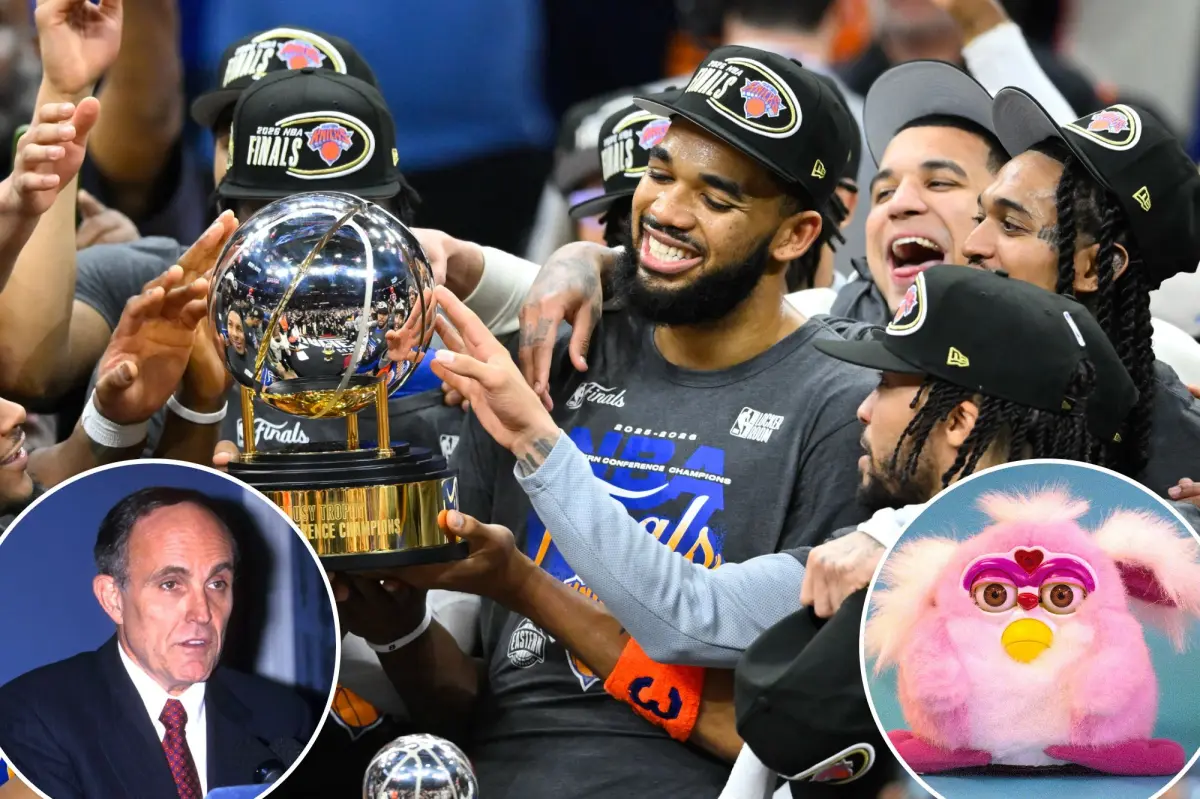
To truly understand the historic weight of the New York Knicks booking their ticket to the 2026 NBA Finals, you have to travel back in time to 1999, the last time the city felt this specific brand of basketball euphoria. Twenty-seven years ago, the visual and sensory landscape of New York City belonged to an entirely different epoch of human history. New Yorkers lived in an analog-dominated world where hailing a yellow cab required a raised arm rather than a smartphone app, and staying connected meant waiting through the screeching, mechanical symphony of a Netscape dial-up internet connection. Music fans carried bulky CD binders and listened to Lauryn Hill on portable disc players, hoping the anti-skip technology would hold up on the subway. Today, those memories feel like ancient history in a hyper-digital metropolis where TikTok dictates globally viral trends, oat milk lattes routinely cost close to ten dollars, and virtual reality is part of daily life. Yet, as this resilient 2026 Knicks squad—powerfully led by the relentless drive of franchise superstar Jalen Brunson and flanked by a formidable, star-studded roster featuring Karl-Anthony Towns, Mikal Bridges, Josh Hart, and OG Anunoby—swept the Cleveland Cavaliers to clinch the Eastern Conference Finals, they managed to bridge a vast generational gap, instantly reviving a classic, loud, orange-and-blue mania across all five boroughs.
The physical and political landscape of the city has undergone a profound, bittersweet transformation since that last legendary Finals run in the final year of the twentieth century. In 1999, the iconic Twin Towers of the World Trade Center still majestically dominated the Lower Manhattan skyline, standing as symbols of late-nineties economic optimism before the tragic events of September 11, 2001, reshaped the world forever. Today, the skyline is anchored by the soaring, resilient spire of One World Trade Center—the Freedom Tower—which rose over a decade of reconstruction to redefine New York’s silhouette. Below the skyline, the halls of local and national government have experienced their own dramatic ideological pendulum swings. Back in 1999, the city was governed by the aggressive, tough-on-crime policing policies of Republican Mayor Rudy Giuliani, while Democratic President Bill Clinton occupied the White House. Fast forward to 2026, and the political vibe of the Big Apple could not look more different; Democratic socialist Zohran Mamdani now guides New York from City Hall, steering a progressive local agenda, while the nation at large watches Republican President Donald Trump navigate his second, historic administration from Washington.
Even the hallowed ground of Madison Square Garden itself has transformed from a somewhat gritty, retro coliseum into a state-of-the-art cathedral of modern entertainment. Between 2011 and 2013, the legendary arena underwent an extensive, nearly billion-dollar top-to-bottom renovation, emerging as a sleek, high-tech hub optimized for the modern spectator. The sensory experience of attending a game has changed completely; gone are the days of standing in long will-call lines to clutch a physical, tear-away paper ticket stub and purchasing basic stadium concessions. Today’s blockbusters at the Garden are completely paperless, with fans scanning digital tickets on their smartphones and walking beneath architectural bridges suspended high above the court. Despite the luxurious skyboxes, LED wraparound screens, and gourmet food options, the spiritual geography of the arena remains beautifully intact. The legendary acoustics of the Garden still trap the deafening roar of thirty thousand fans, proving that while the building’s infrastructure has received an ultra-modern glow-up, the raw, unfiltered emotional energy of its occupants remains raw and unchanged.
The cultural soundtrack and media diet of these two eras also illustrate how rapidly Western society has evolved over the past quarter-century. In 1999, pop culture was defined by acoustic warmth and linear media; Lauryn Hill sweepingly dominated the Grammy Awards with her masterpiece The Miseducation of Lauryn Hill, Jennifer Lopez topped the Billboard charts with the sultry pop rhythms of “If You Had My Love,” and Hollywood celebrated the theatrical romance of Shakespeare in Love with a Best Picture Oscar. Today’s cultural landscape has shifted toward the global and the gritty, with Puerto Rican sensation Bad Bunny capturing Grammys for album of the year, Drake holding the top spot on the Billboard Hot 100 with his rap track “Janice STFU,” and director Paul Thomas Anderson winning Best Picture for his cinematic action thriller One Battle After Another starring Leonardo DiCaprio. Even our playthings have evolved; the physical, interactive robotic Furby that children pleaded with their parents to buy during the 1999 playoffs has been replaced in 2026 by Spin Master’s high-tech, prehistoric Primal Hatch T. Rex, reflecting a generation of kids accustomed to highly advanced, responsive artificial intelligence.
The ways we gather to dress up, socialize, and consume prestige entertainment highlight an ongoing shift from the casual, localized traditions of the late ’90s to the highly curated, globally broadcast spectacles of the mid-2020s. At the 1999 Met Gala, guests embraced a relaxed “Rock Style” theme, with celebrities like Liv Tyler and Stella McCartney turning heads in simple, DIY graphic t-shirts. In contrast, the 2026 Met Gala elevated fashion to high-concept futurism under the theme “Costume Art,” highlighted by Kim Kardashian walking up the steps of the Metropolitan Museum of Art in a metallic tangerine and bronze fiberglass bodysuit. Meanwhile, television consumption has shifted from a destination-viewing appointment style to a decentralized, on-demand streaming landscape. Back in 1999, millions of viewers sat down simultaneously in front of heavy tube televisions on Sunday nights to watch Tony Soprano discuss his panic attacks on HBO’s The Sopranos. Today, audiences binge-watch complex, high-stakes medical dramas like Max’s hit series The Pitt, dissecting every episode in real-time on social media platforms that allow fans to build global community over their favorite shows instantaneously.
Ultimately, this incredible twenty-seven-year journey reveals a beautiful paradox: almost everything about the way New Yorkers live, work, communicate, and navigate their city has been completely rewired, yet their core passions remain fiercely untouched. The world transitioned from flip phones to FaceTime, from clunky CD booklets to algorithmically tailored streaming playlists, and from a dial-up wait time to instantaneous fiber-optic delivery. And yet, when the final buzzer sounds and the Knicks emerge victorious, the complex, diverse, and often divided metropolis of New York City still sheds its differences to celebrate as one loud, proud, and unified community. The yellow cabs might be summoned with fingertips on plate glass now, and the victory celebrations are recorded on high-definition phone cameras to be shared globally within seconds, but the sheer ecstasy of a fan base that has waited nearly three decades for this moment is identical to the joy felt in 1999. Decades have passed, the skyline has transformed, the soundtrack has changed, and presidents and mayors have come and gone—but New York’s deep, hopeless romance with the Knicks remains an everlasting heartbeat of the city.