





In the grand, meticulously engineered universe of Walt Disney World, where every cobblestone in Magic Kingdom is swept before dawn and every shrub at EPCOT’s world showcase is trimmed to within an inch of its life, the lowly trash can has always served as the unglamorous but reliable workhorse of guest comfort. For decades, visitors have depended on those squat, sturdy, flat-topped receptacles scattered across the Florida sun-baked walkways, not just for their waste, but as an unexpected lifeline of practicality. A quiet revolution is now rolling through the resort, however, and it has sparked a wildfire of controversy that has nothing to do with ride queues, character meet-and-greets, or attendance caps. Walt Disney World has begun installing a new generation of high-tech, solar-powered “smart” bins, designed to hold more garbage, compact waste automatically, and alert custodial cast members when they are nearing full capacity. It sounds like a win for logistics and hygiene, theoretically meaning fewer overflowing bins, less frequent trips for employees, and a cleaner park overall. But the removal of the venerated flat top has ignited a passionate, almost comical, yet deeply symbolic outrage among the Disney faithful, who have taken to Reddit, TikTok, and Instagram to mourn the loss of what they consider a “rite of passage.” The dispute proves that in the hyper-immersive Disney bubble, even the most mundane object can hold profound emotional weight, representing a tangible shift in how the corporation views guest needs versus operational efficiency.
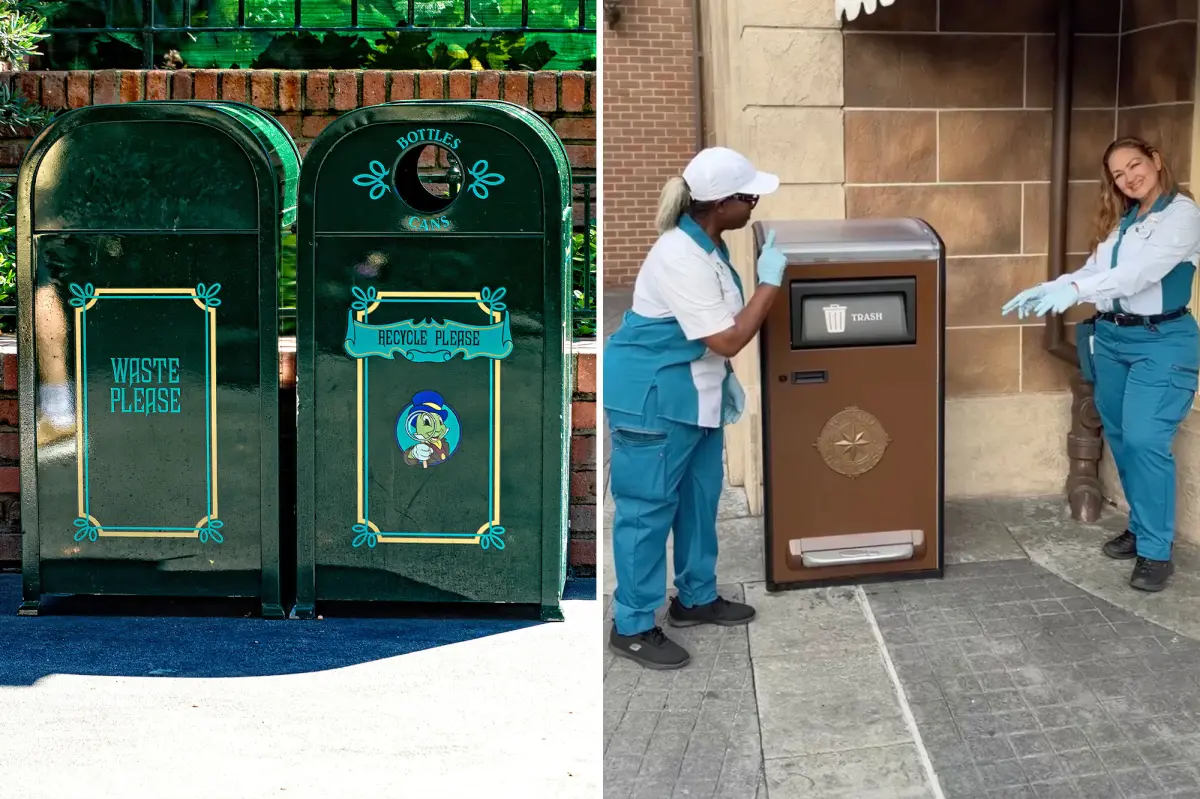
The technical specifications of the new bins are a marvel of modern engineering, which makes the backlash feel almost irrational at first glance. The solar panels capture Florida’s relentless sunshine to power an internal compactor that crushes the contents, significantly increasing the volume each unit can accept before needing to be emptied. The smart sensors communicate wirelessly with custodial teams, creating a data-driven approach to waste management that bypasses the old, labor-intensive schedule of manual checks. To deter pests and manage odors, the units also feature a chute that guests must pull open manually or trigger via a foot pedal for a hands-free disposal experience, a feature that seems particularly useful during times when guests are laden with sticky snacks and soda. Yet, in this polished design, Disney Imagineers seem to have overlooked one crucial, unspoken contract they had with their guests. The old, flat-topped can was not merely a receptacle; it was an impromptu dining table. During EPCOT’s enormously popular Food and Wine Festival, as well as the Flower and Garden Festival, guests traverse the world pavilions armed with plates of small bites from Mexico, Norway, and Germany, looking for a suitable surface to rest their meals while they balance a glass of wine. The new bins feature a curved, sloped top that makes balancing a plate virtually impossible, forcing guests to hold their food awkwardly in one hand while eating with the other. One disgruntled Redditor encapsulated the feeling perfectly, writing with a mix of exasperation and disbelief, “Yes I know there’s bigger issues in the world. but it just baffles me how modern Disney can f—k up something as simple as the trash can.” The visceral swearing signals that this feels less like a design tweak and more like a betrayal of an unwritten rule of the park’s ecosystem.
To truly understand the depth of the hurt feelings, we must acknowledge the strange, cult-like following that the original trash cans have amassed over the decades. In a park where the “magic” is meticulously manufactured, the trash cans have become icons of purposeful, reliable infrastructure. Their design was famously simple: a glossy, durable, bright color scheme (though varied by land) with a perfectly flat perimeter that was wide enough to hold a paper plate of nachos or a folded map. This flatness was not accidental; it was a subtle, genius piece of guest service that Imagineering understood intuitively, adding a level of convenience that guests didn’t realize they were relying on until it disappeared. The devotion to these bins has reached the point of obsessive consumerism. Over the years, Disney has released official merchandise inspired by the trash cans, including miniature replicas, pins, and even shower gel shaped like the bins, and guests snap them up voraciously. Furthermore, when the original cans are auctioned off or sold as retired props, they command staggering prices; original trash cans have sold for thousands of dollars on resale markets, treated like rare collectible art rather than discarded metalwork. For these superfans, the cans represent a snippet of tangible Disney history, a physical object that connects them to childhood memories of their first visit, the smell of popcorn, and the long, happy hours waiting for parades. Removing the flat top, therefore, is not just a functional inconvenience—it feels like having a piece of the nostalgic, physical timeline of their beloved institution bulldozed in favor of a sleeker, faceless tech upgrade.
From Disney’s corporate perspective, the “smart” cans are a logical step forward in a relentless pursuit of operational perfection. They reduce the number of times cast members must traverse the scorching pavement to empty containers, freeing them up for other “magical” tasks like guest interaction. The compaction feature ensures that bins don’t overflow during peak hours, a common complaint that could lead to a less pristine park image. The integrated sensors allow managers to dispatch a waste truck only when a specific can is at seventy percent capacity, saving fuel and man-hours, and reducing the traffic of utility vehicles through guest-facing areas. Disney’s official communication, shared via their “Cast and Community” Facebook page, defended the change with a cheerful slogan: “Same magic. Smarter can.” The video goes on to describe how these next-generation bins are “designed to support the incredible work cast members do every day, helping keep the parks sparkling and ready for unforgettable memories.” However, this corporatespeak rings hollow to the guests who are physically affected by the change. The pragmatic nature of a theme park vacation is exhausting; the price of food has skyrocketed, and guests expect at least a safe, stable place to rest their $15 pretzel. The curved tops seem to prioritize the aesthetics of a modern landfill over the comfort of the paying customer. It is a classic tension between the “show” of Disney and the “business” of Disney, where convenience for the employee is prioritized over a subtle convenience for the guest, a decision that feels particularly tone-deaf during an era where guests are already paying astronomical sums for a single day of admission.
But the anger on social media is not merely about physical comfort; it is an emotional protest against a loss of intimacy and ritual. The act of eating perched awkwardly beside a trash can is incredibly unglamorous, yet it’s a shared, quintessential Disney experience that every visitor understands. The comment on TikTok, “Eating on top of a trash can at EPCOT during a festival is basically a rite of passage. Not glamorous. But PRACTICAL,” captures the poignancy of the situation. It speaks to the inherent contradictions of a theme park vacation—the attempts to enjoy haute cuisine while standing in the Florida heat, the exhausting hunger that turns a garbage lid into a five-star dining table, and the camaraderie shared with strangers doing the same. Another comment on Instagram, simply asking “Where am I supposed to EAT?!” resonates because it touches on the sincere lack of seating available in the world pavilions during major festivals. With restaurants packed and tables at a premium, the flat trash can was an unofficial, free seat—an egalitarian piece of furniture in a world of premium experiences. By curving the top, Disney has effectively removed a public amenity that mitigated the exhaustion of the park day. Furthermore, the very “smartness” of the cans introduces a barrier between the guest and the simple act of disposal. The foot pedal and chute mechanism, while hygienic, are more complex than the simple, gravity-fed open hole of before. In a world increasingly overrun with technology, there is a certain charm to the analog simplicity of just chucking a wrapper onto a flat surface. The new cans feel like an intrusion of the “internet of things” into a sacred, analog space that guests relied upon for its static, uncomplicated reliability.
Ultimately, this trash can kerfuffle reveals a deeper truth about the psychology of Disney World and the expectations of its visitors. Disney guests do not visit for the efficiency of the HVAC systems or the data collection of their smart sensors; they visit for escape. When a mundane object like a trash can becomes the subject of an international news cycle, it highlights how emotionally invested people are in the details of the “show.” The flat-topped trash can was never designed to be a table, but its design tacitly acknowledged that humans are messy, tired, and hungry creatures who need subtle grace in their environment. The new cans, while undeniably smarter, are also colder. They speak to a future where guest flow is analyzed by algorithms and where waste is compacted into oblivion, but they lack the human warmth of literally providing a stable platform for a tired family to enjoy a turkey leg. Disney has faced backlash before when changing beloved attractions or removing snack stands, and they usually do so with trepidation. Here, they seemingly walked into this controversy blind, not realizing that the trash can had achieved the status of a supporting character in the Disney narrative. It is likely that, due to the overwhelming negative feedback, Disney may re-examine the design, perhaps adding a small, flat ledge or a surrounding bench to accommodate the festival crowds. Until then, the “smart” bin rollout serves as a potent reminder that in the delicate art of theme park storytelling, the smallest, most humble objects often hold the largest pieces of the guest’s heart, and that true magic cannot be automated, compacted, or monitored by a sensor—it must be felt, one forgotten plate at a time.