





In Tinseltown, the old rules of shopping are being rewritten, and the change is palpable the moment you step through the doors of some of Los Angeles’s most talked-about boutiques. Retailers no longer seem content with simply taking your credit card at the register; they want to claim your entire afternoon, your social feed, and your sense of belonging. A wave of brands across the city are transforming their brick-and-mortar stores into sprawling lounge destinations, complete with specialty espresso bars, aesthetically pleasing food and soft serve counters, plush couches, and breezy courtyards that invite you to stay long after your browsing is done. These hybrid spaces, playfully dubbed “brewtiques,” are tapping into a major shift in modern retail: turning clothing boutiques into social gathering hubs where customers can linger, sip, and connect alongside racks of pricey designer threads. The message is clear—shopping is no longer a chore to be completed; it’s an experience to be savored. For many shoppers, the cafe is the primary hook, the irresistible lure that pulls them through the door. Propelled by viral TikTok videos and Instagram feeds, the buzz around these in-store coffee spots acts as a low-stakes entry point for newcomers who might never have walked in just to browse the clothes. But once they’re inside, sipping a beautifully crafted latte in a branded cup, they find themselves eagerly buying into the full branded lifestyle, not just a garment.
For some, the appeal is as simple as holding a recognizable branded cup—an iced latte or a matcha in a stylish vessel that feels like an affordable, highly Instagrammable way to buy into a fashion label’s world without necessarily dropping big money on clothes. It’s a clever psychological shift: the coffee becomes a gateway drug to the brand, a tangible piece of the aesthetic that you can carry around and show off. The latest entrant into this world is cult LA denim brand Mother, which recently opened the doors to its first flagship in Beverly Hills. The 3,850-square-foot store is designed less like a traditional boutique and more like a groovy 1970s home, complete with mirrored boudoir-style fitting rooms, curved walls, a coffee bar, and a sunken circular conversation pit where shoppers are encouraged to settle in. Bathrooms and free WiFi are built right into the experience, signaling that this is a place meant for lingering, not just purchasing. Mother co-founder Lela Becker explained the philosophy beautifully, saying, “We never wanted the store to feel like somewhere you walk into, buy something and leave. We thought about the space almost more like a house or a clubhouse than a traditional retail environment, and if you’re inviting people into your house, you should probably offer them something to drink.” Asked if the beverage hook actually gets customers to stick around, Becker didn’t mince words: “It’s still early, but that was absolutely the intention. We wanted to give people permission to stay.” This sense of invitation, of being welcomed into a space rather than being sold to, is at the heart of the brewtique revolution.
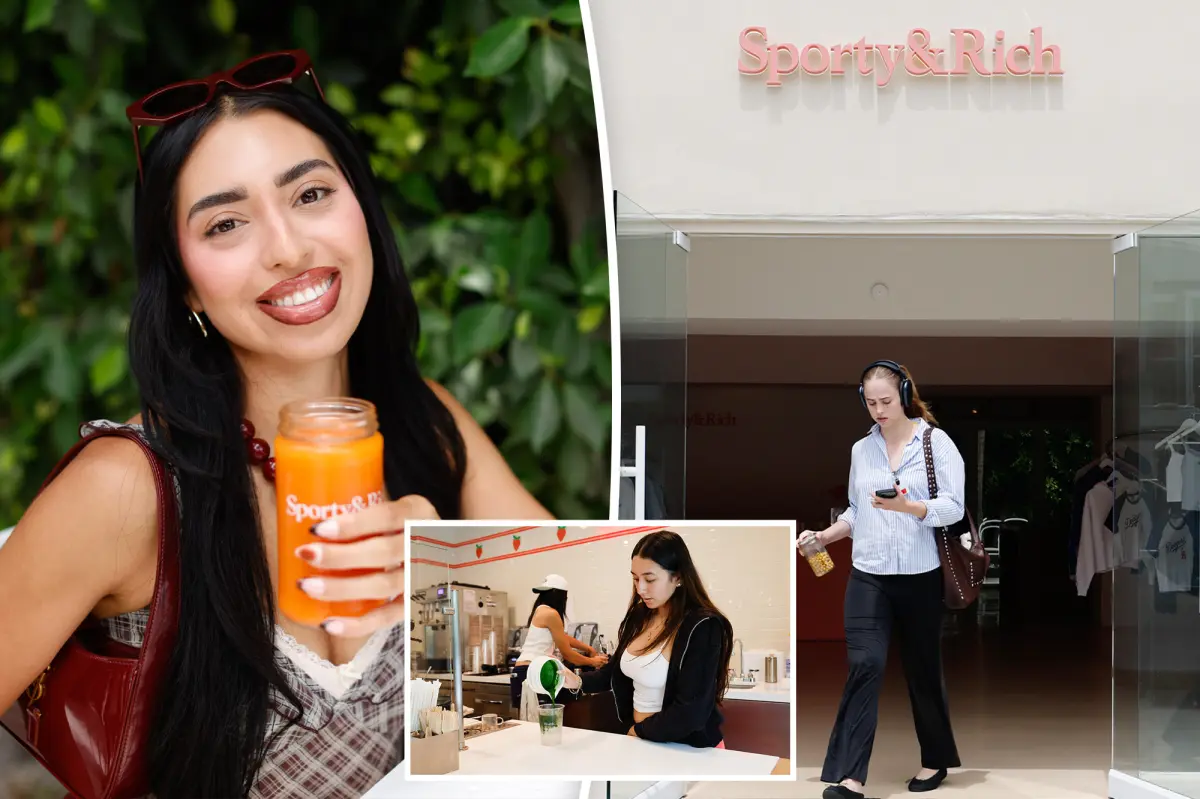
Over on Melrose Avenue, the brewtique trend has reached a fever pitch, with each new opening trying to outdo the last in terms of visual appeal and experiential offerings. Wellness brand Sporty & Rich opened its flagship in July, complete with a strawberry-themed cafe where customers can lounge on pink velvet banquettes under retro tiled walls and neon signs, or hang out in the courtyard outside. The cafe has become a destination in its own right, not just an add-on to the store, thanks to its photogenic branding and a menu full of smoothies, drinks, food, and even bone broth. Visiting LA on a day trip from San Diego, digital creator Jasilynn Zamora spent about 30 minutes in the space, taking photos and videos of herself in front of one of the mirror-lined walls. She discovered the label on TikTok and made a point to visit the physical store. “I think it’s very unique,” Zamora said. “There’s not a lot of cafes like that have a store, so I kind of like how you can shop and get a coffee. I also like the aesthetic of it.” Nearby in the courtyard, Nayara Rocio, a doctor specializing in longevity visiting Los Angeles from Brazil for a Kabbalah course, sought out the location after seeing the brand’s viral popularity on TikTok. Rocio was sipping a smoothie while taking selfies in a Sporty & Rich sweatshirt, and she just so happens to have around 250,000 Instagram followers. These moments—strangers from different corners of the globe converging on a clothing store to drink smoothies and take photos—perfectly illustrate how the brewtique model has transformed retail into a social and cultural phenomenon.
The scene repeats itself across Melrose, where a cluster of brands have embraced the cafe concept with enthusiasm. At Madhappy, two Gen Z shoppers, Valery Renterieo and Manny Guerrero, were hanging out inside with iced matchas and admitted that the “vibe” was the sole reason they walked through the door. They noted that they probably wouldn’t have bothered if there wasn’t a cafe, and part of the appeal was simply walking around holding the branded Madhappy cups. It’s a subtle but powerful form of marketing: the cup itself becomes a status symbol, a way of signaling that you’re part of a particular cultural moment. New York fashion brand Aime Leon Dore also opened its first West Coast flagship on Melrose in April, bringing its popular Cafe Leon Dore concept along for the ride. The cafe has become a destination for fans of the brand, offering a taste of the label’s sophisticated, nostalgic aesthetic in liquid form. Anine Bing joined the trend this summer with a Leora Cafe pop-up at its Melrose store, serving five exclusive drinks designed specifically for the activation. The limited-run cafe added another layer to the brand’s retail experience, turning a simple shopping visit into more of a curated lifestyle moment made for social media. Each of these brands understands that in a crowded market, the physical store must offer something beyond merchandise—it must offer a feeling, a memory, and a reason to return.
While the brewtique concept is not unique to Los Angeles, it may be particularly suited to the city, where coffee shops have long doubled as offices, meeting spots, and places to see and be seen. LA is a city built on movement and image, where the line between public and private life is often blurred, and where the act of being seen is almost as important as the act of doing. In this environment, a clothing store that also serves as a cafe feels less like a gimmick and more like a natural evolution of the city’s social fabric. It taps into a deep human need for connection and community, offering a space where you can work on your laptop, catch up with a friend, or simply people-watch while surrounded by beautiful objects. For brands, the payoff is enormous: every hour a customer spends lounging in their store is an hour of immersion in their world, a chance to build loyalty and emotional attachment that no online ad can replicate. The brewtique is also a savvy response to the challenges of modern retail, where e-commerce has decimated foot traffic and forced physical stores to justify their existence. By becoming destinations rather than mere points of sale, these hybrid spaces offer an experience that cannot be replicated online, giving customers a reason to leave their homes and engage with a brand in a tangible way.
Ultimately, the rise of the brewtique signals a broader shift in the retail landscape, one that prioritizes hospitality, community, and experience over the simple transaction of goods. It’s a recognition that people are hungry for places to gather, to feel connected, and to be part of something larger than themselves. The coffee bar is not just a clever marketing tactic; it’s an invitation to slow down, to linger, and to feel at home in a space that might otherwise feel intimidating or impersonal. As more brands embrace this model, we can expect to see even more creative integrations of food, drink, and fashion, blurring the lines between retail, hospitality, and entertainment. The brewtique is a testament to the power of human connection in an increasingly digital world, a reminder that even in the age of online shopping, there is something irreplaceable about the physical experience of touching fabric, smelling coffee, and sharing a moment with others. Whether it’s the groovy 1970s clubhouse of Mother, the pink velvet dreamscape of Sporty & Rich, or the minimalist cool of Aime Leon Dore, these spaces are redefining what it means to go shopping. They are not just stores; they are living rooms, cafes, and community centers, all rolled into one. And in a city as dynamic and image-conscious as Los Angeles, that might just be the most fashionable thing of all.