







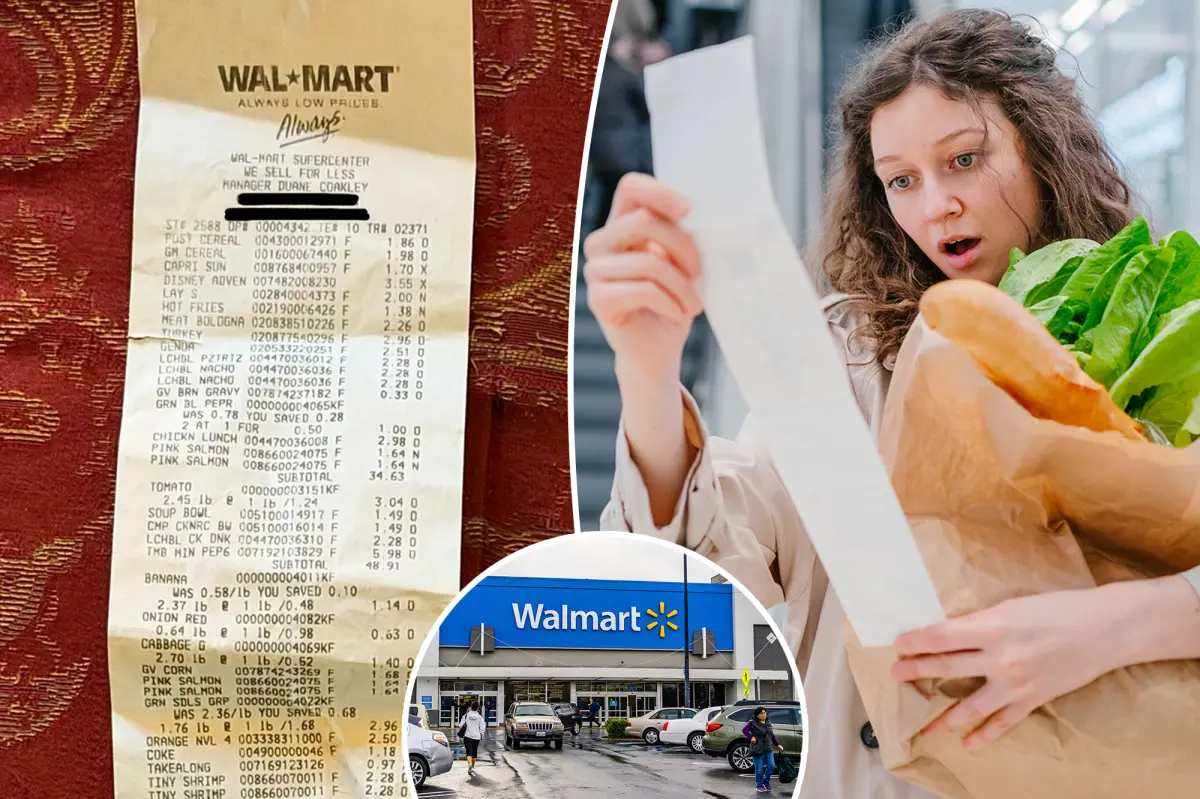
In an era where stepping into a grocery store can feel like navigating an emotional gauntlet of anxiety-inducing price tags, many of us find ourselves wishing we could step into a time machine and roll back the clock to the far more forgiving economic landscapes of yesteryear. Today, the notion of walking out of a supermarket with a dozen fresh eggs for less than a dollar and fifty cents sounds like a distant, beautiful fever dream of a frugal gourmet rather than a reality that existed just a short generation ago. This collective yearning for simpler, affordable times was recently reignited with spectacular force across social media, courtesy of a viral, crumpled artifact from the past: a vintage Walmart register receipt dated June 3, 2006. For younger generations currently struggling to make ends meet, this simple strip of thermal paper served as a painful, eye-opening reminder of the retail giant’s once-fabled “Rollback” prices on everyday essentials. The catalyst for this online firestorm was a post by a twenty-five-year-old user named Kylei, who uncovered her mother’s grocery receipt from nearly twenty years ago and shared it with her followers on the social media platform X, formerly known as Twitter. The image, which quickly went viral and amassed over twelve million views, detailed a routine shopping trip where her mother spent a jaw-droppingly low total of $161.87. What truly broke the internet, however, was not just the final dollar amount, but the sheer volume of goods it represented: that modest sum had purchased an incredible seventy-nine individual items. To a society currently battered by relentless inflation, the receipt did not just represent a transaction from the past; it stood as a symbol of a lost quality of life, triggering an immediate wave of grief, disbelief, and longing among millions of young adults who are finding it increasingly difficult to afford the basic fuel required to feed themselves. This viral snapshot of 2006 became an instant cultural touchstone, transforming a mundane piece of household trash into a historical monument of economic stability that emphasizes just how much our purchasing power has eroded in the intervening decades.
The online reactions to Kylei’s post were swift, emotional, and deeply indicative of a profound generational divide, with young, cash-strapped Gen Zers and Millennials collectively mourning the loss of affordable living. The contrast between her mother’s receipt and contemporary supermarket realities prompted Kylei to comment that the comparison “makes you feel sick,” a sentiment that resonated deeply with millions of readers who watch their hard-earned wages evaporate at the checkout counter every week. The comment section quickly transformed into a digital therapy session and a venue for collective outrage, as young people tried to reconcile the massive gap between their parents’ economic experiences and their own. One astonished twenty-something estimated that the very same basket of seventy-nine items would easily demand more than three hundred dollars in today’s market, an observation that highlights how drastically basic living costs have scaled. Other users expressed their frustration with a sharper, more painful edge, with one commenter lamenting that “they are robbing us blind,” while another mournfully joked that “we used to be a proper country” as they viewed the long-lost financial stability of the mid-2000s. These complaints go far beyond mere online whining; they represent the genuine psychological distress of a generation entering the workforce and attempting to build independent lives, only to find that the fundamental safety net of affordable sustenance has been pulled out from under them. For these young adults, who are already grappling with astronomical housing costs, student loan debts, and stagnant wages, the skyrocketing price of basic food items feels like an existential betrayal. This collective realization that a routine chore like buying groceries has morphed into a major financial hurdle has fostered a deep sense of cynicism, turning what should be a milestone of adult independence into a source of constant, low-grade panic and resentment toward a systemic crisis that seems to have no end in sight.
This widespread frustration is not merely an emotional reaction to a viral post; it is firmly rooted in a harsh, cold reality supported by a devastating wave of nationwide economic data. Across the United States, inflation—the slow, creeping monster that systematically erodes the value of money when demand vastly outstrips supply—has reached a fever pitch, further exacerbated by compounding global challenges, including shipping bottlenecks, supply chain friction, and escalating international tensions like the war involving Iran. The real-world consequences of these supply chain pressures were laid bare in recent reports from the Commerce Department’s Bureau of Economic Analysis, which revealed that food and energy prices have surged at their fastest pace in three years. According to the Labor Department’s consumer price index, the cost of food consumed at home rose by 2.9% compared to the same period just a year prior. For everyday consumers trying to maintain a healthy lifestyle, the statistics are even more punishing: city dwellers paid an astounding 6.5% more for fresh fruit and vegetables than they did in the previous year, while the cost of meat climbed by 8.8%. These are not just abstract percentages on a government spreadsheet; they are tangible financial burdens that force families to make difficult choices at the dinner table, replacing fresh, nutrient-dense ingredients with processed, less healthy alternatives simply because the healthier options have become financially out of reach. The confluence of extreme weather patterns, global regional conflicts, and skyrocketing transportation costs has created a perfect storm, transforming the grocery store into a psychological battlefield where middle- and lower-income families are consistently on the losing side.
The microscopic details of this inflation crisis reveal an even more sobering picture of how the rising cost of living is physically reshaping the lives of families across the nation. Data gathered by the US Census Bureau highlights the staggering reality that a family of four is now spending an average of over $17,000 annually just on groceries—a figure that is particularly pronounced in states with high transportation costs and complex supply routes, such as California, Hawaii, and Texas. For these families, the weekly grocery trip has become a source of immense stress, as the prices of staple goods continue to climb to unprecedented heights month after month. Consider the humble pound of ground beef, which now averages an eye-watering $6.90 per pound, representing a devastating 15% increase year over year. Nonalcoholic beverages, once a cheap comforting indulgence for family dinners, have climbed in price by 5.1% over the past twelve months. Perhaps most shocking is the trajectory of simple produce items like tomatoes, which saw a punishing 15.1% price increase in a single month and are up an incredible 40% on an annual basis. These dramatic spikes mean that basic, home-cooked family meals that were once considered the absolute cheapest way to feed a household have now become costly endeavors. Parents are forced to watch their food budgets double while their matching grocery bags shrink, leaving them with the agonizing task of stretching every dollar, skipping meals, or turning to food banks to ensure that their children do not go to bed hungry under the weight of this systemic pressure.
To cope with this relentless economic onslaught, budget-conscious consumers are abandoning their traditional shopping habits and actively searching for financial sanctuary in cheaper, alternative retail spaces. This desperate hunt for lower prices has fundamentally shifted consumer loyalty, leading many to seek out big-box stores and wholesale clubs over conventional supermarkets. A recent comprehensive analysis by Consumer Reports illuminated this shifting landscape by ranking the most and least expensive grocery stores in the United States, using Walmart’s standard pricing as the baseline comparison. The study confirmed what many shoppers already knew from painful experience: high-end retailers like Whole Foods Market sit at the absolute pinnacle of expensiveness, with prices marking a staggering 40% premium over what a shopper would pay for equivalent items at Walmart. On the other end of the spectrum, the analysis crowned Costco Wholesale as the budget champion of the country, offering prices that were a massive 21.4% lower than those found at Walmart, closely followed by BJ’s Wholesale Club, which came in at 21% cheaper. This data explains why bulk buying and membership-based shopping have exploded in popularity, as families attempt to outmaneuver inflation by purchasing items in massive quantities to lock in lower unit prices. However, this strategy itself is a luxury, as many low-income families simply do not have the upfront cash required to buy in bulk or pay for annual membership fees, leaving them trapped in a cycle of paying higher retail prices for smaller quantities.
Ultimately, the viral sensation of a simple Walmart receipt from 2006 serves as a powerful reminder of how quickly the foundational parameters of our daily lives can shift, leaving us to navigate a world that feels increasingly unfamiliar and hostile. The emotional outpouring triggered by Kylei’s post is a testament to a collective exhaustion—a quiet, pervasive weariness that flows from the constant effort of trying to survive in an economy that demands more and more work for less and less return. While economists discuss policy changes, interest rates, and market corrections in sterile boardrooms, the average person is left to process the human emotional toll of these calculations at the checkout lane, watching the total on the screen climb higher than ever before. What the 2006 receipt truly represents is not just cheap food, but a sense of security and simplicity that has been steadily eroded by global crises, systematic imbalances, and corporate greed. As we look to the future, it is clear that the resilience of everyday people is being tested to its absolute limit, reinforcing the urgent need for real, compassionate economic solutions that prioritize human well-being over profit margins. Until those changes come, consumers will continue to swap tips on social media, hunt for bargains at wholesale clubs, and look back with nostalgic fondness at old, crumpled receipts, dreaming of a time when feeding oneself was a simple, peaceful act of living rather than a stressful financial struggle.