




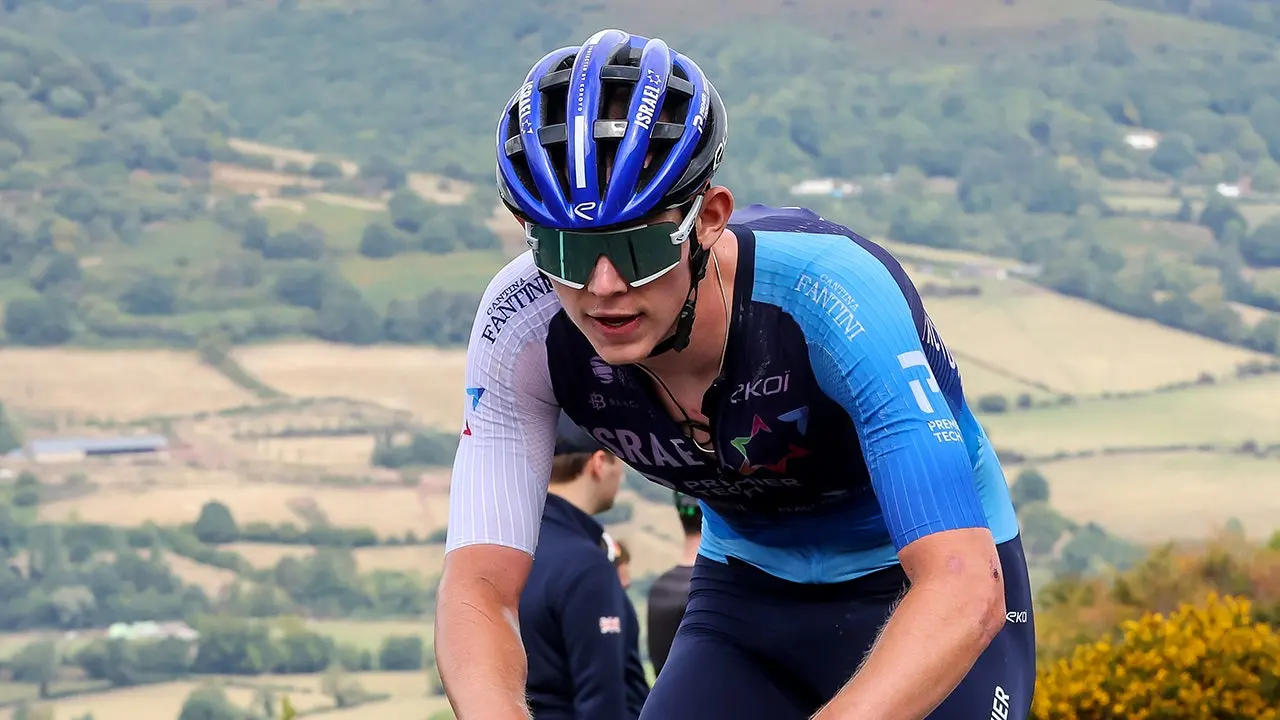
Some lives end in a single, heartbreaking moment, leaving behind a silence that echoes far beyond the road where it happened. On Friday, the cycling world lost one of its own in the most sudden and tragic way imaginable: Finlay Tarling, a nineteen-year-old British cyclist, was killed during the eighth stage of the Volta a Portugal race. He was not just an athlete; he was a son, a brother, a teammate, and a young man with a future that stretched out before him like an open road. The news, announced by his NSN Cycling Team, sent a wave of shock and grief through the sport, reminding everyone that behind the jerseys and the results are real people with families who love them and dreams that will never be fulfilled. Finlay was in the middle of a race, doing what he loved, when a car entered the road in the opposite direction, reportedly ignoring the signals from race stewards. In an instant, a promising life was cut short, and the event that should have been a test of endurance and passion became a scene of tragedy. The race was stopped, not as a mere formality, but as a sign of respect and mourning for a young man who had been taken far too soon. For those who knew him, for those who had watched him ride, and for the entire community that cherishes the spirit and effort of cycling, this loss is profoundly personal.
The details of the incident are as painful as they are stark. During the eighth stage of the Volta a Portugal, between the towns of Melgaço and Fafe in the northern part of the country, the race was unfolding as it should have been: riders pushing their limits, navigating the terrain, competing in one of the toughest cycling events on the calendar. But then, according to local reports, a driver who missed the signs from race stewards entered the road, going straight into the path of the riders. Finlay was run over by the vehicle, and despite the immediate attention of doctors who rushed to his side, his life could not be saved. It is unclear whether any other riders were involved, but the impact of that singular moment has touched everyone who was there and everyone who has heard the news since. There is a particular cruelty in such accidents—they happen so fast, with so little warning, and they leave behind a trail of shock and disbelief. For Finlay, a young man who had already represented Great Britain on the road and track, his dedication to cycling had brought him to Portugal to compete at a high level. He was doing exactly what he had worked so hard to do, in a sport that demands discipline, courage, and resilience. And in a heartbeat, that dedication was met with a tragedy that no one could have predicted or prevented. The road, which had been his place of ambition, became the site of his final, heartbreaking chapter.
The response from Finlay’s team, NSN Cycling Team, captured the depth of the loss in words that are both simple and devastating. “We are heartbroken to announce the passing of Finlay Tarling at the Volta a Portugal today,” the team shared on social media. “Fin was a much loved member of our team but most importantly, he was a son, a brother, and a friend to so many. He will be deeply missed.” These words remind us that before any athlete is a competitor, they are a person. They have a family that cheered for them, siblings who watched them grow, friends who knew them away from the pressure of competition. Finlay was loved not merely for his talent on the bike, but for who he was as a human being. His team’s statement makes clear that the loss is not just professional—it is deeply personal, a wound that will take a long time to heal. In the world of cycling, teams often become like families, spending countless hours together in training camps, races, and the quiet moments in between. The riders who shared the road with Finlay are not just losing a colleague; they are losing a brother. And for his actual family, the grief is unimaginable. His older brother, Joshua Tarling, is a professional cyclist with the Ineos Grenadiers, and the two brothers shared not only a love for the sport but a bond that must now be carried through sorrow. No statement, no tribute, no outpouring of condolences can truly ease such pain, but the flood of support from the cycling community offers at least some comfort in knowing that Finlay was not alone in the world and will not be forgotten.
The wider reaction to Finlay’s death has been a powerful reminder of the solidarity that exists within the sport of cycling, and indeed within the entire global sporting community. The organizers of the Volta a Portugal and the Portuguese Cycling Federation issued a heartfelt statement, saying, “At this moment of profound dismay, the organization of the Volta a Portugal and the Portuguese Cycling Federation express their most heartfelt condolences to the family of Finlay Tarling, to his teammates, to the NSN Development Team, and to all his friends and loved ones.” Such words may feel small compared to the enormity of the tragedy, but they matter. They acknowledge that the loss is not just one person’s burden, but a shared sorrow that is carried by everyone who loves cycling. The eighth stage of the race was stopped immediately, a decision made out of respect and mourning, because continuing the competition would have felt unthinkable after such an event. The riders, many of whom may have been close to Finlay or at least saw him as a fellow competitor, needed time to process what had happened, to grieve, and to reach out to one another. In the days following, tributes poured in from all corners of the cycling world, from fans and fellow athletes to national leaders. Portuguese President António José Seguro and Prime Minister Luís Montenegro both sent messages of condolence to Finlay’s family, offering the sympathy of an entire country that had welcomed these young athletes to compete on their roads. This outpouring of love and grief speaks to the deep impact that one young man’s life had on those around him, even those who never had the chance to meet him. It is a reminder that in moments of tragedy, we are all connected by our shared humanity, and that the loss of a young life resonates far beyond the site of the accident.
Finlay Tarling was more than the tragic circumstances of his death; he was a rising star with a bright future in a demanding sport. At just nineteen years old, he had already represented Great Britain on both the road and the track, competing against some of the best young cyclists in the world. Earlier this year, he placed second in Stage 6 of the Tour du Rwanda, a remarkable achievement that demonstrated his strength, determination, and potential. He was following in the footsteps of his older brother Joshua Tarling, who rides for the prestigious Ineos Grenadiers team, but Finlay was carving out his own path in the sport. Those who knew him described him as a dedicated and passionate rider, someone who put in the hard work required to reach the highest levels of cycling. But beyond his athletic accomplishments, he was a young man with a life full of possibility—friendships to make, experiences to enjoy, and a future that had not yet been written. It is this sense of lost potential that makes his death so devastating. He was at the beginning of his journey, with years ahead of him to grow, to succeed, and to inspire others. Instead, that journey was cut short in an accident that should never have happened. The cycling community has lost not only a talented athlete but also a person who had so much to offer the world. As we remember Finlay, it is important to celebrate the life he lived and the joy he brought to those around him, even as we mourn the years he will never have.
In the wake of this tragedy, there are no easy answers, but there is a deep and abiding need to reflect on what matters most. A young man went out to do what he loved, and he never came home. His family has been plunged into a grief that no parent, sibling, or friend should ever have to endure. The accident has also reignited conversations about road safety in cycling, about the need for greater protections for riders, and about the responsibility of drivers to respect race officials and the athletes who share the road with them. While no amount of discussion can bring Finlay back, honoring his memory may mean working toward a future where such tragedies are less likely to occur, where young athletes can race without fear of a car entering their path. It also means holding space for the human side of this loss—acknowledging that Finlay was a beloved son, brother, and friend, and that his absence will be felt in countless quiet moments for years to come. The condolences that continue to arrive from around the world are a testament to the fact that he mattered, that his short life made an impact, and that his memory will live on in the hearts of those who knew him and even those who only learned of him through this heartbreaking news. As the cycling world mourns, it does so with a shared commitment to remember Finlay Tarling not just for the way he died, but for the way he lived: with passion, courage, and a love for the ride. And to his family, his team, and his friends, we offer the only words that seem to matter in such moments—he will be deeply missed, and he will never be forgotten.