


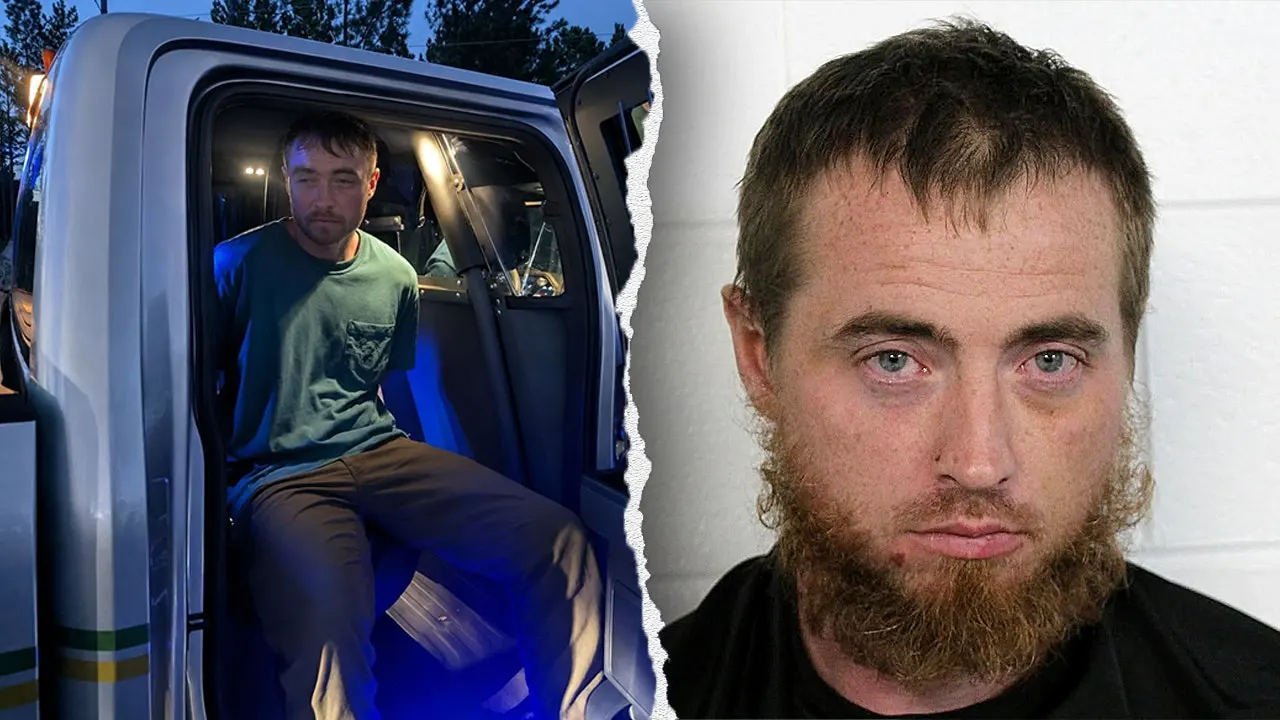
The search for Drake Ladon Keef, a 32-year-old man who had eluded authorities for over a month, came to a definitive end on a Wednesday, closing a tense chapter for the communities in northwest Georgia who had been on edge since a woman’s body was discovered in a shallow grave. Keef was taken into custody with the assistance of the Bartow County Sheriff’s Office, a collaborative effort that marked the conclusion of a 45-day, three-state manhunt. He was subsequently booked into the Floyd County Jail, where he awaited the legal process. The arrest brought a sense of relief to investigators who had been working tirelessly to track him down, but it also signaled the beginning of the next, more complex phase: unraveling the tragic circumstances that led to the death of 35-year-old Stevie Marie Thompson. The charges against Keef—aggravated battery, hit-and-run, and driving with a suspended license—were directly tied to the investigation into her death, hinting at a violent and chaotic final series of events for the victim.
The human story at the center of this police work is that of Stevie Marie Thompson. The 35-year-old woman was not just a case file but a mother, a sister, and a daughter whose life was cut short in the early hours near Rome, Georgia. The incident occurred between midnight and 1 a.m. on August 22nd, a time when most people are asleep, yet something went horribly wrong for Thompson. Her body was found in a shallow grave, a discovery that immediately elevated the case from a missing person report to a homicide investigation. While authorities confirmed her death was tied to Keef, they remained tight-lipped about the specifics of how she died, leaving a void of information that is often the hardest part for loved ones to process. The lack of official details about her final moments and the role Keef allegedly played only deepened the grief for those who knew her.
In the somber days following her death, the community around Thompson began to rally in a quiet but powerful display of support. A GoFundMe campaign was created in her memory, aimed at raising funds for her family to cover funeral and memorial expenses. The page served as a digital gathering place for those who wished to help, and by the time the manhunt concluded, it had raised nearly $4,000. This amount, while falling short of the $8,000 goal, represented a tangible outpouring of sympathy from friends, neighbors, and even strangers who were moved by the tragedy. The fundraiser’s description painted a fuller portrait of the woman who had died, emphasizing that she was a devoted mother whose passing left behind children who would now have to navigate life without her. It also poignantly noted that in her death, Thompson gave the ultimate gift to others by being an organ donor, a detail that highlighted her intrinsic value and the lives she saved even as her own was taken.
The investigation that led to Keef’s capture was a complex operation that stretched across state lines, hence the “three-state” descriptor. The Floyd County Sheriff’s Office acted as the lead agency, meticulously gathering evidence and building a case that would eventually warrant Keef’s arrest. As the weeks dragged on with no sign of the suspect, the public’s anxiety grew, and the sheriff’s office made the strategic decision to place Keef on its Top 10 Most Wanted list. This move was a calculated effort to generate fresh leads and keep his face in the public eye. The warning issued to the public was clear and stern: he was considered dangerous, and citizens were urged not to approach him but to report any sightings to law enforcement immediately. This advisory was a testament to the perceived threat Keef posed as a fugitive who had already been implicated in a violent crime.
The breakthrough in the case came not from a dramatic confrontation but from the relentless grind of detective work and public cooperation. Deputies from the Bartow County Sheriff’s Office, acting on information that had been gathered during the weeks of searching, were able to locate Keef and take him into custody. The specifics of where he was found were not immediately released, leaving a detail that the public was eager to know. The language used in the official announcement—”taken into custody with help”—suggested a coordinated effort between different law enforcement jurisdictions, highlighting the importance of inter-agency collaboration in bringing a fugitive to justice. With Keef now securely behind bars in the Floyd County Jail, the immediate threat to the public had been neutralized, but the work was far from over for prosecutors who would now begin the process of building their case against him.
With the manhunt over, the focus shifted squarely onto the questions that had been looming since Thompson’s body was found. Why was she with Keef, if they were together at all? Did they know each other, or was this a random act of violence? These were questions that authorities had not yet answered to the public. While it was known that Keef was wanted for crimes like aggravated battery and hit-and-run, the connection between those charges and Thompson’s death remained a tightly guarded piece of information. The fact that the cause and manner of her death had not been disclosed added to the air of mystery surrounding the case. For the community and the family, this period of wait-and-see is often agonizing, filled with a desperate need for closure and justice. The relief over Keef’s capture was thus tempered by the solemn realization that a full accounting of what happened to Stevie Marie Thompson on that late August night was still pending.