


Paragraph 1: The Descent into Chaos
The afternoon sun hung high over the sprawling pine-dotted suburbs of Spokane County, Washington, casting a deceptively serene glow across quiet cul-de-sacs and neatly manicured lawns. It was a Tuesday that should have been indistinguishable from any other—a day of mundane errands, school pickups, and the gentle rhythm of ordinary American life. But in a single, horrifying instant, this fragile peace was shattered. A woman, blood streaming from a gunshot wound, burst from her brother’s home and frantically pounded on a neighbor’s door. Her voice, thick with terror and desperation, delivered a message that would set off a chain of catastrophic events: “My brother just shot me.” The neighbor, stunned into action, immediately called 911, and the dispatcher’s cold, urgent voice crackled through the airwaves of the Spokane County Sheriff’s Office. Deputies who had been immersed in the routine mechanics of their shift—paperwork, patrols, traffic stops—were abruptly jolted into high-alert mode. Their vehicles tore through the streets, lights flashing and sirens wailing, racing towards an address that would become a war zone. As they drove, the dispatchers relayed the chilling context: an active shooter, a fleeing victim, and an escalating domestic situation. The deputies, their hands gripping the steering wheels with white-knuckled tension, mentally prepared for a confrontation. They understood, deep in their core, that a domestic violence call is often the most unpredictable and lethal assignment in law enforcement. The quiet neighborhood, once a sanctuary for families, was about to become a stage for unimaginable violence, and these brave men were unknowingly driving straight into an ambush that would leave one of them dead and another clinging to life by a thread.
Paragraph 2: Preparing for the Storm
Upon arriving at the scene, the deputies were met with a grim tableau of fear and urgency. The initial victim, the woman who had narrowly escaped, was being tended to by medics, her injuries serving as a stark, bloody testament to the violence brewing inside the house. The responding officers immediately established a perimeter, their eyes fixed on the seemingly placid exterior of the home. However, their greatest challenge lay in gathering intelligence. Investigators worked furiously, tapping into databases and pulling up the suspect’s criminal history, only to be met with deeply troubling information. The man inside was not a petty criminal; he had an active felony arrest warrant, a history of serious offenses that marked him as a high-risk threat. More alarmingly, they learned he had access to an arsenal of multiple firearms. The realization struck like a physical blow: they were not dealing with a man in the midst of a petty squabble, but an armed, desperate fugitive with a demonstrated willingness to shoot. The horror compounded when they considered the possibility of hostages—additional victims who might be trapped inside, held against their will by an unpredictable gunman. The standard patrol response rapidly morphed into a full-scale tactical emergency. Dispatchers called in the Spokane County Sheriff’s Office SWAT team, the elite unit trained to handle the most extreme and dangerous scenarios. The heavy armored vehicles arrived, and the SWAT officers, clad in tactical gear and carrying specialized breaching equipment, assembled with grim precision. They assessed the layout, whispered strategic plans, and checked their weapons. Sheriff John Nowels later described the tense, agonizing moments of deliberation. The team knew the suspect was heavily armed, that he had already fired a weapon, and that breaching the door could mean walking into a hail of bullets. Yet, they also knew that waiting was not an option. Every passing minute could mean another life lost inside. The officers braced themselves, knowing they were about to charge into the maw of the beast, embodying the very essence of the oath they took—a willingness to sacrifice everything to protect those who could not protect themselves.
Paragraph 3: The Deafening Breach
The silence that enveloped the property was thick and suffocating, broken only by the faint rustle of tactical gear and the low, urgent commands passed between the team. The sun had begun to dip lower, casting long, ominous shadows against the windows of the suspect’s home. The SWAT team and backup deputies moved to their positions, hugging the walls, their movements fluid and rehearsed. The plan was simple: breach the front door, gain a foothold, and neutralize the threat before he could react. With a sudden, deafening crash, the battering ram or breaching charge slammed into the door, splintering the frame. That metallic roar was the signal for absolute chaos to erupt. “SWAT team members and deputies approached the house, attempted to breach the door and were met with gunfire,” Sheriff Nowels recounted later, his voice heavy with the weight of tragedy. From the darkened interior of the house, a torrent of bullets erupted, slicing through the air with deadly precision. The suspect, fully anticipating the assault, had set a devastating trap. The initial volley tore into the advancing officers, striking two deputies squarely. They crumpled to the ground, their bodies riddled with gunfire, their radios falling silent. But their brothers in arms did not falter. In the split second of the ambush, training and brotherhood took over. The remaining officers opened fire, unleashing a furious barrage towards the muzzle flashes in the doorway to suppress the enemy fire. Under this deafening hail of lead, they reached down and grabbed the body armor of their wounded comrades, dragging them with superhuman strength across the threshold, away from the lethal doorway and back towards the relative safety of the perimeter. The scene was a nightmarish symphony of screaming commands, the sharp crack of rifles, and the panicked shouts of men fighting for their lives and the lives of their friends. Bullets whizzed past their heads, kicking up dirt and splintering wood, but they did not stop. Once clear of the kill zone, they immediately fell to their knees, applying tourniquets and shouting for medics. The two wounded deputies were loaded into waiting patrol cars, their sirens blaring as they raced against time to the nearest trauma center, leaving behind a crime scene still heavy with the acrid smell of gunpowder and the echoes of the ambush.
Paragraph 4: A Harvest of Tragedy
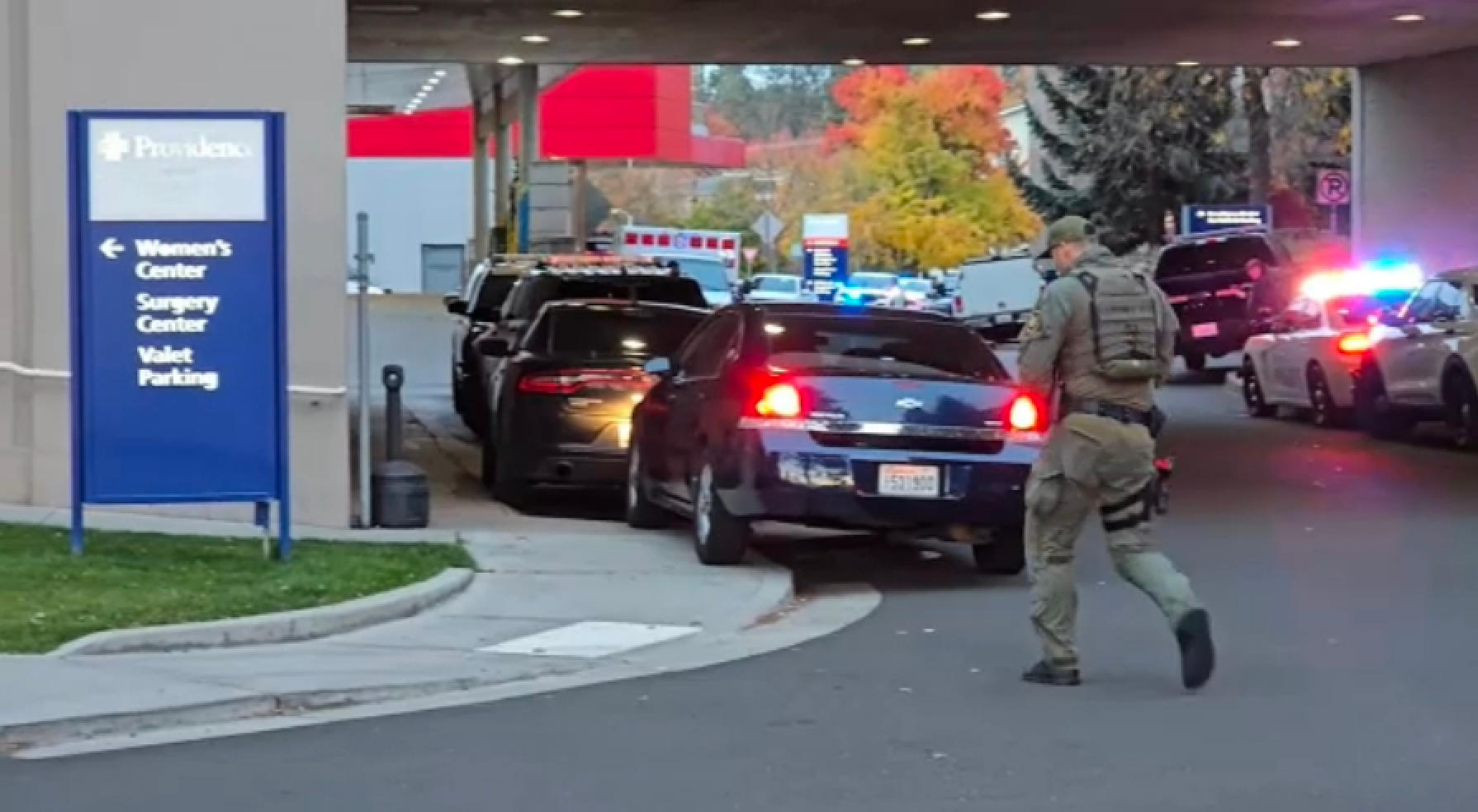
The race to the hospital was an agony of flashing lights and high-pitched sirens, the emergency room staff already prepped and waiting as the gurneys burst through the doors. Trauma surgeons and nurses fought valiantly to stabilize the two officers, but the devastation was catastrophic. Despite their relentless efforts and the advanced medical technology at their disposal, one of the deputies could not be saved. He passed away surrounded by the cold beeping of monitors, his body succumbing to the severe injuries inflicted during the ambush. The news of his death spread through the department like an electric shock, crushing the spirits of the officers who had been pacing the hospital hallways, hoping for a miracle. The second deputy remained in the ICU, unconscious and hooked up to life support, but the doctors delivered a grim prognosis—his injuries were so severe that he was not expected to survive. While the hospital became a focal point of grief, investigators meticulously secured the crime scene at the residence. Upon entering the home, they discovered that the suspect’s reign of terror had claimed more innocent victims. Inside one of the rooms, they found the lifeless body of one individual, likely another hostage taken by the gunman. In the backyard, they stumbled upon a second body. The identities and exact circumstances of these victims were withheld pending notification of kin, adding a profound layer of sorrow to an already devastating incident. Finally, the investigators located the suspect himself, dead on the property—the result of the deputies’ return fire or a self-inflicted wound. The home, once a house of domestic strife, was now a grim morgue. The final tally was staggering: one deputy dead, another on the brink of death, two additional victims dead, and the suspect dead. What had started with a woman’s desperate plea for help had spiraled into one of the deadliest incidents in the county’s recent memory, leaving a community in shock.
Paragraph 5: The Ultimate Sacrifice and a Final Gift
On Wednesday morning, the Spokane County Sheriff’s Office released the heartbreaking confirmation that one of the deputies had officially succumbed to his injuries. The statement painted a portrait of a man who was the very embodiment of heroic duty. He was a devoted husband and the father of two children, leaving behind a family whose world had been violently shattered. The agency’s tribute captured the profound nature of his sacrifice: “Although we know our deputies knew the risks, they bravely moved toward danger to protect others they did not know. They did this with honor and with an unwavering sense of duty to their oath to serve and protect the citizens of Spokane County; they heroically placed themselves in mortal danger.” These words attempted to encapsulate the impossible valor of a man who looked into the face of an armed killer and chose to advance anyway. His wife became a widow, and his children would grow up with only the stories of their father’s bravery and a profound, aching void in their lives. But the tragedy was not yet finished. The second deputy remained on life support, his body broken and unresponsive. Doctors were clear that he would not survive, and the devastating news was delivered to his family. Yet, in a final, breathtaking act of selflessness, it was revealed that this deputy was a registered organ donor. The sheriff’s office confirmed, “As an organ donor, arrangements are being made, and he will continue to serve others with the gift of life.” This decision transformed his impending death into a miracle for others. In his final moments, he would bequeath life to strangers—giving sight to the blind, hearts to the failing, and hope to the desperate. His family, immersed in grief, honored his wishes, ensuring that his legacy would not solely be one of sorrow, but of transcendent generosity. These two officers represented the ultimate price paid by those who wear the badge, one giving his life instantly, the other tragically, but both embodying the core principle of service and sacrifice.
Paragraph 6: A Community in Mourning
As news of the ambush and its devastating outcome reverberated across Washington state and the nation, an outpouring of grief and solidarity flooded in. Police departments from across the country sent their condolences and offered support, recognizing the profound loss of two of their own. The events served as a grim, visceral reminder of the inherent dangers law enforcement officers face daily—how a routine call can instantly transform into a deadly firefight. The community of Spokane County, once peaceful and detached, was now bound together in sorrow. Residents placed blue ribbons and bouquets of flowers outside the Sheriff’s Office. A makeshift memorial began to grow at the scene of the shooting, where people stopped to pay their respects, honoring the men who gave their lives to protect strangers. The tragedy highlighted the human reality behind the badge—that they are sons, brothers, husbands, and fathers. The first deputy’s children will now navigate life without their father, missing birthday celebrations and gentle guidance. The second deputy’s family will watch as his final gift gives life to others, a bittersweet consolation amidst their heartbreak. The investigation into the shooting will continue, dissecting every detail to learn and potentially prevent future losses, but no inquiry can restore what was taken. As the sun set over Spokane County, the silence was heavier, pierced only by the somber sound of church bells ringing in memoriam. The community holds its breath, waiting for the processions, the funerals, and the final honors. Their service is over, their watch ended, but their memory will be enshrined forever in the gray stone of the National Law Enforcement Officers Memorial. Ultimately, the story of these two deputies transcends simple tragedy; it is a testament to immense courage, unwavering brotherhood, and unconditional love for one’s community. They answered the call, ran towards the danger, and paid the ultimate price, proving that the thin blue line is woven from threads of steel, sacrifice, and unbreakable humanity.