


In the American shorthand of capital punishment, lethal injection is often described as the safest, most clinical method of executing a human being. It is supposed to be quiet, dignified, free of the violence of the electric chair or the firing squad. The condemned person is sedated, the drugs are delivered into a functioning vein, and the heart slows to a stop. The language of the law is full of phrases like “humane treatment” and “minimal pain.” But the facts coming out of Tennessee this year have shredded that carefully maintained fiction. In a period of just a few months, the state attempted to execute two death row inmates, and both attempts collapsed into agonizing medical chaos. The person at the center of both is Dr. Mark Fowler, a 69-year-old physician appointed by the Tennessee Department of Corrections. Court documents have exposed a startling, uncomfortable truth: Fowler had not placed an IV line in any patient since 2013. In a sworn deposition, he admitted that he did not have hospital privileges, including privileges to insert a central IV line, at any medical facility. This is not a minor gap in a resume. It is the difference between a doctor who can safely access a vein and one who is fumbling in the dark with a needle, while a human being lies restrained on a gurney. Yet it was Fowler who was charged with overseeing the executions of Tony Carruthers in May and Christa Pike in September. He was the physician in charge, responsible for determining if the inmate was deceased and for establishing a central line if necessary. The fact that a doctor with no meaningful recent experience was put in charge of the most medically delicate and morally charged procedure in American law is a sign of a system in deep crisis.
Fowler’s professional history is all the more troubling because it was not hidden. During the deposition, he was asked about his hospital privileges and his experience with central lines. He explained that he last had those privileges in 2013 and had not placed an IV in a patient since then. That statement alone ought to have disqualified him from participating in any modern execution protocol. The procedure itself is not simple. A central line is a catheter inserted into a large vein outside the heart, frequently in the neck or chest. Without it, the lethal drugs cannot reliably reach the bloodstream. It requires knowledge of anatomy, the ability to guide a needle through tissue, and the judgment to recognize when something has gone wrong. Dr. Gail A. Van Norman, professor emeritus of Anesthesiology and Pain Medicine at the University of Washington, reviewed the deposition and concluded in a declaration that, based on Fowler’s own testimony, he did not have the current experience or training that would be required to obtain or retain privileges to place central lines at many, if not most, major healthcare institutions today. That is the language of a medical expert saying simply: this man should not be doing this. In any hospital, a doctor with these gaps would be supervised or excluded. In an execution chamber, there is no one to stop them. Fowler’s presence at these executions can only be explained by the state’s difficulty in finding qualified medical personnel willing to take on the task. It is an open secret that lethal injection depends on doctors and nurses willing to straddle the line between healing and killing. Those who refuse are not always replaced by experts; they are replaced by whoever says yes. Tennessee’s protocol does not demand board certification or current privileges. It demands someone who can certify death and, if needed, find a vein. In Fowler, the state found a doctor who had not done either of those things in a meaningful way for years.
Fowler’s deficiencies first became impossible to ignore on May 31, when Tony Carruthers was scheduled to die. The execution team, which included Fowler and three other people, spent more than an hour trying to insert two IVs into Carruthers’ arms. They were not looking for a miracle; they were trying to perform the most basic first step of lethal injection. They could not. The team was unable to establish the two peripheral IV sites necessary to deliver the lethal drugs. At that point, the protocol dictated that Fowler step in. He tried to place a central line. He was not successful, and he attempted a second location, which also failed. The execution was called off, but not before Carruthers had been subjected to a prolonged ordeal. His attorney, Maria DeLiberto of the American Civil Liberties Union, described the scene in a court filing: by the time the state abandoned the effort, Carruthers was groaning and clearly in pain. His words were simple and devastating: “It hurts, it hurts.” Think about what that means. A man facing execution was not gently drifting toward death; he was feeling the repeated, invasive attempts to find a vein. His body was being used as a practice canvas by a medical team that was not prepared to do its job. The state’s plan had failed in the most human way possible. And yet, despite this clear warning, the same doctor was called back just months later to oversee another execution.
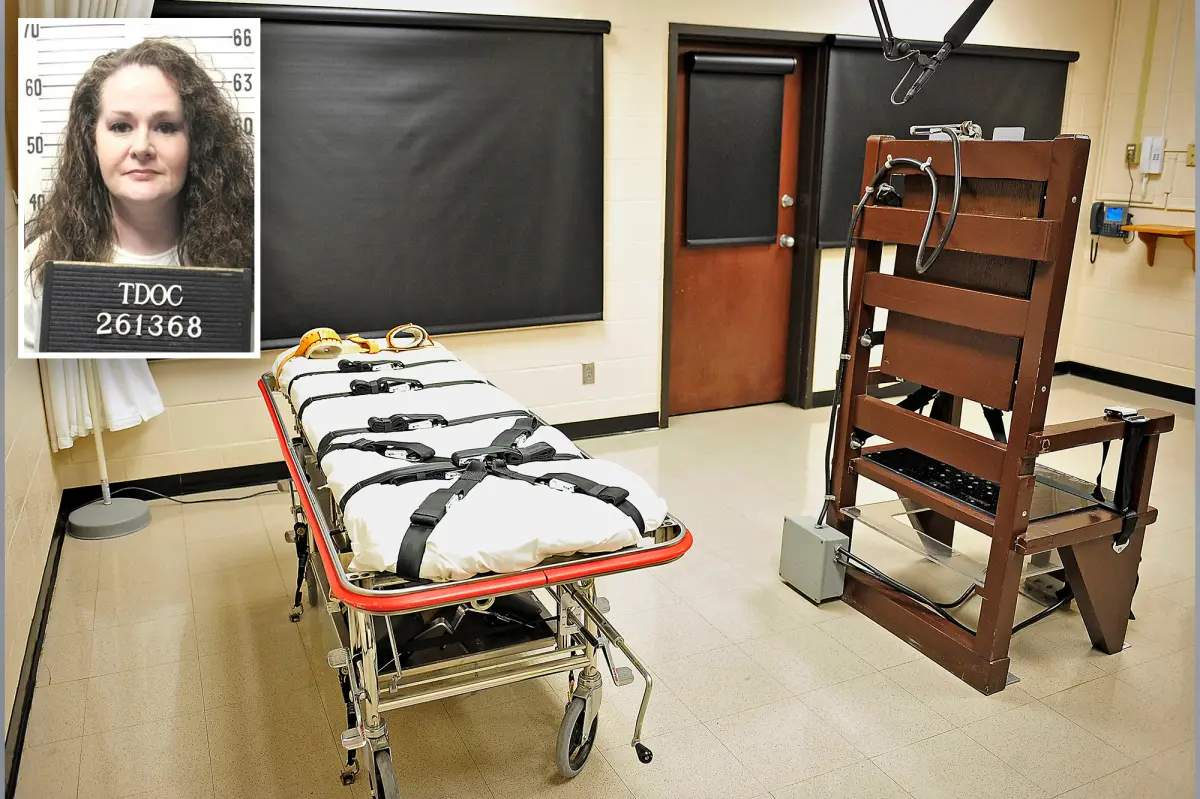
If Carruthers’ experience was a warning, Christa Pike’s was a full-blown catastrophe. In September, the state brought Pike to the execution chamber for what was supposed to be her lethal injection. The team again struggled to establish working IV lines. According to a court document filed by Pike’s attorney, Randy Spivey, the IV team went through about ten needles and tried several spots on both of her arms. They warned that some of her veins may have ruptured or “blown.” They even failed to push saline through the last IV site they established. That failure is a clear indication that the line was not reliable. If saline cannot flow freely through a catheter, lethal drugs certainly should not be introduced. Yet the execution proceeded. Investigators later determined that Pike’s IV lines had been improperly placed. The pentobarbital that was supposed to travel through her veins and stop her heart instead seeped into the tissue of her arms, causing a chemical burn and the breakdown of flesh before it slowly made its way into her bloodstream. Pike survived one dose. She survived two. After hours of this, she was rushed to a nearby hospital, where she remained in critical condition for ten days. She was then released back to the prison’s medical ward. A woman who had been sentenced to death had been injected with a lethal poison in a manner that left her alive but gravely injured. This is not a humane execution. It is the precise opposite. It is the image of a human body being converted into an object of medical failure, and it happened under the supervision of the same physician who had already failed Tony Carruthers.
Fowler has since acknowledged that mistakes were made. In his first public comments after the fiasco, he told New York Magazine that the staff should have stopped when Pike complained of arm pain. “They should have stopped and reassessed, and they didn’t,” he said. It is hard to imagine a more direct admission of breach. The people in the execution chamber heard the prisoner’s words, understood that something was wrong, and continued anyway. They did not honor the most fundamental rule of medicine: first, do no harm. Even if one accepts that a doctor has a lawful role in an execution, that doctor has a duty to recognize when the process is causing unnecessary suffering. Fowler, as the physician in charge, had not only the authority but the obligation to stop the procedure. He did not. His explanation is not really a defense. It is a confession that the protocol was allowed to override basic human compassion. The deeper problem is the pattern. This was not a one-time failure. It happened twice within months, under the supervision of the same physician. It happened after the state had already seen what would occur. It happened because Tennessee’s execution process is beset by a fundamental contradiction: to perform a lethal injection well, the state needs trained medical professionals; to get trained medical professionals, it must ask them to violate their medical oath. The pool of willing and competent doctors is small. Desperate to fill the role, the state turned to Fowler, a doctor whose credentials were no longer current and whose hands had not found a vein in years. This should be a scandal in every state that still uses lethal injection. Instead, the response is often silence.
The story of Christa Pike and Tony Carruthers is not an abstract debate about the death penalty. It is a story about what happened to real people because of a flawed system. It is the sound of a man groaning in pain. It is the image of a woman with needles in her arms, her veins blown, her flesh dissolving under a poison that was meant to end her life. It is the detail of a doctor who had not performed the central procedure in more than a decade, standing over a restrained patient with a catheter and no idea how to make it work. For those who support capital punishment, the standard is not that execution must be pleasant; it is that it must not be cruel. Lethal injection was supposed to be the answer. But when the process fails as it did in Tennessee, when the inmate suffers and survives the attempt, we have to ask whether the state is capable of meeting even its own minimal standard. Humanizing the condemned is not easy in a society that often prefers to think of them as names on a court docket. But they are human. They feel pain. They say, “It hurts.” They lie in hospital beds for ten days after their own executions fail. They are not abstract. And the doctor who oversaw their suffering is not an enemy; he is an emblem. He represents what happens when a system cares more about the appearance of judicial calm than about the truth of what it does. The truth is that death is not clean. The truth is that the state cannot guarantee a painless death. The truth is that once you put a needle into a living arm and inject a lethal drug, you are in the realm of flesh, blood, tissue, and force. Tennessee’s botched executions are not anomalies that can be fixed with better training. They are the inevitable consequence of trying to do something that medicine cannot ethically and humanely do. Until that is acknowledged, more people will be wheeled into those rooms. More needless pain will be inflicted. And more families will have to live with the memory of a loved one’s last words: “It hurts, it hurts.”