


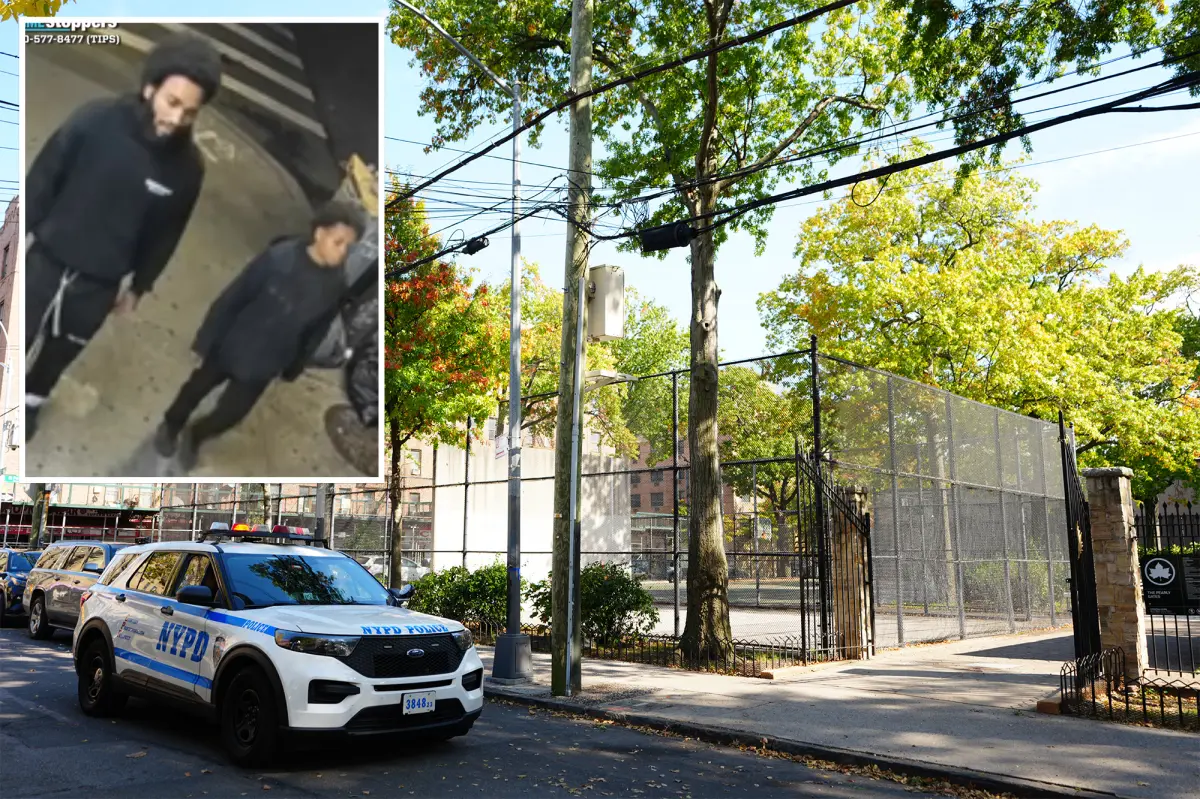
In the quiet, unassuming evening hours of the Bronx, the tranquil rhythm of a fall Tuesday was violently shattered. As streetlights hummed to life over Westchester Square, a 12-year-old girl, her heart buzzing with the ordinary excitement of imminent adolescence—she was just three days from her birthday—set out on a simple journey to meet a friend in the neighborhood park. She had no way of knowing that her path would cross with a wave of senseless, gang-fueled violence that was never meant for her. At roughly 8:30 PM, along Tratman Avenue between Rowland Street and St. Peters Avenue, the innocence of her walk was annihilated by the sudden, deafening crack of gunfire. The bullets sprayed from the darkness, a hail of lead meant for rival gang members, but which found the most tragic of targets: a middle-schooler heading to swing on a jungle gym. Struck in the stomach and her right foot, the terrified child collapsed to the pavement, her world dissolving into a nightmare of pain and confusion. In a primal act of survival, the bleeding girl dialed her older sister, 14-year-old Miral Alamouri. The raw terror in that phone call has become an indelible scar on Miral’s memory. “She was like, ‘I got shot! Oh, I’m scared,’ and I’m trying to keep her awake because you don’t want her to go to sleep and get into a coma,” the older sister recounted, her voice still laced with the despair of that moment. The picture is haunting: a child fighting for consciousness while her sister whispers frantic pleas through the phone, desperately trying to bridge the impossible distance between them. As the young girl’s life fluttered on a knife’s edge, a random act of human grace intervened—a Good Samaritan driving past witnessed the aftermath of chaos and immediately rushed her to Montefiore Hospital, turning a devastating evening into a story where the line between life and death was ruthlessly thin.
The alarm bells of this tragedy have now echoed into the criminal justice system, producing arrests that are as disturbing as they are telling. Over the weekend, police apprehended a 13-year-old boy—a child barely out of the sixth grade—taking him into custody for a monstrous crime. Then, on Tuesday, they arrested 26-year-old Destin Burgess, a man with a prior arrest for gun possession in August of 2025, presumably hanging out in circles that harbor dangerous weapons. Both individuals now face severe charges of attempted murder and criminal possession of a weapon, charges that speak to their alleged participation in the ambush. Yet, it is the chilling context of the shooting that has stunned even hardened law enforcement veterans. According to sources, the gunmen spotted their rivals and, before squeezing the trigger, began shouting a war cry—”Ewok! Ewok!”—a chant intimately affiliated with the Makk Ballas (or Mac Ballers), a violent street gang that has claimed allegiance to the notorious Bloods. This gruesome battle cry, emanating from the mouths of young men who have been indoctrinated into a culture of death, turns the park into a theater of urban warfare. The juxtaposition is brutal: a child’s playground sanctified for laughter and games becomes the backdrop for a lethal attempt to prove dominance. When adults voluntarily involve themselves in this barbaric ritual, they have consciously abandoned the very notion of humanity, viewing innocent civilians as acceptable collateral damage. The presence of a 13-year-old in this plot is perhaps the most staggering indictment of a broken societal safety net. How does a middle schooler end up in the orbit of a gang like Makk Ballas? What void in his life, what absence of mentorship, were filled by the hollow promises of gang solidarity? His arrest is not merely a legal matter; it is a symptomatic tragedy that reveals a systemic failure to protect our youth from being harvested by gang recruiters who prey on vulnerability, desperation, and the need for belonging.
Scouring the crime scene, investigators pieced together the material evidence of the panic that followed the shooting. Beneath the front tire of a car parked near the chaotic scene, they discovered a black and tan Palmetto Armory pistol—a cold, steel instrument of destruction that had just caused catastrophic harm to a child’s body. Alongside the weapon, officers located seven loose 9mm caliber cartridges and one additional live round, evidence of the careless haste with which the shooters fled into the night. Yet, the most staggering and frustrating detail to emerge from the criminal complaint filed in Bronx Criminal Court is that neither Destin Burgess nor the 13-year-old suspect is actually accused of firing the fatal shots. The likely gunman and one other male accomplice remain at large, having vanished into the shadows of the city in the immediate aftermath. This creates a chilling legal limbo, leaving the family of the 12-year-old victim to grapple with the realization that the individual who squeezed the trigger, the heart of the malice, is still roaming free. The arrests of Burgess and the youth are framed as critical to the investigation—likely as accomplices, lookouts, or essential cogs in the attack—but the absence of the gunman casts a long shadow over the pursuit of justice. The discovery of the discarded pistol also highlights the tragically porous nature of gun control, as these illegal weapons continue to seep into the hands of criminals who treat human life with careless abandon. As the NYPD continues its manhunt, the community is left to wonder: how many more shells will be leeched into the streets before the true shooter is apprehended? For now, the barrel of this weapon has been silenced, but the wounds it inflicted—both physical and psychological—are ringing loudly in the ears of all who witnessed the horror.
For the young victim, the true price of this violence is exacted in the brutal reality of her recovery. Upon arrival at Montefiore Hospital, her condition was classified as critical. The bullet that tore through her abdomen had wreaked havoc on her internal organs. In the emergency surgery that followed, doctors grimly discovered holes in her colon, a life-threatening injury that required intricate repair to stop the internal bleeding and prevent a fatal infection. In a parallel procedure, they worked to stem the damage from the second round, which had shattered her right foot, leaving fractures that demanded surgical intervention and which will necessitate months, perhaps years, of physical therapy to restore any semblance of normal function. The girl’s sister, Miral, has been the emotional anchor throughout this ordeal, holding her sibling’s hand in the hospital and trying to manifest a courage she does not feel. Her words, raw and unfiltered, have become a rallying cry for the community: “It’s always the wrong person at the wrong time, and that shouldn’t be happening. You go to the park to sit there and play with your friends, not to get shot.” The physical pain is immense, but the psychological trauma is an invisible shackle that will bind her for years. Nightmares, hypervigilance, a panic attack triggered by the sound of a car backfiring—these are the ghosts that will haunt her waking hours. She was a child about to celebrate her next birthday, eagerly counting the days until cakes and presents. Instead, she now counts the days since the bullets changed her life forever. The family’s brave face to the public masks the sleepless nights, the mounting medical bills, the fear of retaliation, and the gnawing anxiety that the thugs who did this are still unpunished. The path ahead is a marathon of pain, but within her tiny, remarkable frame, there lies a resilience that is refusing to be extinguished.
In the sterile chambers of Bronx Criminal Court, the initial spark of legal accountability has flickered, though it has not yet burned brightly enough to satisfy the family’s appetite for justice. During Destin Burgess’s arraignment, prosecutors argued with force and urgency that he represented a serious danger to the community, requesting a substantial bail of $300,000 in cash or $900,000 in bond. The amount was a clear reflection of the severity of the crime, the public menace, and the desperation to keep him behind bars. Yet, in a decision that sent shockwaves through the victim’s family, the judge set a profoundly lower bail—a paltry $15,000 cash or $45,000 bond. The perceived leniency ignited anger and frustration, as the family saw a man linked to a shooting that nearly took their daughter’s life being handed a path back into the free world with a relatively modest financial hurdle. While Burgess remains in custody awaiting his next court appearance on Friday, where the grand jury will hear evidence, the psychological weight of the situation is heavy. The 13-year-old suspect’s case, however, has entered the labyrinthine system of Family Court, a deliberately protective realm designed to prioritize rehabilitation over punitive action for juveniles. While the law is strict on juvenile offenders, the stark nature of a 13-year-old facing attempted murder charges highlights the imbalance of trying to adjudicate a child as an adult versus steering him toward correction. The family of the victim is left to wonder if this boy will ever truly face the consequences of his alleged role in the attack. Meanwhile, the hunt intensifies for the primary gunman and the other fugitive. The family’s plea is clear: the people who actually pulled the trigger, and those who aided them, must be brought to the cold embrace of a courtroom. Until that day comes, the family lives in a perpetual state of unease, haunted by the knowledge that the principal actors in this tragedy have not yet faced the music. The court docket moves, but justice, in its purest form, remains frustratingly elusive.
Ultimately, this story transcends the headlines and the legal jargon; it is a tragic testament to the human toll of unchecked gun violence and a profound reflection of the fragility of safety in our urban centers. A 12-year-old girl’s desire to meet a friend in a park—the most basic, innocent activity of childhood—was transformed into a brush with death by a gang war she did not know existed and could never comprehend. The echoing chant of “Ewok” that preceded the volley is not just a gang slogan; it is the death rattle of a society that allows young men to treat public spaces as battlefields. The arrest of a 13-year-old boy alongside a 26-year-old man showcases the vicious cycle of violence that traps the young and the desperate, chaining them to a life of crime before they can even vote. As the sister, Miral, so poignantly voiced, “You go to the park to sit there and play with your friends, not to get shot.” This sentiment is a universal plea from every parent, every sibling, every neighbor who wants nothing more than to see children live and laugh, unbounded by the fear of stray bullets. While the media cycle will eventually move on to the next tragedy, the 12-year-old will continue to bear her scars—on her body, her mind, and her future. Her road to recovery is paved with hospital visits, blood draws, and the haunted look in her eyes. But within her ordeal, there lies a spark of resilience that the shooters cannot extinguish. As the search continues for the true gunman, the community’s collective hope is that justice will prevail—not just for this little girl, but for the countless other innocent souls who find themselves in the crossfire of reckless violence. Her story is a powerful catalyst for change, a mournful reminder that behind every firearms statistic is a child with a birthday coming up, a sister on the other end of the phone, and a family fighting with every fiber of their being to keep her alive. The fight for her physical rehabilitation is matched only by the fight for justice, and as long as law enforcement and the community hold the line, there is a glimmer of hope that our parks can once again be places of play, not pain.