






Chapter 1: A Dramatic Exit from Klong Prem Prison and Its Ripples Through Thailand
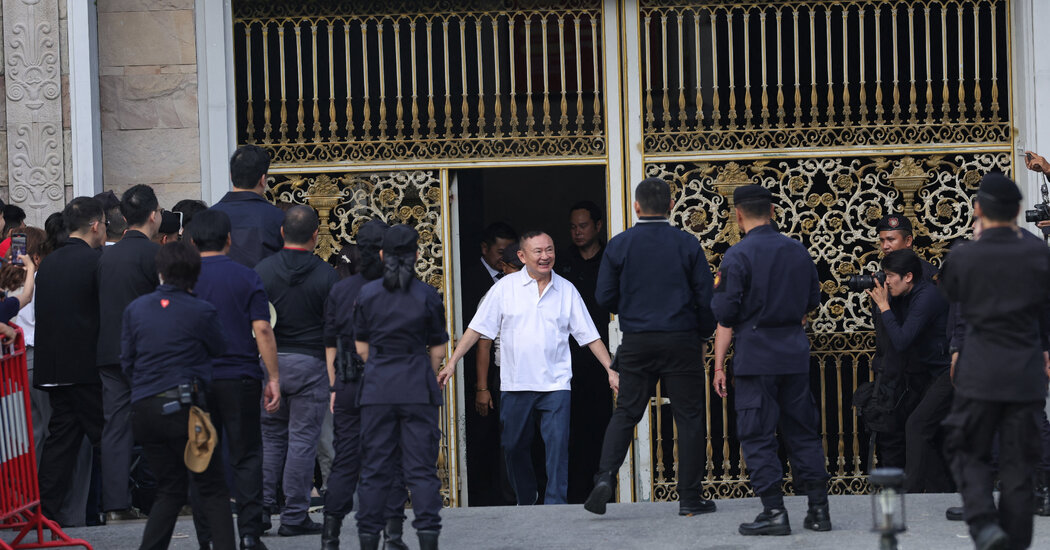
In a twist that encapsulates the volatile undercurrents of Thai politics, former Prime Minister Thaksin Shinawatra, often dubbed the “king without a crown,” walked free from Klong Prem Central Prison in Bangkok on a crisp Monday morning. At 76 years old, the telecommunications tycoon-turned-politician emerged smiling, flanked by family and loyalists from his Pheu Thai Party, marking the end of a brief but symbolic stint behind bars. The parole board’s decision to commute his sentence—citing good behavior and reduced risk—came after just over a year in custody for convictions on corruption and abuse of power charges. Yet, this release isn’t just a personal victory; it’s a seismic event that reverberates through Thailand’s fractured political landscape, where Thaksin’s shadow has loomed large for over two decades.
Only a year ago, the stage seemed set for a Thaksin dynasty revival. His daughter, Paetongtarn Shinawatra, had ascended to the premiership in August 2024, positioning Thaksin as the quintessential power broker operating from behind the scenes. But political fortunes in Thailand can shift like monsoon winds. By month’s end, Paetongtarn was ousted following a controversial gesture deemed overly submissive toward Cambodia’s strongman leader, Hun Sen—an act that inflamed nationalist sentiments and exposed the fragility of her grip on power. Simultaneously, Thaksin, who returned to Thailand in 2023 after years in exile, found himself behind bars again, serving a one-year term tied to unresolved cases from his tumultuous past.
Thaksin’s morning release was captured in fleeting images: no statements to the press, just waves and embraces before he vanished into a waiting vehicle. This self-imposed silence belied the chaos within Thailand’s political arena, a nation still grappling with deep divisions between progressive reformers, conservative royalists, and military elites. As Thaksin steps into freedom, equipped with an electronic monitoring bracelet for the next four months, questions abound about the future. Will he fade into obscurity, or reassert his influence? His Pheu Thai Party remains a cornerstone of the governing coalition, raising concerns that Thailand might end up with a dual premiership of sorts. Critics warn that his liberation could undermine the delicate balance of power, potentially reigniting old rivalries.
What makes this narrative particularly compelling is its reflection of Thailand’s post-2006 coup dynamics, where Thaksin has been both a disruptor and a victim of the system. During Paetongtarn’s short-lived tenure, he was reportedly pulling strings from the sidelines, influencing policy decisions that echoed his populist agenda. Yet, her dismissal highlighted the establishment’s intolerance for perceived challenges to the constitutional monarchy and military depth. With Thaksin now free, analysts are scrutinizing how he navigates this landscape. Is this the end of his saga, or merely intermission? His daughter, undeterred, continues to lead Pheu Thai, but without her father’s direct orchestration, the party’s trajectory remains uncertain. Internationally, Thaksin’s release has drawn mild scrutiny, but domestically, it’s a bombshell that could reshape electoral fortunes ahead of any upcoming votes.
Chapter 2: The Rise of a Populist Titan Challenging Thailand’s Old Guard
To understand Thaksin Shinawatra’s enduring prominence, one must rewind to 2001, when this former police officer and self-made billionaire stepped into the Prime Minister’s seat. His campaign was a populist whirlwind, pledging affordable healthcare for all, subsidized loans for farmers, and a crackdown on corruption that promised to uplift Thailand’s working class. “He tapped into the aspirations of the rural masses,” recalls Kavi Chongkittavorn, a seasoned Bangkok-based journalist and political analyst. Thaksin’s Pheu Thai Party—then under a different name—campaigned on change, delivering on universal health coverage that became a cornerstone of Thai social policy, even years later. His 2001 victory was not just electoral; it was a referendum on modernization in a country long dominated by Bangkok’s elite.
But this ascendancy didn’t come without friction. As Thailand’s constitutional monarchy thrives under King Vajiralongkorn’s watchful eye, Thaksin’s ambitions clashed with the royalist-military establishment. His policies, while boosting rural incomes, were seen as threats to the status quo. “He wanted to rearrange the political order, moving away from patronage systems lethargic under military oversight,” explained Siripan Nogsuan Sawasdee, a professor at Chulalongkorn University. This antagonism brewed tensions, culminating in his 2006 ousting via a military coup. Street protests erupted—pro-Thaksin “red shirts” versus anti-Thaksin “yellow shirts,” painting a vivid picture of societal schism. Arrested on charges of abuse of power, Thaksin fled to Dubai, evading jail but never relinquishing his grip on Thai affairs.
Exile in the Middle East didn’t dim his star; in fact, it amplified it. Through proxy parties, his network won elections, indirect influence that kept him relevant. Then came the 2011 victory of his sister, Yingluck Shinawatra, who inherited both his populist mantle and the instability it bred. Yingluck’s 2014 coup removal by the junta mirrored her brother’s fate, highlighting a pattern of political purging. Yet Thaksin’s perseverance paid off. By 2020, a progressive wave, fueled by youth discontent over outdated laws, emerged. The 2023 elections saw the Move Forward Party, a progressive outlier, triumph, but conservative forces blocked its rise, paving the way for Pheu Thai’s coalition win. Thaksin’s 2023 homecoming—timed with amnesty-like pardons—felt like a negotiated truce with old foes, allowing his daughter Paetongtarn’s meteoric rise. It was a masterstroke of political theater, transforming his return into a symbol of resilience.
Thaksin’s journey embodies Thailand’s evolution from absolute monarchy to a fraught democracy, where wealth and charisma can upend institutions. His healthcare reforms alone cover 98% of Thais today, a legacy that endures despite controversies. But critics argue his favor-bank politics fostered inequality, bribery scandals, and neopattaunism—patronage networks that prioritize loyalty over merit. As he exited prison, such debates lingered, with supporters hailing him as a visionary and detractors as a destabilizer. In expanding this narrative, it’s crucial to note how global events, like the COVID-19 pandemic’s economic fallout, exacerbated Thailand’s divides, making Thaksin’s pro-poor stances more appealing. Journalists covering the scene describe his 2001 campaign rallies as electric, drawing crowds that dwarfed rivals. This populist surge laid the groundwork for his phoenix-like returns, even as it alienated traditional powers. Today, as he breathes free air, those dynamics remain alive, influencing not just politics but Thailand’s global image as a tourist haven seeking stability.
Chapter 3: Exile, Legal Battles, and a Daunting Homecoming
The years in exile were a crucible for Thaksin, sharpening his strategic acumen while keeping Thai politics in flux. From his Dubai base, he orchestrated victories—his influence, though subterranean, was palpable. The 2011 election brought Yingluck to power, promising continuity of his vision, but her tenure unraveled amid economic woes and floods that revealed governance flaws. Accusations of dereliction led to her 2014 coup dismissal, a bitter echo of her brother’s ordeal. “Exile made Thaksin more resourceful,” said Pavin Chachavalpongpun, a Thailand scholar at Kyoto University, noting how digital tools amplified his reach, turning international platforms into megaphones for his agenda.
Then came 2020, a turning point with mass protests demanding royal reforms and electoral shaking-ups. The Move Forward Party capitalized on this energy, winning big in 2023, only to be stymied by alliances and lawsuits that barred it from forming government. Enter Thaksin’s masterstroke: a 2023 return, veiled in partial pardons that erased charges in absentia. Sentenced to eight years upon arrival, he was whisked to a VIP hospital ward for “health issues,” receiving a royal pardon six months later—effectively dodging incarceration entirely. It was a spectacle: protests, media frenzy, and whispers of backroom deals. Pheu Thai clinched power, installing Paetongtarn as PM, a ‘novice’ groomed under her father’s tutelage.
This setup signaled Thaksin’s resurgence, blending nostalgia for his polices with modern reform demands. But the honeymoon was short-lived. Paetongtarn’s Aug-Sep 2024 dismissal stemmed from a protocol gaffe with Hun Sen, exposing cracks in the coalition. Thaksin, meanwhile, faced renewed scrutiny. Acquitted initially in a royal defamation case, he was sentenced in September to a year for prior convictions, aiming to “close the book” on past grievances. His prison entry sparked debates on fairness, with activists claiming selective justice. Now released, his future hangs in the balance. Will he retire gracefully, or pivot to new ventures? Analysts predict low profile, but history suggests otherwise.
Exile refined Thaksin into a chess master, using family proxies to maintain relevance. Yingluck’s fall underscored the high stakes; Thaksin’s pardons raised cynicism about special treatment. As he emerges, Thailand watches for revival signs. Protests during his hospital stint echoed coup-era divides, reminding how personal narratives entwine with national destiny. In journalism circles, his story inspires metaphors of resilience, yet perturbs stability advocates. With monarchy central, his every move tests the envelope, potentially sparking another round of unrest. Economically, his release might buoy Pheu Thai’s fortunes, impacting investor confidence in Southeast Asia’s second-largest economy.
Chapter 4: The Mechanics of Release and Lingering Judicial Shadows
Thaksin’s parole on good behavior wasn’t arbitrary; Thailand’s corrections system, influenced by legal reforms, granted it based on age over 70 and behavioral reforms—claims Thaksin aimed to “rectify” past indiscretions. The Department of Corrections cited low recidivism risk, but critics, like activist Pichit Chaimongkol, fear “unofficial co-premiership,” with Thaksin wielding unchecked power. His electronic tag symbolizes conditional freedom, barring spotlight-returning until mid-2025, yet anecdotal evidence from supporters hints at business interests revived—perhaps in telecom or philanthropy, aligning with his pre-political mogul days.
Judicially, threats persist. An attorney general appeal challenges his royal defamation acquittal, potentially reopening Pandora’s box. Such cases, rooted in stringent lese majeste laws, stifle dissent, spawning fears of retribution. Siripan Sawasdee warns of mistrust from elites, viewing Thaksin as perpetual foil. Analysts foresee passive-aggressive tactics: policy nudges via Pheu Thai, funding youth movements without overt leadership. His lawyers declaim ovolvement, but observers note familial loyalties endure. Paetongtarn, adaptable, steers the coalition, but paternal advice looms, given shared traumas.
Explanations tie to Thailand’s entangled judiciary-executive nexus, where parole decisions blend mercy with strategy. Thaksin’s case exemplifies quandaries: populist demands clash with establishment ballast. Internationally, Human Rights Watch critiques Thai justice inconsistencies, flagging political prosecutions. Domestically, media saturation heightens scrutiny; social media amplifies nucleation. As Thaksin integrates back, everyday Thais ponder impacts—rural aid resurgencevs. unrest escalation. Historical parallels invoke junta overthrows, urging caution. In expanding discourse, economic parallels emerge: Thaksin’s loan schemes boosted exports, yet corruption verdicts marred legacies. His release, thus, merits optimism tempered by vigilance, encapsulating Thai paradoxes—progress amid fragility.
Psychologically, incarceration aged him visibly, yet emerged vigor intact. Family photos depict warmth, countering aloof tech-mogul image. Supporters hail liberation as justice; opponents decry leniency. Constitutional monarchies like Thailand balance tradition and democracy, Thaksin embodying tensions. Forward, his electronic tether restricts travel, fostering introspection. Yet, May national elections could catalyze involvement, reshaping alliances. Journalists anticipate feuds, given Move Forward’s lingering; Thaksin’s endorsement might sway slates. Overall, release transitions turmoil to possibility, yet ambiguities forebode turbulence.
Chapter 5: Navigating Influence Amidst Coalition Dynamics and Public Skepticism
Concerns mount over Thaksin’s quieter epochs. Pheu Thai’s coalition seat ensures sway, potentially duplicating premierships. Pichit Chaimongkol’s petition woes exemplify dissent; Department assurances assuage minimally. Analysts prophecy obscurity adherence, leveraging age for subdued tone. Yet, Thaksin’s history contradicts: exiles bred subterfuge. Daughter Paetongtarn balances coalition, mitigating paternal interference, though shared lineage amplifies suspicions. Economic analyses link to inflation woes; populist agendas might resurface, benefiting demographics.
Public discourse divides sharply. Rural supporters view emancipation as vindication; urban elites fear erosions. Social media trends echo dichotomies: memes ridicule “double PM” speculations. Expert forecasts emphasize positioning: philanthropy or quiet lobbying, avoiding provocations. International relations complicate; regional dialogues with Cambodia heal cuts, yet personal animosities linger from Hun Sen episodes. Domestic tourism sectors lobby stability, IT industry seeks innovation echoes. Thaksin’s tech legacy—shaping Digi-era—could inspire ventures, mitigating retirement perceptions.
Long-term, his exit signals shifts. Progressive surges endure post-2023, empowering youth. Yet, military remnants loom, remembrance of coups deterring boldness. Shahariri Tehuti of the Election Commission foresees repeat contests; Thaksin’s absentees might galvanize ties. Statistically, Thai GDP hinges on political surety; volatility underperformed ten-year averages. Culturally, Thaksin symbolizes defiance, narratives romanticized in cinemas. Hence, release catalyzes storytelling—from rags-to-rich telecom tales to political intrigues—enriching Thai polity lore.
Monitoring電子tag integrates digital supervision, pioneering Thai corrections. Cynics question efficacy; hackers debated amidst cyber-threats. Nevertheless, Thaksin’s assurances to eschew limelight gain credence, preventive measures curbing reprisals. As coalition navigates deficits, his economic acumen coveted; rural investments loom prospects. Overall, skeptics tempered by pragmatism: quiescence prevails, barring provocations. Thailand’s tapestry weaves interplay—archaic mores vs. modern aspirations—Thaksin’s thread resilient.
Chapter 6: The Broader Implications and the Future of Thai Democracy
At stakes beyond individual freedom lies Thailand’s<|reserved_89|> democratic future. Royalist-military opposition perceives Thaksin as existential threat, Siripan Sawasdee’s “untrustworthy” label resonating. Appeal in defamation case tests judicial independence, potentially spiraling escalations. Progressive faction champions reconciliation, urging consensus over confrontation. Internationally, ASEAN watchers monitor fallout; Cambodia strains mend via diplomacy.
Socioeconomic ripples anticipated: healthcare expansions under Paetongtarn hint continuities, poverty reduction targeted. Education reforms, progressive agendas, correlate with youth turnout soaring post-2020. Yet, inequality persists; Thaksin’s policies critiqued for unevenness. Climate initiatives lag, Thailand’s Southeast Asian statestraggling renewables. His release might reoriente focus, leveraging telecom innovations for environmental tech.
Culturally, Thaksin embodies mobility—horatio algar Acquisition to foreign incarceration. Media spotlight fades slower; documentaries speculated. Psychologically, Thailand grapples identity–monarchial fealty vs. democratic freedoms. Experts advocate dialogue, reducing polarities.
Ultimately, his amelioration signals phase, not closure. With Pheu Thai anchoring coalitions, reforms inch forward albeit glacially. Elections eminent, legacies perpetuate. Thaksin’s odyssey reminds: Thai politics ballet of power, resilience key. As nation heals divides, hope endures for equilibrium—stability via inclusion. Future page-turners await, yet Thaksin’s imprint indelible.