






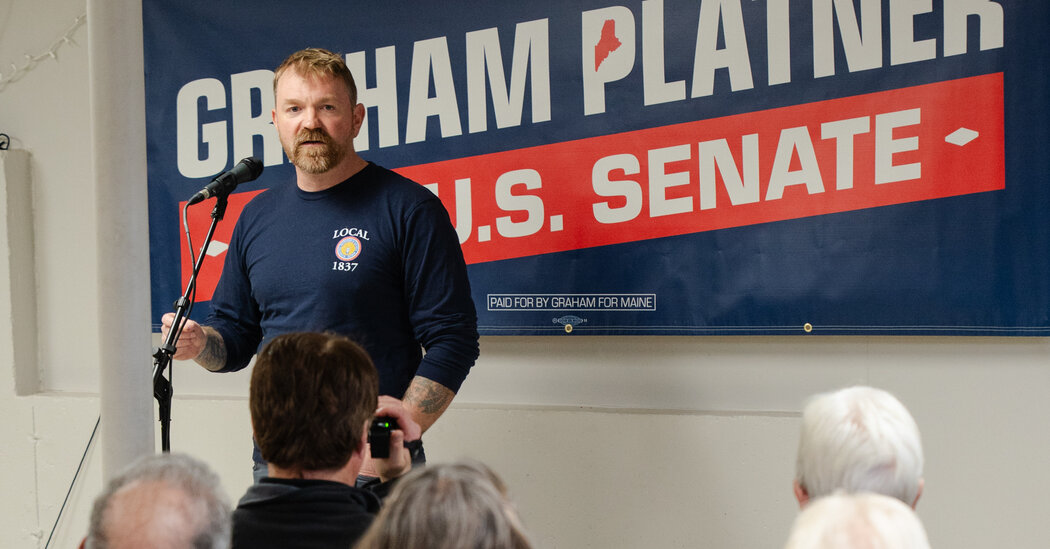
The dense pine forests, rugged coastlines, and fiercely independent communities of Maine have long nurtured a unique political climate—one that places a premium on authenticity, perseverance, and the raw grit of lived experience over the polished, focus-grouped perfection of career politicians. It was within this demanding political landscape that Graham Platner, an insurgent Democrat and decorated combat veteran of the wars in Iraq and Afghanistan, launched a Senate campaign that quickly evolved from a long-shot bid into a powerful, working-class populist movement. Running to unseat the state’s entrenched Republican incumbent, Susan Collins, Platner captured the imagination of voters by presenting himself not as a pristine savior, but as a deeply human, battle-tested survivor of some of life’s harshest trials. He spoke with uncommon candor about his intense, years-long struggle with post-traumatic stress disorder, severe clinical depression, and self-destructive alcohol abuse—vulnerabilities stemming from his multiple combat tours that once left him, in his own words, a “wreck of a human being.” To many Mainers, his willingness to lay bare his psychological scars and his path to sobriety was a refreshing testament to his honesty, offering a powerful narrative of resilience and redemption that deeply resonated with working-class families facing their own quiet battles. Yet, for anxious Democratic Party strategists and political commentators, his turbulent personal history has remained an unpredictable liability, a complex collection of past indiscretions and controversies that threaten to ignite under the intense, unforgiving spotlight of a high-stakes national election. This delicate balance between Platner’s magnetic populist appeal and his highly complicated past has become the central, defining theme of his candidacy, posing a profound question to the electorate about the true boundaries of political survival, forgiveness, and human growth.
The vulnerability of this hard-won redemptive image was pushed to its absolute limit last summer, when an intensely private domestic crisis threatened to spill into the public arena, exposing the painful, fragile realities of the candidate’s personal life. Amy Gertner, who had married Platner in November 2023 in the quiet, tight-knit town of Sullivan, Maine, made a devastating discovery: her husband had been exchanging sexually explicit messages with multiple other women during the early days of their marriage. This revelation occurred at a time when the couple was already navigating the immense, exhausting emotional toll of a high-profile statewide campaign, alongside their deeply private, stressful struggle to conceive a child through grueling in vitro fertilization treatments. Rather than allowing the betrayal to destroy their relationship, Gertner chose the agonizing, courageous path of confrontation and healing, steering their marriage into intensive counseling where both she and Platner could confront his infidelity with raw, unvarnished honesty. Believing she was speaking in confidence to a trusted friend who could help them navigate the potential political fallout before a major, high-stakes Labor Day campaign rally with Senator Bernie Sanders, Gertner shared these deeply sensitive details with Genevieve McDonald, the campaign’s political director. However, this private confession—which involved messages with anywhere from six to a dozen women depending on different internal campaign accounts—eventually morphed into a devastating leak to the national media, leaving Gertner feeling profoundly betrayed and violated. In a deeply personal public statement, Gertner expressed her intense pain over the modern invasion of her privacy, while steadfastly defending her husband and asserting that their marriage had actually emerged from the counseling process stronger, more honest, and more resilient than ever before.
For Genevieve McDonald and the other senior campaign officials who eventually parted ways with the Platner campaign, the revelation of these explicit messages was not merely an intimate, private hurdle, but a severe ethical failure and a catastrophic political liability that could sink the Democratic Party’s chances of reclaiming the Senate. McDonald, a respected former state legislator who understood the critical importance of maintaining the trust of Maine’s highly active female electorate, viewed Platner’s secret online behavior as part of a recurring, highly concerning pattern of poor judgment that directly clashed with the moral clarity required of a national leader. When Gertner reached out in distress during the early hours of late August, McDonald felt a dual obligation—both as a supportive professional and as a strategic adviser—to address a situation that she believed possessed the power to derail the entire campaign if left unmanaged. For the staffers who ultimately resigned from the campaign in October, the United States Senate was never meant to serve as a laboratory for personal rehabilitation, and they argued that voters deserved absolute transparency regarding the true character of the person asking for their trust. This internal campaign fracture was further exacerbated by a series of other controversies, including intense public scrutiny over past social media posts and a highly visible tattoo on Platner’s body that closely resembled a recognized Nazi symbol, which collectively created an atmosphere of constant crisis. This painful division highlighted a larger, ongoing debate within modern progressive politics: the tension between the belief in restorative justice and the pragmatic, often ruthless political necessity of running candidates whose personal lives can withstand the relentless, microscopic scrutiny of opposition research.
Even before the sexting allegations emerged to threaten his standing, Platner was already locked in a fierce, exhausting battle against the digital ghosts of his past, specifically a series of highly toxic Reddit posts he had authored more than a decade earlier during his darkest periods of post-combat isolation. In those online forums, written during a time when he was grappling with severe, untreated trauma, Platner had posted deeply offensive comments that insulted rural communities, marginalized groups, and military sexual assault survivors, including highly insensitive remarks about rape and consent. During the highly competitive Democratic primary, his chief opponent, Governor Janet Mills, seized on these polarizing digital footprints, running a barrage of devastating television advertisements that featured ordinary Maine women expressing their profound disgust and anger over his dismissed remarks. A traditional political candidate would have likely been forced to withdraw under such an onslaught, but Platner chose to lean directly into the pain, refusing to hide behind carefully manicured public relations statements and instead delivering heartfelt, direct apologies that validated the public’s anger and horror. He organized dedicated virtual town halls specifically for his female supporters, giving them a safe space to ask tough questions and providing them with the necessary context to help their families understand that the angry, broken man who wrote those posts fourteen years ago was a stranger to the person he had become through therapy, sobriety, and self-reflection. This strategy of radical vulnerability and deep accountability ultimately disarmed the attacks to such a degree that Governor Mills unexpectedly dropped out of the primary race in late April, cementing Platner’s status as the presumptive nominee and demonstrating that voters were willing to accept his transformation as genuine.
Throughout this tumultuous political journey, Amy Gertner transitioned from a quiet, private source of strength into a highly visible, powerful surrogate on the campaign trail, transforming their intimate marital struggles into a moving symbol of resilience that mirrored the daily hardships of ordinary Mainers. When she stood before an energetic crowd in Portland to introduce Senator Elizabeth Warren, Gertner did not run from the difficulties of her marriage; instead, she openly discussed their grueling fertility journey, their time in marriage counseling, and the hard, unglamorous work required to rebuild trust and heal. By demonstrating such profound, public forgiveness toward her husband, Gertner effectively neutralized much of the moral outrage surrounding his past behavior, showing voters that if the person most directly hurt by his actions could choose reconciliation and hope, then the electorate could choose to do the same. Her deeply emotional speeches connected their personal battles—the high costs of healthcare, the anxiety of trying to build a family, and the heavy burden of overcoming trauma—to the systematic, daily struggles of working-class families across Maine who feel abandoned by a polished, distant political establishment. This strategy of turning private healing into a public platform has transformed their marriage into a living metaphor for their populist campaign, emphasizing the belief that human beings are fundamentally more than the worst mistakes of their past. By integrating their path to redemption into the core narrative of the campaign, they have fostered an incredibly deep, authentic emotional bond with voters that transcends the typical, carefully curated, and often sterile standards of contemporary American politics.
Now, as the campaign marches toward a highly anticipated, high-stakes November showdown with Susan Collins, Platner’s political future exists in a state of thrilling potential and persistent, underlying anxiety, with public polling currently showing him holding a significant lead. A recent poll from the University of New Hampshire revealed that Platner leads the incumbent by nine percentage points overall, and by an astonishing twenty-point margin among female voters—a stunning statistic that suggests his message of economic populism and personal redemption is successfully overshadowing his past controversies. However, beneath the optimistic polling data lies a steady undercurrent of nervousness among mainstream Democrats and undecided voters, exemplified by a poignant moment at a town hall meeting in Sabattus when a supporter named Carolyn Greeley directly asked Platner if there were any more hidden secrets waiting to destroy his campaign. Platner’s defiant, honest response—that he has lived a messy, complicated life and has already laid bare all of his scars—highlights the high-risk, high-reward nature of his entire political project, which asks voters to value raw humanity and genuine struggle over polished, predictable perfection. As the Republican Party prepares to launch a massive, expensive wave of negative advertising focusing on both his old Reddit posts and his recent marital struggles, the Maine Senate race has become a fascinating, landmark test for the limits of modern political forgiveness. Ultimately, the outcome of this election will decide not only control of the United States Senate, but will also answer a fundamental question about the electorate: whether they prefer the flawless, carefully manufactured image of traditional politicians, or the flawed, painful, and undeniably human reality of a leader who has walked through the fire of his own destruction and emerged on the other side.