




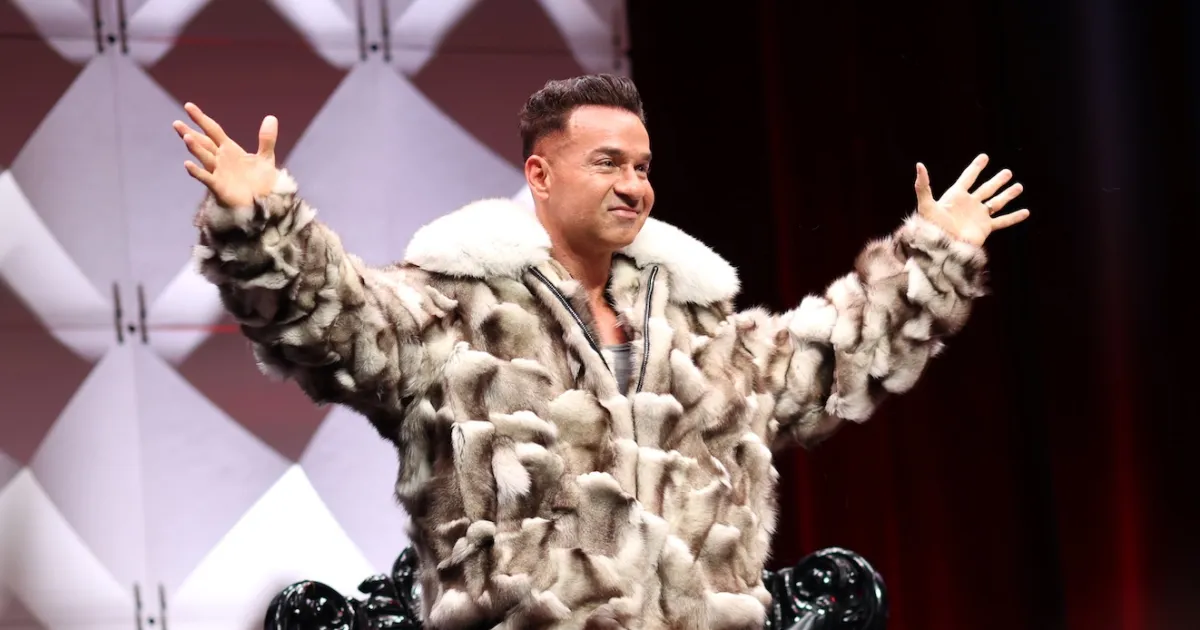
The line between entertainment and public service has never been thinner in American culture, and yet another prominent reality television star is seriously considering making the monumental leap into the political arena. Mike “The Situation” Sorrentino, who first captured the nation’s attention as the brash, hyper-confident breakout star of MTV’s epochal series Jersey Shore, recently revealed that he has his sights set on a highly ambitious new title: Governor of New Jersey. Speaking to local news outlet News 12 during the VUE Magazine spring edition party in Wall Township, the 43-year-old pop culture icon laid out a timeline that would see him transition from a television personality to a savior of lives, and ultimately, to a political candidate. When pressed on whether he would align himself with the Republican or Democratic party for his eventual gubernatorial run, Sorrentino played it cool, opting to keep his specific political affiliations under wraps. Instead, he chose to appeal directly to the universal financial frustrations of his fellow Garden State residents, teasing a potential platform anchored by a promise to eliminate state property taxes. For a man who once lived a life defined by late-night parties, club brawls, and endless vanity, this pivot toward public office marks an extraordinary and unexpected evolution.
To truly understand Sorrentino’s political ambitions, one must first look of the deeply human, heavily flawed, and ultimately triumphant journey that defined his life over the past decade. Years before he entertained the idea of running a state government, he was fighting a brutal war against his own personal demons. The very same obsessive, all-or-nothing personality that catapulted him to television fame quickly became his undoing behind closed doors, dragging him into a dark world of substance abuse where extreme wealth, instant fame, and dangerous addictions collided. This self-destructive spiral culminated in a public and humiliating reckoning when the federal government prosecuted him for tax evasion. Having failed to pay $8.9 million in taxes, Sorrentino was stripped of his passport, lost his voting rights, faced millions of dollars in financial penalties, and was ultimately sentenced to federal prison, where he served an eight-month term before his release in 2019. It was a harrowing low point that would have permanently broken many people, leaving them defeated and forever defined by their worst mistakes in the eyes of the public.
Instead of letting incarceration and disgrace write the final chapter of his story, Sorrentino chose to embrace the grueling, daily work of rebuilding his life from the ground up, turning his public downfall into a powerful narrative of resilience. Central to this profound personal transformation was his enduring relationship with his wife, Lauren, whom he married in November 2018 just before commencing his prison sentence. Together, they navigated the wreckage of his past, and today, they are happily raising three young children in an environment built on stability, love, and growth. Now celebrating more than nine continuous years of sobriety, Sorrentino has transformed himself into a published author, a devoted family man, and a vocal advocate for recovery. He frequently shares his story as living proof that a person’s comeback can be vastly greater than their setback, demonstrating to those still trapped in the cycle of addiction that redemption is not merely a distant dream, but a tangible reality that can be achieved through humility, hard work, and a willingness to change.
This profound desire to guide others through the darkest chapters of their lives is the actual bedrock upon which Sorrentino is building his future political platform. Rather than jumping straight onto the campaign trail with empty slogans, he is dedicating the immediate future to the launch and nationwide expansion of the Archangel Centers, his own custom recovery and treatment facilities which debuted in September 2024. Sorrentino plans to spend the next three to five years focusing entirely on establishing these centers in all fifty states, leveraging his personal experience with recovery to provide critical aid to families suffering from the addiction crisis. He views this humanitarian mission as an essential prerequisite to his political ambitions, believing that the work of saving lives must come before asking citizens for their votes. Only after he has left a lasting, nationwide legacy of healing does he intend to officially introduce the electorate to “Governor Situation.” By positioning his philanthropic work as the foundation of his candidacy, Sorrentino seeks to prove that his political aspirations are born out of genuine empathy and a desire to serve, rather than a superficial craving for power or continued media relevance.
While the prospect of “The Situation” running for governor might sound like a far-fetched television script to some, his journey aligns perfectly with a broader cultural trend that has redefined the landscape of modern American governance. The barrier that once separated celebrity status from civic leadership has completely dissolved, paving the way for media personalities to utilize their direct-to-consumer communication skills in public office. Sorrentino follows a well-established path trodden by figures like former President Donald Trump, Secretary of Transportation Sean Duffy, and fellow reality TV veteran Spencer Pratt, who is currently running for mayor of Los Angeles. In an era where traditional political experience is frequently met with skepticism by an exhausted electorate, reality stars possess a unique advantage: they are already deeply familiar to the public, they understand how to command a narrative, and their highly publicized personal struggles often make them appear far more relatable and human than polished, career politicians.
Unsurprisingly, this growing wave of entertainers entering the political arena has sparked a lively and polarized debate about the qualifications required to lead. Critics, including former Real Housewives star Lisa Rinna, have openly questioned this trend, arguing that the public has already seen the chaotic consequences of mixing reality television with public administration and should be hesitant to repeat the experiment. Rinna pointed out the inherent danger of equating entertainment value with political competence, noting that despite her own massive platform, she would never trust herself to manage a city. Conversely, supporters like Audrina Patridge have enthusiastically defended these campaigns, noting that individuals like Pratt are often highly intelligent, deeply misunderstood by the public, and genuinely motivated to enact positive, disruptive change. As Mike “The Situation” Sorrentino prepares to bridge the gap between treatment center advocate and public servant, his journey will ultimately test whether the citizens of New Jersey are willing to look past his wild youth and embrace his story of redemption, or if they will view “Governor Situation” as simply another chapter in the endless spectacle of celebrity branding.