







The Metropolitan Museum of Art’s Costume Institute is far more than a museum department; it is the ultimate temple of fashion’s living history, where fabric and thread are elevated to the status of fine art. The announcement that the 2027 Met Gala will honor the legendary and tempestuous career of John Galliano with the exhibition “John Galliano: Horizons” has sent shockwaves of anticipation through the global creative community. This decision is one of historic proportions, marking only the third time in the Costume Institute’s illustrious history that a living designer has been selected as the sole subject of a monographic exhibition. Galliano joins an incredibly exclusive pantheon, following in the footsteps of the revolutionary Yves Saint Laurent in 1983 and Comme des Garçons’ enigmatic founder, Rei Kawakubo, in 2017. This choice is not merely an acknowledgment of aesthetic brilliance; it is a profound testament to a career that has consistently redefined the boundaries of what fashion can express. The Met Gala, which serves as the spectacular opening night for these exhibitions on the first Monday of May, is famous for its star-studded red carpet where celebrity culture meets high-minded curation, but the true heart of the evening remains the storytelling of the garments themselves. In choosing Galliano, the Met is preparing to showcase a life lived on the absolute edge of imagination, celebrating a man whose impact on the runway is so vast and deeply felt that it continues to shape how we dress, dream, and perceive beauty.
At the center of this upcoming exhibition is a deeply philosophical inquiry into the nature of creativity, led by the visionary curator Andrew Bolton, who has long championed fashion as a legitimate, high-art medium. Bolton’s conceptual framework for “Horizons” treats fashion not merely as a collection of beautiful clothes to be admired on mannequins, but as an active, living form of cartography. It is an exploration of a designer who does not map physical territories, but rather the intangible landscapes of the human soul—the affinities, the sharp tensions, and the dramatic transformations that occur when history collides with modern sensibility. Every single one of Galliano’s collections is born from an obsessive, passionate journey where seemingly disparate elements are brought into conversation: a specific historical portrait meets a modern posture, a dramatic silhouette whispers a forgotten story, and memory itself is woven into the very fabric of the material. By organizing the exhibition around the concept of a horizon, the Met invites us to look forward at what lies ahead in the landscape of design, while also reflecting on where we currently stand as a society. It is an invitation to witness how a singular creative mind can translate raw, abstract ideas into tangible garments, and how those garments, in turn, evoke visceral, overwhelming emotional responses from those who behold them.
Galliano’s career is a tapestry of unmatched theatricality and unparalleled craftsmanship, spanning decades of revolutionary design at some of the world’s most prestigious fashion houses. From his early days of dramatic, romantic collections under his namesake label to his transformative, historic reigns at Givenchy and Christian Dior, and his current avant-garde work at Maison Margiela, Galliano has consistently pushed the envelope of what is possible on the runway. His design philosophy is defined by a brilliant, sometimes chaotic collision of darkness and light, of meticulous historical erudition and wild, untamed imagination. He is a designer who looks to the past—whether it be the romanticism of the French Revolution, the decadence of the Belle Époque, or the raw energy of street culture—not to mimic it, but to smash it together with the present and the future in a spectacular display of creative alchemy. To understand Galliano is to understand fashion as theater, where the runway is a stage and each garment is a character in a larger-scale narrative about identity, desire, and survival. His ability to evoke a sense of wonder has earned him the adoration of peers and patrons alike, making him an enduring icon whose work transcends the cyclical nature of seasonal trends to become part of our collective cultural consciousness.
However, “Horizons” does not shy away from the complex and often painful realities of Galliano’s personal and professional journey, acknowledging that a true retrospective must confront the shadows alongside the brilliant light. The exhibition’s title and curatorial direction suggest a willingness to examine how his public conduct, its severe consequences, and our rapidly changing cultural values have reshaped how the world understands and critiques his work today. In 2011, Galliano’s career came to a screeching, highly publicized halt following a series of deeply offensive, anti-Semitic remarks made in Paris, an event that led to his dismissal from Dior and his temporary banishment from the fashion industry. This dark chapter, which he has spent more than a decade actively working to repair through rehabilitation, education, and profound self-reflection, is an essential part of his narrative. By addressing this history, the Met frames the exhibition not as a simple, uncritical celebration, but as a nuanced human story about grace, accountability, redemption, and the complicated relationship between an artist’s personal actions and their creative output. It asks difficult questions about whether art can be separated from the artist, and how a creative genius can rebuild a broken life to find a new voice in a world that is vastly different from the one in which they first rose to fame.
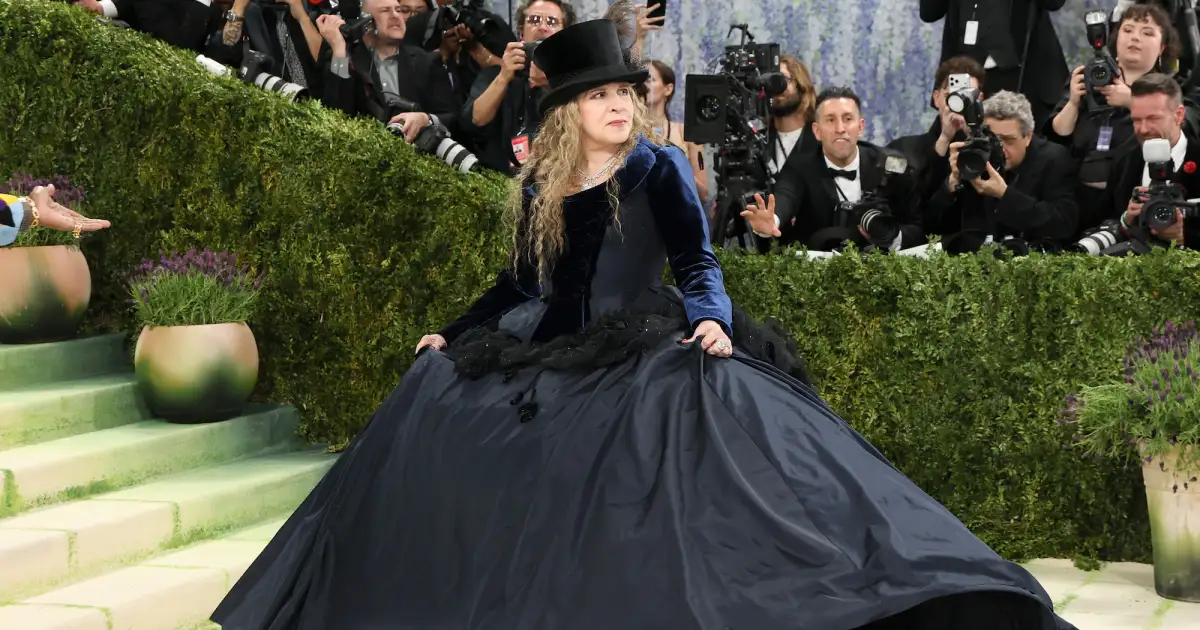
This sentiment of resilience and unmatched artistry is echoed by Vogue’s Global Editorial Director, Anna Wintour, who has been a steadfast supporter of Galliano’s creative genius and remains one of the most powerful voices in the fashion industry. Wintour has declared that there is no designer alive more deserving of an exhibition of this immense scale, emphasizing that Galliano’s legacy is not defined by a single, tragic moment, but by a lifetime of extraordinary contribution to the arts. “Horizons” will offer an unprecedented, intimate look inside Galliano’s creative process, featuring not only his show-stopping, legendary haute couture creations but also the intimate artifacts of his daily labor. Visitors will be treated to a treasure trove of his personal sketches, meticulously kept research books, and rare archival materials that reveal the sheer volume of intellectual labor and historical research that goes into every single garment. From his recent, breathtaking work like the Zara gown designed for rock icon Stevie Nicks at the 2026 Met Gala to the viral, porcelain-doll-like creations of the Maison Margiela Artisanal show, the exhibition will demonstrate how Galliano continues to capture the zeitgeist, proving that his creative fire burns as brightly as ever.
As the fashion world eagerly looks forward to the first Monday in May 2027, the anticipation for this groundbreaking exhibition and the accompanying Met Gala continues to build, promising a night where art, history, and modern celebrity will once again collide. While the specific dress code and co-chairs for the evening have yet to be announced, the theme of “Horizons” guarantees a red carpet that will be nothing short of legendary, as attendees attempt to interpret Galliano’s rich, theatrical, and deeply emotive legacy through their own fashion choices. Ultimately, this exhibition is more than just a celebration of one man’s career; it is a profound reflection on the enduring power of fashion as a mirror to the human condition. It reminds us that even when the horizon seems distant or fraught with storm clouds, the journey of creation, transformation, and artistic rebirth is one of the most beautiful and necessary endeavors of our existence. When the doors of the Metropolitan Museum of Art swing open to reveal “Horizons,” the world will not just be looking at beautiful dresses; they will be looking at the cartography of a human soul that has braved the depths of darkness to find the light once more.