






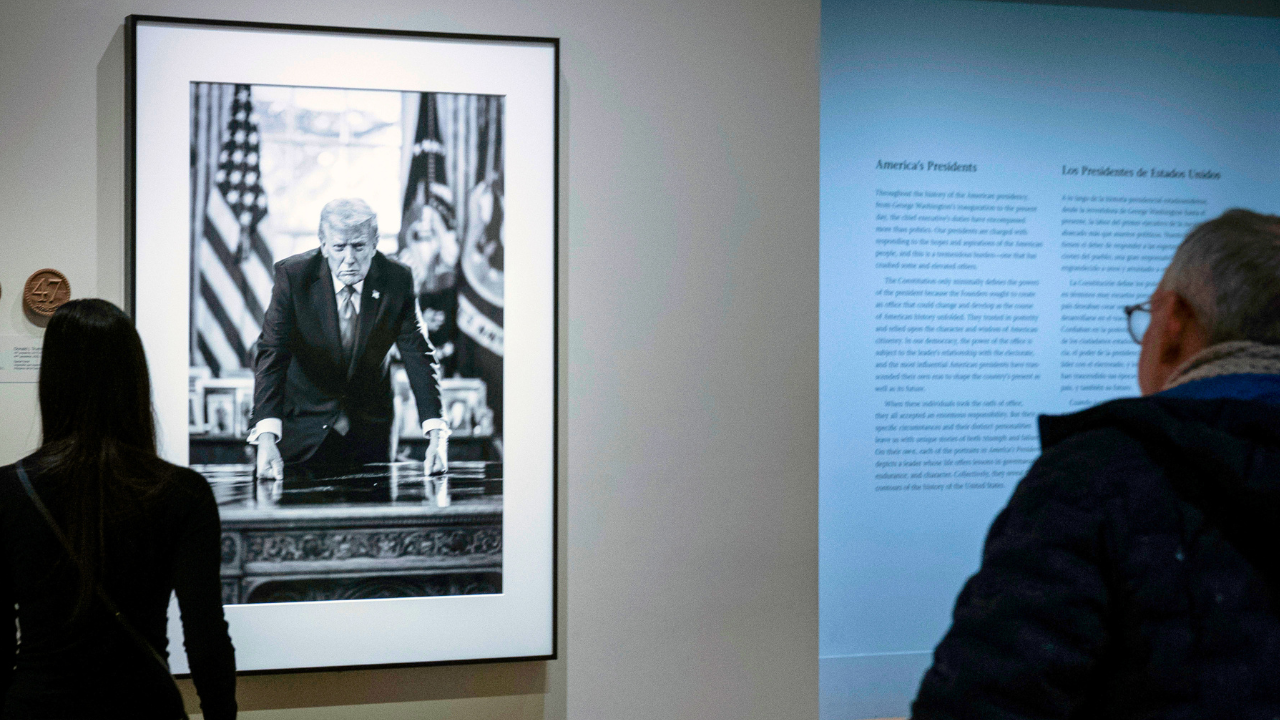
The Smithsonian Institution has long stood as the secular cathedral of the American experiment, a sprawling and majestic network of twenty-one museums, a national zoo, and nearly one hundred and fifty-seven million artifacts that collectively serve as the sacred repository of the nation’s shared cultural memory. To walk through its hollowed halls on the National Mall is to encounter the physical manifestation of America’s greatest triumphs and most profound tragedies, from the iconic, battle-worn Star-Spangled Banner that survived the British bombardment of Fort McHenry to the humble, wooden writing desk where Thomas Jefferson penned the revolutionary words that birthed a new republic. However, this vast and revered empire of cultural preservation, which relies heavily on over one billion dollars in annual taxpayer funding alongside private donations, has recently found itself dragged into the absolute center of a ferocious, highly public ideological civil war. This conflict erupted into the national spotlight in March 2025, when President Donald Trump signed a sweeping executive order titled “Restoring Truth and Sanity to American History,” marking the formal commencement of the most aggressive, intrusive, and comprehensive White House scrutiny the institution has faced in several decades. The administration argued with fierce conviction that the taxpayer-supported Smithsonian had strayed dangerously far from its foundational mission, accusing its academic leadership of actively replacing traditional, patriotic narratives with divisive, progressive, and “woke” ideologies that alienate the very citizens whose taxes fund its daily operations. This opening political salvo set the stage for an intense, sixteen-month bureaucratic and cultural struggle over who ultimately has the authority to define the American story, pitting a populist administration determined to assert executive control over national symbolism against an academic establishment fiercely protective of its curatorial independence, historical objectivity, and scholarly rigor.
As the spring of 2025 gave way to the humid summer months in Washington, the machinery of the White House Domestic Policy Council, energized by the active and hands-on participation of Vice President JD Vance in his official capacity as a Smithsonian Regent, began to systematically dissect the internal workings of the institution, with a particular and unrelenting focus on the National Museum of American History. White House investigators did not merely review public-facing displays; they launched an exhaustive, forensic audit of the museum’s strategic plans, educational curricula, internal records, and the public speeches of its leadership team, seeking to document what they viewed as a systemic, institutional bias against traditional American values. This mounting tension culminated on August 12, 2025, when White House officials delivered a formal, sternly worded letter to Smithsonian Secretary Lonnie Bunch, officially placing the institution on notice and demanding a massive cache of internal documents, including future exhibition plans, curator notes, and internal governance policies. The letter did not just request information; it laid down a strict, uncompromising timeline, ordering on-site walkthroughs, mandatory curator interviews, and a direct instruction for museums to begin actively revising public content within one hundred and twenty days to better “celebrate American exceptionalism.” For the curators, researchers, and historians who had dedicated their entire professional lives to historical preservation and nuanced storytelling, this intervention felt like an unprecedented political intrusion into a space that had traditionally enjoyed a high degree of scholarly autonomy, creating an atmosphere of deep anxiety and quiet resistance within the museum’s offices as staff grappled with the reality of an administration demanding a fundamental shift in how history was presented to the public.
By the latter half of 2025, the quiet, simmering friction between the White House and the Smithsonian escalated into open institutional warfare, fueled by what the administration perceived as a deliberate lack of patriotic enthusiasm during key national milestones. Administration officials expressed profound outrage when the National Museum of American History remained open on Independence Day in 2025 but hosted no special, dedicated commemorative programming to honor the nation’s birth, a decision compounded by the quiet discontinuation of the museum’s traditional Flag Day ceremonies and what the White House claimed was an uninspired preparation for the nation’s upcoming semiquincentennial. When the White House scrutinized the plans for this 250th anniversary of the United States, they argued that the proposed exhibits focused disproportionately on America’s historical sins, systemic inequalities, and racial grievances, while minimizing the towering achievements of the Founding Fathers, the philosophical brilliance of the Declaration of Independence, and the revolutionary spirit of 1776. This ideological chasm deepened significantly on December 18, 2025, when the White House sent a sharp, admonishing letter to Secretary Bunch, accusing the Smithsonian of outright non-cooperation and stalling tactics regarding the requested curatorial documents. Setting a firm, final deadline of January 13, 2026, the administration pointedly reminded the Smithsonian leadership that their massive federal subsidy was contingent upon compliance with the President’s executive order, effectively weaponizing the power of the federal purse to force a compliance that the museum’s leadership had sought to quietly evade in the name of historical integrity.
In the early months of 2026, the conflict transformed from a paper-bound bureaucratic dispute into a physical, tense presence on the museum floor, as White House investigators conducted extensive on-site walkthroughs, notebook in hand, interviewing defensive museum staff and scrutinizing individual displays. These investigators walked the polished marble floors alongside ordinary, unsuspecting tourists, but they saw the exhibits through a radically different, highly politicized lens, identifying what they characterized as a pervasive focus on “restorative history,” decolonization, immigration activism, and social justice at the expense of national pride. To the administration’s team, the museum had undergone a profound and negative transformation, evolving from a place that honored the nation’s founders and technological milestones into a platform for contemporary political activism that painted American history as a continuous, bleak narrative of oppression, systemic discrimination, and struggle. Curators, on the other hand, argued that their work was designed to humanize the American experience by giving voice to those who had historically been marginalized, insisting that a mature, democratic nation should be strong enough to confront its complex, sometimes painful past in all its dimensions. This clash of perspectives highlighted a fundamental human question at the heart of the debate: is the primary purpose of a national museum to foster a unifying, patriotic mythology that inspires civic pride and national unity, or is it to serve as an honest, critical mirror that reflects the diverse, messy, and contested struggles of all people who have shaped the country?
The climax of this bitter curatorial struggle arrived on May 14, 2026, with the highly anticipated debut of the Smithsonian’s signature exhibition commemorating the nation’s 250th anniversary, an event that was meant to heal divisions but instead became a major flashpoint for further executive condemnation. Featuring iconic, irreplaceable artifacts such as George Washington’s military uniform, Thomas Jefferson’s personal writing desk, and the original Star-Spangled Banner, the exhibition was quickly dismissed by the White House as a disappointing, low-effort repackaging of existing displays that utterly failed to capture the monumental significance of the American founding. Just months before the landmark national celebration, the administration accused the museum of deliberately downplaying the heroic legacy of the Founders and stripping patriotic symbols of their emotional resonance, leading to the July 2026 release of the Domestic Policy Council’s damning, 162-page report entitled “Saving America’s Story.” This expansive, image-laden document concluded that the National Museum of American History had succumbed to complete “ideological capture,” reserving some of its harshest, most detailed criticisms for how curators classified and portrayed illegal migration, which the administration claimed was presented through a biased lens of progressive activism rather than objective historical analysis. The report served as a public indictment of the museum’s leadership, detailing through photographs of exhibit placards, and internal communications what the administration viewed as a deliberate attempt by a progressive cultural elite to rewrite the American narrative for contemporary political ends.
The final, dramatic act of this historic confrontation occurred on July 24, 2026, when President Trump signed a new executive order, “Restoring Trust in the Smithsonian Institution,” which mobilized multiple federal agencies—including the Department of the Interior and the Office of Management and Budget—to enforce the report’s recommended reforms, while taking the unprecedented step of ordering the National Park Service to install temporary signs directly outside the museum’s entrance on the National Mall. These physical signs, standing in stark, jarring contrast to the historic limestone facades of the museums, explicitly directed arriving visitors to the administration’s critical report, warning them of the allegedly biased presentation of history waiting inside and forever altering the visitor experience. This unprecedented move left ordinary tourists, school groups, and international visitors caught in the middle of a literal signpost war, forcing them to contemplate the political battle lines before they even crossed the physical threshold to see the artifacts of the American past. Ultimately, this extraordinary intervention by the executive branch serves as a powerful reminder that history is never merely a collection of dusty facts and quiet displays, but a living, breathing battleground where the present constantly renegotiates its relationship with the past. As the Smithsonian navigates this turbulent, highly polarized era, the ongoing struggle over its exhibits reflects a deeper, unresolved national debate: whether America’s strength lies in the preservation of a sacred, unifying national creed, or in the courageous, complicated embrace of a multi-voiced and evolving historical truth.