





The Incident Unfolds at Foss High School: A Day of Chaos and Fear
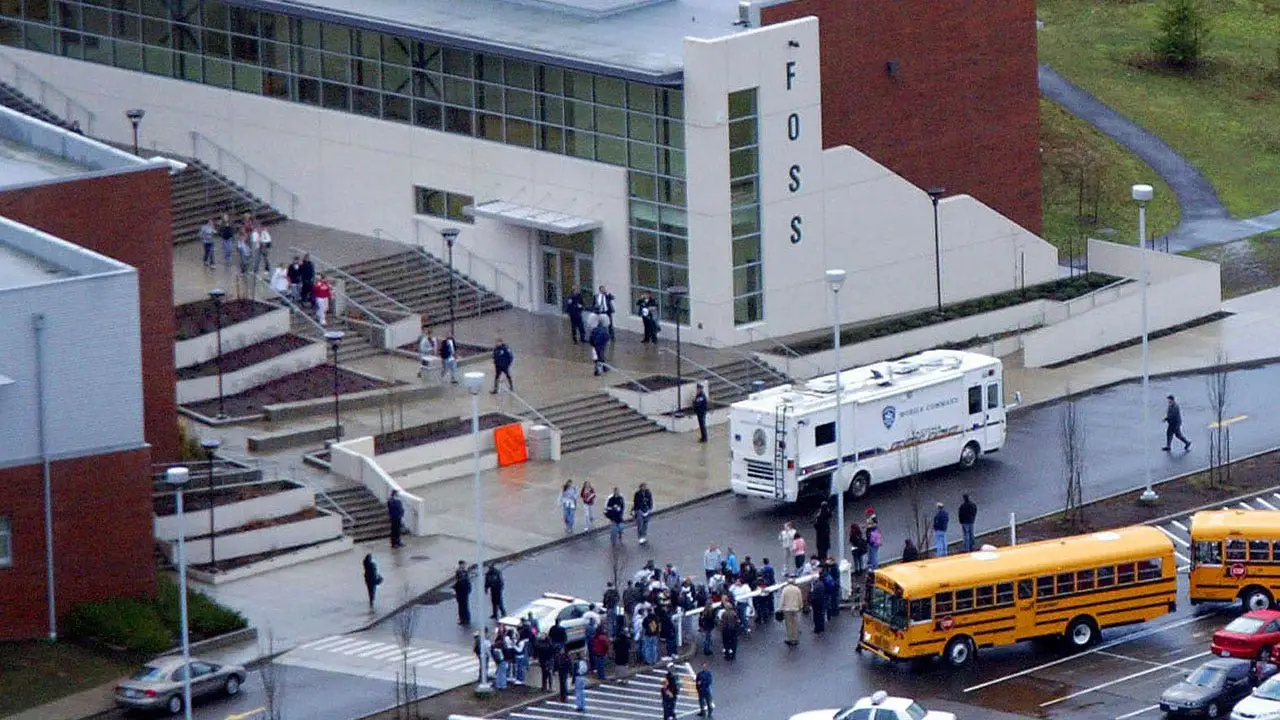
In the quiet suburbs of Tacoma, Washington, where community pride and routine often define everyday life, a shocking act of violence erupted at Foss High School, shattering the illusion of safety that schools are supposed to provide. On a seemingly ordinary Thursday afternoon, around 1:38 p.m., the campus descended into lockdown as reports of a stabbing incident spread like wildfire. Four students and a security guard were injured, their lives forever altered by wounds that ranged from superficial cuts to life-threatening lacerations. The suspect, just a teenager navigating the turbulent world of high school, was identified as Waleed Emad Essakhi, a 17-year-old student who authorities say acted with chilling intent. According to court documents, the chain of events began the previous day at a local skatepark, where Essakhi allegedly stole a vape pen from another student—a seemingly minor theft that spiraled into a confrontation rooted in teenage bravado and unresolved grievances. The following day, as classes hummed along, four of the victim’s friends confronted Essakhi on school grounds, perhaps harboring thoughts of settling the score through a fight rather than involving adults. But what started as a heated exchange escalated dramatically: surveillance footage captured Essakhi pulling an object from his pocket—an object later revealed to be a knife—and allegedly slashing at his assailants with deadly precision. The victims, unarmed and caught off guard, suffered stab wounds to their bodies; one was slashed in the side, requiring emergency surgery to remove part of his lung, while another endured surgery for a deep cut to his arm. The most heartbreaking part? These were young people in the prime of their lives, dealing with the petty grudges of adolescence, only to find themselves fighting for their futures in a hospital bed.
The scene that unfolded was nothing short of terrifying, a vivid reminder of how quickly teen conflicts can turn lethal. Staff members and the security guard, heroes in the unfolding drama, rushed in to intervene, trying to separate the combatants. The guard, in the line of duty to protect the students entrusted to the school, was himself slashed on the arm, his injury a testament to the bravery required in such perilous moments. As the lockdown gripped the school—students huddled in classrooms, their phones buzzing with frantic messages from parents—law enforcement arrived swiftly. Essakhi was apprehended shortly after the stabbing, his hands still stained with the weight of what had transpired. Arraigned in Pierce County Superior Court the next day, he faced four counts of first-degree assault with a deadly weapon, a charge that underscored the severity of wielding a blade in a crowded school environment. Deciding to try him as an adult, the court acknowledged the gravity of his actions, setting bail at $75,000 and scheduling his next hearing for June. Prosecutors, expressing deep concerns for community safety, painted a picture of Essakhi as volatile, urging the court not to underestimate the risks. Yet, in his mother’s words, a glimmer of humanity emerged: she described her son as a recent transfer to Foss High, fleeing bullying and fights at his previous school, suggesting that perhaps this outburst was the culmination of pent-up frustrations and a cry for help that went unheard. It’s easy to imagine the toll this takes on families—parents torn between defending their child and grappling with the reality of what they’ve done, all while society rushes to judgment.
As news of the stabbing rippled through the community, it forced residents to confront the fragility of safety in public spaces, especially schools that are meant to be sanctuaries for learning and growth. Tacoma Public Schools responded promptly, canceling classes and activities the day after the incident, designating the campus as a reunification site where worried parents could collect their shaken children. Counselors were on hand, offering emotional support to students and staff alike, because trauma like this doesn’t end with the physical wounds; it lingers in nightmares and trust issues. One victim reportedly claimed that Essakhi was “egging them on,” slapping his own face in a defiant provocation that sounded more like a desperate act of self-defense inflamed by rage than calculated malice. The lack of any weapons on the victims’ side highlighted the unevenness of the confrontation, raising questions about preventative measures—could metal detectors or anti-bullying programs have nipped this in the bud? Reflecting on broader societal issues, this incident echoed similar tragedies in schools nationwide, where knives and guns sometimes replace words in settling disputes. It’s a stark human element that makes this story relatable: teenagers, often irrational and fueled by peer pressure or social media bravado, making choices that ripple far beyond their comprehension. For the victims, recovery was not just physical; surgeries for stab wounds involved hours under anaesthetics, with one figuratively and literally fighting to breathe again after lung damage. The security guard’s arm cut would heal with time, but the psychological scars—witnessing violence in a place of supposed security—might never fully fade. Neighbors and community members, glued to Fox News updates, shared their own stories of schoolyard skirmishes turned dangerous, fostering a collective empathy that underscores our shared vulnerability.
In the court of public opinion, Essakhi’s story unfolded through his mother’s lens, painting him as a bullied youth pushed to the brink rather than a cold-blooded attacker. This perspective invites understanding, reminding us that behind every headline is a human story filled with complexities—family pressures, failures in mental health support, and the isolating effects of adolescence in an increasingly digital world. The plea of “not guilty” entered on his behalf opened the door for a trial, scheduled for June, where evidence like surveillance footage would be dissected to uncover the truth. Prosecutors, wary of dismissing this as mere teen trouble, emphasized the need for high bail, citing Essakhi’s alleged volatility as a threat to public safety. Yet, humanizing him doesn’t excuse the violence; it merely begs the question of what leads a young person to such extremes. Imagine transferring schools after relentless bullying, seeking a fresh start, only to face immediate retaliation over a stolen vape pen—a petty item symbolizing deeper struggles. Schools, as microcosms of society, often mirror societal failures: inadequate counseling, weak anti-violence policies, and a lack of early intervention. Communities like Tacoma, with its diverse population and growing youth demographic, must reckon with these challenges, turning incidents like this into catalysts for change. Parents, reflecting on their own high school dramas, might see parallels—fights over failed tests or social slights that escalated into real harm. And for the students injured, their paths forward involve not just healing bodies but rebuilding lives, with scholarships, therapy, and support networks becoming lifelines amidst uncertainty.
As the dust settled and the lockdown lifted at 2:45 p.m., the human cost became clearer, urging a reevaluation of how we protect our most vulnerable. Fox News broadcasts brought the story into living rooms, with anchors narrating details that hooked listeners, prompting debates on social media about school safety and juvenile justice. Downloading the app to stay updated became a small act of community involvement for many, as the incident sparked discussions on stricter penalties for assaults with weapons and better mental health resources for troubled teens. One victim’s surgery to remove a lung portion was a sobering detail, illustrating how a moment’s rage can steal years of health and potential. The security guard’s injury added a layer of heroism, his pain a reminder that educators and staff are on the front lines daily. Mother’s defense, pleading for empathy, challenged preconceptions, suggesting that Essakhi might have been a product of circumstance—a boy cracking under pressure rather than a monster. This narrative resonates universally, as many recall their own brushes with teenage turmoil, fostering compassion for all parties involved. The school’s cancelation of activities the next day allowed for grief and reflection, with counselors working overtime to mend emotional fractures. In essence, this wasn’t just a stabbing; it was a wake-up call, highlighting the urgent need for conflict resolution education and support systems that intervene before sharp objects do.
Looking ahead, the judicial process promises more revelations, with the omnibus hearing on June 1 and trial on June 17 holding the community’s breath. Essakhi’s case, tried as an adult, sets precedents for how we handle youthful offenders, balancing accountability with rehabilitation. Prosecutors’ concerns about volatility echo widespread fears, yet advocacy groups might argue for restorative justice, focusing on healing over punishment. For the injured students and guard, ongoing medical care and counseling represent hope, as communities rally with fundraisers and support. Tacoma, a city of resilience, is no stranger to recovery—from natural disasters to social upheavals—and this incident may galvanize improvements in school security, perhaps through increased patrols or mental health hotlines. Parents, newly attuned to school gossip and warning signs, will scrutinize their children’s worlds more closely, attending PTA meetings with fresh purpose. The humanized story here is one of interconnected lives: a bullied boy’s desperation, friends seeking revenge, protectors stepping in, and a system striving for justice. By listening to Fox News updates and engaging in discourse, people are transforming tragedy into action, ensuring such chaos doesn’t define their children’s futures. In summarizing this, we honor the victims’ pain, the suspect’s humanity, and society’s call to do better, weaving a tapestry of empathy that binds us all.