






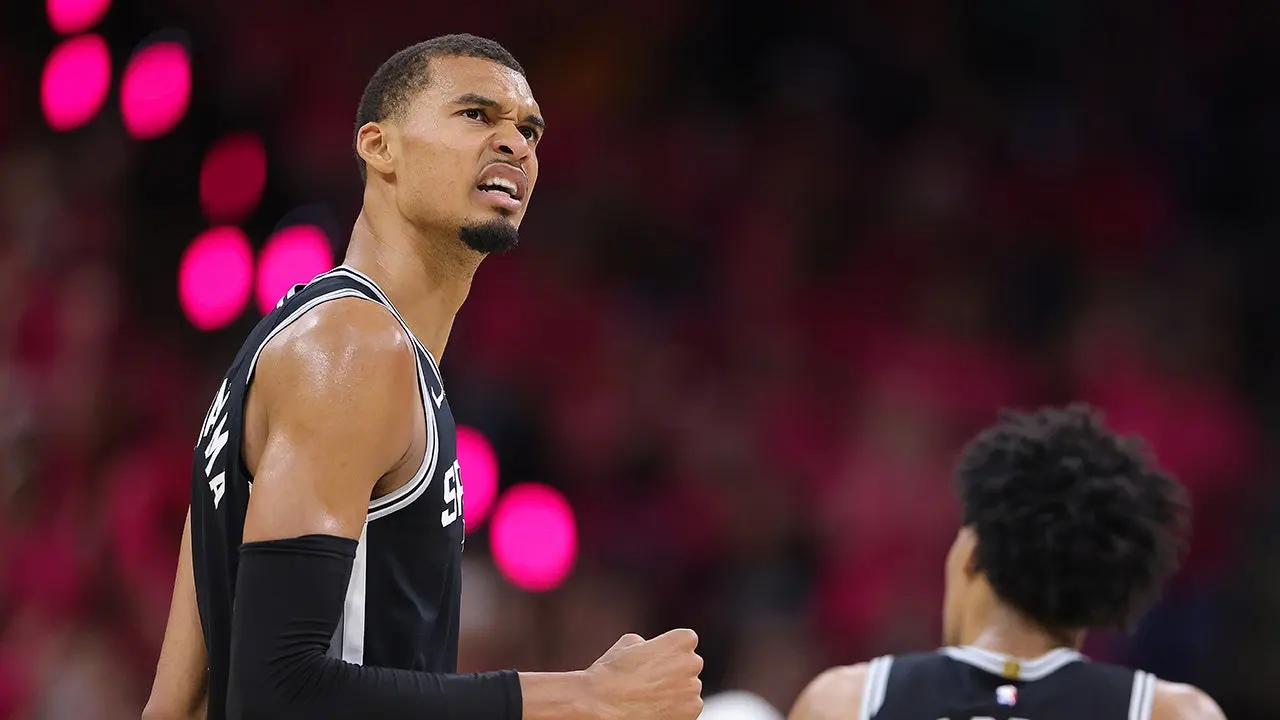
The Western Conference Finals have long been the ultimate crucible of basketball greatness, a stage where dynasties are forged and pretenders are ruthlessly unmasked under the brightest playoff lights. This year, however, the narrative feels entirely shifted, charged with a futuristic energy that seems to have arrived far ahead of schedule. The spotlight rests intensely on the San Antonio Spurs and the Oklahoma City Thunder—two young, explosive franchises that have bypassed the traditional rebuilding timeline to clash in a series that feels like a glimpse into the next decade of professional sports. At the heart of this collision is San Antonio’s sophomore sensation, Victor Wembanyama, the French basketball prodigy whose sheer presence has challenged our fundamental understanding of physics on a basketball court. Standing over seven feet tall with a guard’s agility and a defensive reach that alters entire offensive schemes, Wembanyama has captivated the sports world, carrying the weight of a legendary franchise on his remarkably broad shoulders. Yet, standing directly in his path are the defending world champions, the Oklahoma City Thunder, led by the enigmatic and unflappable Shai Gilgeous-Alexander. The playoff atmosphere, thick with anticipation and the scent of Texas dust, serves as the perfect backdrop for a series that has already transcended standard basketball analysis to become a deeply human drama about youth, pressure, legacy, and the pursuit of ultimate athletic supremacy. Every possession feels like a high-stakes chess match played at hyper-speed, a testament to how quickly these two rosters have grown from young rebuilding projects into championship contenders. For the fans gathered in San Antonio, this series represents more than just a shot at the NBA Finals; it is the official dawning of a new era, a rebirth of the golden years of Spurs basketball, now fueled by a generational talent who seems virtually preordained for legendary status.
To truly understand the gravity of Game 3, one must examine the historic and emotionally exhausting path that led both teams to this critical juncture. Through the first two contests of the Western Conference Finals, Victor Wembanyama put on a display of basketball virtuosity that left historians scrambling for the record books, posting statistical lines that had not been witnessed at this elite level of the postseason in nearly fifty years. In the series opener, Wembanyama was nothing short of a basketball deity, orchestrating a masterclass with a mind-boggling 41-point, 24-rebound performance that anchored a thrilling Game 1 victory for San Antonio, instantly igniting championship fever across South Texas. It was a statement game, one that declared the young Spurs were no longer just happy to be here—they were ready to take the crown from the reigning kings. However, championship teams do not falter easily, and the defending champion Thunder proved exactly why they wear the ring during Game 2. Led by the cool, calculating demeanor of back-to-back NBA MVP Shai Gilgeous-Alexander, who answered with a clinical 30-point performance of his own, Oklahoma City methodically picked apart the Spurs’ defense to even the series. That bounce-back victory by the Thunder served as a harsh, grounding reminder for Wembanyama and his young teammates that the postseason is a grueling war of attrition, where individual brilliance must constantly battle against seasoned, collective execution. The shift to San Antonio for Game 3 was supposed to be the moment the Spurs recaptured their momentum, utilizing the raw, unfiltered energy of their home arena to push the veteran champions to the brink, setting the stage for an emotional homecoming that the young roster desperately craved.
There is an undeniable sanctuary in playing on your home court, a psychological buffer that young players cling to when the pressure of the postseason threatens to overwhelm them. Ahead of the crucial Game 3, San Antonio’s promising young guard Stephon Castle openly reflected on this comfort, acknowledging that despite the hostile environments they had endured on the road, the team felt a profound, grounding reassurance when playing in front of their own fiercely loyal fanbase. When the ball was tipped on Friday night, that collective energy manifested as a roaring, tangible force within the arena. Sanitized of all the clinical, statistical noise of the regular season, the first five minutes of the game was pure, unadulterated basketball poetry for San Antonio. Driving on the fuel of a raucous, deafening home crowd, the Spurs exploded out of the starting gates with a breathtaking 15-0 run that left the defending champions looking momentarily human, hesitant, and thoroughly rattled. Wembanyama was the catalyst, blocking shots at the rim and running the floor with fluid grace, while Castle and the rest of the supporting cast moved with a frenetic, desperate speed. Within minutes of the opening tip-off, the lead ballooned to a commanding 19-4 advantage, and the atmosphere in San Antonio reached a fever pitch, with fans daring to believe that their young contenders were about to run the champions out of the gym. It was a beautiful, fleeting sequence that highlighted the raw emotional peak of playoff basketball, where momentum feels like an unstoppable tidal wave and a young team looks entirely invincible.
But the true measure of a champion lies not in how they start a game, but in how they respond when the walls are closing in, and the Oklahoma City Thunder possess a collective poise that has been forged in the fires of past playoff battles. As the initial madness of the Spurs’ run began to settle, the Thunder did not panic; instead, they slowly, methodically began to claw their way back into the contest, relying heavily on the unsung heroes of their championship roster. While casual fans often focus on the superstars, playoff series are frequently decided in the quiet, crucial minutes when the bench units take the floor, and on this night, Oklahoma City’s depth proved to be the ultimate difference-maker. The Thunder’s reservoir of talent went to work as Alex Caruso, Jaylin Williams, Jared McCain, and Cason Wallace stepped onto the hardwood and completely altered the texture of the game. Caruso brought his trademark defensive intensity, harassing San Antonio’s ball-handlers and disrupting the passing lanes that had looked so open just minutes prior. Meanwhile, Williams provided crucial physicality in the paint, McCain hit timely, backbreaking shots that quieted the crowd, and Wallace played with a veteran maturity that belied his age. Together, this bench unit acted as a human firewall, absorbing the Spurs’ best punches, stabilizing the half-court offense, and slowly chipping away at the lead until the home crowd’s roaring desperation turned into a tense, nervous hush. It was a masterclass in modern basketball depth, proving that while stars may grab the headlines, it is the resilience and selflessness of a complete roster that ultimately hoists trophies at the end of the year.
As the game matured into a fierce back-and-forth battle, it inevitably evolved into a direct, dazzling showcase between the two central figures of the series, Shai Gilgeous-Alexander and Victor Wembanyama. The statistical matchup was an absolute deadlock, with both superstars pouring in 26 points, yet their methods of accumulation offered a fascinating contrast in basketball styles and philosophies. Wembanyama operated like a force of nature, using his extraterrestrial wingspan to pull down rebounds, protect the paint, and score in ways that defied traditional mechanical logic, keeping the Spurs competitive even as the rhythm of the game began to favor Oklahoma City. On the other end, Gilgeous-Alexander was a portrait of serene, calculating efficiency, orchestrating the offense with a deliberate, slow-motion grace that consistently dissected the Spurs’ defensive schemes. Where Wembanyama offered spectacular, high-flying highlights, SGA countered with steady, mid-range assassinations and an uncanny ability to get to his spots on the floor regardless of who was guarding him. This duel of giants became the emotional heartbeat of the second half, a thrilling back-and-forth where every bucket felt like a heavy counterpunch. Ultimately, it was Gilgeous-Alexander’s ability to elevate his teammates and maintain his composure under duress that allowed Oklahoma City to steadily pull away, turning a once-competitive contest into a commanding 123-108 victory. Despite Wembanyama’s heroic efforts to carry the offensive load for San Antonio, the Thunder’s collective execution proved too disciplined, too relentless, and too seasoned for the young Spurs to overcome on this particular night.
With the final buzzer sounding and the scoreboard reflecting a tough 123-108 defeat, the reality of a 2-1 series deficit now sits heavily on the shoulders of the young San Antonio Spurs. The human element of this loss is profound; for a young group that felt the incredible high of a 19-4 start, the subsequent slow-motion defeat at home is a bitter, emotionally exhausting pill to swallow. Victor Wembanyama, despite his historic individual accolades and another stellar 26-point performance, must now navigate the psychological burden of leadership in the face of adversity, learning in real-time what it takes to guide a team through the darkest moments of a playoff run. On the other side, the defending champion Thunder showcased the quiet confidence of a team that has been here before, celebrating their hard-fought victory with the subdued professionalism of athletes who know the job is far from finished. This series has become a beautiful, complex narrative of contrast—the raw, unrefined potential of a rising young giant versus the polished, championship-hardened execution of a modern dynasty. As both teams look ahead to Game 4, the tactical adjustments will undoubtedly dominate the headlines, but the true battle will be waged in the hearts and minds of the players. San Antonio must find the emotional resilience to bounce back from a deflating home loss, while Oklahoma City will try to apply a stranglehold on the series, ensuring that this captivating duel between Wembanyama and Gilgeous-Alexander continues to deliver some of the most compelling human drama in modern sports history.