





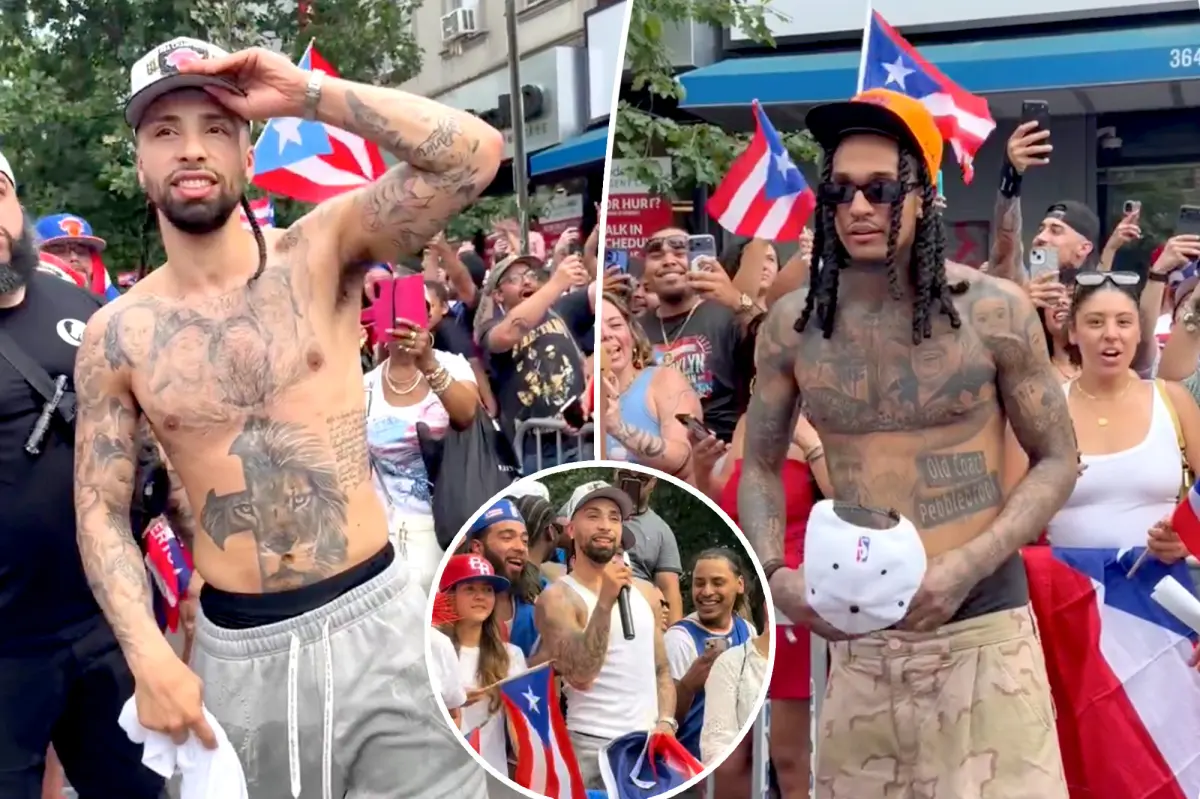
The sticky warmth of a late June afternoon has a unique way of magnifying the vibrant, beating heart of Brooklyn’s historic neighborhoods, but on this particular Sunday, the air in Bushwick carried an electric charge that transcended the season itself. The eighth annual Knickerbocker Avenue Puerto Rican Day Parade was already destined to be a joyous, spectacular tapestry of cultural pride, defined by the rhythmic, infectious beats of salsa pulsating through massive street speakers, the brilliant red, white, and blue of the Puerto Rican flag draped over shoulders and hanging from fire escapes, and the fragrant aroma of street vendors cooking traditional dishes. Yet, what was expected to be a beautiful community gathering transformed into an absolute frenzy of hometown pride when Jose Alvarado, the beloved playmaker and point guard for the New York Knicks, made a surprise, unannounced appearance. Striding through the sea of cheering spectators, Alvarado radiated the raw, kinetic energy of a man who knew he was exactly where he belonged, rejecting any sense of athletic aloofness. In a moment of pure, unadulterated passion that instantly captured the local imagination and went viral across social media, the Brooklyn-born athlete ditched his white tank top, swinging it wildly over his head like a fan in the raucous Madison Square Garden rafters, while a deafening, thunderous chorus of “Knicks in five!” erupted from the densely packed crowd. It was an iconic scene that blurred the line between superstar athlete and hometown kid, a vivid reminder of how deeply sports and cultural identity are woven into the very fabric of New York City life. As the decorated float slowly rolled down the crowded avenue, Alvarado stood tall, looking out at the endless sea of faces of people who walked the same streets he did as a child, his eyes reflecting a profound mixture of awe, validation, and deep love. This was not just a promotional stop or a standard celebrity appearance; it was a triumphant homecoming, a mutual love letter between a neighborhood and a player who carries the grit of the city in every single heartbeat.
To fully understand the sheer magnitude of the crowd’s reaction to Alvarado’s presence, one must understand the journey of the man himself—a story deeply rooted in the concrete basketball courts and resilient neighborhoods of Brooklyn. Born and raised in Williamsburg long before the gentrification of the Brooklyn waterfront took hold, Alvarado lived the quintessential New York childhood, one shaped by the constant clatter of the JMZ subway lines, the vibrant community gardens, and the relentless pursuit of his athletic dreams on the neighborhood blacktops. His family eventually relocated to Queens, another borough defined by its rich diversity and hard-working ethos, where he quickly made a name for himself at the legendary Christ The King High School in Middle Village. It was within those storied walls, a veritable cathedral of high school basketball, that Alvarado sharpened his claws, developing the tenacious, never-say-die defensive attitude that has come to define his professional career in the NBA. As the only born-and-raised New Yorker currently wearing the iconic orange and blue of the Knicks roster, he carries a distinct, incredibly heavy mantle of representation. He does not just play for New York; he is of New York, a living product of the asphalt playgrounds where foul calls are rare, defense is a matter of personal honor, and respect must be earned through hard work every single day. For the kids lining the guardrails of Knickerbocker Avenue, Alvarado represents the ultimate manifestation of their own dreams, demonstrating that the long, sweaty hours spent practicing crossovers on chain-link rims under the dim glow of streetlights can lead all the way to the basketball mecca of Madison Square Garden. By celebrating his roots so openly and passionately at the parade, Alvarado showed that despite the fame, the lucrative contracts, and the national spotlight, his soul remains firmly anchored in the outer boroughs that raised him, earning him the eternal respect of New Yorkers who pride themselves on recognizing real, authentic talent.
The emotional weight of the day was further elevated by the profound cultural connection Alvarado shares with the thousands of community members lining the parade route. Of proud Puerto Rican descent, his relationship with the island extends far beyond mere heritage or distant ancestry; he is a bonafide national hero who recently played a pivotal, historic role in guiding the Puerto Rican national basketball team to qualify for the highly anticipated 2024 Summer Olympics in Paris. This achievement sent shockwaves of joy and pride across the Caribbean island and reverberated throughout the massive diaspora living in the five boroughs of New York. For the Puerto Rican community of Bushwick, a historic enclave of Nuyorican culture and political activism, seeing Alvarado wave their flag and celebrate alongside them was a deeply validating and emotional experience. His presence at the Knickerbocker Avenue parade served as a vibrant bridge between the island they love and the city they call home, a powerful reminder that cultural identity is not diluted by distance but rather enriched by it. The intersection of his NBA stardom and his fierce commitment to the national team represents a dream realized for millions of Boricuas who rarely see their heritage represented at the highest levels of global athletic competition. As he stood on the float, flanked by community elders who had migrated decades ago and toddlers sitting on their parents’ shoulders wearing custom jerseys, the collective pride in the air was thick enough to touch. Alvarado’s success is viewed by the neighborhood not as an individual triumph, but as a collective victory for every Puerto Rican family that has struggled, persevered, and contributed to the rich cultural mosaic of New York City. The parade became a living testament to the power of representation, illustrating how a single athlete’s journey can ignite a sense of shared destiny across multiple generations.
Adding to the starry, celebratory atmosphere of the afternoon was the unexpected and highly cheered presence of Alvarado’s Knicks teammate, guard Jordan Clarkson, whose appearance further cemented the event as a historic moment in local sports lore. Clarkson, known throughout the basketball world for his eccentric fashion sense, effortless charisma, and dynamic scoring ability on the court, was seen warmly posing for photographs with ecstatic fans, signing autographs on worn basketballs, and fully immersing himself in the festive, music-fueled environment. The heartening sight of these two professional athletes navigating the dense crowd with such ease and humility highlighted a beautiful aspect of contemporary sports culture: the total dismantling of the barrier between high-salaried superstar athletes and the working-class communities that support them. Clarkson’s active participation in a fundamentally local, culturally specific parade showed a deep respect for his teammate’s heritage and an eagerness to embrace the unique, multicolored soul of New York City’s outer boroughs. The natural camaraderie between Alvarado and Clarkson on the streets of Brooklyn mirrored the tight-knit, gritty chemistry that has endeared this current Knicks team to its incredibly passionate, long-suffering fan base. This was not a sanitized, corporate appearance structured by public relations executives to build a brand; it was a raw, spontaneous celebration of life, sports, and community. The crowd responded with overwhelming warmth, treating the players not as distant, unapproachable icons to be photographed from afar, but as brothers and neighbors who had returned home to share in the collective joy of a spectacular season. To see Clarkson, who does not share the same local roots, fully embraced by the Brooklyn crowd was a beautiful testament to the unifying power of basketball, transforming the street into a harbor of mutual respect, where background and origin faded beneath the shared love of the game.
The profound mutual respect between the organizers of the parade and the athletes was perhaps best illustrated by a significant logistical adjustment that did not go unnoticed by local residents. Traditionally, the Knickerbocker Avenue Puerto Rican Day Parade is known to kick off before the midday sun reaches its peak, typically starting well before noon to make the most of the daylight and avoid the sweltering afternoon temperatures. However, on this special Sunday, the parade organizers made the unprecedented decision to push the start time back to 3:00 p.m.—a deliberate shift designed specifically to accommodate the schedules of their honored guests, Alvarado and Clarkson, ensuring they could participate fully. This adjustment spoke volumes about the parade committee’s admiration for the athletes, prioritizing their inclusion over rigid historical scheduling and showing how valued their presence was to the community. When Alvarado finally ascended the parade float under the late-afternoon sun, the eager anticipation of the waiting crowd erupted into pure ecstasy. Grasping the microphone with hands that have stolen countless basketballs on the hardwood, he delivered a brief but deeply raw and unfiltered address that echoed down the blocks of Bushwick. “Thank you guys so much, it means the world to me. Really,” Alvarado shouted, his voice cracking slightly with genuine, unscripted emotion. “I’m a kid from Brooklyn. And the Knicks party f–kin’ did it.” The crowd erupted in a frenzy of cheers, car horns, and whistles, the float itself shaking slightly from the sheer energy of the moment. In an era where professional athletes are heavily coached to speak in safe, sterile platitudes, Alvarado’s raw passion and unfiltered exclamation were met with roaring approval, embraced by the neighborhood as the ultimate sign of a genuine New Yorker speaking directly from the soul to the people who truly understand him.
As the parade began to wind down and the warm sun finally dipped below the iconic Brooklyn skyline, casting a beautiful golden hue over the bustling streets of Bushwick, the lingering impact of the day’s festivities was written on the smiling faces of everyone who attended. This surprise appearance by Jose Alvarado was far more than a simple highlight reel moment for sports blogs; it was a powerful, emotional affirmation of what it means to remain connected to one’s origins despite achieving astronomical success. By choosing to celebrate his team’s achievements and his nation’s historic Olympic qualification in the very streets where he first dreamed of greatness, Alvarado cemented his legacy as a true folk hero of New York basketball. He is living proof that the spirit of Williamsburg and Queens, forged through hard work, resilience, and community support, can conquer the grandest stages in the world without ever losing its essential, grounded character. For the young athletes of Brooklyn who watched him wave his shirt and shout his love for the city, the future now looks a little brighter and the path to their own dreams feels a little more reachable, showing them that their circumstances do not limit their potential. As a breaking news story that continues to capture hearts across the five boroughs, this parade will undoubtedly go down in neighborhood history as the day a kid from Brooklyn came home not just to celebrate a victory, but to show his people that no matter how high he flies, he will always keep his feet firmly planted on the concrete of the city that made him. This beautiful, unbreakable connection between the local pavement and the professional arena represents the true, beating soul of New York basketball, where every personal triumph belongs to the neighborhood that helped build the player from the ground up, ensuring his legacy will endure long after his playing days are over.