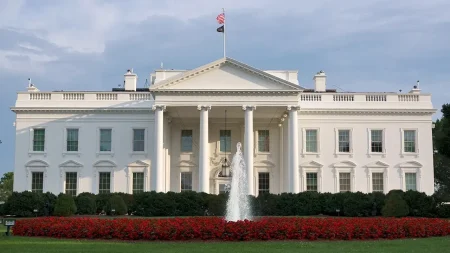







The mechanics of state-sanctioned justice are often cloaked in sterile legal procedures, but beneath the mountains of filings and institutional language lies an intensely human drama of guilt, grief, and the ultimate finality of life and death. This tension came to a quiet but decisive head in Washington, D.C., when the United States Supreme Court denied requests for emergency stays of execution for two aging inmates on Florida’s death row. This judicial refusal effectively cleared a path for the state of Florida to carry out its eleventh and twelfth executions of the year, bringing a sudden end to decades of legal battles and reigniting the nationwide debate over capital punishment. For the families of the victims, the decision represented the closing of a painful, decades-long chapter of waiting, a hope that the scales of justice might finally balance the horrific losses they endured in the mid-1980s. Conversely, for the legal teams, advocates, and families of the condemned, the ruling signaled the exhaustion of hope, leaving them to watch the final sand slip through the hourglass. In a society that constantly wrestles with the morality of institutional killing, these decisions are never merely procedural; they are deeply intimate events that force us to look closely at our collective definitions of retribution, redemption, and the value of human life, even when that life is marred by unspeakable crimes. By refusing to intervene, the country’s highest court allowed the state to proceed with a historical and highly rare double execution day, setting into motion an afternoon and evening that would leave an indelible mark on the annals of American criminal justice. It serves as a stark reminder that behind every legal docket, dry judicial ruling, and political debate, there is a complex network of human tragedy, trauma, and the irreplaceable loss of human souls.
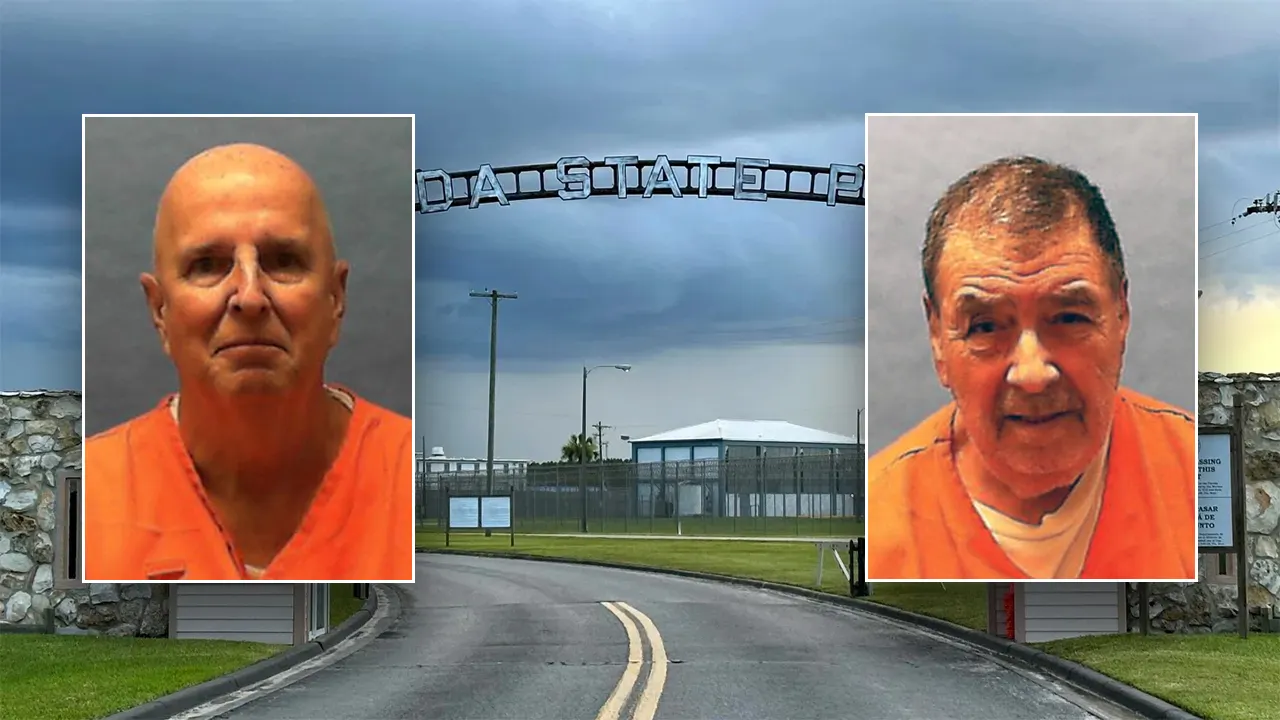
The first of the two scheduled executions was that of James Duckett, a 68-year-old former police officer whose life was defined by a shocking and tragic duality: a man sworn to protect the public who ultimately committed one of the most heinous crimes imaginable. In 1987, Duckett shattered the trust of his community and permanently broke the heart of a family when he raped and murdered an 11-year-old girl, an act of violence that left a permanent scar on the local collective consciousness. For thirty-seven years, Duckett sat in a cell, navigating the winding corridors of the appellate system, as his youth faded and he transitioned into old age behind bars. On Tuesday, his final hours were marked by an agonizing suspense; originally scheduled to die at noon, he was granted a brief reprieve as correctional authorities waited for the Supreme Court to issue its final ruling. When the high court’s denial ultimately came down, the administrative machinery moved swiftly, and at 1:19 p.m., after the lethal chemical cocktail was administered, Duckett was pronounced dead. The trajectory of Duckett’s life—from a community protector wearing a badge to a condemned man dying on a gurney—captures the tragic complexity of institutional betrayal and the generational agony of a victim’s family who had to carry the weight of their loss for nearly four decades. His death, while satisfying the state’s mandate for retribution, serves as a grim monument to the horrific vulnerabilities of children and the immense weight of administrative justice that takes almost a lifetime to reach its final, sterile conclusion. It forces us to ask how someone entrusted with public safety could fall so far, reminding us of the deep wounds that crimes of this nature inflict upon the social fabric.
As the dust settled on Duckett’s afternoon execution, another deeply complex human story prepared to meet its end under the stark lights of the state chamber, focusing on 80-year-old Dominick Occhicone. Scheduled for 6:00 p.m., Occhicone’s execution placed him at a historic and unsettling crossroads, making him the oldest inmate ever to be executed in the history of Florida. Decades earlier, in 1986, Occhicone had shattered lives when he was convicted of murdering his ex-girlfriend’s parents, an act of domestic spillover that destroyed a family and permanently sealed his fate. Spending nearly forty years in prison meant that Occhicone grew old, frail, and gray waiting for a sentence that many believed might never come due to his advancing age. The image of an octogenarian being wheeled or walking haltingly toward the execution chamber raises profound questions about the nature of aging in maximum security and the purpose of executing someone who is a physical shadow of the person who committed the crime forty years prior. Supporters of the sentence argue that age should not grant immunity for the stolen decades of his victims, asserting that the passage of time does not diminish the gravity of a double homicide. However, human rights advocates point to the execution of the elderly as a form of double punishment—decades of psychological torment on death row followed by a physical termination in one’s twilight years—highlighting the deeply complicated intersection of geriatric care, prison environments, and the unyielding demands of the law. This execution forces a confrontation with the reality of time; generations have grown up in the years since the 1986 crime, and yet the debt extracted by the state remains frozen in time, waiting of payment. The physical frailty of an eighty-year-old man stands in stark contrast to the severe majesty of the law, creating a visual and ethical juxtaposition that challenges observers on all sides of the capital punishment debate. To some, his execution is a long-delayed act of essential justice, a promise kept to the deceased parents and their surviving relatives. To others, it feels like an unnecessary act of cruelty performed on a body already close to its natural end, demonstrating the endless struggle to find a balance between mercy and retribution in cases of extreme violence.
The carrying out of both Duckett’s and Occhicone’s sentences on the same day marked an exceedingly rare event in modern American history, transforming Tuesday into a dark milestone for the penal system. If both executions were completed as planned, it would represent the first time Florida has executed two inmates in a single twenty-four-hour period since 1964, a time when the legal framework of capital punishment was radically different than it is today. On a national scale, double executions have become almost completely obsolete in the twenty-first century, with only one other such occurrence since the turn of the millennium, when the state of Arkansas executed two men on the same night in 2007. The logistics of a double execution require an extraordinary level of precision, placing an intense psychological and operational strain on prison staff, medical personnel, and administrative officials who must transition from one lethal procedure directly into another. This rare administrative feat forces society to confront the reality of death row as an assembly line of state-ordered mortality, challenging the notions of individualized justice. Critics argue that conducting multiple executions in a single day desensitizes the public and reduces human lives to a mere checklist of state efficiency, while proponents suggest that it is merely the logical convergence of long-overdue legal processes. This compression of tragedy into a single afternoon amplifies the emotional weight on everyone involved, from the spiritual advisors trying to comfort two distinct souls on the brink of death, to the journalists tasked with reporting on back-to-back state killings. Regardless of perspective, the sheer rarity of this event serves as a stark reminder of the state’s awesome and terrifying power to end human life, executed with a systematic precision that leaves no room for error or second thoughts. It turns the prison into a hyper-focused environment where the sole focus is the termination of life, cast against a backdrop of historic legal precedent that will be studied for years to come.
This double execution is not an isolated anomaly, but rather the culmination of an aggressive and highly active capital punishment agenda in Florida that sets it apart from almost every other state in the nation. This year alone, Florida has executed eleven inmates, a number that is more than double that of its next closest peer, Texas, which has carried out four executions over the same period, according to official department of corrections data. The dramatic divergence between Florida and other traditional capital-punishment states highlights a profound regional shift in judicial enforcement and political will, as Florida’s leadership has actively worked to expedite death penalty cases and clear out backlog on death row. This rapid pace of executions raises vital questions about the consistency of human rights standards across state lines, demonstrating how an individual’s geographic location can dramatically alter their chances of survival or the speed of their execution. While some applaud Florida’s aggressive stance as a decisive victory for law and order and a swift fulfillment of promises made to grieving victims’ families, others express deep concern over the quickening pace of state-sanctioned deaths. The history of the state’s capital justice system is marked by high-volume periods, such as when Florida executed nineteen inmates in 2025, but the acceleration seen in the current term is striking. The sheer volume of executions in Florida forces a broader public examination of whether the justice system is prioritizing punitive efficiency over the meticulous, prolonged safeguards designed to prevent irreversible error, revealing the deep political and emotional divisions that characterize the American approach to justice. In this environment, the state’s justice system operates with a momentum that seems almost unstoppable, leaving little room for the delays that once characterized the death penalty appeal process. This contrasts sharply with the broader national trend, where many states are moving away from the death penalty entirely or imposing moratoriums, leaving Florida as a prominent outlier that aggressively pursues the ultimate punishment.
In the final analysis, the events of this historic Tuesday in Florida transcend the cold statistics of court dockets and the administrative execution of two elderly men, leaving behind a profound legacy of human pain and unresolved ethical questions. As the families of the victims walk away from the prison gates, they are left to navigate a world that is legally “made whole” but remains deeply fractured by the loss of loved ones whose absences have lingered for nearly forty years. For those who believe in the redemptive potential of the human spirit, the execution of Duckett and Occhicone—men who lived long enough to grow old and fragile in the shadow of their crimes—represents a tragic missed opportunity for societal mercy, reflecting a system that values retribution over the possibility of transformation. Ultimately, these executions stand as a solemn reflection of a society that continues to struggle with its deepest impulses: the desire for justice, the pain of unhealed wounds, the demand for accountability, and the fundamental sanctity of human life. As the state of Florida moves forward with its unprecedented pace of capital punishment, the echoes of this double execution will continue to reverberate through courtrooms, statehouses, and family living rooms, serving as a powerful reminder that our legal systems are not merely machines of law, but mirrors that reflect our deepest values, our fears, and our complicated humanity. The lives cut short decades ago, the lives ended on this Tuesday, and the lives of those left behind to pick up the pieces are all woven into this dark tapestry of American justice, leaving us to wonder if true healing can ever be found through the needle of an executioner. In a world that often seeks simple answers to complex tragedies, the state-ordered deaths of James Duckett and Dominick Occhicone remind us that the pursuit of justice is a heavy burden, one that requires us to examine not just the guilt of the condemned, but the moral fiber of the society that condemns them.