






The End of an Era: Spirit Airlines’ Sudden Shutdown
In the vast, evolving world of American aviation, Spirit Airlines once stood as a bold experiment in making flying accessible to the masses, ripping away all the frills to offer some of the cheapest fares imaginable. Founded as a trucking company back in Michigan during the 1960s, Spirit morphed through charter flights in the 1990s before truly transforming the skies in the following decade. By adopting a no-nonsense model inspired by European upstarts like Ryanair, Spirit stripped air travel down to its bare essentials—charging extra for everything from seat assignments to printed boarding passes—while keeping ticket prices rock-bottom. For years, this strategy paid off handsomely, democratizing flying for millions who could never afford it before. Passengers traded comfort for low costs, and Spirit reveled in the profits, even poking fun at the norms with cheeky ads that drew laughs (and groans) on late-night TV. But as competition heated up and costs soared—especially after the pandemic’s shadow lifted—Spirit’s once-unshakable dominance began to crumble. By 2024, the ultra-low-cost carrier was hemorrhaging money, filing for bankruptcy amid fierce rivalries at hubs like Las Vegas, Florida, and New York. A second bankruptcy followed in 2025, with hopes pinned on emerging leaner. Yet, just as plans seemed to gain traction, the U.S.-Israeli war with Iran sent jet fuel prices skyrocketing by about 65%, sealing the doom. Despite a frantic eleventh-hour push from the Trump administration, creditors rejected a lifeline deal, leaving Spirit no choice but to pull the plug. In the early hours of a Saturday morning last year, a stark yellow banner appeared on their website: operations were winding down. All flights canceled. Employees and passengers alike were left reeling in a whirlwind of uncertainty, as one of America’s most disruptive airlines vanished overnight, a stark reminder of how fragile even the boldest dreams can be in a high-stakes industry.
The shutdown hit like a hammer in the quiet pre-dawn hours, catching many off guard. Spirit’s statement came just after 2 a.m., urging passengers not to head to airports, as the airline’s homepage broadcast the grim news in bright, unavoidable yellow. It was the culmination of years of mounting pressures that Spirit had once mastered but could no longer navigate. Rising labor costs for pilots and ground crews, coupled with frequent aircraft maintenance issues—especially engine problems that plagued the industry—eroded margins that were already thin. Intense competition from bigger players like Delta, United, and American forced Spirit to scale back, but the final straw was undeniably the fuel surge tied to international tensions. The Trump administration scrambled to broker a deal with creditors for a bailout, but negotiations faltered, leaving no room for salvation. As stories of stranded travelers flooded social media and news outlets, it became clear this wasn’t just a business failure; it was a human one. Tens of thousands found their vacations, reunions, or work trips upended, while 17,000 Spirit workers—from flight attendants to mechanics—faced immediate joblessness. The airline vowed to refund credit and debit card purchases automatically and work tirelessly to repatriate over 1,300 crew members mid-air, highlighting a flicker of responsibility amidst the chaos. Other carriers, sensing both opportunity and responsibility, offered discounted fares to absorb displaced travelers, with United even extending job invitations to Spirit’s unemployed. It was a bittersweet moment, as the very model that had forced the industry to innovate now left a gaping hole, prompting questions about how budgets, long touted as democratic, could collapse so abruptly under economic and geopolitical pressures.
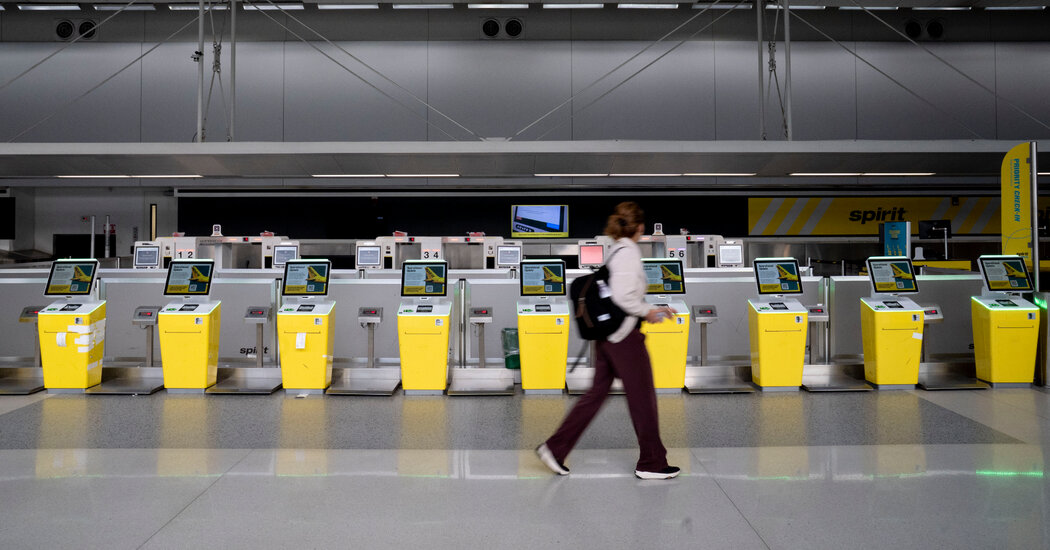
On its last day, Spirit managed a delicate farewell, safely ferrying more than 50,000 passengers one final time. Flight 1833, the swan song, lifted off from Detroit late that evening and touched down in Dallas just after midnight, a quiet epitaph to an airline that had zipped millions across the country. For those directly affected, the grief was tangible and immediate. At LaGuardia Airport’s Terminal A—Spirit’s exclusive home base—Saturday morning dawned eerily quiet, save for a scattering of bewildered passengers and camera crews capturing the spectacle. TV reporters hovered like vultures, interviewing the few who’d shown up unaware of the shutdown. Danny Nuñez, a 50-year-old MBA graduate en route to an Orlando commencement, recounted his surreal checkpoint stumble. He’d double-checked his flight the night before, only to reach a kiosk that spat out an error message instead of a boarding pass: “Please bring to an agent.” But no agents loomed; the terminal’s notices bluntly declared customer service extinct. Frustrated and dismayed, Nuñez feared missing his life’s milestone event. “I might not make my ceremony,” he muttered, weighing whether to gamble on another carrier’s mercy. His story echoed through the airport’s emptiness, a personal microcosm of the broader dislocation. Elsewhere, at Chicago O’Hare, the message seemed to have sunk in—the Spirit check-in zone lay deserted, a sign that word had spread but not without heartache. Travelers shared tales on social feeds: families separated mid-vacation, wedding attendees delayed, workers stranded far from home. Spirit’s fleet, once the envy for its efficiency, now symbolized lost plans and unpredictable futures. In a nod to crisis management, the airline assured those in the air they’d be landed safely, but for many on the ground, the human toll deepened—a tapestry of dashed expectations woven from low fares that once promised freedom but now felt like false hopes.
The ripples extended far beyond the terminals, exposing the vulnerabilities of Spirit’s model in an unforgiving market. Critics, including United Airlines CEO Scott Kirby, argued the airline’s troubles ran deeper than fuel prices, citing a flawed philosophy that prioritized penny-pinching over passenger dignity. “They treated customers poorly,” Kirby said in an interview, implying Spirit’s ultra-low-cost ethos alienated flyers who, over time, migrated to more service-oriented big carriers offering perks like free carry-ons and flexible seating. This shift mirrored wider industry trends, where even Spirit’s rivals struggled post-pandemic—witness the Association of Value Airlines’ plea for $2.5 billion in government aid to cushion fuel spikes. Larger airline groups like Airlines for America balked, warning that such handouts would unfairly penalize self-sufficient competitors. Yet, amidst the blame, acknowledgment of Spirit’s impact shone through. Frontier Airlines’ Bobby Schroeter praised Spirit for “expanding access to affordable travel,” offering discounted rides to affected passengers as a gesture of solidarity. Spirit’s legacy is undeniable: by flooding lesser-served routes with rock-bottom fares, it pressured giants like Delta to introduce “basic economy” options, democratizing air travel for budget-conscious Americans. Economists and aviation experts credit Spirit with driving down costs across the board, turning flying into an everyday option rather than a luxury. But this innovation came at a cost—profits for Spirit dwindled as others copied and improved the formula, eroding the edge that once made the airline thrive. In blocking Spirit’s 2024 merger with JetBlue, a federal judge underscored this disruptive force, warning its elimination could stifle competition. Critics of the veto mourned the lost synergies, yet realities proved mergers elusive; JetBlue itself battled losses, suggesting even a combined entity might not have lasted. Spirit’s story thus humanized economics, showing how a single airline’s gamble reshaped habits and expectations, only to falter under inequality—pitting survival against fairness.
For the 17,000 employees left abruptly jobless—from pilots juggling mortgages to ticket agents navigating single-parent households—the shutdown felt deeply personal, a betrayal after years of loyalty to a model that demanded sacrifice for shared success. Spirit had promised a riveting career in the fast-paced world of budget travel, attracting talent with promises of adventure and growth. But as costs ballooned and bankruptcies piled up, morale waned, and the final curtain revealed the fragility of human endeavors tied to market whims. Social media lit up with farewell videos from crews, sharing laughs, tears, and reflections on miles logged. Stranded passengers, too, bore the brunt: imagine the business traveler missing a critical meeting, or the student detoured from graduation, scrambling for alternatives amid canceled connections. Airlines like United and American stepped in with emergency flights and fare waivers, embodying a sense of community responsibility that Spirit itself pioneered through low prices. Yet, this altruistic wave couldn’t erase the anguish—customers reported horrific tales of inadequate refunds and communication breakdowns in Spirit’s twilight. One passenger, bound for family festivities, described the panic of rebooking at triple the cost, questioning the value of “ultra-low” fares that now seemed predatory. Experts weigh in, noting Spirit’s role in inclusion: studies show low fares boosted tourism and economic mobility, especially for underprivileged groups who’d otherwise drive or skip trips. But the human price—emotional turmoil, financial setbacks—underscores a stark truth: in aviation, innovation’s heroes can become its casualties when economics tilt. As Gabe Castro-Root and Kim Bellware reported in the flurry of coverage, Spirit’s demise wasn’t just corporate; it was a collective heartache, reminding us that behind every bankruptcy are lives interrupted, dreams deferred, and a reimagining of what “affordable” truly means.
Reflecting on Spirit’s arc, from humble Michigan roots to national disruptor, reveals a journey fraught with triumph and tribulation. Powered by private equity firm Indigo Partners since 2006, Spirit emulated Ryanair’s playbook, slashing overheads with vigor. Under CEO Ben Baldanza’s leadership from 2013 to 2023—until his untimely death in 2024—the airline amassed billions in profits, reveling in its renegade charm. Ads mocked the excesses of legacy carriers, turning baggage fees into punchlines and seat selections into jokes. For a decade, this worked: Spirit expanded relentlessly, forcing a price war that slashed averages nationwide. Airports once bypassed for small operations saw spikes in traffic as Spirit’s model proved lucrative, enticing bargain hunters and reshaping how America flew. Yet, as Baldanza often quipped, success bred imitation. Delta’s 2012 basic economy fares mirrored Spirit’s, siphoning customers with added conveniences like more routes and reliability. By 2020, the pandemic amplified woes—empty skies masked underlying fractures, but as travel roared back, so did expenses. Engine troubles, COVID-fuelled layoffs, and now geopolitical fuel drama compounded debts, rendering bankruptcy inevitable. Spirit’s second filing in 2025 aimed at a slimmer rebirth, shedding routes to stabilize, but Iran’s conflict and ensuing price hikes torpedoed it. The administration’s rescue bid highlighted Spirit’s strategic importance—its low fares bird-dogged inflation in travel, a point economists emphasize in analyses of accessibility. Detractors, however, saw overreach; some advocated for the JetBlue merger as a lifeline, believing symbiosis could balance innovation with stability. But aviation’s history is littered with merger mishaps—think United-US Airways integrations marred by delays and integrations. Spirit’s story ends tragically, but its imprint endures: today’s budget options, from Spirit’s heirs to adapted majors, owe much to its ethos. In humanizing this saga, we see not just an airline’s fall, but the highs and lows of ambition—Baldanza’s passion, crews’ perseverance, passengers’ pioneering spirit—all underscoring that progress comes with peril, and in the skies, freedom often wings on a razor’s edge. As reporters chronicled, Spirit’s closure prompts introspection: how do we balance affordability with humanity? The void left by its departure is more than economic; it’s a reminder of resilience in the face of uncertainty, urging airlines to learn from Spirit’s lessons before they, too, spiral down.