

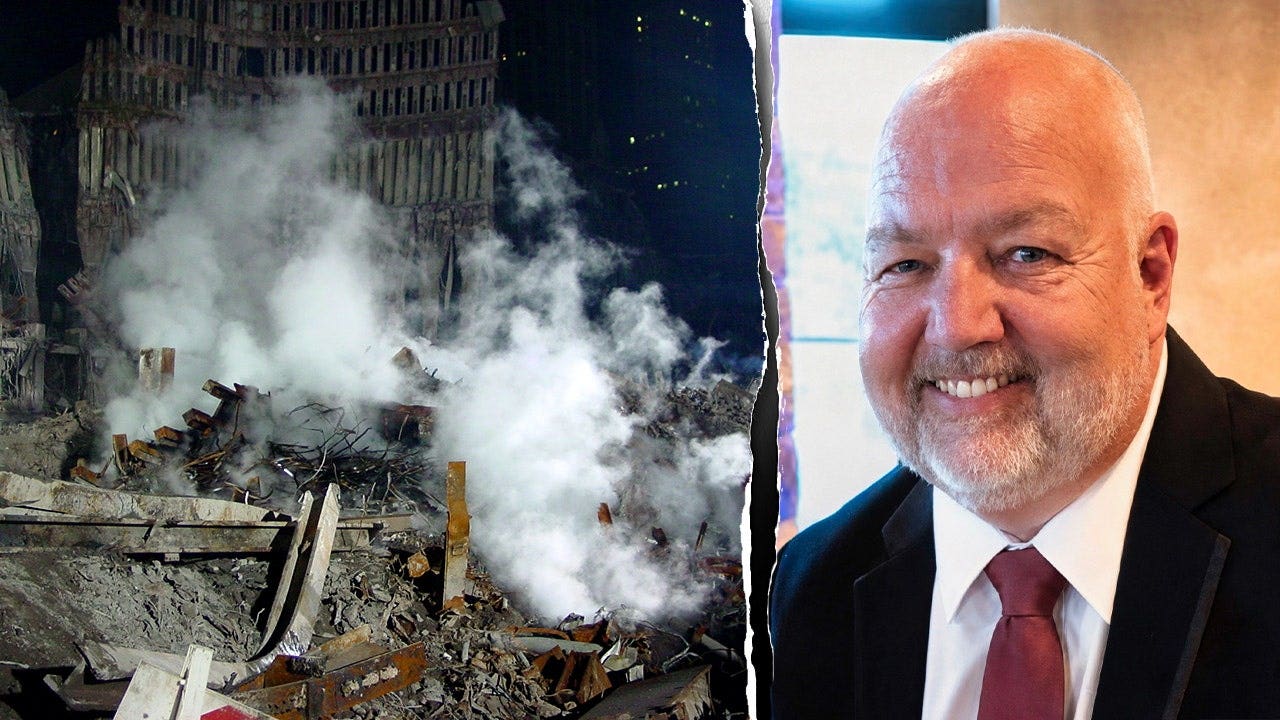
Twenty-five years later, the grief of September 11 still lives inside Ken Tregellas, not as a wound that refuses to heal, but as a memory that shaped who he became. A responder for The Salvation Army, Tregellas carries both the sorrow of what he witnessed and the quiet pride of having been there when it mattered most. Over the years, his children have asked him the question that seems to hang over so many who served in the aftermath of the attacks: knowing what it would cost, would he still have gone? His answer never changed. “I wouldn’t have changed a thing. It was an honor,” he told Fox News. That honor began on an ordinary Tuesday morning, when he was getting his twins ready for school and saw the North Tower burning on the television. Like so many Americans, he felt confused, unsure if this was a terrible accident. It was only when United Flight 175 slammed into the second tower that the truth became impossible to ignore: the country was under attack. Within hours, the phone rang, and Tregellas knew his life was about to change. He had spent years running The Salvation Army’s emergency assistance programs in underserved communities, and now he was asked to serve as the Red Zone coordinator at Ground Zero. He knew he had to go. When flights reopened, he boarded a plane from Wisconsin to New York, a flight with only four other passengers. He had never seen the city before, except in pictures and movies, and nothing could have prepared him for the sight that waited in Lower Manhattan. Walking into that burning, broken place, he was stunned that fire still raged in the massive pile where the Twin Towers once stood. The smoke, the twisted metal, the smoldering ruins — it was a landscape of loss unlike anything he had ever encountered.
As Red Zone coordinator, Tregellas was responsible for overseeing every aspect of The Salvation Army’s work at Ground Zero, and that work was as raw and human as it was organized. “Our job was really to take care of the people that were looking for bodies at that point,” he recalled. “It was more of a recovery effort.” Around the site, six tents became a small refuge in the middle of devastation: makeshift cafeterias, places to sleep, quiet corners where weary workers could pause. The responders who came through were often exhausted beyond words, their boots melted by the heat of the steel, their faces hollowed by the weight of what they had seen. They could replace their shoes, eat a hot meal, rest for a few hours, and talk with others who understood the horror of the pile. But The Salvation Army’s mission went far deeper than food and clothing. Tregellas emphasized that the organization was there to provide emotional and spiritual care, a steady presence in the middle of chaos. Prayer was offered around the clock to anyone who wanted it, no matter what they believed. What struck him most was the diversity of the people who came. Families traveled from all over the world, hoping for answers that often never came. “You had to listen,” he said. “You were dealing with interpreters. It was a whole different thing than I think most of us had ever dealt with before.” At Ground Zero, Tregellas learned that caring for people in the middle of unimaginable loss means being willing to simply sit with them — to offer a meal, a place to rest, a prayer, or a quiet presence that said, without words, that they were not alone.
But the weight of what Tregellas witnessed did not stay behind at Ground Zero. It followed him home, settled into his mind, and quietly changed how he saw the rest of the world. He had spent nearly thirty-two years serving with The Salvation Army and had witnessed heartbreaking disasters before, but nothing compared to the scale of death and destruction in New York. In the months and years after, he found himself struggling to respond to other tragedies the way he once had. When he returned to flood sites, where families had lost their homes and everything they owned, he felt something inside him disconnect. He knew the loss of a house, furniture, clothing, and photographs was devastating to the people living through it. He knew it with his head, but his heart kept comparing those losses to the lives he had seen ended on September 11. “I was thinking in my head, ‘that’s just stuff, you didn’t lose your life,’” he admitted. “And I compared everything in my life, even my children I would tell them, doesn’t compare to the loss of life. I had a really hard time getting over that.” It was a painful and isolating place to be, caught between grief and guilt, unable to feel the way he once did, yet aware of what he was feeling. The empathy that had come so naturally to him had been buried under the immense weight of Ground Zero, and it took years for him to find his way back to a place of balance. The memory of the fallen, and the responsibility he felt toward them, never faded, but he slowly learned that honoring their lives also meant allowing himself to feel compassion for other suffering, even when it looked different from what he had seen in New York.
Ten years after the attacks, Tregellas faced a new battle, one that became all too familiar for many who served at Ground Zero. He began having trouble eating and swallowing, but he did not think much of it at first. When he finally went to the doctor, the diagnosis came as a shock: cancer in his tonsils. “I hadn’t really dealt with cancer at all,” he said. “And then as they started to look at it and it showed up in a couple other places.” Further tests revealed stage 4 mantle B-cell lymphoma, a rare and aggressive form of cancer. The treatment was brutal: about eight months of chemotherapy, long hospital stays, and eventually a stem cell transplant that doctors told him was his best chance to survive. For a year, he held on to hope. But just when he thought he had beaten it, the cancer returned in his other tonsil. “I thought we were just going to do the same thing again, which I wasn’t excited about, but I was thinking, ‘Well, it worked once, it can work again,’” he remembered. His doctors, however, believed that would be too harsh on his body, so they turned to ibrutinib, a targeted drug used to treat certain blood cancers. He stayed on that medication until February of this year, and it put him back into remission. “I never had any cancer since,” he said. The Victims Compensation Fund helped cover his treatment, one of thousands of survivors and responders who continue to face illnesses linked to the toxic dust and exposure at Ground Zero. The numbers are staggering: more than 57,000 certified cancer cases among workers, survivors, and residents of Lower Manhattan. There are more than sixty-nine reported types of cancer connected to 9/11, with non-melanoma skin cancer being the most common. Lymphoma, the category that Tregellas fell into, remains on the rarer side, but it is a reminder that the cost of that day did not end when the smoke cleared.
Now, Tregellas spends part of his time speaking about what he witnessed, often to young people who know September 11 only as a chapter in a history book. It is a difficult thing to stand before a new generation and try to explain the smell of smoke and death, the sight of first responders with melted boots, the sound of families desperate for word about their loved ones. When he spoke to Fox News, he grew emotional, and a heavy sigh carried the weight of decades. He knows that those who were there will never forget, but he feels it is vital to bring the memory to the forefront, so that younger generations understand what happened and why it still matters. “That’s where we bring it back,” he said. “It’s an important part of history. And yeah, it united us. I think it still does at times.” For Tregellas, sharing his story is not just about the pain; it is about the moments of grace that appeared even in the darkest days. It is about the strangers who became brothers, the families who traveled across the world to stand at the site and weep, the Salvation Army volunteers who handed out cold water to firefighters and offered prayers to the brokenhearted. It is about the simple, stubborn human commitment to show up and help, even when the world seemed to be falling apart. He wants young people to know that out of the horror of that day came something powerful: a sense of unity, of shared purpose, of people from every background standing together as one. He believes that spirit still exists, even if it sometimes feels distant, and he hopes that by telling his story, he can help keep that spirit alive for another generation.
This week, on the twenty-fifth anniversary, Tregellas says he is looking forward most of all to the solidarity. “It’s a week of, ‘we did it,’ this is how we did it and let’s look back and learn that together we can do a whole bunch,” he said. “And yeah, I’m proud to be a part of that.” His pride is not born of glory or triumph, but of service and sacrifice, of standing in the ruins and refusing to turn away. It is born of the honor he felt caring for those who searched for answers, for the broken and the grieving, for the workers who gave everything they had. It is born of his own battle with cancer, a disease that became the lingering price of his devotion, and of his determination to keep sharing his story no matter how much it hurts. He goes on because he believes that remembering is a responsibility, and that the resilience shown in the aftermath of September 11 belongs to all of us. Tregellas knows the cost of that day will never fully be paid, that grief and illness and memory will forever be part of its legacy. But he also knows that love and courage were there too, in the volunteers, in the first responders, in the ordinary people who did extraordinary things. When he looks back on the decision he made twenty-five years ago, he does not regret it. He does not wish he had stayed home with his family in Wisconsin. He does not wish he had never seen Ground Zero. He told his children that he would not have changed a thing, and he meant it. It was an honor, and no cancer, no grief, no heavy sigh can ever take that away.