






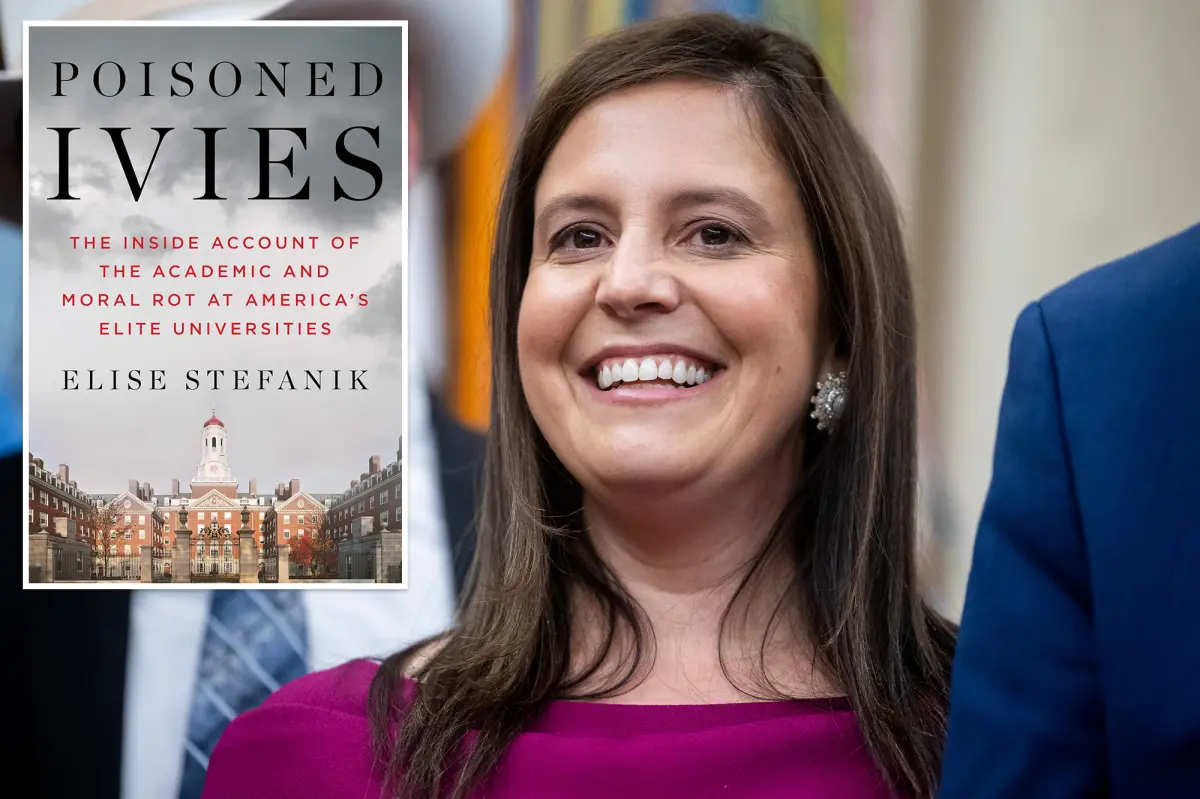
Rep. Elise Stefanik’s new book, “Poisoned Ivies,” burst onto the scene as a powerful critique of the troubling rise of antisemitism and what she calls “anti-Americanism” festering within the walls of America’s elite universities. Picture this: a determined congresswoman from upstate New York, far from the ivory towers she took aim at, watching her hardcover hit the top spot on Amazon’s bestseller list right on release day. It’s a moment that’s both vindicating and eye-opening, reflecting how deeply her voice resonates with readers who feel the nation’s higher education system has drifted far from its ideals. In Washington, D.C., Stefanik held a lively book-signing event, where she chatted with fans and fellow leaders, emphasizing how this work wasn’t just another political tome but a heartfelt call to action. She poured her energy into announcing a nationwide tour, stopping in places like New York, Florida, Texas, and California, eager to connect with people across the country who shared her concerns. As she mingled with attendees, you could sense the genuine passion in her words—a woman who had jumped headfirst into the fray, not out of ambition alone, but from a place of conviction about safeguarding our institutions. This wasn’t just about selling books; it was about sparking conversations that could reshape how we think about education and morality in America. Stefanik shared how the project’s roots lay in real struggles, drawing from thousands of personal stories she collected as a key player on the House GOP leadership and the Education Committee. It felt personal, like sitting down with an old friend recounting how one confrontation ignited a fire that refuses to die out. The buzz around the book extended beyond sales; it peaked at number one in Amazon’s “Best Sellers in Political Conservatism & Liberalism” category, proving that her message about the “poisoned” state of academia was striking a chord with everyday Americans worried about the future of our kids and communities. And yet, beneath the accolades, there was a human element—a reminder that Stefanik, amid the political whirlwind, remains approachable, ready to listen and engage in the very dialogues her book seeks to ignite.
To understand the heart of “Poisoned Ivies,” you have to rewind to that pivotal moment nearly three years ago, when Stefanik faced off against the presidents of Harvard, the University of Pennsylvania, and MIT in a Capitol Hill hearing that became a viral sensation. It wasn’t scripted drama; she hadn’t even planned to pose the burning question that would echo through history. She wanted a straightforward “yes” when asking if calling for the genocide of Jews—echoing chants from campus protesters—violated their universities’ codes of conduct. In her words, it was meant to be an easy one, a test of basic moral clarity. But what unfolded was astonishing: one by one, the presidents danced around it with “it depends on the context,” hiding behind legal jargon and what Stefanik saw as a dangerous slide into moral relativism. It was like watching a scene from a tense thriller, where the so-called elites equivocate while the world watches in disbelief. She recalled feeling that surge of astonishment—how could leaders of institutions shaping tomorrow’s leaders dodge such a clear question? This wasn’t just policy talk; it was a human failing, a lack of bravery in the face of hate, and it exposed the rot she argues has infected our universities. The hearing drew massive viewership, surpassing even Watergate or impeachment scandals, proving how hungry people are for truth in a polarized world. For Stefanik, it was more than a show; it was a wake-up call, highlighting the need for moral leadership that so many elite schools had abandoned. She humanized it further by sharing her personal preparation, poring over testimonies, talking to students late into the night, all to ensure that the questions hit home. In a way, that confrontation wasn’t just Stefanik challenging the presidents—it was an awakening for a nation questioning the values instilled in its youth. The aftermath? A ripple effect that no one saw coming, reshaping higher education in profound, unexpected ways.
The fallout was swift and transformative, as Stefanik recounted at her event with a mix of frustration and hope. Within 48 hours, the Penn president was out the door, forced to resign amid the backlash. Two months later, Harvard’s leader followed suit, a testament to how public pressure could reshape institutions long seen as untouchable. It’s a testament to how one clear moment of accountability can uproot decades of complacency. Stefanik didn’t mince words: these universities, supposed beacons of learning, had veered off course, failing to educate the next generation with the moral compass they desperately need. She painted a picture of a system lost in its own ego, where equivocation on hate overshadowed principles. But here’s the uplifting part—since that hearing, seismic changes have swept campuses. It’s become tougher to get into schools like Vanderbilt, which took strong stands against antisemitism, than some Ivy League holdouts still grappling with hate on their grounds. In a brief chat before the signing, she beamed about this shift, saying the competition now rewards schools that prioritize safety and inclusion over outdated prestige. It’s like the tide turning, proving that decency can triumph if we demand it. She avoided sounding triumphant, instead sharing how her book dives into the human cost—real students harassed, friendships fractured, dreams deferred by the very places meant to foster growth. Reading between the lines, her story echoed personal losses too, like any parent or educator heartbroken by systemic failures. The book, she insisted, isn’t a typical memoir; it’s a repository of voices, thousands of student stories she gathered, turning impersonal data into emotional narratives that tug at the heart. It’s empowering, showing how everyday people pushing back can drive real reform. In her telling, the resignations weren’t ends but beginnings, sparking a broader reckoning that redefines what “elite” truly means in education.
Delving deeper into “Poisoned Ivies,” Stefanik offers a rare behind-the-scenes glimpse of the turmoil at these institutions, revealing the infighting and internal conflicts that often stay hidden. At Harvard, for instance, she details major clashes between the university president and her governing board, power struggles that mirrored the larger moral battles. Columbia witnessed similar boardroom scuffles, where debates over tackling antisemitic intimidation boiled over into heated disagreements. It’s fascinating and a bit messy, like peeking into the dysfunction of a dysfunctional family, but it humanizes these giants, showing they’re not monolithic but composed of flawed individuals wrestling with conscience and politics. Stefanik also connects the dots to broader national trends, noting how, post-Trump’s re-election, the Justice Department’s Civil Rights Division has targeted these universities over hate, bringing the feds into what was once an internal affair. Yet, amidst the criticism, she highlights positive examples—schools like Vanderbilt, the University of Florida, and Dartmouth that are “doing it right,” implementing policies that foster safe, diverse environments without succumbing to the toxic drifts others have. It’s inspiring, a reminder that change is possible not through blanket condemnation but by spotlighting models of excellence. In her Manhattan Institute event the night before, she introduced students featured in the book, some who’d endured harassment from anti-Israel protesters after the October 7, 2023, Hamas attacks. Their stories added a raw, emotional layer, turning abstract issues into vivid, personal accounts of resilience and recovery. Stefanik’s empathetic retelling of their experiences made it clear her book is a labor of love, compiled from late-night calls and heart-to-hearts, ensuring these voices aren’t forgotten in the academic elite’s echo chambers. She’s not just criticizing; she’s amplifying the underdog, the students who dared to speak out despite the risks. In broader strokes, the book critiques how universities, once sanctuaries of free speech, have enabled environments where bigotry thrives under the guise of tolerance. It’s a call to parents, alumni, and policymakers to demand better, to infiltrate the system with integrity. And Stefanik’s role? She’s the catalyst, a steady force navigating the chaos with a father’s insight—drawn from her own background, urging a return to common-sense values that unite rather than divide.
As “Poisoned Ivies” builds momentum, Stefanik’s personal journey ties into a larger narrative of purpose and transition. Just last December, she surprised many by announcing she wouldn’t seek re-election to her New York Congressional District seat while ending her gubernatorial bid, choosing instead to pivot toward new horizons. At the D.C. event, she spoke warmly about the uncertainty of it all, calling it “whatever capacity that ends up being,” a nod to her openness to future roles away from the daily grind of politics. It’s a human moment— a reflection of someone ready for reinvention after years in the trenches, her voice unyielding but her path evolving. The book tour feels like an extension of this, a chance to rally supporters and forge ahead, perhaps influencing policy or advocacy beyond Congress. Published by Simon and Schuster’s Threshold Editions, the 256-page volume is a comprehensive take, blending insider anecdotes with data-driven insights, available now and already making waves in bookstores and online. Readers are flocking to it for its unfiltered honesty, appreciating how Stefanik balances critique with hope, arguing that fixing higher education starts with individual accountability. Anecdotes within reveal the emotional toll on her—long hours dissecting board meetings, consoling frightened students—yet it’s laced with optimism, pointing to a silver lining in the reforms gaining traction. She emphasizes the human element: universities aren’t buildings but communities, and healing requires empathy, dialogue, and unwavering principles. In a world tech-obsessed and partisan, her message cuts through, reminding us that morality in academia isn’t optional; it’s essential for a thriving democracy. As the tour kicks off, you’ll see Stefanik engaging in Q&A sessions, sharing laughs and light moments amidst serious topics, proving her relatability. Ultimately, “Poisoned Ivies” is more than a bestseller— it’s a bridge, connecting policymakers, educators, and families in a shared quest for renewal. And in Stefanik’s words, it’s about time we all get involved, one conversation at a time.
Wrapping up the tale of “Poisoned Ivies,” it’s clear this book is a mirror held up to America’s soul, revealing cracks in institutions we once revered and urging a path forward with compassion and resolve. Elise Stefanik’s work has ignited discussions from Coast to Coast, blending the political with the profoundly personal, making abstract debates tangible through lived experiences. As readers dive in, they encounter not just facts but the heartbeat of a movement—stories of courage, infighting, and redemption that resonate long after the final page. Stefanik’s tour is just beginning, promising more intimate interactions where her story unfolds in real-time, fostering connections that could shape the future. In a time when universities face existential questions, her narrative offers solace and strategy, a blueprint for parents to advocate and leaders to lead with integrity. The book’s rise atop bestseller lists underscores a hunger for authenticity, for leaders who confront antisemitism head-on without apology. Humanizing academia’s challenges, Stefanik reminds us that behind the headlines are real people—students scarred by hate, administrators reckoning with failures, and reformers championing change. It’s a testament to how one person’s conviction can ripple outward, influencing policy and public sentiment alike. As she steps into her next chapter, free from electoral battles, there’s a sense of quiet power, the kind that builds legacies through ideas rather than titles. “Poisoned Ivies” isn’t just a critique; it’s an invitation to heal, to reclaim the promise of education in America. For anyone grappling with these issues, it feels like a conversation begun, one that invites you to participate, reflect, and act. In the end, Stefanik’s message hums with hope: by amplifying voices and demanding accountability, we can uproot the poison and cultivate a garden of true excellence. This book, with its blend of insight and heart, ensures that conversation continues, bridging divides and inspiring action in an ever-evolving landscape.