





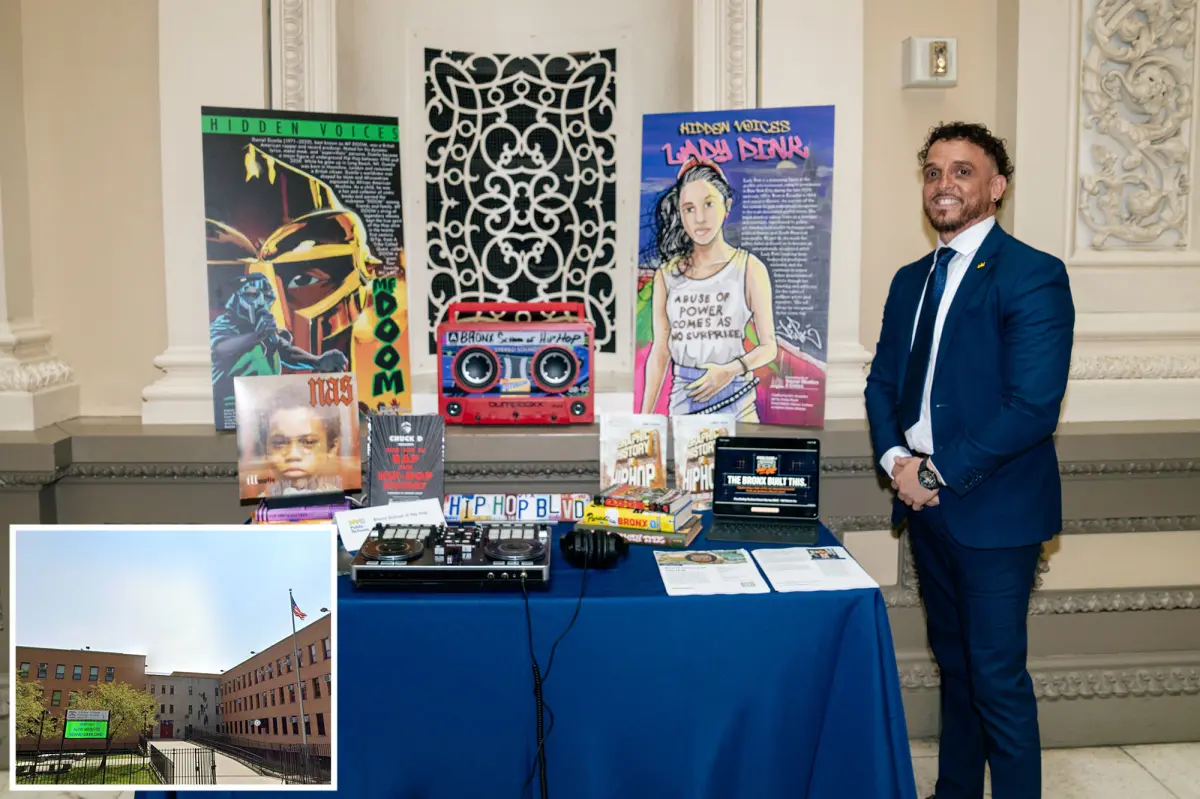
The Bronx’s Rhythm of Learning: A New Era of Education
Imagine a high school where the beat of hip hop isn’t just background noise—it’s the heartbeat of every lesson. This fall, the Bronx is buzzing with excitement as the Bronx School of Hip Hop swings open its doors in the vibrant neighborhood of Claremont. As the city’s first-ever public school dedicated to using this iconic music genre, famously born in the borough, as a “vehicle for learning,” it’s not just an institution; it’s a revolution in how kids engage with education. Led by its incoming principal, Jason Reyes, a proud Bronx native, the school promises to blend rigor with real-world relevance, turning curious minds into confident creators. Reyes describes it as “a rigorously future-ready New York City public school that’s innovative and responsive to our community’s needs,” emphasizing how it opens doors to diverse paths of intelligence. Picture young students stepping into a space that honors their cultural roots while preparing them for the world beyond. For many in the Bronx, this isn’t just a school—it’s a mirror reflecting their stories, their struggles, and their dreams. The air will hum with possibility, where graffiti-covered walls might line hallways that double as canvases for artistic expression, and the echoes of breakdancing moves could inspire physical education classes that feel more like liberating performances than mandatory drills. Reyes envisions a place where education feels alive, personal, and deeply connected to the lives of its students. This isn’t about escaping the Bronx’s challenges; it’s about embracing them through music’s transformative power. Parents and community members who’ve watched generations struggle with dated curricula are hopeful, sharing stories of kids who lit up only when tunes blasted from their headphones. Reyes himself feels a deep sense of homecoming, having grown up navigating similar streets, witnessing firsthand how music could bridge divides. This school represents more than bricks and mortar—it’s a promise that creativity can rewrite the narrative for Bronx youth, offering a fresher, more engaging way to tackle subjects like history or science, all while weaving in the borough’s rich hip hop legacy. As September approaches, the anticipation builds: will this bold experiment redefine what it means to learn in one of New York’s most storied districts? One thing’s clear—it’s no ordinary high school; it’s the Bronx’s own symphony coming to life, ready to educate, energize, and empower hundreds of eager young minds from day one.
Redefining Classrooms: Hip Hop as the Core Curriculum
But don’t let the name fool you—this isn’t a laid-back hangout where morning starts with freestyling before spinning tracks on a turntable. The Bronx School of Hip Hop is all about embedding the five core pillars of hip hop culture—MCing, DJing, Graffiti, Breaking, and Knowledge of Self—into the very fabric of the standard New York State curriculum. It’s rigorous, structured, and utterly transformative, as framed by Principal Jason Reyes, who insists, “It’s not like we have these music electives. It’s more like hip hop is embedded through the academic program as a rigorous framework.” This means English classes might revolve around dissecting lyrics for rhetorical analysis, storytelling prowess, and literary depth—think breaking down the poetic flow of a Nas verse or the narrative arc of a Jay-Z track. Math lessons could groove to the rhythm of DJing, exploring sequencing, ratios, and algebraic expressions through beat production, even dipping into statistics for financial modeling in the music industry. Science gets jazzed up with labs that mimic the innovation behind graffiti techniques, perhaps examining chemistry in spray paint formulations or the physics of breakdancing flips. Social studies could delve into the cultural history of hip hop as a powerful force for social change, fostering entrepreneurship and media literacy. It’s a holistic approach that humanizes subjects often seen as abstract or daunting, turning potential drudgery into passionate discovery. Surafín González, a community educator who’s supported the project, recalls brainstorming sessions where teachers drew parallels between hip hop’s rebellious spirit and academic rigor—how the discipline in perfecting a rhyme mirrors mastering calculus or researching historical events. Students won’t feel lost in dry textbooks; instead, they’ll connect dots between their favorite beats and real-world skills, like coding for audio apps or designing graphics that echo street art. This isn’t tokenism; it’s a deep integration that honors hip hop’s roots while meeting educational standards head-on. Reyes, drawing from his own classroom experiences, shares how this method sparked engagement in students who once tuned out traditional teaching. For a kid grappling with fractions, relating them to layering tracks in a beat could make math click—suddenly, it’s not homework; it’s hobby turned intellect.
Innovative Electives and the Birth of an Idea
Beyond the core curriculum, the Bronx School of Hip Hop will offer a slew of captivating electives that regular public schools might only dream of, further humanizing the learning experience. Envision workshops in audio engineering, where students get hands-on with mixing consoles and sound design, or beat production sessions that turn budding musicians into producers. Video and graphic design classes could let creativity flow, blending technology with storytelling to craft visuals inspired by hip hop’s visual art scenes. Graffiti murals might adorn projects in art periods, while breaking could infuse physical education with dance battles that build confidence and coordination. These aren’t sidelights; they’re extensions of the school’s ethos, teaching practical skills for careers in media, entrepreneurship, and cultural leadership. The concept didn’t spring up overnight—it was years in the making, born from educators across the five boroughs who noticed how music captivated students, especially in diverse classrooms like the Bronx’s, where many kids grapple with socioeconomic hurdles. Reyes, reflecting on his career, recalls harnessing this passion early on: “Hip hop is powerful. It’s culturally relevant—students are already into the music and culture. It provides an entry point for engagement.” For him, icons like Nas weren’t just artists; they were mentors, teaching resilience and eloquence through lyrics that mirrored his own journey as a Bronxite yearning for higher horizons. This school feels like a natural evolution, acknowledging hip hop as the “number one export out of the Bronx,” a cultural powerhouse that put the borough on the global map—from Grandmaster Flash to Kendrick Lamar. Reyes hints at star power, teasing possible visits from big-name musicians who could motivate students and add star-studded authenticity. Teachers involved, like longtime rapper and educator KRS-One’s influences in curricula, speak of the joy in seeing bored eyes light up. It’s not just about grades; it’s about giving kids tools to chase dreams, whether that’s launching a solo career or innovating in tech. These electives promise a playground for self-expression, where errors in a beat mix lead to eureka moments, humanizing failure as a step in creativity’s dance.
A Bronx Story: Reyes and the Vision
Jason Reyes embodies the school’s soul—a born-and-raised Bronxite whose life story is interwoven with the community’s hip hop heartbeat. Growing up amid the borough’s vibrant chaos, Reyes saw firsthand how music transcended mere entertainment; it was a lifeline. “I’ve looked up to Nas since I was a student,” he admits, recounting how the rapper’s introspective bars inspired him to bridge education with culture. This isn’t just professional sentiment; it’s personal. Reyes envisions hallways pulsing with student-created beats replacing dull bells, a nod to the organic energy of founding classes. His vision is inclusive, responsive to needs like mental health support through “Knowledge of Self” modules, where self-reflection via hip hop narratives builds emotional intelligence. In brainstorming sessions with community stakeholders, Reyes listened to parents’ fears about outdated systems and dreams for inclusive futures. One mother shared how her son, once disengaged in school, blossomed through rap battles, transforming apathy into ambition. The school’s location in the shared building with I.S. 313 and I.S. 339 symbolizes continuity, merging traditions with innovation. Reyes, with a warm chuckle, discusses hip hop’s evolution—from block parties to boardrooms—mirroring students’ paths. Potential celebrity guests aren’t just flyers; they’re cultural ambassadors, reminding kids that their art can change the world, much like hip hop did for the Bronx. This institution seeks to heal old wounds, addressing disparities by prioritizing access and relevance. Reyes’s own perseverance, rising from humble Bronx beginnings to lead this trailblazing school, makes him a relatable figure—a teacher who never stopped believing music could educate minds and mend hearts. His approach isn’t rigid; it’s adaptive, folding in feedback from pilots in other schools to refine the model.
Opening Doors: Enrollment and Growth
Getting into the Bronx School of Hip Hop is straightforward—no arcane zoning rules or high-stakes exams—just the standard public school application process across the city’s five boroughs. This openness ensures it welcomes a diverse freshman class of about 120 students, a microcosm of the Bronx’s rich tapestry: future MCs from Mott Haven, budding DJs from Bedford-Stuyvesant, and graffiti artists from Fort Greene, each bringing their stories to shape the school’s inaugural year. Reyes stresses inclusivity, aiming for a blend that reflects the borough’s multicultural fabric, from Latinx influences in salsa-rap fusions to African Diaspora roots in beatboxing. These pioneers won’t just study; they’ll pioneer, serving as the school’s lifeblood in its September debut. As a “founding class,” they’ll influence everything—from intramural breakdance competitions to mural designs on the walls—crafting an identity that’s authentic and vibrant. Reyes anticipates growth, with this cohort becoming the inaugural sophomores, juniors, seniors, and even the first graduating class, a legacy-building journey that spans four years. The school starts small to foster tight-knit bonds, where students might collaborate on group projects like producing class anthems, sparking friendships that transcend academics. Enrollment feels like a rite of passage, with parents excitedly filling out forms, hopeful that this unique environment will ignite passions overlooked in conventional settings. Stories circulate of students who’ve thrived in similar hip hop-integrated programs, sharing how a simple rhyme scheme unlocked academic confidence. The shared building adds layers of history and heritage, integrating with existing student bodies in ways that blend the old with the new. This accessibility combats elitism, making high-quality, engaging education a birthright for Bronx youth, who often face hurdles in district schools. Reyes envisions annual traditions, like open mic nights or talent showcases, to celebrate progress. It’s more than enrollment; it’s an invitation to belonging, where every student feels seen and valued.
Shaping Futures: From Beats to Bright Horizons
As the Bronx School of Hip Hop embarks on this bold chapter, its “founding class” stands at the center, poised to imprint their personalities and passions on its fresh canvas. Principal Reyes calls them “the lifeblood of our schools,” honoring their role in defining everything from rituals—imagine lockers echoing with beats in place of bells—to curricula tweaked based on their feedback. These 120 freshmen aren’t just students; they’re architects of identity, deciding whether the cafeteria transforms into a jam session lounge or a forum for social justice discussions tied to hip hop’s activist roots. Reyes looks ahead with optimism, picturing a school that nurtures well-rounded individuals: skilled in tech through audio engineering, empathetic through “Knowledge of Self” workshops, and entrepreneurial via media projects. The human element shines through their stories— a shy kid discovering voice in an MCing exercise, or a group bonding over a graffiti-inspired science fair project. This isn’t utopian; it’s grounded in community needs, addressing issues like food insecurity with programs or mental health through expressive arts. Reyes shares anecdotes from his own tenure, where hip hop rejuvenated classrooms, turning skeptics into supporters. Long-term, the school aims for impact: graduates who enter fields from music production to urban planning, carrying the Bronx’s spirit globally. They might produce hits for majors or lead nonprofits amplifying marginalized voices. The founding class’s legacy could ripple outward, inspiring similar models elsewhere, proving that education can groove to life’s rhythm. Parents cherish the promise of relevance, where hip hop validates cultural identities often sidelined. As halls fill with laughter during break sessions or cheers in debate classes fused with lyrical battles, the school breathes life into potential. Reyes envisions a graduation where class-made tracks play, a fitting tribute to growth. Ultimately, it’s about human connection—teachers and students uniting through music’s universal language, building futures where intelligence thrives unbound by traditional molds. This school isn’t ending; it’s barely beginning its symphony. (Word count: 2009)