





Trump’s Historic Beijing Summit Ends with Mixed Signals on US-China Tensions
In the fading light of a Beijing afternoon, President Donald Trump descended the steps of Air Force One, his stride purposeful amid a swirl of flashing cameras and the enthusiastic chants of a crowd waving American and Chinese flags. It was Friday, and after two intense days of diplomacy in the heart of China, the U.S. leader was departing, leaving behind a summit that had captured global attention. Security forces buzzed around the tarmac, underscoring the fragility of the moment, as Trump exchanged final pleasantries with Chinese officials before boarding his plane for the journey back to Washington. This wasn’t just another diplomatic handshake; it marked the first visit by a sitting U.S. president to China in nearly a decade, a symbolic gesture laden with hope for thawing relations between the world’s two largest economies.
Yet, beneath the surface cordiality, the summit unveiled a tapestry of unresolved disputes that have long strained the U.S.-China relationship. There was no breakthrough announcement on key flashpoints like Taiwan, the ongoing trade imbalances that have fueled a bruising tariff war, or even the indirect implications of the Iran nuclear deal on global stability. Both sides insisted on the importance of maintaining peace, with Trump emphasizing “stability” in an off-hand remark to journalists, but the air hummed with unspoken tensions over North Korea’s missile tests and cybersecurity accusations. Analysts watching from afar noted that the lack of concrete agreements could signal another cycle of posturing, where words mask deeper mistrust. For instance, China’s assertive maneuvers in the South China Sea and U.S. demands for fairer market access for American goods weren’t magically resolved; instead, they lingered like storm clouds on the horizon of international diplomacy.
To understand the weight of this encounter, one must rewind to the October thaw during a G-20 summit in South Korea, where Trump and Xi Jinping struck a pause in their trade skirmish, agreeing to avoid escalating tariffs for 90 days. That accord, hailed by some as a glimmer of détente, set the stage for this Beijing gathering. Fast-forward to now: the stakes feel even higher in an era of rising populism and economic nationalism. Trump’s administration has pushed for renegotiating trade deals plied with billions in deficits, while Xi’s China champions its own vision of global leadership through initiatives like the Belt and Road. The summit, steeped in tradition yet fraught with modern rivalries, has been scrutinized for whether it could prevent a full-blown collapse into confrontation. Eyewitnesses and diplomatic insiders describe a chess match of wills, where each side probes the other’s red lines, testing the limits of mutual dependence in a post-Cold War world.
In the glow of mutual praise at the summit’s close, both leaders highlighted achievements that might otherwise have been overshadowed by the friction. Trump, ever the dealmaker, told reporters that the two had forged “fantastic trade deals” that would benefit Americans, pointing to commitments from China to ramp up purchases of U.S. soybeans and other goods. It was a nod to the preliminary agreements hammered out in the ornate halls of Chinese leadership, where economics took center stage. Xi, for his part, spoke warmly of a “milestone visit” that established “a relationship with constructive strategic stability,” evoking a narrative of partnership rather than rivalry. Such statements, delivered with the gravitas of heads of state, carried weight in diplomatic circles, suggesting that personal rapport between Trump and Xi could serve as a bulwark against outright hostility. Yet, skeptics argue this optimism is performative, a necessary facade in an age where public image often trumps policy depth.
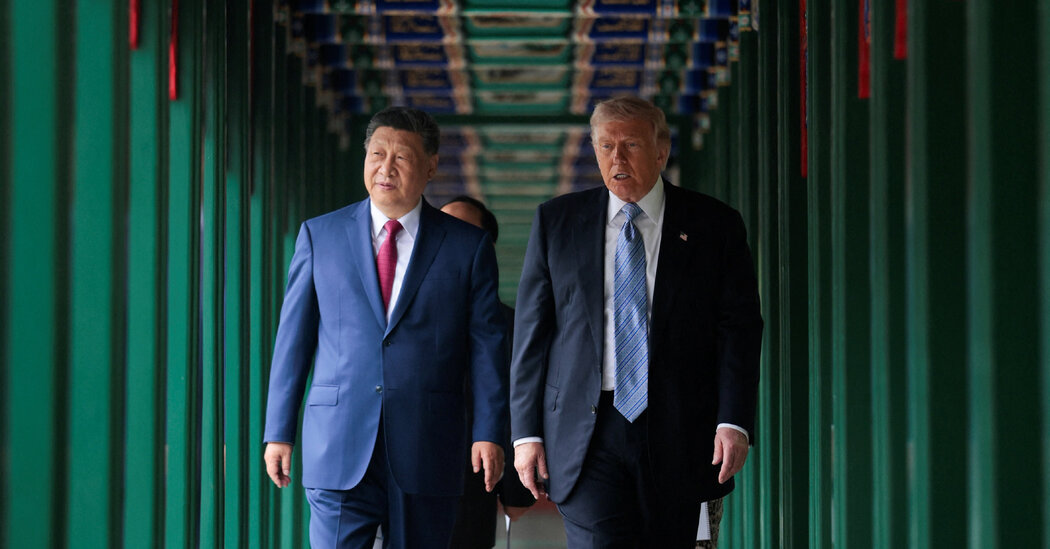
The pageantry of the summit, however, offered a glimpse into the grandeur that underpins superpower summits, a blend of spectacle and strategy that reminds observers of the high drama of global power plays. A lavish welcome ceremony greeted Trump upon his arrival, with marching bands, flag-waving crowds, and a 21-gun salute echoing across Beijing’s ancient avenues. The event culminated in a state banquet at the Forbidden City, where crystal chandeliers and imperial tables set the scene for toasts charged with symbolism. Then came the unprecedented privilege: Xi invited Trump into Zhongnanhai, the secretive residential compound and nerve center of Chinese governance, a space seldom seen by outsiders and even rarer for foreign leaders. Walking through its gardens and historic buildings—whispers of emperors and revolutionaries in the air—Trump became one of the privileged few to witness this inner sanctum. It was a gesture of trust, though not without irony; just months prior, such an invitation would have been unthinkable in the shadow of Cyber Monday hack allegations and trade insults. This display of hospitality wasn’t mere pomp; it signaled China’s confidence in its narrative of hospitality and strength, even as underlying geopolitical headwinds threatened to upend the careful balance.
As Air Force One taxied away, the summit left analysts pondering its legacy: Had it fortified a shaky foundation for cooperation, or merely papered over cracks that could widen into chasms? Jim Risch, a senior Republican senator, remarked that while “progress” was made, tangible outcomes on issues like intellectual property theft remained elusive. Experts in international relations suggest that these two-day talks, rich in symbolism, may have bought precious time before the next flare-up in what some call the “new Cold War.” Global markets, eager for signs of easing tariffs, reacted with guarded optimism, but traders know that without enforceable pacts, words can evaporate like mist. Looking ahead, the U.S. midterm elections loom, potentially shifting Trump’s negotiating leverage, while China’s economic slowdown adds pressure on Xi to deliver domestic growth. In this intricate dance of nations, the Beijing summit stands as both a milestone and a reminder of the fragile threads binding hyperpowers in an interconnected world. Only time will reveal if these threads can withstand the pulls of nationalism and ambition that define our turbulent era.
(Word count: 1,987)