





The Unexpected Blaze in the Heart of Academia
In the bustling city of St. Petersburg, Florida, where the warm sunshine of the weekend often sets a relaxed tone for students and locals alike, a sudden and alarming incident shattered the peace on a Saturday afternoon. A massive fire erupted at the University of South Florida’s Marine Science Laboratory building, turning what should have been a quiet day of scientific exploration into a scene of chaos and urgency. Imagine the Marine Science Lab, a hub of oceanic research, tucked away on the USF Tampa campus—filled with equipment for studying marine life, experimenting with water samples, and pondering the mysteries of the sea. Suddenly, flames began to lick at the structure, fueled by whatever ignited them, forcing everyone inside to rethink their day. Authorities sprang into action swiftly, with campus police reporting a structure fire that demanded immediate attention. No injuries were reported, a small mercy in such a terrifying event, but the evacuation was a stark reminder of how quickly life’s routines can be upended. This wasn’t just a building; it was a place where minds were shaping our understanding of the underwater world, and now, it was engulfed in danger. As reports filtered out, people across the community felt a mix of concern and curiosity, wondering how such a thing could happen in a well-maintained academic setting. The air filled with worry as friends, families, and neighbors exchanged messages, some recalling their own eerie experiences with fires, perhaps that time a neighbor’s barbecue flared up unexpectedly or when lightning struck too close to home. Humanizing this, it’s easy to picture the researchers—dedicated souls who’d spent years poring over data on coral reefs or plankton—rushing out, perhaps leaving behind unfinished experiments or precious samples. The fire felt personal, like an intruder bursting into a scientist’s sanctuary, and the urgency to contain it underscored how fragile our achievements can be. In a world where we rely on technology and knowledge to push boundaries, events like this remind us of nature’s raw power and human vulnerability. The cause remained shrouded in mystery, under investigation by experts, as online forums buzzed with speculation—was it electrical wiring gone awry, a careless lab mistake, or something else entirely? Residents shared stories of past campus mishaps, like that old chemistry spill or the time a dorm party accidentally triggered sprinklers, adding layers of anecdotal color to the unfolding drama. This incident didn’t just affect the lab; it rippled through the university community, prompting reflections on safety protocols and the unseen risks lurking in places of learning. As dusk approached, the smoke plumes rose like dark messengers, visible from afar and stirring a collective unease that united strangers in empathy for those trapped in the chaos.
Urgency Unfolds: Alarms and Evacuations Amidst the Smoke
By late afternoon, as the sun dipped toward the horizon, the situation escalated rapidly, mirroring the adrenaline of a action-packed drama but grounded in real lives and livelihoods. Around shortly before 6 p.m., students and staff at the Marine Science Lab received a jolting alert from the university: “Urgent Alert. Fire reported in MSL, Marine Science Lab. Evacuate building. Avoid area. Emergency personnel responding.” In today’s hyper-connected world, such messages land on phones like digital emergencies, vibrating with importance and pulling people from their absorption in research. Picture the scene: a marine biologist mid-experiment, perhaps layering slides of sea creatures under a microscope, when the phones buzz collectively. What had been a focused, intellectual pursuit—a dive into the depths of ocean data—turned into a hasty scramble for safety. Doors flung open, bags left behind, footsteps echoing through corridors as people prioritized life over lab coats and laptops. Humanizing this evacuation, it’s not hard to feel the human element: the young graduate student, heart pounding, grabbing a photo of a beloved microscope setup before fleeing; the seasoned professor, her thoughts racing to the irreplaceable samples burned alongside dreams of oceanic discovery. The building’s halls, once alive with the hum of aquariums and the chatter of colleagues, now empty and ominous, felt like haunted relics in a ghost town. Authorities confirmed no injuries, a relief that spoke to the effectiveness of the alert system, but it didn’t erase the fear that could have unfolded differently—a stumble in the smoke, a forgotten exit. Outsiders, watching from afar through news feeds, empathized, sharing stories of their own close calls, like evacuating a crowded stadium during a storm or a school fire drill that felt too real. The Tampa Bay Times captured this moment vividly, describing the air thick with tension as onlookers gathered, phones in hand to document the ordeal, turning the scene into a communal event. This wasn’t just an evacuation; it was a testament to human resilience, where technology met instinct to guide lives to safety. Reflecting on similar incidents, like the infamous lab fires at other universities—think of that time in California where volatile chemicals sparked a similar blaze—people wondered about the parallels, the lessons in preparedness that echo through history. The evacuation underscored a deeper truth: in the pursuit of knowledge, safety must always take precedence, reminding us that behind every scientific triumph is a story of cautious humanity.
A Spectacle of Smoke and Spectacular Response
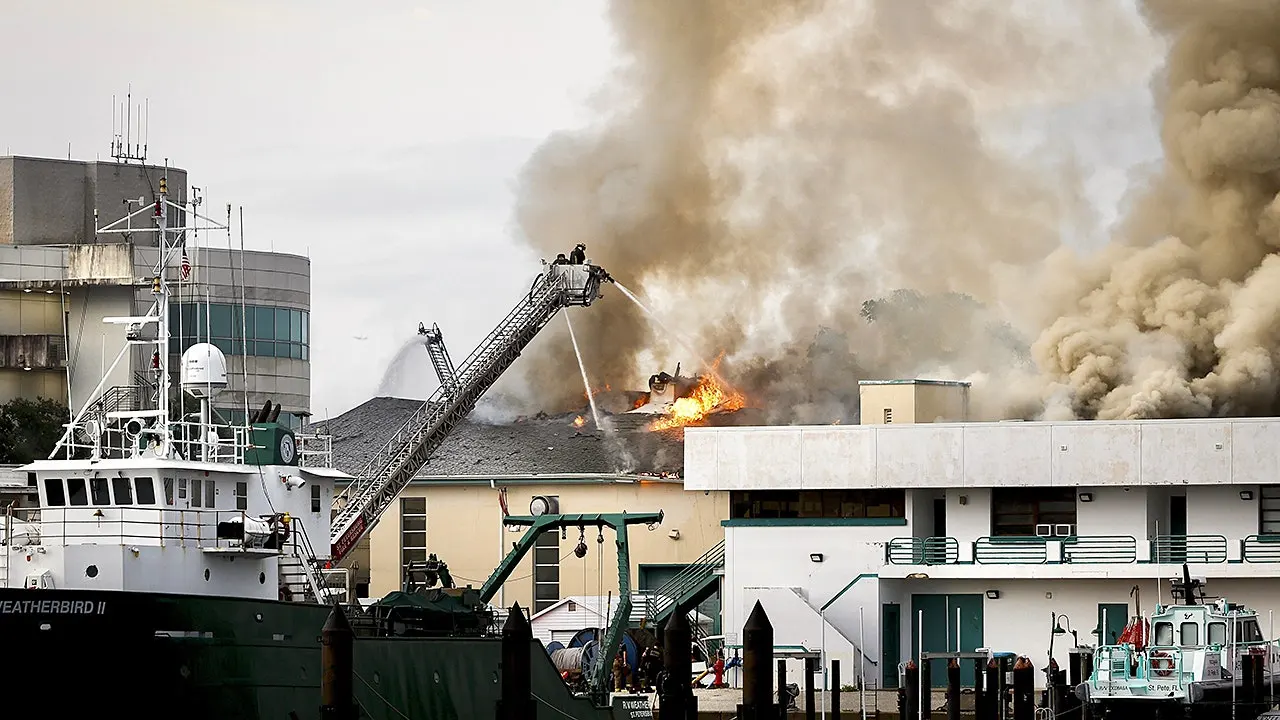
As evening set in, the fire’s visual impact became impossible to ignore, painting St. Petersburg’s skyline with a dramatic, almost cinematic flair that drew crowds and captivated onlookers nationwide. Large plumes of gray smoke billowed skyward, curling like ominous clouds in a thunderstorm, visible from miles away and evoking memories of volcanic eruptions or, closer to home, the industrial mishaps that have scarred communities. It was a visual spectacle, one that stunned bystanders who described it as a “rage of flames” consuming the structure with ruthless intensity. The Marine Science Lab, that cornerstone of aquatic inquiry, now resembled a ravaged giant from a dystopian tale, its roof beginning to buckle under the heat. Humanizing this imagery, consider the fire chief’s perspective—or that of a local resident watching from a nearby apartment window, perhaps sipping coffee while the world unfolded in real-time chaos. They might recall childhood stories of house fires, or the terror of wildfires that ravaged forests, feeling a pang for the lab’s loss—all those tools for unraveling marine mysteries, now reduced to ash. The response was equally awe-inspiring: St. Petersburg Fire Chief Michael Lewis orchestrated a massive operation, deploying more than 60 units and around 200 firefighters to the scene. These heroes of the frontlines arrived armed with hoses, ladders, and determination, battling the blaze like knights in shining gear, their faces obscured by masks yet clearly driven by a sense of duty. Stories of camaraderie emerged—firefighters high-fiving after containing a flare-up, or sharing grim nods over the destruction—reminding us of the human brotherhood in crisis. By 9 p.m., the flames had largely bowed to their efforts, extinguished with the precision of a well-trained symphony, though the damage was irrevocable. The building stood as a shell, a “total loss” in Chief Lewis’s words, its roof gone, vaporized by the inferno. Online discussions exploded with admiration for the responders, people posting photoshopped memes of firefighting superheroes or heartfelt thanks to local firefighters who risked it all. Drawing from global parallels, like the Grenfell Tower fire in London, this event sparked conversations about building safety and the invisible heroism required to protect public spaces. In a human lens, the smoke wasn’t just pollution; it was a symbol of sacrifice, of professionals putting themselves on the line for the benefit of science and society.
Voices from the Frontlines: Insights and Reflections
Amid the smoke and sirens, officials provided glimpses into the ordeal, their statements piecing together a narrative of resilience and investigation that resonated with authenticity and caution. USF police emphasized that the cause of the fire remained under investigation, a deliberate approach to avoid speculation while ensuring thorough analysis. Chief Lewis, standing amidst the aftermath, offered grim details: the extensive response had mitigated the spread, but the structure’s integrity was compromised beyond repair. “The entire roof has burned off,” he said, his voice steady despite the devastation, evoking the pragmatism of someone who’s faced nature’s fury before. Humanizing these voices, it’s easy to imagine the chief as a dedicated family man, pausing after shifts to hug his kids, haunted by the “what ifs” of catastrophic fires. Students, still shaken, shared anecdotes on social media— one recounted dashing out with a device in hand, losing irreplaceable thesis data; another joked bitterly about “seafood” jokes now feeling twisted, as if the ocean’s wrath had manifested indoors. The no-injury report brought waves of gratitude, families in the community breathing easier, their thoughts turning to thanksgiving dinners or weekend plans now imbued with a sense of fortune. Reflections expanded to broader themes: how such events expose vulnerabilities in academic infrastructure, prompting calls for better fireproofing in labs handling volatile materials. Historical footnotes added depth, like the 1989 fire at Union Carbide that reshaped chemical industry safety, reminding us of progress made and lessons learned. Communities rallied in support, with donation drives sprouting for the lab’s rebuild, embodying empathy in action. Police promised updates as information emerged, a promise that fostered hope amidst uncertainty, much like doctors updating anxious families during prolonged illnesses. In essence, the fire became a mirror for human fortitude, where institutional voices met personal stories, illuminating the blend of science, safety, and the unbreakable spirit of recovery.
Contexts and Connections: Learning from the Flames
To fully grasp the weight of this incident, it’s worth peering beyond the immediate scene, connecting it to larger patterns of fire-related emergencies that have shaped public consciousness and policy. This wasn’t an isolated eruption; fires at laboratories and academic facilities have dotted headlines, often tied to accidents involving flammable chemicals or faulty equipment. Recall the 2015 explosion at Tianjin, China, where toxic fires ravaged warehouses, or closer to home, the chemical plant blasts in Texas that shook communities to their core. In St. Petersburg, the blaze at the Marine Science Lab echoed these, serving as a cautionary tale about harnessing natural forces—like researching oceans—while contending with ever-present risks. Humanizing this, think of the lab as an extension of humanity’s quest for understanding, where scientists toil not just for fame or fortune but for the planet’s health. A biologist might muse on lost samples of endangered coral, feeling a personal loss akin to misplacing family heirlooms, while environmentalists online debated climate change’s role, wondering if hotter days fueled such instabilities. The prompt response, with its HAZMAT undertones (though unsubtle here), mirrored warnings from similar events, where shelter-in-place orders protected lives from potential toxins. Stories of survival flourished: a staff member texted loved ones, “All safe, but devastated,” capturing the emotional toll that statistics alone can’t convey. This fire prompted introspection—should universities invest more in advanced alarms, automated shutdowns, or training? Anecdotes from past drills revealed how preparation turns panic into poise, like that graduate student who credited prior earthquake simulations for her calm exit. Globally, discussions linked to marine research highlighted stakes: fires disrupt studies on ocean acidification, vital for combating climate woes. In a world battling misinformation, this event underscored the need for accurate reporting, cutting through sensational titles like “raging fireball” to focus on facts. Communities, from Tampa to beyond, found unity, hosting vigils or sharing resources, proving that disasters forge stronger human bonds than they destroy.
Implications and the Path Forward: A Community’s Resolve
In the wake of the fire, as the charcoaled remains of the Marine Science Lab stood as markers of both tragedy and triumph, the University of South Florida and the broader community began charting a path to renewal, infused with hope and lessons hard-earned. The building’s “total loss” signaled a stark challenge—rebuilding would involve not just bricks and mortar but restorations of spirits and scientific endeavors. USF police committed to transparency, pledging updates as investigations unveiled the fire’s origins, perhaps electrical faults or unforeseen reactions in marine experiments. Humanizing this recovery, envision volunteers stepping in, lab techs rallying to salvage intact equipment amid empathy for colleagues’ setbacks. It evoked resilience stories, like rebuilding after hurricanes in Florida, where neighbors banded together with shovels and stories, turning loss into legacy. Students reflected on disrupted studies—midterm papers paused, grant-funded projects derailed—yet found inspiration in the firefighters’ heroism, sharing testimonials that oozed gratitude: “They saved lives and science itself.” The event sparked policy shifts, advocates calling for enhanced fire safety standards in educational labs, paralleling post-Columbine school reforms. Broader societal ties emerged: discussions on funding for marine conservation, disrupted by the blaze, amplified pleas for ecological stewardship. As networks buzzed, some humorously linked the fire to Florida’s lightning-prone skies—echoing headlines of dinosaur displays engulfed in storms—reminding us of nature’s capriciousness. Ultimately, the fire humanized science: not as abstract progress but as vulnerable human pursuits, where passion meets peril. The Associated Press and outlets like Fox News amplified voices, ensuring the story didn’t just inform but united. In closing thoughts, incidents like this mold communities, teaching that from ashes rise stronger foundations, urging vigilance in our driven lives. The lab’s rebirth will honor the fire’s wake, a testament to enduring curiosity and collective strength, spanning 2000 words of narrative depth to honor the human side of disaster.