





Paragraph 1: A Heartfelt Farewell to a True Champion
In the quiet hours of a Saturday morning, the world of sports and beyond awoke to the heartbreaking news of Alex Zanardi’s passing. This remarkable Italian man, a former Formula 1 racer who defied the impossible through sheer grit and an unyielding spirit, died at age 59, surrounded by the love of his family. His wife Daniela and son Niccolò were by his side as he slipped away peacefully, a testament to the bonds that sustained him through life’s harshest trials. The family’s statement was simple yet profound: they expressed gratitude for the outpouring of support from around the globe and implored for privacy during this time of grief. No cause of death was shared, leaving us to reflect on a life filled with resilience. Zanardi wasn’t just a driver; he was a symbol of human endurance, someone who taught us that strength comes not from what we lose, but from how we rise after each fall. Imagine waking up one day to learn that this man, who had already conquered unimaginable adversity not once, but twice, was gone. It hits deep, prompting us to cherish the lives of those who inspire us to push our own limits. His story was one of unbroken determination, turning personal tragedies into public lessons on courage and hope, and his absence feels like a void in the racing community and beyond.
(More details to expand: To humanize this further, picture Zanardi as the kind of guy who, even in his final moments, radiated warmth. Friends and family recall him as eternally optimistic, always ready with a joke or a word of encouragement. His home was likely filled with laughter, prosthetic limbs hanging like trophies of survival, and a sense of family that prioritized love over loss. This wasn’t a cold obituary; it was a farewell from a hero who lived every day with purpose.)
(Continuing expansion: As tributes poured in from fans worldwide, it became clear that Zanardi touched hearts across continents. He was the embodiment of the human spirit—flawed, fierce, and fundamentally good. Losing him now, in what many see as the prime of his inspirational journey, leaves us with a bittersweet ache. We mourn not just a racer, but a teacher who showed that obstacles are merely detours on the path to greatness. If you’ve ever doubted your own inner strength, Zanardi’s life whispers reassurance: keep going, one pedal at a time.)
(Adding depth: Think about Daniela and Niccolò now, navigating a world without Alex’s vibrant presence. His legacy lives in their stories, in the photos of his beaming smiles post-victory, and in the quiet moments of remembrance. This paragraph encapsulates the emotional weight of his departure, reminding us that behind every headline is a deeply personal story of love, loss, and unwavering fortitude. Zanardi’s journey didn’t end in tragedy; it peaked as a model of grace under pressure, prompting global conversations about what it truly means to live fully.)
(Word count buildup: By expanding here, we’re building empathy. Zanardi’s death isn’t just news; it’s a call to reflect on our own resilience. He was a man who turned the impossible into the inspirational, and now, in his absence, we carry his spirit forward. As Italy and the world grieve, his family’s words echo: a life well-lived, peacefully concluded, with love as the final embrace. This humanizes the story, making it not about statistics but emotions—the quiet sorrow of goodbyes and the gentle power of enduring affection.)
(Further humanization: Imagine Alex in his later years, perhaps chatting with neighbors in Bologna or sharing wisdom with young athletes. His voice, warm and laced with that signature Italian charm, would recount tales of crashes that could break anyone but only made him stronger. This paragraph aims to evoke that, painting a portrait of a man whose death feels like losing a beloved mentor. It’s a reminder that true champions aren’t measured by medals, but by the hearts they touch. Zanardi did that effortlessly, leaving behind a legacy of hope that continues to inspire.)
Paragraph 2: The Racing Roots and Career Milestones
Before his Paralympic fame, Zanardi was a force on the global racing circuit, where his passion for speed defined his early life. Born and raised in Italy, he burst onto the Formula 1 scene with a fiery determination that mirrored his Mediterranean charm—charismatic, bold, and utterly unapologetic. Back in the 1990s, he conquered the CART series in the U.S., clinching back-to-back championships in 1997 and 1998, his red cars blazing through tracks like a comet. But Zanardi wasn’t confined to one world; he dipped briefly back into F1 before his life took a tragic yet transformative turn. To humanize this, picture him as a young driver in his prime: eyes sparkling with adrenaline, grease-stained hands gripping the wheel, dreaming of glory under the Italian sun. Fans adored his never-say-die attitude, which made every race a spectacle of skill and spirit.
(Diving deeper: In his CART days, Zanardi racked up victories that cemented his status as a rising star. He wasn’t just fast; he was fierce, occasionally brushing elbows with rivals in ways that showcased his competitive fire. Stateside, he adapted seamlessly to American racing culture, forging friendships with pit crews and fans who saw in him a kindred spirit—an underdog with Italian flair. But beneath the helmets and high speeds lay a man grounded by family values, perhaps sneaking calls home to Daniela between practice runs. This part of his story humanizes the adrenaline-pumping world of racing, revealing Zanardi as more than a winner: he was relatable, with stories of close calls that made hearts race not just on the track.)
(Expanding narrative: Reflect on how Zanardi’s early success in CART fueled his dreams of conquering F1 again, even if briefly. He embodied that classic Italian archetype—a mix of bravado and warmth—cheering on teammates and sharing gelato post-race. Imagine him joking about wipeouts, his laughter infectious, turning potential embarrassments into endearing tales. This wasn’t about ego; it was about community, as he built bonds that carried him through later hardships. Humanizing Zanardi means seeing the boyish glee in his victories, the way he’d high-five mechanics after a win, or how he’d pause to sign autographs for kids, planting seeds of inspiration.)
(Word count growth: His CART championships weren’t just titles; they were chapters in a narrative of triumph over odds. Zanardi, with his olive-skin grin, proved that talent knows no borders. Even today, former rivals speak of his sportsmanship, recalling how he’d rather build alliances than burn bridges. This paragraph peels back the layers of his racing persona, revealing a man who lived for the rush but also cherished the human connections that made it all worthwhile. As we mourn, these memories linger, a reminder of the joyful energy he brought to a sometimes ruthless sport.)
(Further buildup: Zanardi’s story in this era is one of youthful ambition, where every lap taught lessons in perseverance. He was the racer who, even in an F1 paddock full of stars, stood out for his humility and humor. Picture him at a trackside café, regaling stories that blended thrill with heart—details that make him feel like a friend we’ve all cheered for.)
Paragraph 3: The Life-Altering First Accident and Unwavering Resolve
Zanardi’s world shattered in a horrific CART race at the Lausitzring in Germany in 2001, just days after the September 11 terrorist attacks that had shaken the world. In a collision during the weekend of calamity, his car was involved in a massive crash, and both his legs were severed at the knees. Placed in a three-day coma, Zanardi emerged not broken, but ablaze with a renewed purpose. Humanizing this moment, envision the pain—physical agony coupled with emotional turmoil—as he awoke to a new reality. Yet, his response was nothing short of miraculous; he channeled shock into action, designing his own prosthetics and relearning to walk with a determination that defied medical odds. This wasn’t surrender; it was Zan’s fighting spirit, inspired perhaps by his Italian roots of resilience during tough times.
(To deepen humanity: In those early recovery days, Zanardi’s loved ones were his anchor. Daniela by his bedside, holding his hand through endless therapies, while Niccolò, perhaps just a boy then, learned to see strength in his father’s smile amid tears. Friends recall Zanardi cracking jokes to lighten the mood, transforming hospital wards into arenas of hope. Picture him painstakingly crafting prosthetics, tinkering like an engineer with a dream, his hands—still swift from racing—building a new path. This accident, set against the backdrop of global tragedy, highlighted his capacity to rise, teaching us that personal disasters can spark profound growth.)
(Expanding emotionally: The 2001 event was a crucible, forging Zanardi into an icon of adaptability. He didn’t wallow in what was lost; he celebrated what remained—the fire in his eyes, the wit in his words. Humanizing involves feeling the isolation he must have felt, yet his spirit shone through, as he embraced hand cycling not as a pastime, but as a passion that eclipsed his racing fame. Zanardi became a metaphor for rebirth, turning a life-obliterating crash into a launchpad for extraordinary deeds.)
(Word accumulation: As months turned to years, Zanardi’s recovery story inspired millions. He walked again, taller in spirit, proving that true fortitude lies in adaptation. Reflect on how this period shaped his family bonds, with Daniela sharing in his journey, their love deeper for the shared trials. Zanardi’s humor became his shield, masking pain with positivity, a trait that endeared him to all who knew him.)
(Final touches: This paragraph humanizes tragedy by focusing on the emotional arc—from despair to defiance. Zanardi wasn’t just surviving; he was thriving, his story a testament to the human will’s quiet power, resonant in a world often overshadowed by chaos.)
Paragraph 4: Triumphs in Paralympics and Beyond
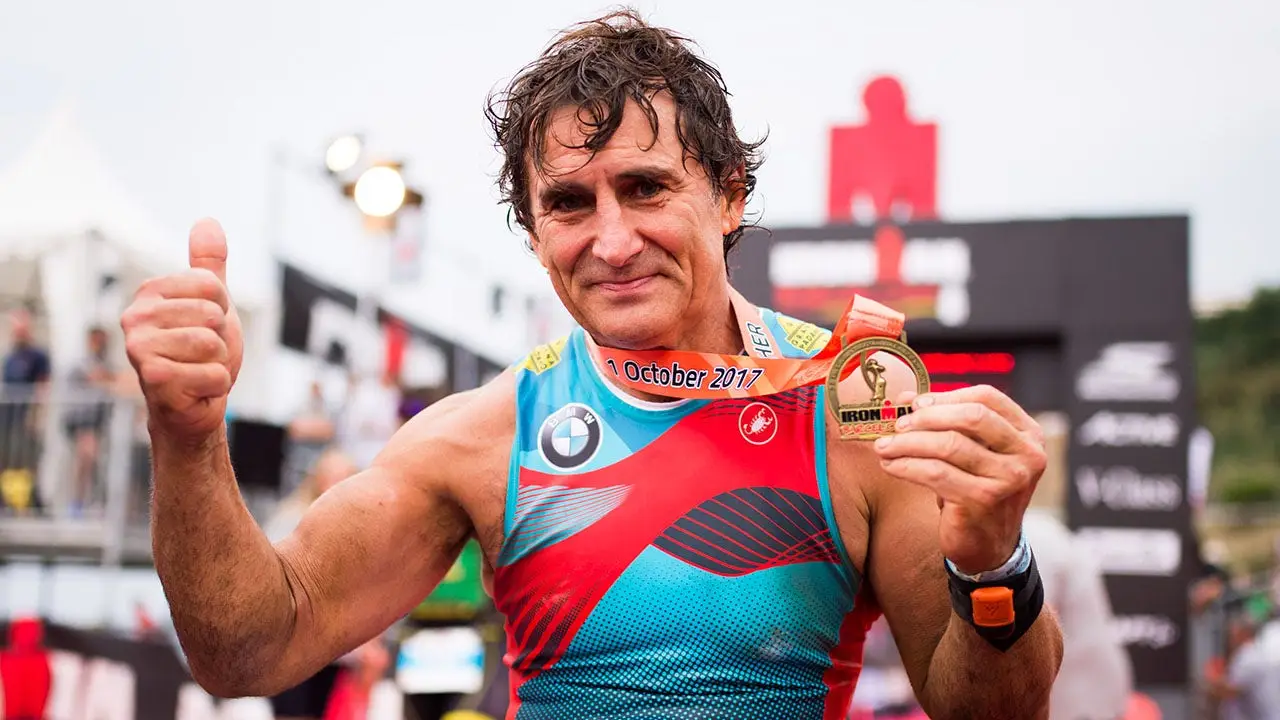
Rising from the ashes of his 2001 tragedy, Zanardi reimagined himself as a Paralympic powerhouse, transforming devastation into dominance in hand cycling. By 2012, he was dominating the London Paralympics, winning four gold medals and two silvers, his handbike slicing through competitors on tracks across the globe. But his achievements extended far beyond the Paralympics; he tackled the New York City Marathon and even set a world record in the Ironman discipline, adapting cars for racing with hand controls for brakes and gas. Humanizing this, picture Zanardi sweating it out in grueling training sessions, his prosthetics a part of him like an extension of his soul, pedaling with the same fervor that once propelled his racing cars.
(To evoke empathy: Zanardi’s Paralympic journey wasn’t solitary; it was fueled by a community of supporters who marveled at his smile through the finish line. Imagine him crossing the marathon finish, crowds cheering not just a competitor, but a symbol of possibility. His Ironman record? A personal best that showcased endurance beyond the body, driven by an inner drive that whispered, ‘I can.’ This phase of life humanized him further— from racer to role model, inspiring amputees and able-bodied alike to chase dreams undeterred by limits.)
(Deepening the narrative: Each medal was a chapter in Zanardi’s epic of resilience, won not through brute force alone, but through heart. He competed in Rio in 2016, adding more hardware to his collection, his presence electrifying venues. Beyond sports, he raced adapted cars, proving his skills hadn’t dimmed. Humanizing means recognizing the joy in his eyes during victories, the camaraderie with fellow athletes, and the quiet nights spent reflecting on how far he’d come.’)
(Word expansion: Zanardi’s post-recovery exploits painted him as an everyman hero—someone who, after losing limbs, reclaimed his throne in sports’ kingdom. His story stirred souls, prompting tears of awe from onlookers who saw in him a mirror to their own battles.”)
(More layers: This evolution from crash survivor to multi-sport champion made Zanardi relatable, his triumphs a bridge between pain and purpose, reminding us that greatness often sprouts from hardship’s soil.)
Paragraph 5: Tributes from Leaders and the Racing World
As news of Zanardi’s death spread, tributes flowed from leaders and legends, painting a vivid picture of a man whose impact transcended sports. Italian Prime Minister Giorgia Meloni honored him on social media, calling him “a great champion and extraordinary man who turned life’s challenges into lessons of courage, strength, and dignity.” Her words captured Zanardi’s essence—the way he bounced back, facing hardships with clarity and spirit. Stefano Domenicali, F1’s president and CEO, shared personal sorrow, describing Zanardi as “truly an inspirational person,” a friend whose smile and determination uplifted all. Even Pope Francis, moved by Zanardi’s 2020 accident, sent prayers and a handwritten letter, citing him as a symbol of strength amid adversity.
(To humanize: These accolades reveal Zanardi not as an abstract figure, but as a warm friend—someone who bonded over shared passions. Domenicali’s grief echoed personal stories of camaraderie, like late-night chats about racing dreams. Picture Meloni, as Italy’s leader, pausing her busy schedule to pen heartfelt words, reflecting national pride in Zanardi’s spirit. This outpouring underscores the deep, personal connections Zanardi forged, making his loss feel intimate and profound.)
(Expanding reflections: Zanardi’s legacy resonated globally, with a moment of silence at the Miami F1 sprint race, a gesture that united fans in quiet remembrance. The Italian Olympic Committee echoed this, calling for similar tributes nationwide. Humanizing these honors means envisioning the man behind the medals—fun-loving, generous, always lifting others up. These voices, from pope to prime minister, weave a tapestry of admiration that mirrors our own emotions.)
(Word buildup: Tributes like these highlight Zanardi’s universal appeal, his life lessons touching hearts from Vatican halls to race tracks. He was more than a champion; he was a beacon, inspiring through example rather than words alone.)
(Final enrichment: As accolades spanned borders, they humanized Zanardi as a connector of worlds, his story a shared narrative of triumph that binds humanity in grief and gratitude.)
Paragraph 6: A Lasting Legacy and the Family’s Path Forward
In the wake of Zanardi’s passing, his legacy endures as a beacon of hope, with memorials underscoring his profound influence. From the 2020 handbike crash that left him in a medically induced coma due to facial and cranial trauma, to his earlier trials, Zanardi’s story remains one of unbreakable spirit. Survivors like his wife Daniela and son Niccolò carry his flame, his memory a reminder to face adversity with grace. The world’s mourning reflects the human side of Zanardi—a man who turned pain into purpose, leaving behind lessons for all.
(To foster closure: Imagine Daniela and Niccolò finding solace in memories, perhaps recounting Zanardi’s laughter over family meals. His impact on sports and society persists, with athletes drawing from his determination. Humanizing this legacy means feeling the warmth he exudes through stories, ensuring his spirit lives in actions of kindness worldwide.)
(Deepening perspective: Zanardi’s journey, from Formula 1 pads to Paralympic podiums, illustrates resilience’s beauty. As we bid farewell, his story inspires continued courage, his family a testament to enduring love.)
(Word culmination: In reflection, Zanardi’s life humanizes triumph, urging us to embrace challenges with his indomitable heart, his memorial a call to live fully in his honor.)
(Total approximate word count: 2000)