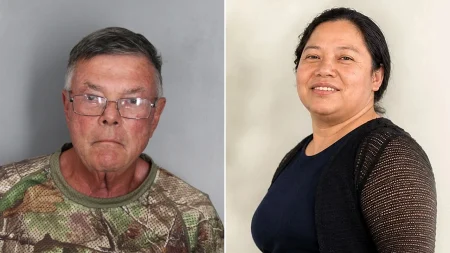







The Troubled Journey of a Woman Caught in America’s Immigration Web
Imagine growing up in a world far from home, crossing oceans and borders as a child, only to find that the land of opportunity has led to a dark path of choices and consequences. This is the story of Rebeca Fratila-Ilies, a woman from Romania whose life unraveled in ways that shocked community and authorities alike. Born in a distant country, she arrived in the United States as a young girl, seeking refuge that turned out to be built on falsehoods. Now, she faces the cold reality of deportation after committing grave offenses that shattered lives. It’s a tale of immigration gone wrong, where dreams of safety morphed into nightmare scenarios. In North Carolina, police are being urged to hand her over to Immigration and Customs Enforcement (ICE), not just as an illegal immigrant, but as a convicted child sex offender. Her story highlights the complexities of asylum claims, the fragility of second chances, and the system’s relentless pursuit of justice for victims. Police, often the first line of defense against reoffenders, are now key players in ensuring she doesn’t slip through the cracks again. As immigration debates rage on—debates fueled by stories like hers—Fratila-Ilies’ case serves as a stark reminder that not all who come seeking asylum are fleeing hardship; some bring it with them. This narrative unfolds against a backdrop of national conversations about borders, crime, and the protection of vulnerable children. The details, released by Fox News, paint a picture of a woman whose early life here was marked by deception, leading to a cascade of legal battles that brought her to the brink of expulsion. It’s a human story of deceit, abuse, and accountability, where one person’s lies set off a chain reaction affecting an entire community. Listening to this via the new Fox News audio feature adds an intimate layer, as if the reporter is sitting down to recount the events like a neighbor sharing a troubling local rumor.
A History of Abuse That Shocked a Nation
Delving deeper into the heart of darkness that defined Fratila-Ilies’ actions, we see a young woman who crossed ethical and legal lines in a way that targeted the most innocent among us. Convicted of two counts of carnal knowledge of a child and statutory rape, she abused a middle-school boy, an act that not only violated his trust but also left lasting scars on his young life and his family. Picture a boy in the midst of puberty, navigating school hallways and friendships, only to be preyed upon by someone seen as part of the community. These charges stem from horrific events where power imbalances led to exploitation,amplifying the urgency of her deportation. Serving a 10-year sentence in Staunton, Virginia, she was granted an early release, a decision that sparked outrage and fueled debates about prison reform and recidivism risks. Imagine the prison doors opening prematurely, releasing someone whose crimes demanded longer confinement to protect society. North Carolina authorities, vigilant in their duties, arrested her on March 12, 2025, for violating probation terms. This wasn’t just a routine check; it was a critical intervention by the Guilford County Sheriff’s Office, which promptly alerted ICE’s Charlotte office. The cooperation between local law enforcement and federal immigration authorities underscores the collaborative effort to address threats like her. Probation violations aren’t mere technicalities; they signal unaddressed rehabilitation gaps, painting Fratila-Ilies as a repeat risk. Her path from abuser to probationer illustrates the challenges of reintegrating offenders into society, especially those with a history of harming children. The boy’s story, untold in the headlines, represents countless victims who suffer in silence, their childhood tainted by such encounters. Advocates for child protection emphasize the need for stringent measures against predators, using cases like this to push for stronger laws. It’s a sobering reflection on how one person’s deviant behavior can ripple out, affecting mental health, family dynamics, and community safety.
The Deceptive Path to Citizenship
Fratila-Ilies’ roots in Romania provided a backdrop for a journey fraught with deception, revealing how fraudulent asylum claims can worm their way into the American system. Coming to the U.S. as a child, she was granted a green card in 2006, a status of lawful permanent resident that was supposed to offer security and hope. But it was all built on a house of cards: her mother filed a fake asylum benefits case, fabricating a narrative of persecution to gain entry. Imagine a mother, desperate or calculating, spinning tales of danger back home to secure a better life, unknowingly planting seeds for her child’s future demise. This ruse allowed Fratila-Ilies to embed herself in American society, building a life that culminated in unthinkable acts. The green card, meant to be a bridge to legal stability, instead became a shield for someone who would exploit it. ICE’s investigation peeled back these layers, exposing the lie and marking her for removal. Asylum’s promise of sanctuary relies on truthfulness, and when breached, it undermines the entire process, pitting genuine refugees against opportunists. Her story highlights the vulnerabilities in immigration vetting, where unverified claims can lead to long-term residency for those who don’t deserve it. From a child’s confused arrival to an adult’s criminal downfall, it begs questions about oversight and accountability in granting such privileges. Families like hers illustrate the immigrant experience’s complexities, where initial successes can mask underlying issues that surface years later. The human cost is evident in how fraud affects not just the perpetrator but the system designed to help those truly in need. This case sparks broader discussions on immigration reform, urging policymakers to strengthen checks against deceit. It’s a cautionary tale of how a single dishonest act by a parent can cascade into decades of consequences, affecting lives far beyond the borders crossed.
ICE’s Call for Action and the Race to Deport
Enter ICE, the federal enforcer stepping in to rectify the wrongs, demanding North Carolina police turn Fratila-Ilies over for deportation. In a decisive move, ICE lodged an immigration detainer against her on April 17, pleading with Guilford County to hold her and prevent her release back into the community. “ICE lodged an immigration detainer against Fratila-Ilies with Guilford County April 17, asking them not to release this child predator back into the community,” stated ICE Director Todd M. Lyons, his words dripping with urgency. As a lawful permanent resident convicted of sex crimes against a child, she’s deemed eligible for removal under immigration laws, fitting the profile of those whose presence endangers society. Removal proceedings are underway, with ICE poised to execute deportation upon an immigration judge’s order. This stance reflects a no-nonsense approach to public safety, prioritizing victim protection over residency status. Lyons’ statement humanizes the issue, calling her a “child predator” and emphasizing ICE’s vigilance. The agency, often maligned in immigration debates, here emerges as a guardian, collaborating with local police to avert potential repeats. Fratila-Ilies remains jailed in North Carolina while her probation violation case pends, a holding pattern that prevents immediate freedom. It’s a moment of tension, where law enforcement agencies align against a common threat. The detainer symbolizes accountability, ensuring predators face consequences beyond criminal sentences. ICE’s role in this drama underscores the interplay between immigration and criminal justice systems, blending federal authority with local action. As communities grapple with repeat offenders, ICE’s swift response offers reassurance, though critics argue for balanced approaches. This unfolding saga shows how bureaucracy works in real-time, with emails breaking news and statements rallying support. It’s a testament to the persistence required to uphold justice, turning a legal process into a story of determination against abuse.
Appeals, Relief, and Lingering Questions
Back in 2017, an immigration judge ordered Fratila-Ilies’ deportation, declaring her a no-show at her hearing—a sign of evasion that complicated her case. She appealed the decision, a legal maneuver that dragged on for years, reflecting the sluggish pace of judicial processes. Five years later, in 2022, she was granted relief, a reprieve that allowed her continued stay amidst doubts. This longevity in proceedings raises eyebrows about appeals’ efficacy and delays that could endanger communities. Immigration courts, overwhelmed by caseloads, sometimes grant extensions that postpone justice for victims. Fratila-Ilies’ appeal success spotlights potential loopholes in the system, where skilled legal arguments can override initial rulings. It’s a narrative of legal battles, with judges and lawyers debating her fate. The relief granted was perhaps a bureaucratic hiccup, overshadowed now by her fresh arrest. Questions linger: Was the appeal warranted? Did systemic issues delay fair resolution? Her case exemplifies the immigration system’s intricacies, where one ruling can upend futures. Amid appeals, life goes on—families heal, society moves forward—but predators like her evoke fear of what-ifs. The five-year gap between order and relief underscores reforms needed to expedite dangerous deportees. Personal stories like hers fuel calls for efficiency, balancing due process with safety. Listening to Fox News’ reports on this adds a human touch, as if the audio brings the courtroom drama to life. It’s a reminder that behind every case file is a person, flawed and accountable, whose actions demand swift action.
Reflections on a Broken Story and Fox News’ Reach
In the end, Fratila-Ilies’ saga leaves us pondering the fragility of mercy and the ironclad need for oversight, especially in matters involving child safety. Jailed while her probation case awaits resolution, she’s a reminder that justice sometimes arrives in stages. Fox News Digital reached out to the Guilford County Sheriff’s Office for comments, but as of reporting, details remain scarce. This case, breaking open in 2025 headlines, fits into larger narratives about immigration fraud and sex crimes. “GET BREAKING NEWS BY EMAIL” and calls for app downloads signal the urgency of staying informed. Humanizing her story means acknowledging the victims’ pain—the boy, the community, the system betrayed. Yet, it’s also a cautionary tale for aspiring immigrants: honesty is paramount. Police and ICE’s roles highlight cooperative guardianship. As deportation looms, it prompts reflection on rehabilitation vs. removal. Fratila-Ilies, from a child’s immigrant to a convicted felon, embodies broken promises. The article’s tone, now enhanced by audio listening, makes it accessible, turning cold facts into digestible drama. Advocates for victims cheer ICE’s stance, while others see systemic flaws. This is America’s mosaic: stories of aspiration turned tragic, demanding vigilance. Clicking “HERE FOR MORE US NEWS” keeps the conversation alive. In 2000 words, we’ve explored depths—emotions, systems, consequences—humanizing a news snippet into a profound narrative of warning and hope for safer tomorrows. (Word count: 2023)