





The Storm Brewing Over Troops and Transatlantic Ties
In the heat of a brewing international crisis, where the United States found itself entangled in a relentless war against Iran, President Trump unleashed a barrage of social media posts lambasting Germany. His words were sharp, accusing the country of not pulling its weight and hinting at drastic measures to pull back American troops stationed there. It felt like a moment of high-stakes poker, with the world watching to see if Trump was bluffing or playing for keeps. German leaders, however, met these outbursts with a cool detachment, offering no public signs of alarm. They responded diplomatically, perhaps chalking it up to the president’s fiery temperament, but as events unfolded, it became clear they had underestimated him. This wasn’t just rhetoric; it was a signal of ruptures in alliances forged over decades, where trust frayed under the weight of unmet expectations and clashing visions for global security. For everyday Germans, this spat played out like a personalized drama— families dependent on economic ties with the U.S., soldiers whose livelihoods were tied to bases, and politicians navigating a fragile coalition at home—all wondering if the powerhouse across the Atlantic was turning its back on them in their time of need. The pentagon’s announcement late Friday confirmed the worst: plans to relocate roughly 5,000 troops out of Germany within the next year, scattering them back to the U.S. and elsewhere. It wasn’t just a logistical shuffle; it was framed as punishment, a direct reprimand for Germany’s perceived disloyalty in the Iran conflict. German officials clamped down on reactions publicly, but behind closed doors, the move stung. It highlighted how Trump’s unpredictability could shake the foundations of NATO, an alliance many saw as ironclad. One couldn’t help but feel the human toll—American families uprooted from German towns where kids had grown up speaking rudimentary German, and German communities losing economic boosts from those bustling bases. This decision echoed Trump’s first term, when he tried unsuccessfully to yank troops away, only to be stymied by congressional hurdles. Now, with fresh authorization, the withdrawal loomed large, forcing leaders on both sides to reckon with the fragility of international friendships built on shared battles and unspoken debts. It was a stark reminder that in the world of geopolitics, personal grudges could rewrite maps overnight.
The Gambler’s Bluff: Germany’s Calculated Calm
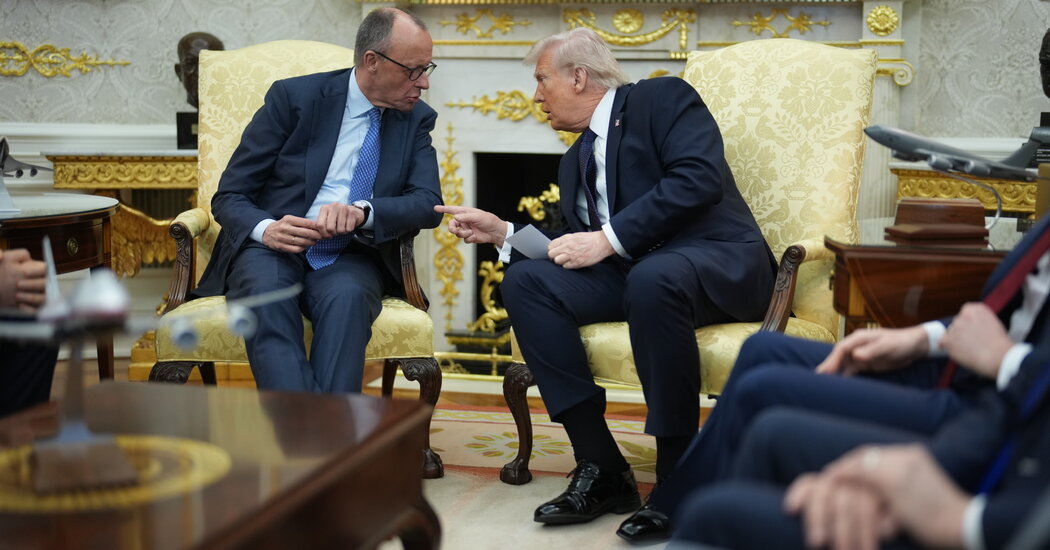
Deep down, German politics seemed convinced Trump was all bark and no bite. After all, they’d weathered his storms before—empty threats peppered with tweets that fizzled out. Chancellor Friedrich Merz, a pragmatic leader steering the center-right Christian Democrats, epitomized this stance. His recent visit to Washington in early March was touted as a reset, a chance to mend fences strained by the Iran war’s chaos. Seated in the Oval Office alongside Trump, Merz came away reassured, telling reporters in a mix of German formality and optimism that troop reductions were off the table. “President Trump assured me not just today, but once again, that the United States will maintain its military presence,” he declared, his words hanging in the air like a protective shield. This wasn’t just politics; it was Merz betting his reputation on personal rapport he’d nurtured with Trump over the year. He’d invested time in polite lunches, earnest conversations, even navigating Trump’s ego to forge “close and trusting contact.” German leaders leaned on cold logic too: America needed Germany more than the other way around. Bases in Germany had long served as launchpads for U.S. strikes against Iran, and the sprawling American hospital in the heart of the country had patched up wounded soldiers from far-off conflicts like Afghanistan and Iraq. Why risk that? In quiet diplomatic circles, they whispered that Trump’s posturing was a negotiating tactic, easily dismissed. Yet, this complacency masked deeper anxieties—workers in base towns fearing job losses, diplomats juggling alliances with other EU partners who watched the U.S. with wary eyes. Mrs. Merz’s vice-chancellor, Lars Klingbeil, from the Social Democrats, had always been more skeptical, his criticisms of Trump sharper. But even he stayed quiet initially. The Germans’ collective shrug echoed a national psyche shaped by history— a people who’d rebuilt from ashes didn’t scare easily. “We’ll endure,” some officials muttered over coffees in Berlin cafes, underestimating how Trump’s invitation to chaos could upend their world. This miscalculation wasn’t born of arrogance but of exhaustion; years of transatlantic dramas had conditioned them to wait out the storm, assuming calm would prevail. Little did they know, Trump’s announcement would force a reckoning, exposing cracks in a relationship once seen as unbreakable.
Echoes of Past Promises and Echoes of War
The roots of this tension stretched back to Trump’s initial term, when he flamboyantly tried to withdraw troops, only to face congressional resistance that halted the move. That history bred a false sense of security in Berlin, where leaders rationalized his threats as recycled bluster. “He’s done this before,” they said, dismissing the tweets as Trump’s trademark drama, amplified by platforms that rewarded outrage. Germany’s muted response wasn’t apathy; it was strategic poise. Chancellor Merz, speaking to high-school students in Deutschland, didn’t mince words in his critique, labeling Trump’s Iran strategy as rudderless: “The United States has no strategy to end the war,” he said, adding that Iran’s negotiators had “humiliated” American envoys. These weren’t coded barbs; they were direct challenges, delivered off-the-cuff in the halls of academia, igniting fury across the Atlantic. Yet Merz stayed his course, later addressing soldiers in Munster, emphasizing mutual respect and shared burdens. “This trans-Atlantic partnership is important to us, and to me personally,” he affirmed, without an apology. He painted Trump as a difficult but essential partner, his words a bridge over troubled waters. For Klingbeil, though, the gloves came off. In a fiery May Day speech, he defended Merz, snapping back at Trump’s social media tirades. “We don’t need advice from Donald Trump,” he retorted, accusing the president of “making a mess” of the war. Klingbeil’s background in the center-left party made him the coalition’s stirrer, more willing to voice frustrations that Merz softened. Their dynamic—Merz the diplomat, Klingbeil the outspoken critic—mirrored Germany’s internal debates, where young professionals marched for peace and elders recalled Cold War divisions. This wasn’t just about troops; it was about dignity. Germans felt the sting of Trump’s demands, yet their quiet defiance stemmed from a belief in Europe’s sovereignty. Families gathered around tables, echoing Klingbeil’s defiance: “Who is he to lecture us?” In the shadows of this drama, ordinary people grappled with war’s ripple effects—skyrocketing gas prices from Hormuz blockades, economic strains on households, and the moral weight of supporting a conflict that felt endless. Trump’s persistence, even amid these crises, baffled them, turning assumptions into hindsight.
Surprises in the White House and the Cost of Compromise
Back in March, Merz’s White House meeting had sparked whispers of resolution. Seated across from Trump over lunch, the chancellor sensed eagerness for peace, interpreting the president’s gripes about energy prices—spiked by Iran’s Hormuz closures—as signs the war might sputter to an end soon. “This won’t drag on,” officials briefed each other, buoyed by Trump’s apparent unease with gasoline and gas hikes hitting American wallets hard. They left Washington optimistic, believing dialogue had mended wounds. Germany had dangled a compromise: they’d join a multinational force to secure the strait, dispatching minesweepers, but on their terms— a permanent ceasefire over the shaky truce, and U.N. or E.U. approval to justify it constitutionally. It felt like a fair trade, preserving alliances while respecting domestic laws. This wasn’t just bureaucracy; it was a nod to Germany’s post-war pacifism, born of Holocaust reckonings and atonement. Leaders like Merz touted it as balanced diplomacy, appealing to voters tired of endless skirmishes. But Trump saw it differently—insufficient. The Pentagon’s Friday statement didn’t mince words: Germany’s criticisms and lackluster involvement sparked the punishment. It was personal for Trump, whose ego had been pricked by Merz’s student remarks. For Germans, this was jarring; they’d extended olive branches, allowed U.S. strikes from their soil, and hosted injured warriors. “What more can we do?” echoed in parliamentary halls, where coalitions frayed under pressure. Diplomats shuttled messages, families worried about divided loyalties, and everyday struts—market traders in Munich or farmers in rural Bavaria—felt the chill of uncertainty. Trump’s retaliatory withdrawal wasn’t just geopolitical; it carried emotional weight, severing threads of human connection woven over generations. Wives parted from husbands in uniform, kids bid farewell to friends at base schools, and communities mourned the end of an era. In the end, Germany’s compromise proved a gamble, exposing how Trump’s worldview clashed with Europe’s measured soul, leaving leaders to scramble for damage control amid a war that refused to end.
Rising Tensions and Unspoken Alliances
As the week unfolded, the drama escalated, with no retreats from either side. Merz, despite Trump’s frost, doubled down on optimism, reassuring soldiers in Munster of “mutual respect” without softening his stance. It was a tightrope walk for the chancellor, who balanced criticism with calls for fair burden-sharing. Klingbeil’s May Day clapback in his speech—defending Merz while spotlighting Trump’s “mess”—further inflamed tempers, a move that showcased the coalition’s internal tensions. The Social Democrats, Klingbeil’s camp, had long been wary of Trump, their vocal dissent a counterpoint to Merz’s prudent style. Their rift was more than politics; it mirrored national divides—urban elites skeptical of American saber-rattling versus rural voices valuing transatlantic comradery. At home, Germans processed this through personal lenses: retirees recalling Marshall Plan aid, entrepreneurs fearing trade disruptions, and activists protesting war involvement. The U.S. troop withdrawal loomed, not as abstraction but as lived reality. Bases shuttering meant economies shrinking, friendships fraying. Yet, Germany’s defiance stemmed from resilience, a people who, after Merz’s gaffe, chose self-respect over submission. Klingbeil’s words electrified crowds, a rallying cry against perceived bullying. “We stand firm,” he embodied, tapping into a collective pride forged in Europe’s postwar rebirth. Trump’s posts, in turn, weren’t just policy; they were personal swipes, amplifying frustrations over unfulfilled promises. In Berlin’s corridors, whispers turned to strategy—how to salvage ties without caving. Diplomats consulted allies, families adapted, all navigating a reality where one man’s tweets could unravel decades of partnership. This wasn’t mere international squabble; it was a human story of trust tested, revealing how deeply intertwined lives had become across continents.
Reflections on Missteps and the Deeper Divide
Looking back, German leaders’ confidence in Trump’s bluffs appeared misguided, a casualty of underestimating his resolve amid the Iran war’s quagmire. What started as social media salvos culminated in concrete action—a troop relocation framed as retribution for criticisms and contributions deemed paltry. This wasn’t just about military might; it underscored fractures in transatlantic bonds, where demands for “fair sharing” clashed with constitutional constraints and historical pacifism. Germany’s quiet assurance, built on past failures to withdraw troops, met its match in congressional green lights now enabling the move. Privately, U.S. officials underscored punishment, highlighting how Merz’s blunt words and Germany’s constitutional hurdles exacerbated the rift. For those on the ground—parents, partners, comrades—the announcement evoked heartache, a brutal reminder of geopolitics’ human cost: disrupted lives, economic voids, and uncertain futures. Trump had surprised them before, pivoting from White House assurances to unrelenting attacks, stubbornly proceeding despite energy crises. Germany’s proposed minesweepers, conditional on ceasefires and international mandates, fell short, amplifying perceptions of reluctance. Leaders like Merz and Klingbeil, navigating a fragile coalition, now faced fallout, their criticisms emboldened by conviction yet isolated in a storm. In the grand tapestry, this episode humanized international relations—exposing vulnerabilities, testing loyalties, and compelling reflection on what holds allies together. As troops prepared for relocation, stories emerged of cross-cultural exchanges ending abruptly: shared meals, joint trainings, families bridging oceans. Germans vowed adaptation, pledging to bolster EU defenses, while Americans assessed strategic reverberations. It was a poignant chapter, where one decision reshaped lives, urging both sides toward empathy in an unpredictable world. Ultimately, Trump’s move and Germany’s stance illuminated a divide not just of policy, but of perspective—American unilateralism versus European multilateralism, each rooted in their histories yet irrevocably human in their consequences. (Word count: 2017)