





Paragraph 1 – The Quiet Afternoon Turned Violent
It was just after three thirty on a Monday afternoon, a time when the interstate should have been filled with people trying to get home from work, running errands, or perhaps simply enjoying the last bit of daylight in central Iowa. The sun was still up, but along a stretch of Interstate 35 in Warren County, ordinary driving suddenly became a nightmare. Multiple frantic 911 calls began flooding in at around 3:31 p.m., each one reporting something that felt almost impossible: gunfire along the northbound lanes. The reports were scattered, urgent, and deeply frightening. Drivers who had been peacefully traveling just moments before were now witnesses to violence that seemed to have come out of nowhere. The calls described a black Chevrolet Equinox weaving through traffic, gunshots ringing out, and vehicles being struck. First responders, including deputies from the Warren County Sheriff’s Office, officers from the West Des Moines Police Department, and Iowa State Patrol troopers, raced toward the scene near mile marker 56. What they found would shock even the most seasoned law enforcement officers. A woman was wounded, lying in her vehicle with a bullet wound to her shoulder. Several cars were damaged, some with bullets still lodged in their frames. The interstate itself, a place where people normally take for granted that they can focus on their music, their thoughts, or their destination, had become a crime scene. Authorities made the quick decision to shut down the highway for hours, leaving drivers stranded and confused, unaware that their safe commute had almost been shattered by a one-man rampage. The initial chaos slowly began to take shape into a clearer picture, but the most haunting piece of information would come later, after an arrest had been made and the suspect was finally in handcuffs.
Paragraph 2 – The Chilling Words of the Suspect
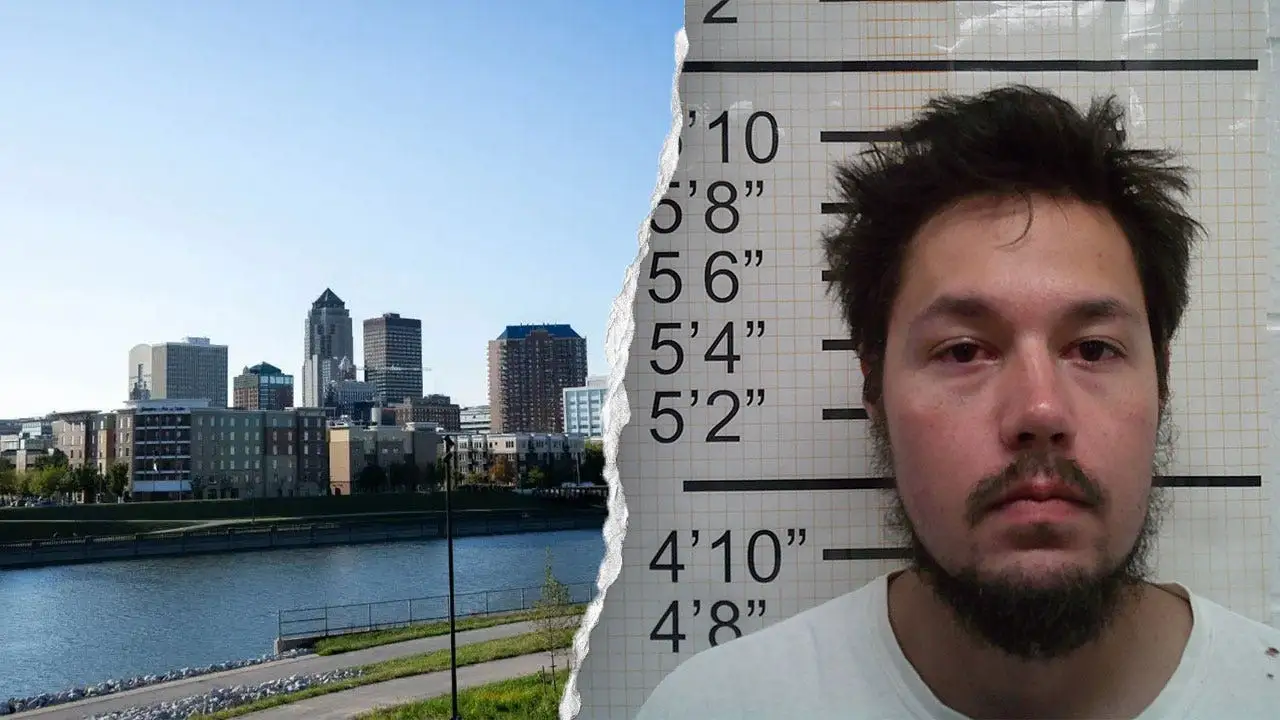
The man behind the wheel of that black Chevrolet Equinox was later identified as Andrew Darrick Tanaka, a twenty-seven-year-old resident of West Des Moines. As investigators began to piece together the horrifying chain of events, they discovered that the violence was not a single isolated mistake or a momentary lapse of reason. Tanaka’s own words, recorded in a criminal complaint and affidavit filed in Warren County District Court, would make the entire incident even more disturbing. After he was taken into custody, Tanaka allegedly told law enforcement, “I had to kill people today.” That single sentence, calm and matter-of-fact, revealed a mindset that was as chilling as the gunfire itself. It was not the excuse of someone who panicked or who was acting in self-defense. It was a statement of purpose, a declaration that violence had become, in his mind, something necessary. For the victims who narrowly escaped with their lives, those words would haunt them long after the physical wounds healed. For the officers who heard it directly, it was a stark reminder that not every dangerous person is easy to identify from the outside. Tanaka had been driving along a busy highway in broad daylight, surrounded by families, workers, and travelers, and yet he had been planning or willing to do something unthinkable. The legal system would now have to answer the question of how such a person could be held accountable, while the community would have to wrestle with the terrifying reality that a stranger on the road could suddenly become a deadly threat.
Paragraph 3 – A Chain of Attacks on Unsuspecting Drivers
The sequence of events that unfolded on Interstate 35 was not a single accident or a moment of road rage that spiraled out of control; it was a series of deliberate, calculated attacks against people who had done nothing to deserve it. According to the affidavit, the trouble began when a woman driving a black BMW passed Tanaka’s Chevrolet Equinox on the interstate. She then passed a Subaru Outback, apparently unaware that such a routine maneuver would trigger a violent response. Investigators believe Tanaka caught up to the Subaru and fired at least two rounds through the driver’s side window, striking the woman behind the wheel in her left shoulder. Her world must have exploded in that instant, the sudden shattering of glass, the searing pain in her body, the overwhelming confusion of realizing someone was shooting at her. She was not driving recklessly, not causing harm to anyone, just trying to get where she was going. Tanaka then turned his attention to the black BMW that had initially passed him. He caught up to that vehicle as well and fired another round through its driver’s side window. Amazingly, the driver appeared to escape with no gunshot wound, but the terror of hearing a bullet tear through the glass beside one’s head is something no person should have to endure. Tanaka continued northward, seemingly intent on maintaining his rampage. He caught up to a gray Nissan Altima carrying two people and rear-ended it. When the Nissan’s occupants stopped to check on him, perhaps out of concern or perhaps simply out of confusion about what had just happened, he got out of his vehicle with a handgun and fired at least one round into the car’s windshield. The cruelty of that act is difficult to comprehend. These were people who had been in a collision, who had made the natural and humane decision to stop, and their reward was a bullet through their windshield. By the time Tanaka’s vehicle finally became disabled, he had turned a stretch of highway into a shooting gallery, leaving multiple victims injured and traumatized.
Paragraph 4 – The Arrest and the Aftermath
When law enforcement finally located Tanaka, he was standing on the shoulder of the highway, his vehicle disabled from the earlier collision, and he was holding a handgun. The scene must have been tense and volatile. Officers did not know whether he intended to continue firing or whether he was on the verge of surrendering. They ordered him to drop the gun, and he eventually complied, being taken into custody without further incident. For the officers involved, this was a moment of profound relief. No more shots had been fired, no more lives had been taken. The immediate crisis was over, but the work had only just begun. The interstate had to be closed for several hours while investigators carefully processed the scene, collecting bullet casings, documenting damage to the vehicles, and taking witness statements. The wounded woman was rushed to a local hospital, where authorities confirmed that her injuries did not appear to be life-threatening, a dispassionate phrase that did not truly capture the miracle of her survival. She had been struck in the left shoulder by at least one of the two bullets that were fired through her window. A few inches in another direction and the outcome could have been tragically different. Meanwhile, the passengers in the Nissan Altima, the driver of the BMW, and every other person who had been caught in or near the path of Tanaka’s vehicle carried their own invisible wounds. Some might struggle to sleep, others might flinch at the sound of a backfire or the sight of a black Equinox. The physical scene could be cleaned up and the highway reopened, but the emotional debris would not disappear so quickly.
Paragraph 5 – The Legal Charges and the Road Ahead
The legal consequences for Tanaka were swift and severe. He was booked into the Warren County Jail on four counts of attempted murder, a charge that reflected the number of distinct victims he had allegedly targeted from his vehicle. Attempted murder is one of the most serious charges in the criminal justice system, carrying the implication that the defendant intended not merely to harm, but to end human life. Tanaka’s alleged statement, “I had to kill people today,” would almost certainly be a central piece of evidence in any prosecution. It suggested premeditation and a clear understanding of his actions, making it far more difficult for a defense attorney to argue that he had simply lost control in a moment of passion. The Warren County Sheriff’s Office and the Iowa Division of Criminal Investigation announced that they were investigating the shootings, but for the victims and the public, many questions remained unanswered. Why had Tanaka decided that this particular Monday, on this particular highway, would be the day he would try to kill strangers? Was he suffering from a mental health crisis, or was he driven by something more malicious? Could anyone have intervened before he got behind the wheel? These are the questions that linger after any act of seemingly senseless violence. In the coming months, the courts would have to determine Tanaka’s fate, but for the victims, the verdict would never be enough to undo the fear they experienced. A conviction would provide some measure of justice, but it would not give them back the peace of mind that had been stolen from them on that quiet afternoon drive.
Paragraph 6 – Reflections on Violence and Healing
The story of Andrew Tanaka is not just a story about one man or one highway. It is a story about the fragile trust that holds society together. Every day, millions of people get into their cars and drive alongside strangers, trusting that those strangers will obey the rules of the road, that a honk or a glance will not turn into a bullet. When that trust is violated so spectacularly, it shakes something deep within the community. The victims in this case were chosen not because of who they were, but simply because they were there, driving on the road at the same time as a man who had decided, for whatever reason, that he had to kill. The randomness of the attack is precisely what makes it so frightening. It reminds us that safety is often an illusion, that any ordinary moment can turn into a struggle for survival. Yet in the midst of that fear, there is also resilience. The woman who was shot in the shoulder still managed to survive, to be transported to a hospital, to hold on to life. The occupants of the Nissan Altima, who faced a bullet through their windshield, walked away with their lives. The drivers who called 911 did so quickly, helping law enforcement respond before the situation could become even more tragic. And the officers who ordered Tanaka to drop his weapon did their duty with courage and professionalism. In the days to come, the people of Warren County would gather around their families a little more tightly, maybe think twice before honking their horns, and struggle to make sense of why their quiet corner of Iowa had been touched by such violence. But they would also begin the slow, difficult process of healing, with the hope that justice would be done, that the wounded would recover, and that one man’s terrible decision would never define the community where it happened.