


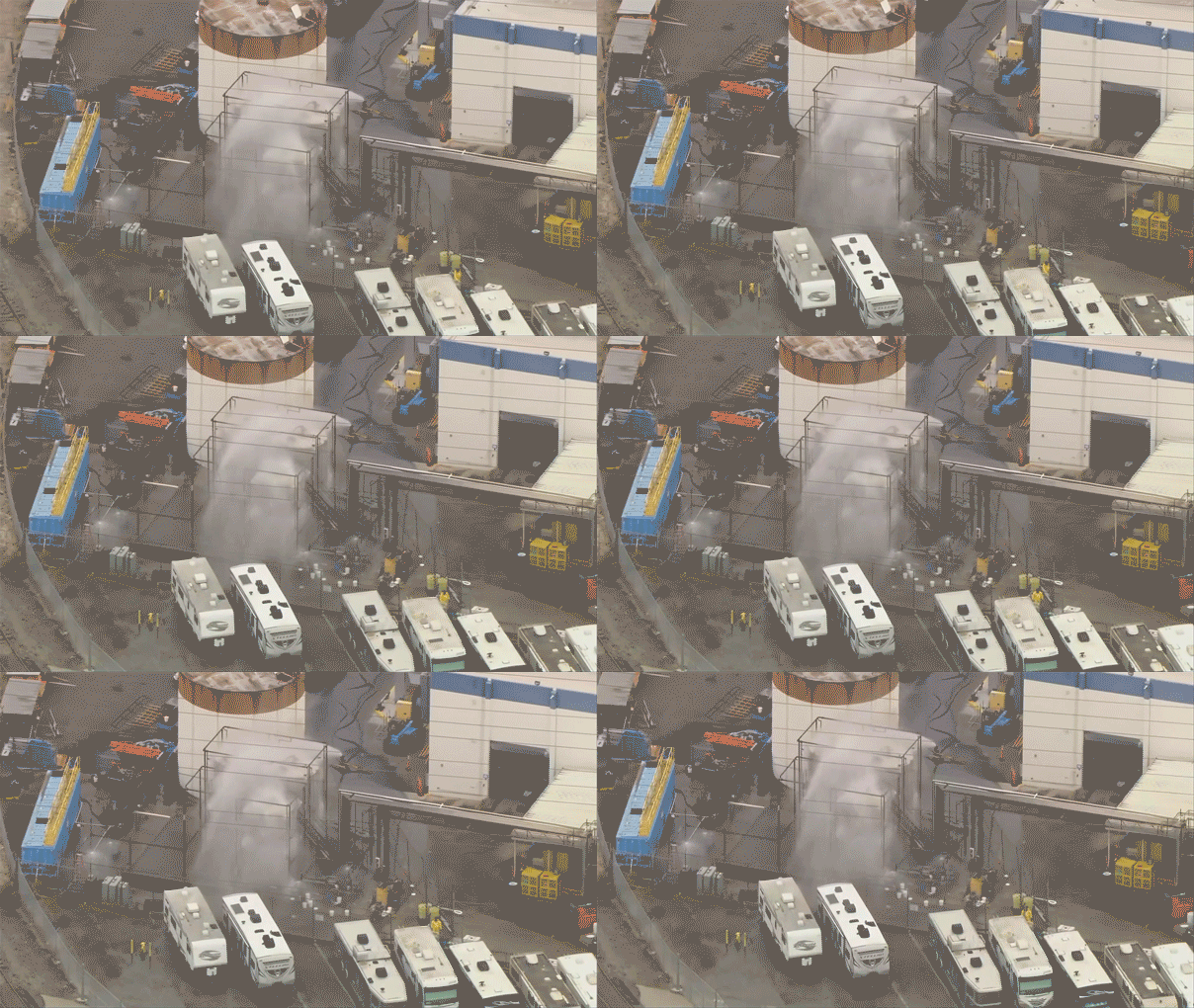
The soft morning breeze and golden California sunlight of Garden Grove were suddenly pierce by sirens, disrupting an ordinary Friday and plunging a suburban community into a state of absolute terror. Tucked within this quiet residential enclave sits the GKN Aerospace facility, a vital manufacturing hub that builds high-tech engine structures and components for commercial and military aircraft. On this day, however, the plant became the epicenter of an unfolding disaster when workers discovered that a massive, 34,000-gallon chemical storage tank had begun “actively in crisis,” off-gassing highly toxic and volatile fumes into the suburban sky. The dangerous agent at the center of the panic is methyl methacrylate, commonly known as MMA—a flammable, volatile monomer used in the aerospace sector to fabricate high-strength plastics and synthetic resins. Under normal operating conditions, MMA is a triumph of modern engineering, crucial for manufacturing the durable, lightweight materials that keep aircraft safely aloft. But when left unstable inside a failing industrial tank, this critical component transforms into a volatile weapon, threatening to breach its steel shell and devastate everything in its path. Suddenly, the quiet, unsuspecting neighborhood found itself living in the shadow of a ticking chemical clock, as the invisible hazard of toxic gas thrust local families into an unexpected struggle to preserve their lives, their health, and their homes.
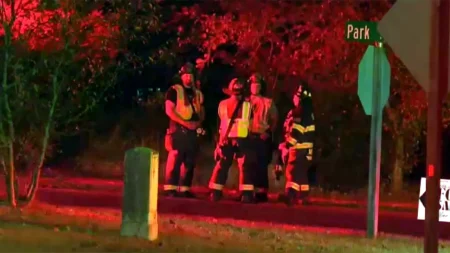
The progression of this crisis highlights the exhausting, emotional roller-coaster that local families were forced to endure over a sleepless twenty-four hours of uncertainty. The alarm was first raised on Thursday evening when plant operators noticed irregular chemical off-gassing, prompting an immediate mobilization of the Orange County Fire Authority. Recognizing the extreme flammability of methyl methacrylate, first responders worked through the night under the glare of industrial floodlights, setting up specialized cooling systems designed to lower the tank’s soaring internal temperatures and physically stabilize the accelerating chemical process. By Friday morning, initial reports suggested that these aggressive cooling measures had successfully mitigated the threat, bringing an immense sense of relief to weary residents who were told they could safely return to their beds. However, this hard-won peace was cruelly shattered just hours later when the internal chemical reactions within the tank rapidly re-escalated, defying all mitigation efforts. Incident Commander and Orange County Fire Division Chief Craig Covey was forced to deliver a grim update to the public, announcing that the tank in question had reached a critical threshold where it could no longer be secured or controlled. This sudden reversal shattered any illusions of safety, forcing local authorities to shift instantly from a narrative of containment to one of urgent survival, as they scrambled to evacuate residents who had only just unpacked their bags from the night before.
With the tank officially declared uncontrollable, emergency officials were left to prepare the community for a binary of disaster, planning their response around two catastrophic scenarios, each carrying a devastating human and environmental cost. “We are setting up these evacuations in preparation for these two options: It fails, or it blows up,” Chief Covey grimly explained. The first possibility is a physical breach of the tank itself, an event that would result in the sudden release of 6,000 to 7,000 gallons of highly toxic and corrosive chemicals directly onto the GKN Aerospace property and the surrounding streets. Such a massive spill would not only pose an immediate, severe inhalation hazard to nearby residents but would also trigger a complex environmental disaster, contaminating local soil and running the risk of toxic runoff entering the municipal water systems. The second, and far more terrifying, scenario is “thermal runaway”—a self-sustaining, accelerating chemical reaction where rising temperatures generate increasing pressure inside the sealed container, turning the 34,000-gallon vessel into a massive, improvised bomb. Chief Craig Covey warned that an explosion of this magnitude would not be isolated; the resulting blast wave and intense heat would almost certainly spark a secondary chain reaction, igniting neighboring storage tanks filled with aviation fuel and other hazardous chemical reservoirs on the industrial site. This grim assessment left first responders with the agonizing task of preparing for a literal explosion, standing vigil on the perimeter of a potential disaster zone, knowing that their only option was to evacuate the public and wait to see which catastrophic path the volatile chemicals would take.
The sudden shift in strategy from containment to evacuation sent shockwaves through the local neighborhoods, transforming abstract chemical concepts into immediate, chaotic, and deeply human panic. As police cruisers rolled slowly through suburban streets, their sirens wailing and loudspeakers blaring urgent evacuation commands, families were forced to make impossible, split-second decisions about what to take and what to leave behind. Parents frantically loaded children and pets into vehicles, grab-bags were stuffed with critical medications and cherished family photo albums, and neighbors knocked on the doors of elderly residents to ensure no one was left behind in the rush. Garden Grove Police Chief Amir El-Farra addressed the community with a blend of professional urgency and deep empathy, emphasizing that public safety was the department’s absolute priority but acknowledging that the success of this massive logistical effort depended entirely on the cooperation of frightened, stressed citizens. To host the sudden influx of displaced families, emergency response officials quickly established temporary shelters at community centers in Garden Grove and Cypress. These spaces quickly became symbols of community resilience; inside, local volunteers distributed water and blankets, while neighbors who had previously only exchanged brief waves in passing sat together on cots, comforting one another, sharing rumors of the tank’s status, and united in their quiet prayers that they would have standing homes to return to.
As local emergency crews took their stands on the frontlines of the crisis, the broader political and administrative machinery of both the state of California and the federal government began to turn, highlighting the profound seriousness of the incident. Representative Derek Tran, the Democratic congressman representing the affected area, immediately stepped forward to monitor the toxic leak, establishing direct, constant communication lines with local police, fire departments, and disaster response leaders. Recognizing that a chemical disaster of this potential scale could easily overwhelm local municipal resources, Tran proactively contacted federal emergency agencies, specifically reaching out to the Federal Emergency Management Agency (FEMA) and the Environmental Protection Agency (EPA) to demand the immediate deployment of federal resources, air-monitoring equipment, and disaster relief funds. This high-level intervention illustrates the intricate safety networks that exist to protect American citizens, but it also shines a harsh spotlight on the persistent systemic tensions surrounding urban planning, where heavy industrial manufacturing facilities operate in close proximity to residential zones. The empty, silent streets within the evacuation zone became a poignant visual representation of this systemic vulnerability, as the looming threat of federal intervention signaled that the unfolding crisis in Garden Grove was no longer just a localized emergency, but a matter of critical national concern regarding chemical safety and community protection.
As night fell, the community of Garden Grove remained suspended in an agonizing state of limbo, waiting for a resolution to a crisis that had hijacked their lives and threatened their peace. Standing between the unstable, groaning chemical tank and the quiet family homes were the brave men and women of the Orange County Fire Authority and local mutual aid partners, whose tireless dedication serves as a powerful reminder of the selflessness of America’s first responders. Amazingly, due to the swift and disciplined execution of the evacuation orders, no injuries or fatalities have been reported, a hard-won victory in the face of such an imminent and unpredictable hazard. Regardless of how this tense standoff is resolved—whether the tank cools down, undergoes a controlled release, or suffers a localized failure—the psychological and physical impact of this near-miss will linger in Garden Grove for years to come, sparking necessary conversations about industrial zoning laws, safety protocols, and corporate accountability for facilities operating near residential neighborhoods. For now, wearied families can only wait in shelters and hotels, leaning on the warmth, strength, and resilience of their community, keeping their eyes trained on the news, and hoping for the simple, precious blessing of a safe return to the quiet, everyday lives they were forced to flee.