


The air in New York City on that Friday afternoon was heavy with an all-too-familiar dread. Just hours before the Jewish community was set to welcome Shabbat—a weekly sanctuary of peace and reflection—news broke of a thwarted terrorist plot targeting an undisclosed local synagogue. For many Jewish New Yorkers, already navigating a devastating surge in antisemitic harassment and violence, the revelation felt like a physical blow. Desperate for answers and reassurance, dozens of anxious Jewish leaders hastily dialed into a private emergency Zoom briefing with high-ranking details from the New York Police Department. On that call, communal leaders pleaded for concrete safety protocols, trying to secure some semblance of peace they could pass down to their frightened congregations before the sun dipped below the horizon. Among those listening intently was Mark Treyger, the chief executive of the Jewish Community Relations Council in New York. As the grandson of Holocaust survivors, Treyger understood intimately the generational weight of fear that such threats awaken. He and other leaders spent the remaining hours of the afternoon relaying safety measures to their communities, trying to quiet the collective heartbeat of a community under siege and assure them that their houses of worship remained safe. Yet, even as they sought to reassure their congregations, another potent message was preparing to reverberate across the city from the highest office in municipal government.
For many, the sense of fragile security was shattered when Mayor Zohran Mamdani, the city’s first Muslim mayor and a champion of progressive causes, released a meticulously produced video to mark Nakba Day. The video commemorated the “catastrophe” of 1948, the period of displacement and exile of hundreds of thousands of Palestinians during the founding of Israel. At the heart of the video was the deeply personal, moving narrative of Inea Bushnaq, an elderly Palestinian New Yorker who recalled the terror of fleeing her childhood home. While the video deeply resonated with Palestinian residents who have long felt invisible in American public life, it struck a raw, agonizing nerve for mainstream Jewish leaders, who viewed its release as a profound betrayal of empathy. Many Jews felt the video presented a painfully revisionist, one-sided history that erased the very catalyst of Israel’s creation: the systematic slaughter of six million Jews in the Holocaust, and the subsequent declaration of war by neighboring Arab nations aimed at destroying the nascent state. The timing of the release—unfolding just as the city’s Jewish community was retreating into the offline sanctuary of Shabbat, and immediately following a terrifying local security scare—felt to many like an intentional evasion of dialogue, turning a moment of communal vulnerability into a battleground over historical memory.
For the city’s Palestinian diaspora and their progressive allies, however, the video was a historic and long-overdue validation of their humanity. For decades, the dominant political consensus in Washington and New York had rendered the Palestinian experience of 1948 almost entirely unspeakable in polite political company. Sumaya Awad, a writer and the granddaughter of Nakba survivors, reflected on how rare it is for Western leaders to acknowledge the systematic displacement that built modern Israel, emphasizing that the trauma of the Nakba is not a historical artifact but an ongoing reality for millions. To those who celebrated the video, including progressive Muslims and anti-Zionist Jewish activists, Mayor Mamdani’s message was a courageous act of inclusion that did not diminish Jewish suffering but finally gave a voice to those who had been forced to suffer in silence. Mamdani himself defended the broadcast against fierce criticism, arguing that acknowledging the pain of one marginalized community does not inherently diminish the suffering of another. He extended an open invitation to his critics, insisting his door remains open to every New Yorker regardless of political alignment. Yet, for mainstream Jewish leaders like Amy Spitalnick of the Jewish Council for Public Affairs, the Mayor’s defense rang hollow; she argued that the video went far beyond expressing legitimate empathy for Palestinian suffering, crossing into history-erasure and normalizing harmful anti-Israel tropes that have fueled real-world hostility on New York’s streets.
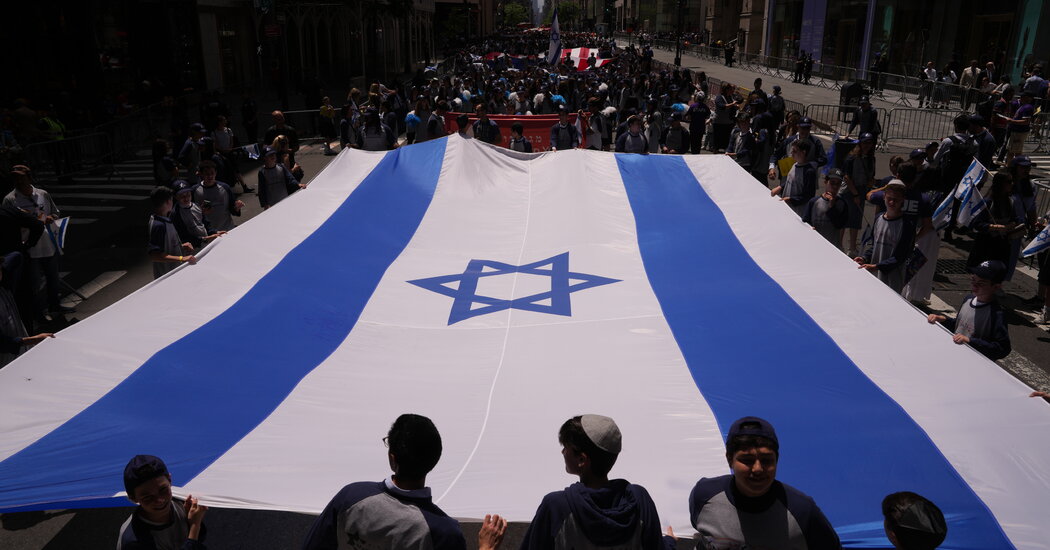
This explosive clash over the Nakba Day video was not an isolated incident, but rather the culmination of a long, deteriorating relationship between City Hall and the mainstream Jewish establishment. Since his historic election campaign, Mamdani—a former grassroots organizer and vocal advocate for Palestinian rights—had been viewed with deep suspicion by the city’s politically centrist and conservative Jewish institutions. Over his months in office, that suspicion hardened into alienation. Mainstream Jewish leaders pointed to a series of deliberate snubs and policy shifts that suggested a hostility toward their concerns. Mamdani broke decades of mayoral tradition by announcing he would skip the annual Celebrate Israel Parade, a cornerstone event for the city’s pro-Israel community. Furthermore, he systematically reversed several pro-Israel executive orders enacted by his predecessor, Eric Adams, and chose to appoint progressive, anti-Zionist Jewish voices to key liaison roles that had historically belonged to representatives of the mainstream Orthodox or conservative leadership. The appointment of Rabbi Miriam Grossman, an anti-Zionist faith leader, as a community liaison was viewed by traditional organizations as a deliberate attempt to bypass established leadership in favor of fringe voices who did not speak for the vast majority of Jewish New Yorkers, reinforcing a growing feeling of exclusion.
The deep fracturing of the city’s civic fabric was laid bare on Monday evening during the Mayor’s Jewish Heritage Month reception at Gracie Mansion. Historically, this annual gathering has been a joyous, bipartisan celebration of Jewish culture, community contribution, and joint municipal pride. This year, however, it became a landscape of absences. The leadership of key organizations—including the UJA-Federation of New York and the Jewish Community Relations Council—staged a silent coordinate boycott of the event. Even Rabbi Bob Kaplan, a highly respected interfaith leader who was scheduled to deliver the evening’s opening invocation, chose to stay home, expressing his quiet protest of the mayor’s divisive behavior. While City Hall officials privately panicked over the prospect of empty halls, the reception itself ultimately hummed with a different kind of energy. The mansion was filled instead with the Mayor’s progressive Jewish allies, members of anti-Zionist organizations, and representatives of the ultra-Orthodox Satmar Hasidic sect, who historically reject political Zionism on theological grounds. They mingled, ate cheese blintzes and burekas, and celebrated their own version of Jewish identity, presenting a striking image of a community that is deeply, irrevocably divided over its relationship with the state of Israel and the city’s leadership.
When the music faded and the plates were cleared, the evening left behind a haunting picture of a city struggling to find a common language for grief. The mayor’s office quickly blasted photos of a smiling, diverse crowd of secular liberals and Orthodox rabbis to portray a unified Jewish front, but the reality inside the room was far more complicated and fragile. Among the attendees was Alana Zeitchik, an Israeli New Yorker whose own family had been directly shattered by the October 7th attacks, with her cousins taken hostage by Hamas. Zeitchik attended the event not to endorse the mayor’s policies, but to ensure that the agony of the hostages and the mainstream Zionist perspective were not completely erased from the room. Looking around the beautiful, divided space of Gracie Mansion, she observed with quiet sadness that the gathering did not truly represent the mainstream Jewish community she knew, wishing for a space where different facets of trauma could coexist. Her presence, much like the entire controversy, underscored the tragic reality of New York City in this polarized era: a beautiful, hyper-diverse metropolis where the pain of one community is so often felt as the erasure of another’s, leaving its leaders and citizens to grapple with the agonizing question of whether true empathy can ever survive the bitter boundaries of history.