



In November 2017, the city of Raqqa, Syria, lay in ruins, a pulverized playground of shattered concrete and hidden death left behind by a retreating and desperate Islamic State. Into this perilous landscape stepped Chief Petty Officer Kenton Stacy, a highly decorated Navy Explosives Ordnance Disposal specialist whose job was to seek out and neutralize the invisible threats designed to tear human bodies apart. While clearing the second floor of a hospital that ISIS had meticulously rigged with improvised explosive devices, a booby trap detonated, inflicting catastrophic injuries that changed the trajectory of his life forever. Kenton survived the blast only because of the extraordinary, death-defying heroism of Army Staff Sergeant Justin Peck, who fearlessly bounded into the active danger zone to rescue his brother-in-arms, performing grueling, continuous CPR for over two hours while combat medics fought to stabilize Kenton’s fading heartbeat. Today, Kenton is a quadriplegic, living in Texas under the constant, vigilant care of his devoted wife, Lindsey, and their four children. The daily reality for the Stacy household is a relentless gauntlet of physical, emotional, and financial exhaustion; Lindsey must courageously juggle the complex, round-the-clock medical needs of her paralyzed husband alongside those of their oldest son, who battles cerebral palsy. Their lives are a testament to the compounding, unseen wreckage of war—a quiet tragedy that unfolds daily within the walls of their home, far away from the battlefields of the Middle East, as they struggle to find the support, recognition, and simple financial peace of mind they so richly deserve.
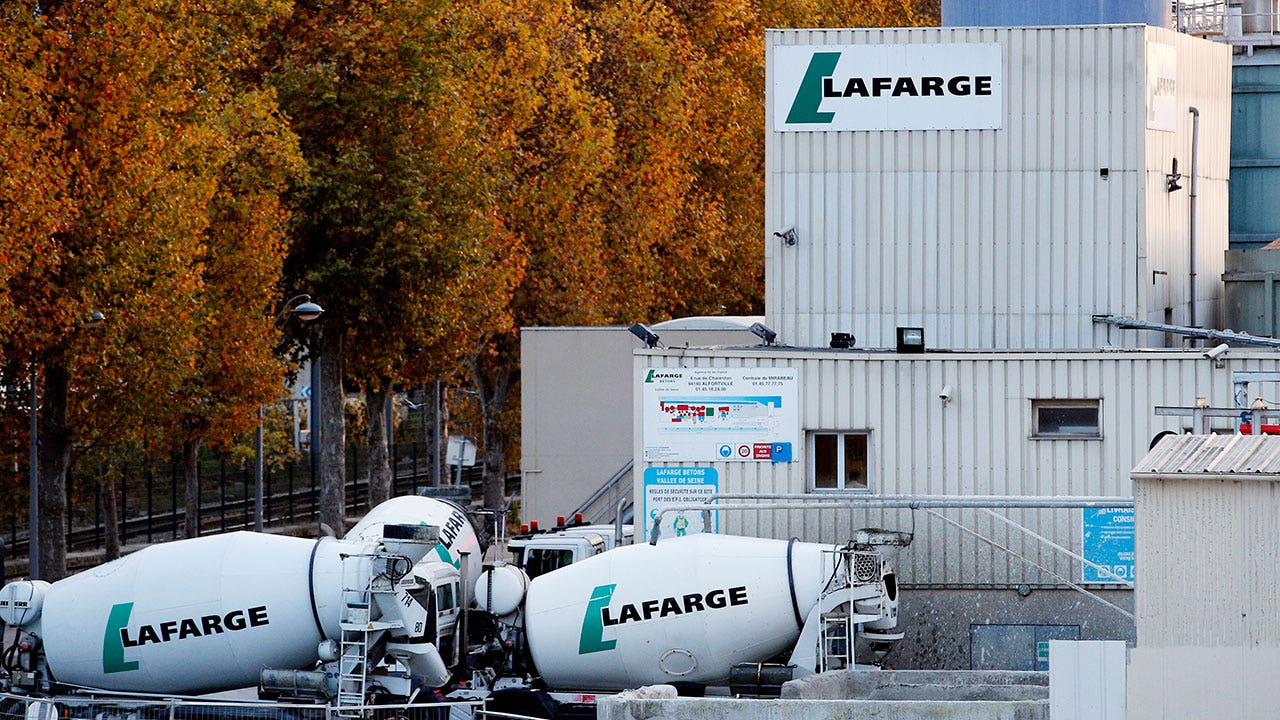
Yet, the injuries that dismantled the Stacy family’s lives were not merely the random misfortunes of combat; they were actively subsidized by one of the largest corporate entities on the planet. For years, the French cement giant Lafarge, the world’s leading manufacturer of concrete, chose to prioritize corporate profits and the preservation of its expensive infrastructure over basic human decency and international law. Between 2013 and 2014, as the Syrian civil war descended into unprecedented brutality, Lafarge operating through its local subsidiary funneled more than $6.5 million in direct bribes directly into the coffers of ISIS to keep its massive, $680 million manufacturing plant in Jalabiya running within terrorist-controlled territory. This was not a passive transaction; the concrete mixed inside that multi-million-dollar facility was actively used by ISIS militants to construct a sophisticated network of underground bunkers, fortified tunnels, and defensive strongholds that shielded the extremists from coalition forces and enabled them to wage their campaign of terror. While American and allied soldiers were bleeding to dismantle the caliphate, Lafarge was essentially acting as a financial engine for the enemy, putting money and building materials into the hands of the very terrorists who built the bombs that shattered Kenton Stacy and took the lives of countless other service members. Representative of this dark chapter, the legal battle initiated by the victims’ families seeks to expose how corporate greed directly fueled the global terror network that devastated so many American homes.
The agonizing human cost of Lafarge’s corporate complicity is painfully mirrored in the story of Hailey Dayton, whose father, Chief Petty Officer Scott Dayton, was the first American service member killed by ISIS in Syria on Thanksgiving Day in 2016. Hailey was just fifteen years old when her childhood was abruptly shattered on a day of national celebration, a moment frozen in her memory with devastating clarity. Looking out her window, she saw a white van pull up and watch six Navy officers dress-uniformed in pristine whites step out onto the pavement, triggering a sudden, desperate surge of hope that her father had come home early to surprise his family for the holiday. That fleeting, joyful smile evaporated instantly when she opened the front door to find, instead of her father’s warm embrace, six stoic military men with tears pooling in their eyes, bearing the unspeakable news of his death. Today, as a young woman living in Florida, Hailey carries the profound, invisible wounds of a Gold Star child, describing the lingering grief of losing a father who dedicated twenty-three years of his life to defending his nation. For Hailey and hundreds of other military families, the knowledge that a powerful multinational corporation helped finance the weapons, ammunition, and infrastructure used to murder and maim their loved ones turns their grief into a deep, burning indignation that demands accountability, not just from the perpetrators, but from the institutions that enabled them.
In a landmark legal victory that sent shockwaves through the corporate world, a French court in Paris finally convicted Lafarge of providing material support to a terrorist organization, sentencing its former chief executive officer to six years in military prison and convicting eight other former employees for their direct roles in the bribery scheme. Prior to this historic ruling, Lafarge also pleaded guilty in a federal court in the Eastern District of New York in 2022, marking the first time in United States history that a major corporation has faced and admitted to criminal charges for supporting a terrorist group. Representing Kenton Stacy, Hailey Dayton, and approximately twenty-five other families out of nearly one thousand plaintiffs, Todd Toral—a partner at the prominent law firm Jenner & Block and a veteran U.S. Marine—has been waging a fierce legal crusade to secure justice for these wounded warriors and Gold Star survivors. As part of its American plea agreement, Lafarge forfeited a staggering $777 million to the United States Department of Justice, a massive cache of funds specifically earmarked to compensate the victims of these horrific ISIS attacks and their families. Toral views this case as a vital, precedent-setting crusade, arguing that when corporations decide to treat the funding of global terrorism as a mere “cost of doing business,” they must be held criminally and financially accountable directly to the human beings whose lives are shattered as a consequence of their greed.
Despite this historic legal victory and the massive fortune sitting in the Department of Justice’s asset forfeiture fund since October 2022, the families who paid the ultimate price are still waiting for their government to release the promised compensation. Under the Biden administration, the Department of Justice repeatedly deflected and delayed requests to distribute the $777 million, citing the pending criminal proceedings against Lafarge in the French courts—a convenient bureaucratic roadblock that has now been completely dismantled by the French court’s definitive guilty verdicts. Over a year ago, members of Congress, including Arizona Representative Andy Biggs, sharply questioned Justice Department leadership regarding why these vital funds remained frozen, pointing out that previous administrations had ignored the victims’ urgent petitions while leaving their families to languish in financial uncertainty. The transition of leadership at the Department of Justice has placed the ultimate decision in the hands of Acting Attorney General Todd Blanche, yet the silence emanating from Washington remains deafening to those left in limbo. For Gold Star daughters like Hailey Dayton, this prolonged, institutional delay feels like a betrayal, making her feel like an insignificant pawn in a larger geopolitical and bureaucratic game, while her father’s sacrifice is treated as an afterthought by the very government he died to protect.
As Memorial Day approaches, a time when the nation pauses to honor the fallen, the contrast between empty political rhetoric and the harsh financial reality faced by wounded veterans and grieving families grows increasingly stark. For Lindsey Stacy, who battles everyday expenses to ensure Kenton receives the specialized care he needs, the release of these funds is not about winning a legal lottery, but about basic survival, finding closure, and securing the medical resources necessary to give her heroic husband a dignified life. Todd Toral and his legal team continue to press the government, passionately arguing that absolutely no group of citizens is more deserving of this compensation than the families who have given their sons, husbands, and fathers to the altar of freedom. In response to the growing public pressure, the Department of Justice released a carefully sanitized, non-committal statement, asserting its legal commitment to maximizing compensation for victims while refusing to comment on the specifics of the pending distribution process. But for the families who must face the daily, grueling reality of paralysis and profound loss, sterile bureaucratic promises are no longer enough; they are calling on their government to stand beside them, to release the frozen funds, and to finally deliver the tangible justice and peace that their extraordinary sacrifices have earned.