


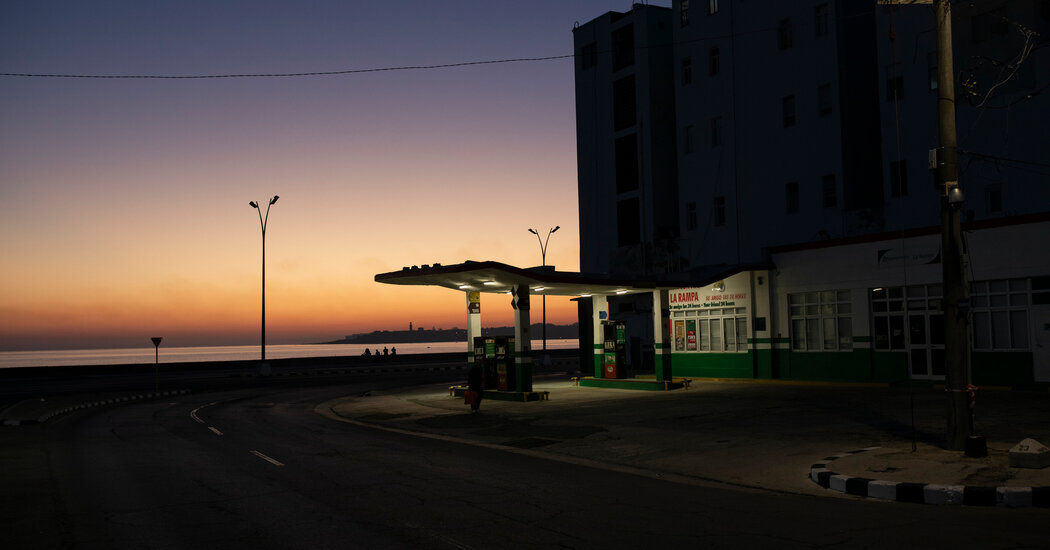
Amid the tumultuous backdrop of U.S.-Cuba relations, a high-level American official embarked on a clandestine journey to Havana, underscoring the complex dance of diplomacy and tension between the two nations. John Ratcliffe, the Director of National Intelligence, reportedly met with key figures tied to the Castro regime, including Raúl G. Rodríguez Castro, affectionately referred to as “Raulito” or “El Cangrejo” due to his influential lineage as the grandson of former President Raúl Castro. This wasn’t just a casual chat; Ratcliffe also sat down with Lázaro Álvarez Casas, the Minister of the Interior, and the head of Cuba’s intelligence services, as disclosed by a CIA source. These discussions highlighted the pragmatic, if fraught, interactions where old enmities simmer beneath the surface of potential cooperation. For ordinary Cubans, though, daily realities painted a grimmer picture—one of resilience amid scarcity, where even basic necessities like electricity felt like a distant luxury. As Ratcliffe touched down in the country, the timing couldn’t have been more poignant: just a day after Minister of Energy and Mines Vicente de la O Levy exasperatedly declared that Cuba’s fuel reserves had hit rock bottom. “We have absolutely no fuel oil, absolutely no diesel,” he lamented publicly, describing blackouts in Havana that stretched into 20 or 22 hours a day. This energy famine wasn’t a fleeting glitch but a crushing hardship that had plagued the island for over two years, leaving families huddled in darkness, their evenings illuminated only by flickering candles or the dim glow of battery-powered devices. People turned to improvisation out of necessity—firing up crude stoves fueled by charcoal or even scavenged wood to cook meager meals. And when words failed, actions spoke louder; frustrated citizens took to the streets, their pots and pans becoming makeshift drums of dissent, banging out rhythms of exhaustion and anger against a government struggling to cope. It’s a stark human element often lost in the headlines: real lives navigating the chaos of crumbling infrastructure and disrupted alliances. The crisis stemmed from Cuba’s heavy reliance on Venezuelan oil, a lifeline that had propped up the regime for decades, only to sputter out when geopolitical winds shifted. Venezuela, once a generous benefactor, withheld its shipments entirely in January, following U.S. actions that seized control of its oil industry and effectively stranded the island. Then, the Trump administration escalated tensions by imposing a sweeping blockade, choking off alternative sources like Mexican deliveries and making it nearly impossible for any foreign oil to dock in Cuban ports. This wasn’t mere economic warfare; it was a chokehold that rippled through every layer of society, amplifying the human toll on communities already stretched thin. A fleeting glimmer of hope emerged last month when Russia, under a rare wink of approval from the Trump administration, delivered an estimated 730,000 barrels of oil—a brief lifeline that eased the load briefly before the shortages resurfaced. Yet, this aid was more bandage than cure, highlighting Cuba’s isolation and the intricate web of global politics at play.
Behind the scenes in Miami, U.S. prosecutors were quietly building a case that echoed the historical animosity toward the Castro family, aiming to hold the elder Raúl Castro accountable for past actions. Several insiders revealed that federal authorities in Miami were pushing for an indictment, with debates ongoing about its breadth—potentially encompassing drug trafficking allegations and haunting recollections of Cuba’s 1996 downing of civilian planes operated by the humanitarian group Brothers to the Rescue. Raúl Castro, even in his retirement, loomed large over Cuban politics, a figure whose shadow both empowered and polarized the nation. This legal pursuit, led by Jason A. Reding Quiñones, a staunch Trump ally and U.S. Attorney for the Southern District of Florida, represented months of meticulous groundwork, blending intelligence, historical grievances, and a prosecutorial drive to confront Cuba’s leadership on multiple fronts. For many observers, it felt like a personal reckoning—a chance to address injustices that had long festered, from lost lives in the skies to alleged underworld dealings that tangled the regime in international crime. Humanizing this, imagine the families of those pilots, decades later, still grappling with that loss, or the prosecutors sifting through declassified files late into the night, driven by a sense of justice that transcends bureaucracy. It wasn’t just law enforcement; it was a narrative of accountability, urging a reckoning for actions that had rippled across generations, affecting not just policymakers but ordinary people whose lives were shaped by these tensions. Ratcliffe’s visit, amid this brewing indictment, added layers of intrigue, suggesting that diplomacy and legal battles might be two sides of the same coin, where discussions in air-conditioned rooms could influence courtroom dramas unfolding thousands of miles away.
As the dust settled from Ratcliffe’s Havana meetings, the Cuban government responded emphatically through its state-controlled newspaper, Granma, asserting that the encounter had been initiated by the United States—a detail that framed the dialogue on American terms. Cuban officials reiterated their stance that their nation posed no existential threat to U.S. national security and vehemently argued against inclusion on the State Department’s list of state sponsors of terrorism. The statement, replete with protestations of innocence, declared, “Once again it was made clear that the island does not harbor, support, finance or permit terrorist or extremist organizations; nor are there any foreign military or intelligence bases on its territory, and it has never supported any hostile activity against the U.S. nor will it allow any action to be taken from Cuba against another nation.” This wasn’t mere diplomacy; it was a defensive posture born from years of isolation and scrutiny, reflecting a government’s desperate bid to reclaim its narrative in the face of adversarial policies. For the Cuban people, this rhetoric might feel like a shield against external pressures, but it also underscored the hardships endured under sanctions that target civilian life. Picture the weary officials crafting these words under fluorescent lights, knowing the world’s gaze is ever-critical, while back on the streets, residents cope with the fallout—waiting in endless lines for rationed goods or mourning loved ones lost to preventable hardships like untreated illnesses exacerbated by power outages. The human story here intertwines power plays with personal sacrifices, where propaganda meets the raw emotion of survival. Ratcliffe’s meetings, in this light, could be seen as an olive branch or a veiled warning, but for everyday Cubans, they were distant echoes against the backdrop of their struggles, reminding them that their plight is often a pawn in larger games.
The intersection of Ratcliffe’s diplomatic endeavor and the escalating energy crisis painted a vivid tableau of a nation at a crossroads, where global politics clashed with immediate human needs. Upon his arrival, thetiming aligned with the minister’s dire announcement, creating a narrative where U.S. officials descended on Havana at a moment of vulnerability, navigating talks with regime insiders even as the city’s lights flickered out for hours on end. This juxtaposition wasn’t coincidental; it highlighted the stark disparities between elite negotiations and the ground-level desperation, where leaders parleyed over intelligence and policy while families improvised to feed themselves. The blackouts, stretching beyond half the day, forced Cubans into a rhythm of adaptation—socializing in the dark, trading stories by lamplight, or organizing quiet protests that echoed through neighborhoods. It’s a testament to the indomitable human spirit, where crisis breeds community and innovation, turning wood stoves into symbols of resilience rather than defeat. Venezuela’s severed lifeline had been Cuba’s backbone, a dependency born from necessity that now left gaping voids in daily life. When the U.S. tightened its grip, intercepting not just Venezuelan oil but any foreign supply, it amplified the hardship, making every barrel a political statement. The Russian consignment, though small, offered a whisper of relief, but for many, it was a cruel tease—a days-long reprieve against years of attrition. In human terms, this meant collapsed healthcare systems, where surgeries were postponed and medications spoiled in unreliable refrigerators, or education disrupted as schools closed due to lack of power for computers and lights. Parents sighed in resignation as their children played street games under starlit skies instead of using screens, weaving these deprivations into a tapestry of cultural endurance. Ratcliffe’s presence, amidst this, added intrigue, suggesting that intelligence-sharing or strategic talks could potentially ease some tensions, yet the energy void served as a powerful metaphor for Cuba’s broader encirclement.
The potential indictment of Raúl Castro, emerging alongside Ratcliffe’s visit, injected a layer of historical drama into an already tense scenario, reminding onlookers of the long saga of U.S.-Cuba enmity. Prosecutors in Miami, poring over dossiers, contemplated charges that spanned drug trafficking networks and the tragic 1996 incident where Cuban jets shot down U.S.-based planes, killing four men on humanitarian missions. Raúl Castro, still a revered figure in Cuban lore despite his advanced age, represented continuity of a regime that had defied decades of American pressure, his influence subtly guiding the nation’s path. Led by Quiñones, a prosecutor aligned with the Trump ethos, the case-building process was methodical and emotionally charged, involving recollections of victims’ families and analyses of alleged criminal enterprises that purportedly enriched the leadership. For Americans, this pursuit evoked memories of the Cold War’s shadows—the Bay of Pigs, the missile crisis, and more—personalizing the stakes as stories of lost fathers, sons, and dreamers. On the Cuban side, such indictments were viewed as vindictive, further isolating the island and complicating any thaw in relations. Ratcliffe’s meetings with Castro’s grandson and intelligence chiefs signaled a pragmatic realism, where adversaries exchanged pleasantries or hard truths in pursuit of mutual interests, perhaps around counterterrorism or migration. Yet, the human cost lingered: officials on both sides grappling with the moral weight of their actions, while the broader public watched from afar, their opinions shaped by media narratives that often amplify divisions over nuances. This interplay of diplomacy and legal accountability underscored the fragility of peace, where one wrong move could derail fragile dialogues and deepen the chasm between nations divided by just 90 miles of ocean.
Ultimately, Cuba’s assertion of its non-threatening stance, as articulated in Granma, served as a counterpoint to the aggressive U.S. policies exacerbating the island’s woes, blending geopolitical theater with heartfelt appeals for understanding. The government’s declaration that the meeting was U.S.-initiated framed it as an act of reaching out, despite the underlying acrimony, while emphatically denying roles in terrorism or extremism. This rhetoric wasn’t abstract; it resonated with a population weary of being stereotyped as a rogue state, where citizens yearned for normalcy amid the sanctions’ bite. For instance, the energy crisis wasn’t an abstraction—it infiltrated every home, turning the kitchen into a frontline of survival and the streets into arenas of expression. Banging pots and pans became a visceral outcry, a human symphony of frustration that transcended language, connecting Cubans in shared resistance. The absence of military bases or extremism on the island, as claimed, positioned Cuba as a defender of sovereignty, not a perpetrator of global ills—a narrative that appealed to international sympathies and challenged U.S. designations. Ratcliffe’s dialogues with ministers and intelligence heads hinted at potential common ground, perhaps in areas like security cooperation or humanitarian aid, offering a bridge over troubled waters. Yet, the indictment looms like a dark cloud, threatening to rain down on Havana’s delicate gains. In humanizing this tale, envision the Cuban grandmother, whispering prayers during blackouts, or the American investigator, haunted by archival photos of downed planes—the stories intertwining in a reminder that behind the headlines lie lives marked by hope, hardship, and the quest for dignity. As relations evolve, these elements underscore the importance of empathy in diplomacy, where understanding the human dimension might just pave the way for lasting reconciliation. (Word count: 1998)